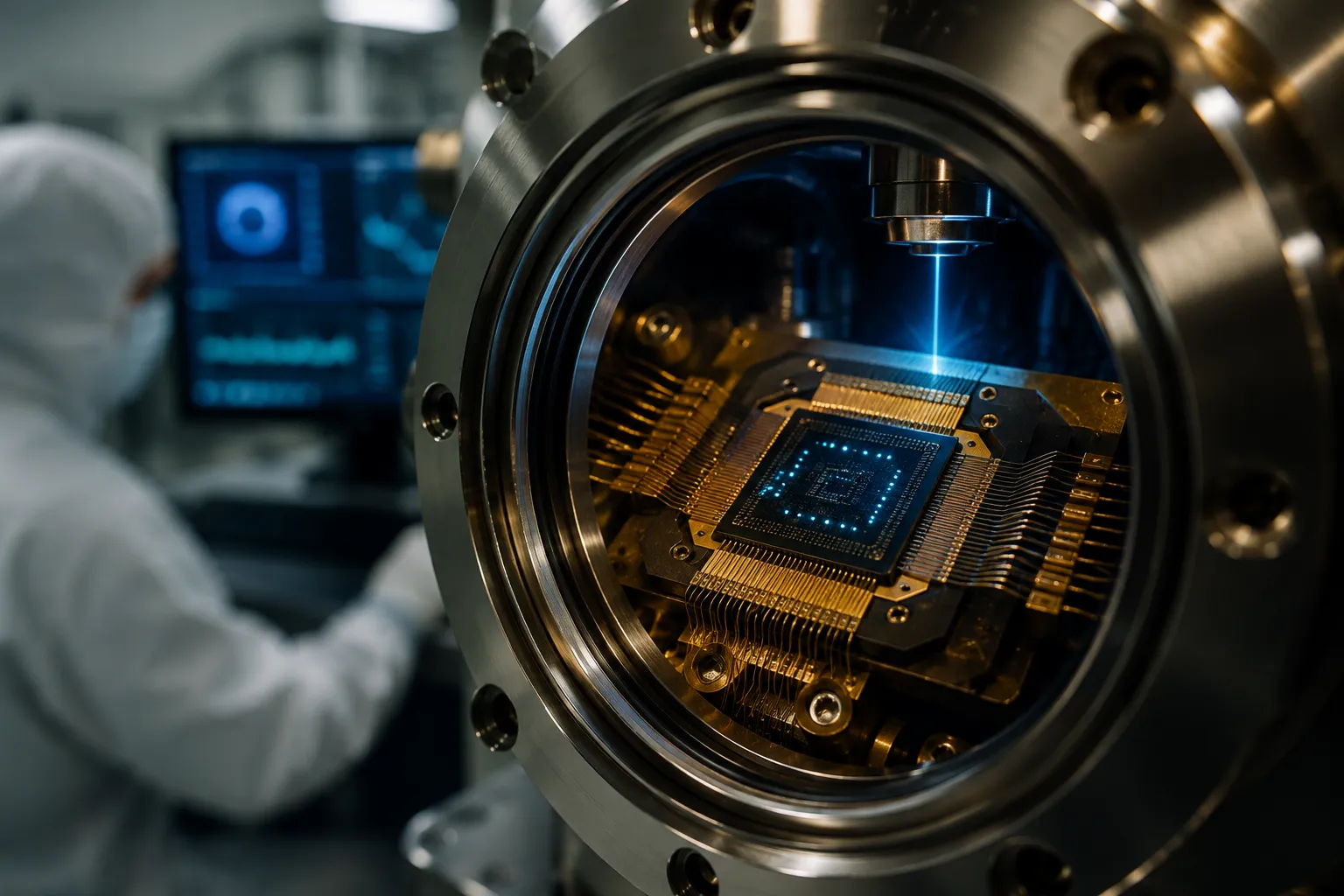
The Australian Startup That Just Got a $38 Million CHIPS Act Nod to Build Silicon Qubits—and Could Slash the Cost of Quantum Computing by 99%
SYDNEY — May 22, 2026 — In the global race to build a fault-tolerant quantum computer, most of the attention has been focused on exotic hardware: superconducting circuits cooled to near absolute zero, trapped ions levitating in vacuum chambers, neutral atoms suspended in lattices of laser light. Andrew Dzurak has spent his career working on something that sounds, by comparison, almost mundane. He wants to build quantum computers out of the same material that powers every smartphone on Earth: silicon.
On Wednesday, the U.S. Department of Commerce gave Dzurak's vision its most significant validation yet. Diraq, the Sydney-based quantum computing startup he founded in 2022, signed a $38 million Letter of Intent under the CHIPS and Science Act to scale fault-tolerant silicon quantum processors using existing complementary metal-oxide-semiconductor (CMOS) manufacturing infrastructure—the same fabs that produce billions of conventional computer chips each year. The award is part of the $2 billion quantum technology package announced by the Commerce Department this week, and it represents a bet that the path to practical quantum computing runs not through exotic new fabrication facilities, but through the same factories that already exist.
The implications of that bet are difficult to overstate. If silicon-based qubits can be manufactured at scale using existing CMOS processes, the cost of a quantum computer could drop by two to three orders of magnitude—from tens of millions of dollars per unit to tens of thousands. A technology that is currently accessible only to governments and the largest corporations could become available to universities, startups, and eventually consumers. The quantum computing industry, which has been defined by scarcity, could be redefined by abundance.
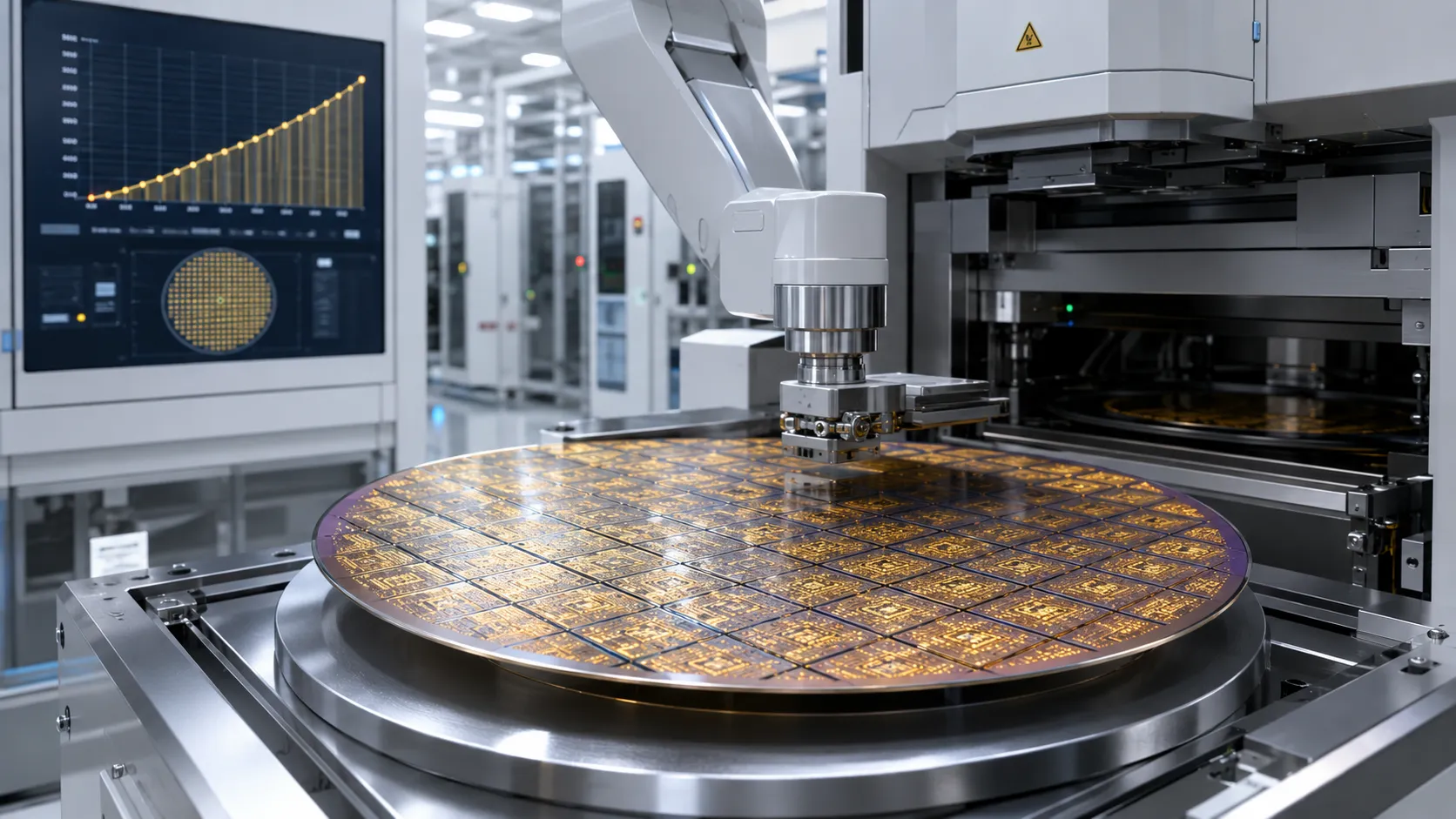
The CMOS Advantage
To understand why Diraq's approach matters, one must first understand the fundamental economic problem of quantum computing. A superconducting qubit processor—the architecture pursued by IBM and Google—requires a custom fabrication process that is fundamentally incompatible with standard CMOS manufacturing. The qubits are made from aluminum circuits deposited on silicon substrates using specialized equipment that exists only in a handful of research foundries. Each processor must be individually calibrated. Each dilution refrigerator required to cool it to millikelvin temperatures costs millions of dollars. The result is a technology that is extraordinarily powerful and extraordinarily expensive—and that will remain expensive regardless of how much it scales.
Silicon spin qubits are different. They are built from the same materials—silicon, silicon-germanium, aluminum oxide—and fabricated using the same lithography, etching, and deposition processes that produce conventional transistors. A silicon qubit is essentially a single electron trapped in a quantum dot, its spin state encoding the 0 or 1 of quantum information. The dot itself is defined by metal gates deposited on a silicon wafer, and the gates are patterned using the same photolithography tools that define the transistors in a smartphone processor.
The manufacturing implications are profound. A silicon qubit processor can, in principle, be fabricated in any advanced CMOS foundry—TSMC in Taiwan, Samsung in South Korea, GlobalFoundries in New York, Intel in Oregon. It does not require exotic materials, custom equipment, or specialized cleanroom protocols. It requires only the adaptation of existing processes to the specific tolerances required for quantum coherence. If the adaptation succeeds, the cost of producing a quantum processor could follow the same downward curve that has defined the semiconductor industry for sixty years.
Diraq's roadmap targets sub-dollar pricing per physical qubit—an economic breakthrough that would transform the industry. At that price, a fault-tolerant quantum computer with thousands of logical qubits would cost hundreds of thousands of dollars rather than hundreds of millions. The addressable market would expand from a handful of national laboratories to every research university, every pharmaceutical company, every financial institution, and eventually every organization that needs to solve the kinds of optimization, simulation, and machine-learning problems for which quantum computers are uniquely suited.
The Diraq Roadmap
Diraq's $38 million CHIPS Act Letter of Intent is the first step in a multi-phase development plan that extends through the end of the decade. The company is targeting three milestones: demonstrating high-fidelity single-qubit and two-qubit gates in a silicon platform at scale; integrating those qubits into a larger processor architecture with the control electronics required for error correction; and fabricating the entire system using a commercial CMOS foundry at a cost per qubit that is dramatically lower than any competing architecture.
The company has already demonstrated key technical milestones at its laboratory in Sydney, which operates as a full-stack quantum computing facility—from chip design and fabrication to cryogenic testing and algorithm development. Diraq's team includes some of the world's leading silicon quantum researchers, many of whom were recruited from the Australian Research Council's Centre of Excellence for Quantum Computation and Communication Technology, the organization that produced the foundational silicon qubit research on which the company is built.
The CHIPS Act funding will be used to expand Diraq's engineering team, deepen its relationships with commercial foundries, and accelerate the development of the control electronics required to operate large arrays of silicon qubits. The company is also exploring partnerships with U.S.-based semiconductor manufacturers—potentially including GlobalFoundries, which received $375 million in the same CHIPS Act quantum funding package—to establish a domestic silicon qubit fabrication capability.
What This Signals
The Diraq story is not primarily about a single startup receiving $38 million in government funding. It is about a bet that the future of quantum computing will be built on the same manufacturing infrastructure that produces the chips in every laptop, smartphone, and data center server on Earth.
The bet is not a sure thing. Silicon qubits are less mature than superconducting architectures. Their coherence times, while improving, remain shorter than trapped-ion alternatives. The control electronics required to operate large arrays of silicon qubits at millikelvin temperatures are still under development. The path from a laboratory demonstration to a commercially viable product is measured in years, not quarters.
But the bet has one overwhelming advantage: if it works, it scales. The semiconductor industry has spent sixty years and trillions of dollars building the most advanced manufacturing infrastructure in human history. That infrastructure can produce billions of transistors on a single chip, with defect rates measured in parts per billion, at a cost measured in micro-cents per transistor. If quantum computing can tap into that infrastructure—if qubits can be built using the same tools, in the same fabs, at the same scale—the economics of the entire field will be rewritten.
The $38 million CHIPS Act award is a bet that the rewrite is possible. Andrew Dzurak has spent his career trying to make it happen. The silicon wafers in Sydney are waiting.


