The Algorithm That Humiliated 12 Master Sommeliers: How AI Learned to Taste Wine—and What It Means for the Future of Food
ZURICH — May 22, 2026 — In a conference room at ETH Zurich, twelve of Europe's most accomplished wine experts sat at a long table, glasses arrayed before them, tasting notes at the ready. They were master sommeliers, wine critics, and seasoned winemakers—people who had spent decades training their palates to detect the faintest traces of oak, the subtlest hints of blackcurrant, the almost imperceptible whisper of graphite that distinguishes a Pauillac from a Pomerol. They were the best in the world at what they did. And on this particular afternoon, they lost.
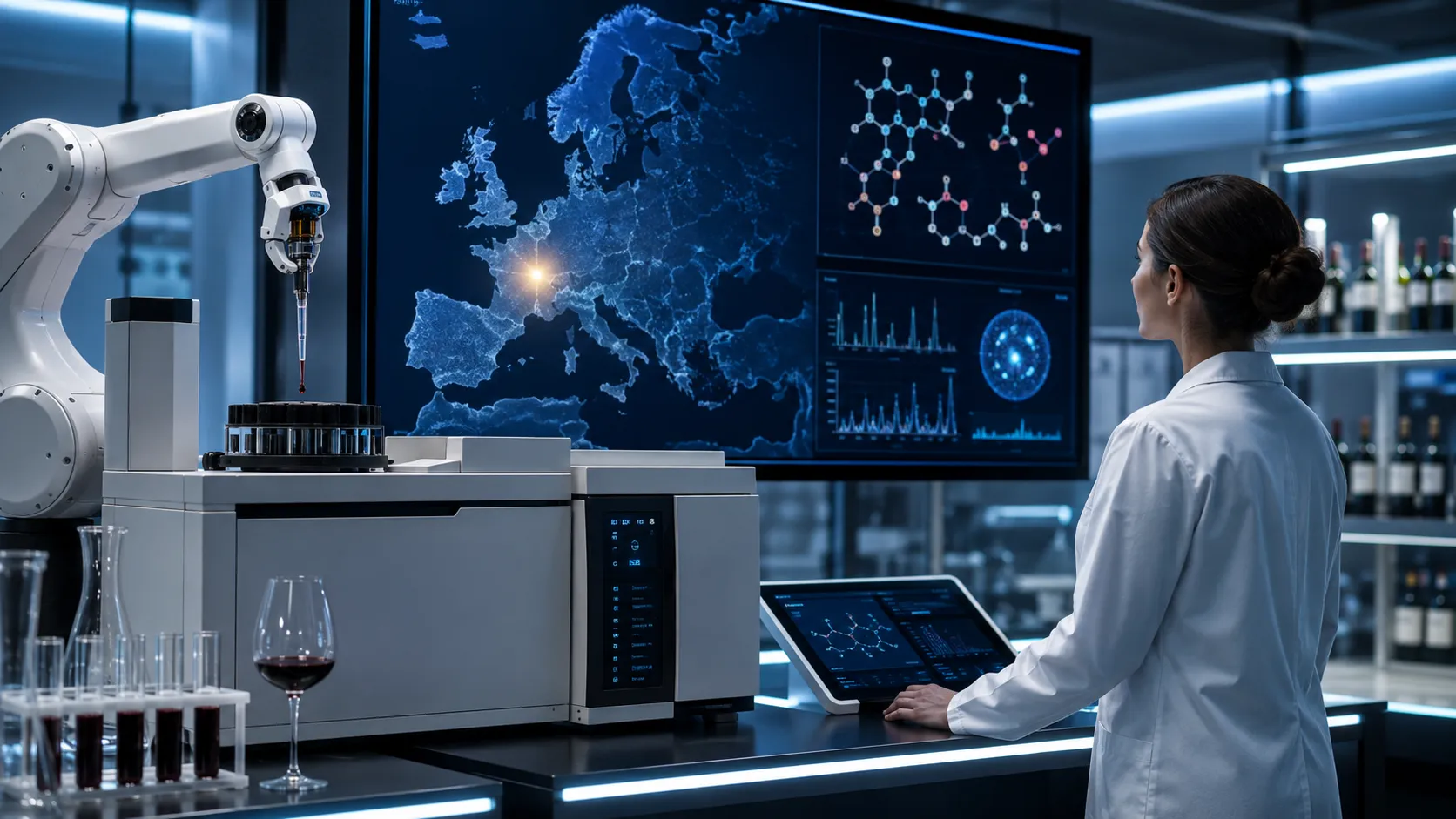
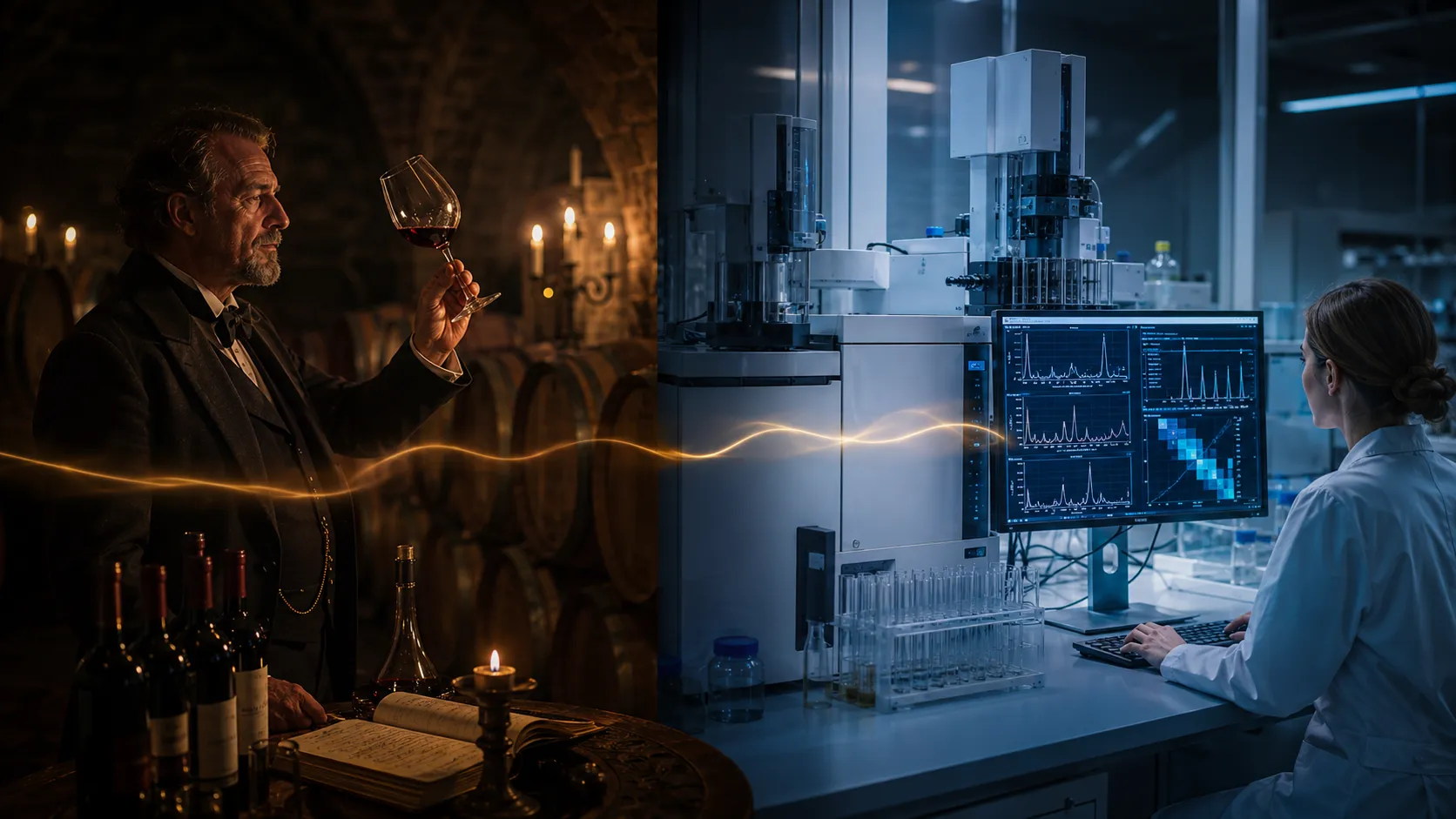
Their opponent was not another human. It was an artificial intelligence model trained on chemical sensor data—gas chromatography, mass spectrometry, ion mobility spectroscopy—drawn from thousands of wine samples across every major growing region on Earth. The AI had never tasted a drop of wine. It had never experienced the pleasure of a perfectly aged Burgundy or the disappointment of a corked Chardonnay. It had no palate, no nose, no sensory experience of any kind. What it had was data—vast quantities of it—and a machine-learning architecture that had been trained to correlate chemical signatures with grape variety, geographic origin, and vintage year.
The AI won decisively. It identified wine origin with 97% accuracy, grape variety with 99% accuracy, and vintage year to within two years in 94% of cases. The human experts, pooled together, achieved approximately 78%, 85%, and 67% respectively. The results, published in Nature Communications on May 8, 2026, have sent ripples through the wine industry, the sensory science community, and the broader world of artificial intelligence. They have also raised a question that extends far beyond the tasting room: if a machine can taste better than a master sommelier, what else can it taste that humans cannot?
The Chemistry of Terroir
To understand what the ETH Zurich team built, it helps to understand what wine actually is—not as a beverage, but as a chemical system. A single glass of wine contains hundreds of volatile organic compounds, each present in concentrations measured in parts per billion or even parts per trillion. These compounds are produced by the grapevine, by the yeast during fermentation, by the oak barrel during aging, and by the slow alchemy of oxidation and esterification that continues long after the bottle is sealed.
The combination of these compounds—their presence, their absence, their relative proportions—constitutes a chemical signature that is unique to each wine. A Cabernet Sauvignon from Napa Valley has a different chemical profile than a Cabernet Sauvignon from Bordeaux, even if both are made from the same grape variety and aged in similar oak barrels. The difference is terroir—the sum of soil, climate, sun exposure, and winemaking tradition that gives each wine its distinctive character. Terroir is real, and it is measurable. But until recently, no one had built a machine capable of measuring it comprehensively enough to identify a wine's origin with near-perfect accuracy.
The ETH Zurich team did exactly that. They collected more than 2,000 wine samples from across Europe, subjected each sample to a battery of chemical analyses, and fed the resulting data into a deep neural network. The network was trained not to "taste" the wine in any human sense, but to identify statistical patterns in the chemical data that correlated with the wine's known origin, grape variety, and vintage. After months of training, the model could identify a wine's region of origin with 97% accuracy from chemical data alone—a level of precision that no human taster, no matter how experienced, can match.
The Limits of the Human Palate
The human sense of taste is a remarkable instrument, but it is not a precise one. The tongue can detect five basic tastes—sweet, sour, salty, bitter, and umami—while the nose can distinguish thousands of volatile aromas. Together, they produce the experience of flavor, which is deeply subjective, influenced by memory, emotion, expectation, and context. The same wine, served in the same glass at the same temperature, can taste different to the same person on two different days.
The master sommeliers who participated in the ETH Zurich study are at the peak of human tasting ability. They have spent decades training their palates, learning to identify grape varieties and growing regions by taste alone. Their abilities are extraordinary by any reasonable standard. But they are not machines. They cannot detect compounds present at concentrations below the human olfactory threshold. They cannot simultaneously track hundreds of chemical variables and weight them against each other with statistical precision. They are, in the end, human—and humans have limits.
The AI has no such limits. It does not get tired. It does not get distracted. It does not have a cold. It does not bring emotional baggage to the tasting—no nostalgia for a childhood vineyard, no prejudice against a particular winemaker, no desire to impress a peer. It simply processes the chemical data and returns a result. The result is not always perfect—3% of wines are misidentified—but it is far more accurate than any human taster has ever been.
The implications for the wine industry are significant but not apocalyptic. The AI is not going to replace sommeliers, because wine is not primarily about chemical identification. It is about experience, emotion, storytelling, and the human connection that forms when a knowledgeable expert guides a customer toward a bottle they will love. What the AI can do is augment that expertise—providing sommeliers with chemical insights that no palate can detect, helping winemakers optimize their fermentation processes, and giving consumers more information about what they are drinking.
Beyond Wine
The ETH Zurich team is already working on extending the technology to other sensory domains. Coffee, tea, chocolate, cheese, olive oil, honey—all are complex chemical systems whose quality and authenticity can be assessed by trained human tasters, and all are susceptible to the same kind of machine-learning analysis that identified wine origins with 97% accuracy. The same technology could be used to detect food fraud—olive oil adulterated with cheaper oils, honey cut with corn syrup, coffee labeled as single-origin that is actually a blend. It could be used to optimize agricultural practices, identifying the soil amendments and irrigation regimes that produce the most distinctive and desirable flavor profiles. It could be used in personalized nutrition, matching foods to individual genetic profiles and taste preferences.
The broader scientific significance is that the study demonstrates a general principle: AI can extract patterns from complex chemical data that are invisible to human perception, and those patterns can be used to make accurate predictions about the physical world. The principle applies not only to wine but to any domain where chemical complexity carries meaningful information—environmental monitoring, disease diagnosis, drug discovery, and more.
What This Signals
The algorithm that beat the master sommeliers is not a threat to the romance of wine. It is a tool that reveals how much of that romance is written in chemistry—and how much of the chemistry we have been missing. The sommelier who swirls a glass, inhales, and pronounces it a 2018 Saint-Émilion is not performing a parlor trick. They are detecting real chemical signals, processed through years of training and experience. The AI can detect those same signals, and many more besides, with a precision that exceeds human ability. But it cannot tell you whether the wine is beautiful, or whether it will pair well with your dinner, or whether it will evoke a memory of a summer afternoon in Provence.
Those questions are still human. The machine has learned to taste. It has not learned to feel. And that distinction—between analysis and experience, between data and delight—is the boundary that will define the relationship between AI and food for the foreseeable future. The sommeliers lost the blind taste test. But they are still the ones you want at your table.


