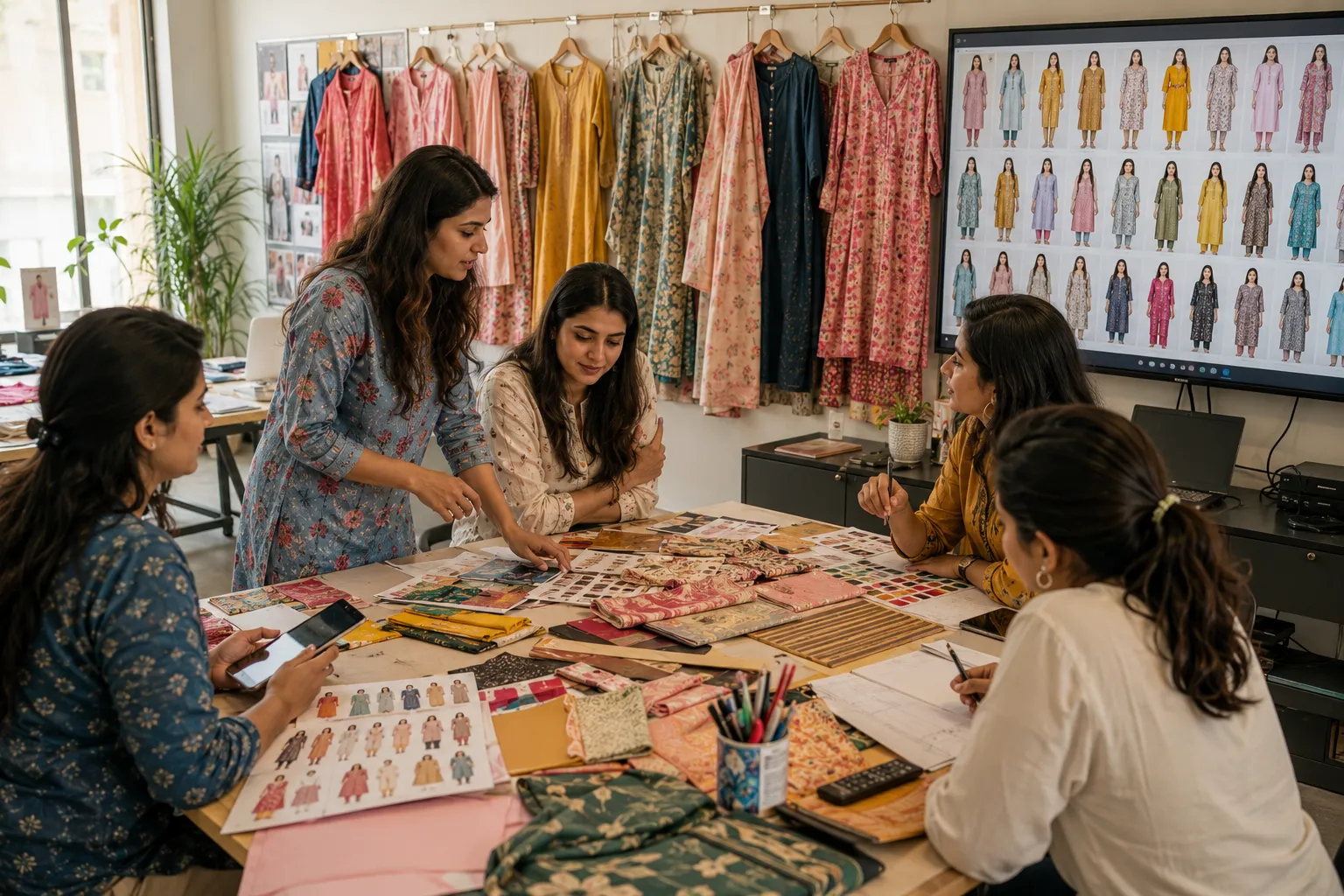
The Accidental Empire: How a 21-Year-Old Who Wanted to Be an Investment Banker Built India's Zara for Indian Wear—And Is About to Take It Public
DELHI — May 22, 2026 — There is a photograph Sidhant Keshwani does not need to show you. You can picture it from the way he talks: a young man, fresh off a flight from Manchester, sitting in his family's Delhi office, surrounded by fabric swatches, export orders, and the quiet hum of a manufacturing business that had seen better days. He was 21. He had plans. "I initially wanted to be an investment banker," he admits, laughing. "I accidentally got into entrepreneurship."
That accident has turned out rather well. Today, Keshwani is the founder and CEO of Libas, one of India's fastest-growing fast-fashion ethnic wear brands for women. The company just crossed a ₹1,000 crore annual run rate—the first Indian D2C fashion label to reach that milestone while remaining profitable. It operates around 50 stores across more than 15 Indian cities, plans to add at least 70 outlets annually over the next two years, and is preparing for an initial public offering by early next fiscal year. Libas reported revenue of ₹609.1 crore in FY25, up 25 percent from ₹486.5 crore the previous year, and expects to close FY26 at approximately ₹750-800 crore, roughly 30 percent higher. The company competes with legacy brands including Biba and Aurelia, has international expansion plans targeting the UAE and United States within the next one to two years, and is taking a wait-and-watch approach due to Middle East tensions.
The numbers are impressive, but the architecture beneath them is what matters. Keshwani built his first ₹500 crore without a rupee of outside capital—bootstrapped, profitable, and growing at 30 to 35 percent annually—before raising ₹150 crore from ICICI Venture in 2024, the company's first and only external funding. He did it by seeing something that the Indian fashion industry, for all its centuries of expertise, had missed: the working woman does not need another wedding lehenga. She needs a kurta she can wear to the office on Tuesday.
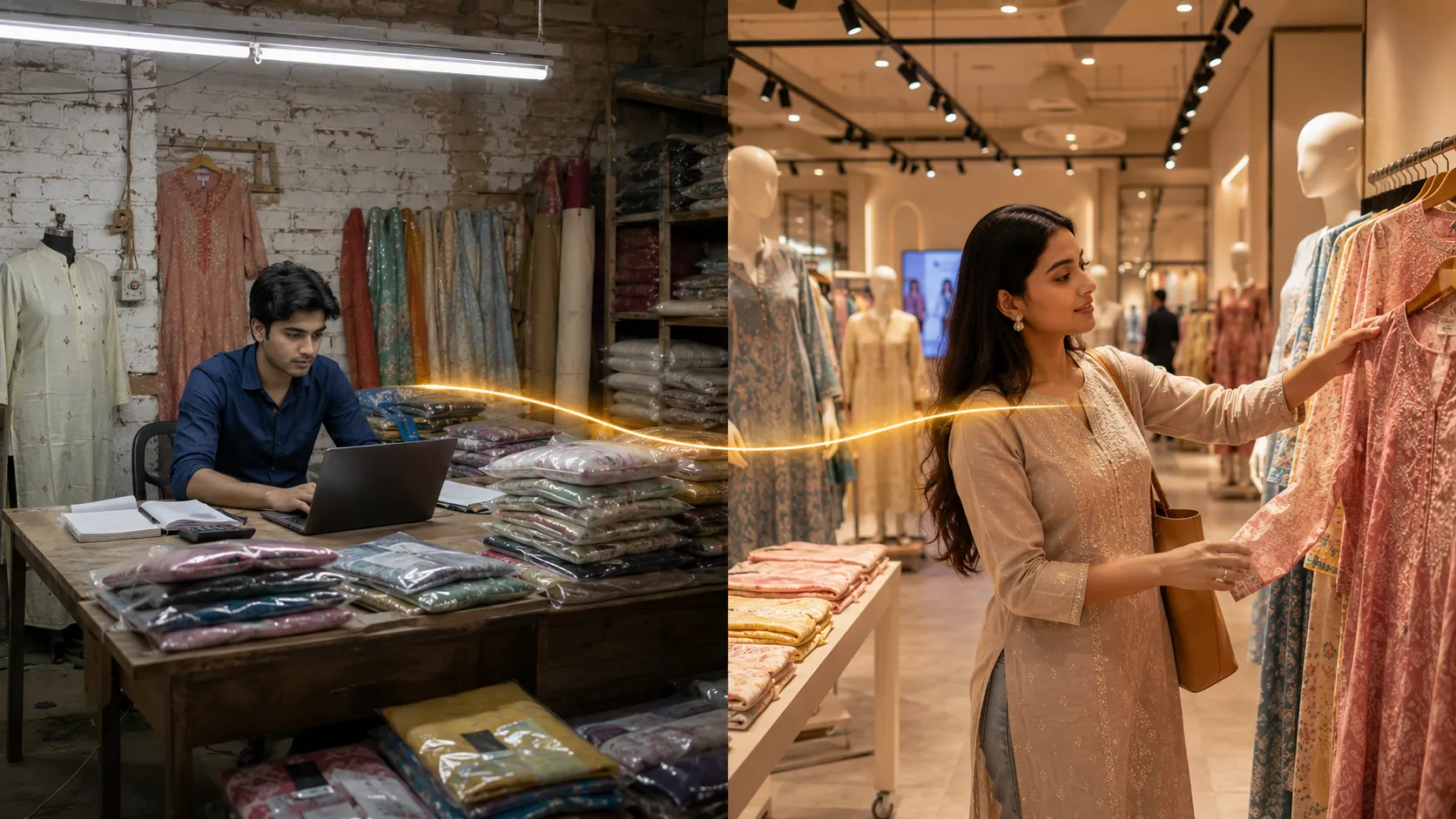
The Dinner Table That Built a Brand
Sidhant Keshwani grew up with business in his blood—not the glamorous kind, but the kind that unfolds over decades, in factories and export offices, away from the headlines. His father, Sunil Keshwani, was a first-generation entrepreneur who built the family's apparel manufacturing business from nothing. Evening conversations at home were rarely about school or cricket. They were about fabric blends, fashion trends, and supply chains. "Business and fashion were core to my DNA," Sidhant says. "I grew up seeing that on a daily basis."
When he left for the University of Manchester to study Economics, he carried that instinct with him. What the UK gave him, in addition to a degree, was a ringside view of e-commerce accelerating across the West—Amazon, ASOS, and the broader digital retail shift. He returned to India in 2012 with one conviction: that e-commerce would define his generation. "Every ten years there's a boom," he explains. "The dot-com boom, then real estate, then e-commerce. Whoever catches the bus early is the one who ends up making something big."
He caught the bus. In 2014, at the age of 21, he set up a separate company with a separate office and a focused e-commerce play, with his father's manufacturing unit as the exclusive supplier. But before he listed a single product, he spent months researching the market with an unusual discipline for someone his age. The question he kept asking was simple: what will people actually buy online?
The sweet spot for e-commerce spending at the time was ₹500 to ₹800. Heavy, embellished garments were out—too expensive and too risky for a new medium. But he noticed something else. Women who worked in offices wore kurtas frequently—not once a year for a wedding, but once a week, sometimes more. The traditional ethnic wear market was built around occasion-wear: the wedding lehenga, the Diwali saree, the reception anarkali. The everyday kurta—the garment that millions of Indian women wore to work, to lunch, to parent-teacher meetings—was an afterthought. "We launched as a pure workwear brand," Keshwani says. "That was our first trip—target the working woman, give her something she needs every week, at a price she's comfortable spending online."
The insight was not complex. But it was commercially explosive. The Indian ethnic wear market was dominated by legacy brands like Biba and Aurelia, which sold through multi-brand outlets and traditional retail chains. Their supply chains were built for seasonal collections—spring-summer, festive, wedding—with long lead times and limited responsiveness to trends. Keshwani's bet was that he could build a fast-fashion model for Indian wear, with the speed, the pricing, and the digital fluency of a Zara or an ASOS, but for the kurtas and kurti sets that Indian women actually wore. "We identified a gap in fast fashion for Indian wear and built a highly agile model around speed, trend identification, product launches, and marketing execution," he says. "That has been our biggest growth driver."
The Pivot That Changed Everything
The brand that Keshwani built between 2014 and 2020 was successful by any reasonable standard—profitable, growing, well-reviewed by customers. But it was not yet the company he believed it could become. The inflection point arrived in 2021, when Libas pivoted from a workwear-focused ethnic brand into a full-fledged fast-fashion Indian wear label. The pivot was not a rebranding exercise. It was a fundamental reengineering of the company's supply chain, design process, and go-to-market strategy.
The fast-fashion model that Keshwani built around that pivot is the engine that has driven Libas's growth ever since. The company launches 80 to 100 new designs every week—a cadence that rivals Zara and outpaces every ethnic wear competitor in the Indian market. It works with over 200 contract manufacturers spread across hubs such as Delhi-NCR, Jaipur, and Surat, a distributed supply chain that allows it to respond to trends in days rather than months. It has built an omnichannel strategy that integrates its website, third-party marketplaces, and a rapidly growing network of physical stores. The company is EBITDA positive since inception, with margins in the 1 to 5 percent range over the past few years, and is targeting EBITDA margins of more than 7 percent in the coming year.
"We are targeting to scale EBITDA margins to more than 7 percent in the coming year while continuing to grow aggressively," Keshwani said. The statement captures the central tension of Libas's current moment: the company is trying to do two things simultaneously that are difficult to do separately—grow at 30 to 35 percent annually while expanding margins and building a physical retail network from scratch.
The physical retail push is the most visible manifestation of that tension. In FY26, Libas opened 28 stores, up from 10 the previous year. It plans to launch more than 50 stores in FY27 and scale to around 150 stores over the next two years, with a longer-term target of over 200 outlets. All of the stores are company-owned and company-operated, a model that Keshwani insists on to maintain control over the customer experience. The stores are mostly 1,200 to 1,500 square feet, with about 20 percent flagship locations ranging between 2,500 and 3,000 square feet. Capex runs around ₹3,500 to ₹4,000 per square foot. The Exclusive Brand Outlets have already crossed ₹100 crore in net sales.
The offline expansion is not merely a growth play. It is a strategic hedge against the marketplace dependence that has defined Indian D2C brands. Currently, 65 to 70 percent of Libas's sales come from online channels, but the company is targeting a near 50:50 split between online and offline as it scales its physical footprint. Within online, owned channels already contribute nearly half of the sales, and this share is expected to grow further as the company reduces its reliance on third-party marketplaces. "Over the next few years, growth will increasingly come from our own ecosystem—our website and our stores," Keshwani said.
Quick Commerce and the 60-Minute Kurta
The most futuristic piece of Libas's distribution strategy is its bet on quick commerce. Currently, quick commerce contributes less than 1 percent of the company's business. Keshwani expects it to grow to 5 percent next year and 10 percent the year after. The brand is already working with platforms like Zepto and Swiggy Instamart, and it is building capabilities to deliver orders within 60 to 120 minutes in key metro markets by using its stores as fulfilment hubs.
The idea of buying a kurta the way you buy a packet of chips—scrolling, tapping, receiving within the hour—is either absurd or inevitable, depending on your view of Indian consumer behavior. Keshwani is betting on inevitable. The stores, in this strategy, are not just retail touchpoints. They are being reimagined as fulfilment hubs to support faster deliveries and tighter inventory control. A customer in Delhi who orders a kurta on Zepto at 10 a.m. may receive it from the Libas store two kilometers away by 11 a.m. The store carries inventory that serves both walk-in customers and online orders simultaneously. The model collapses the distinction between retail and e-commerce into a single, unified supply chain.
The fast-fashion approach, with 80 to 100 new designs launched every week, is closely tied to this omnichannel strategy, enabling quicker demand sensing and inventory turns across channels. If a particular design sells out online within hours, the company can push more inventory to the stores that serve the zip codes where the demand is concentrated. If a design languishes on the website, it can be discounted in-store without triggering the algorithmic penalties that marketplaces impose on brands that cut prices online.
The IPO and the Profit Pivot
Libas's path to the public markets is, by Keshwani's own acknowledgment, contingent on forces he cannot control. The company is aiming for a listing by early next fiscal year, but market volatility—driven by geopolitical shocks, renewed U.S. tariff pressures, and record foreign investor outflows from Indian equities—could delay the offering by several months. "If markets don't allow and if Middle East tensions don't reduce, then it probably will be delayed by a few months or so," Keshwani told Reuters. Libas is also weighing a private equity round ahead of the IPO and has "a decent amount of runway."
The financials present a mixed picture. Libas reported revenue of ₹609.1 crore in FY25, up 25 percent from ₹486.5 crore in FY24, but slipped from a ₹4.8 crore profit to a ₹16.5 crore loss, largely due to the costs of offline expansion. The loss is not a sign of operational distress—the company remains EBITDA positive, and the store buildout is a deliberate investment—but it does mean that Libas will need to demonstrate a credible path back to net profitability before it can command the valuation multiple that a public listing would require. Keshwani's margin expansion target of more than 7 percent EBITDA is the financial linchpin of the IPO thesis.
The broader context of India's retail market provides the tailwind. India's $1.06 trillion retail sector is set to nearly double by 2030, driven by a growing middle class and attracting brands across segments. The ethnic wear market, in particular, is undergoing a structural shift from unbranded, tailor-made garments to branded, ready-to-wear products—a shift that mirrors the transformation of Western apparel markets a generation ago. The companies that win that shift will be the ones that combine the brand equity of traditional labels with the supply-chain speed and digital fluency of modern D2C brands. Libas is betting that it can be both.
What This Signals
The Libas story is not primarily about ethnic wear. It is about the structural transformation of Indian consumer brands—and about the generation of founders who are building them.
For decades, the Indian consumer market was defined by two categories: cheap, unbranded products sold through informal retail, and expensive, foreign-branded products sold through formal channels. The middle ground—affordable, aspirational, Indian-branded products that combined quality with cultural relevance—was largely empty. Libas filled that gap in ethnic wear. It built a brand that is neither a discount label nor a luxury import, but something in between: a fast-fashion Indian wear brand that treats the working woman's kurta as seriously as Zara treats the European office dress.
The mechanics of that achievement are instructive. Keshwani built his first ₹500 crore without outside capital—a discipline that forced the company to generate returns from its operations rather than subsidizing growth with investor money. He identified a gap that the legacy brands had overlooked: the everyday ethnic wear market. He built a supply chain that could launch 80 to 100 new designs every week, matching the cadence of global fast-fashion giants. He is now building a physical retail network from scratch, not because e-commerce is failing, but because the Indian consumer still wants to touch the fabric before she buys the kurta.
The IPO, when it comes, will be a test of whether the public markets are ready to value an Indian D2C brand at the scale and profitability that Keshwani is targeting. The geopolitical headwinds are real, and the path back to net profitability is not yet complete. But the trajectory is unmistakable. The accidental entrepreneur who wanted to be an investment banker has built an empire in Indian wear. The kurtas are selling. The stores are opening. The IPO is on the horizon. The accident, it turns out, was no accident at all.


