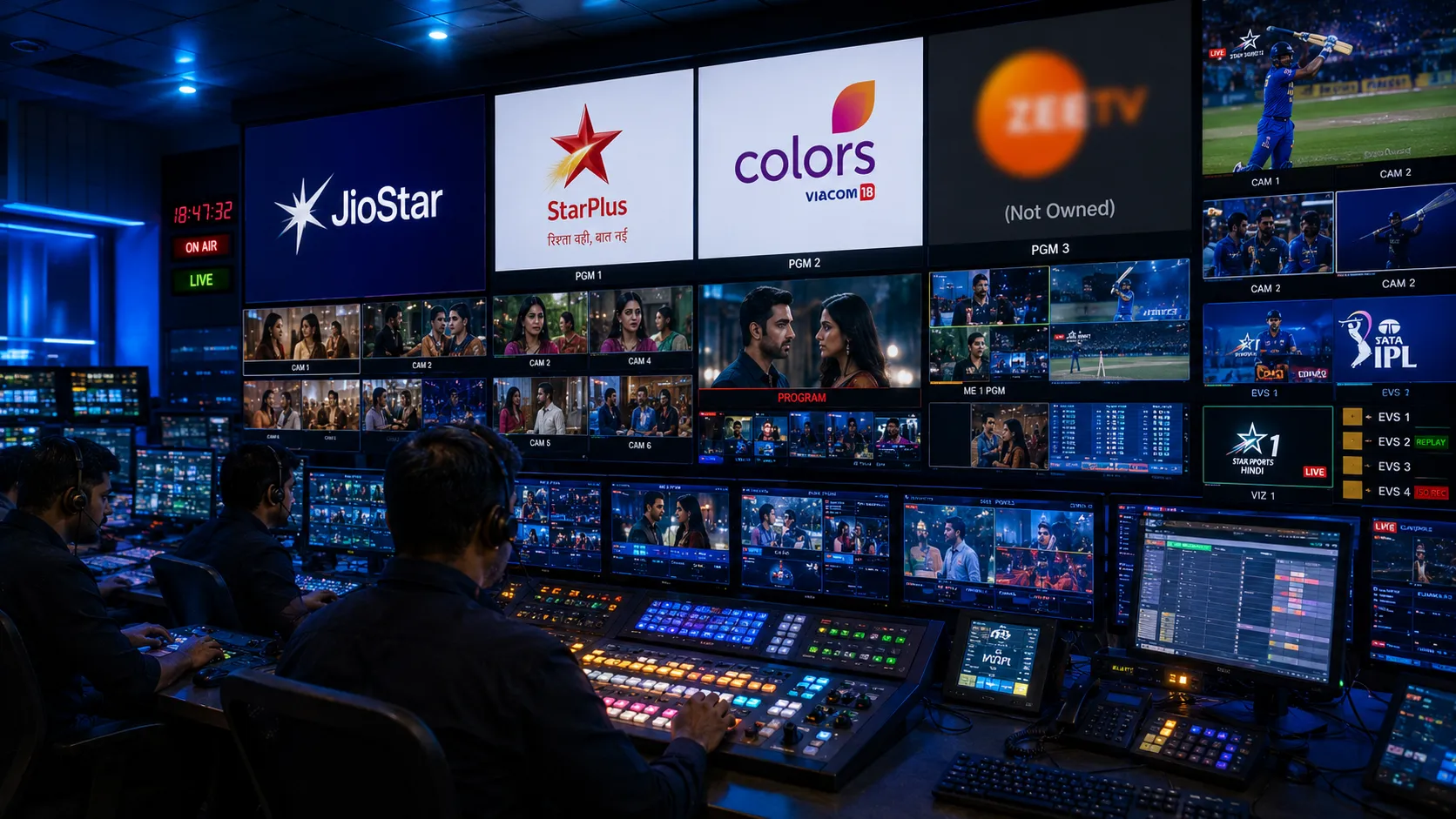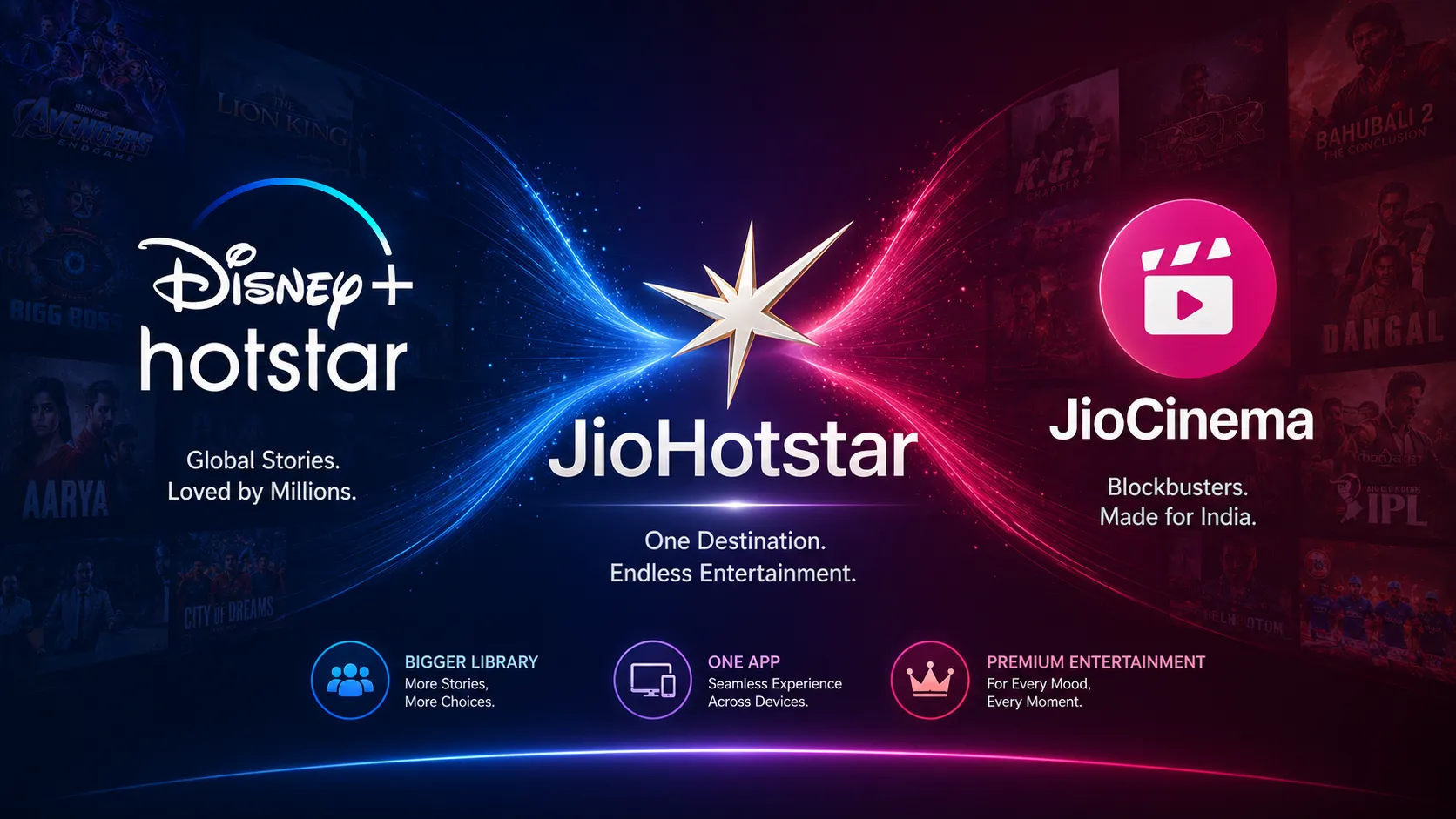
Reliance and Disney merged their Indian media empires to create JioStar — a 100‑channel, 500‑million‑user colossus that now controls nearly half of India's TV viewership and a global‑scale streaming platform. The wedding was lavish. The hangover could be brutal.
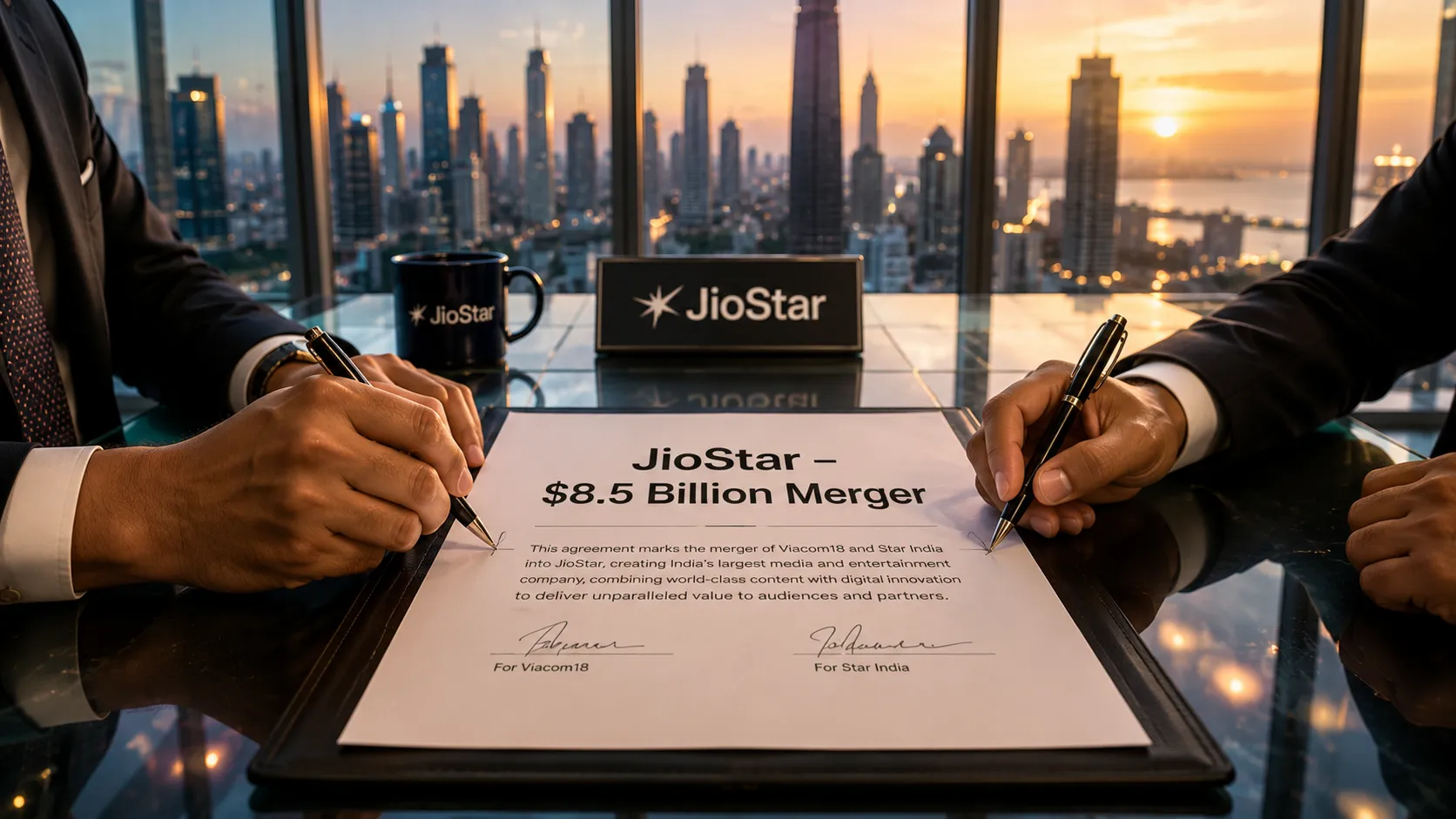
The deal was signed in a glass‑walled conference room in Mumbai, with lawyers on three continents, and a valuation that made the entire room catch its breath. $8.5 billion. Reliance Industries and The Walt Disney Company were not just merging assets. They were merging futures. The result — JioStar — is a media behemoth that controls over 100 television channels, the JioHotstar streaming platform, the rights to the Indian Premier League, ICC events, and a library of 100,000+ hours of content. It is the largest media and entertainment company in India by every conceivable metric. And it is only 14 months old.
The merger, which closed on 14 November 2024, created a single entity combining Star India's TV network and sports rights, Viacom18's entertainment channels, and Jio's digital platforms. The financials, revealed in Reliance's FY26 annual report, are staggering: JioStar standalone gross revenue of ₹36,248 crore, profit after tax of ₹3,210 crore, and a streaming platform (JioHotstar) with 500‑550 million monthly active users. When JioStar's financials are consolidated into Reliance's Media & Entertainment vertical, the numbers nearly double from the previous year — from ₹17,762 crore to ₹34,917 crore.
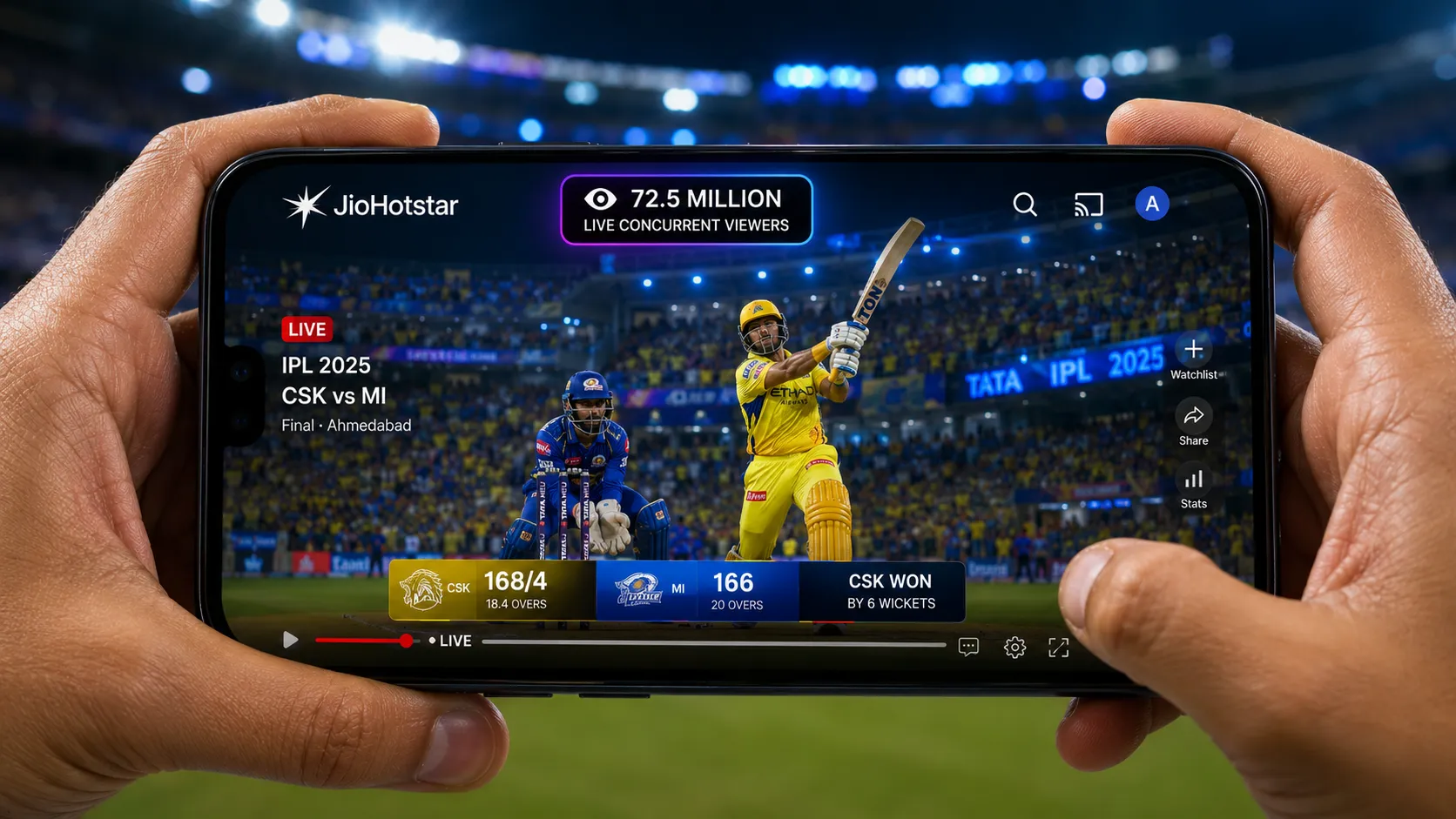
But the merger is not just about numbers. It is about power. JioStar now commands a 34.7% share of linear TV viewership — close to the combined share of its next three competitors. In Hindi general entertainment channels, its share is 48%. It holds the top position in Marathi, Malayalam, Kannada, Bangla, Telugu, and Tamil markets. On the streaming side, JioHotstar's 72.5 million peak concurrent viewers for the ICC T20 World Cup final is a global benchmark. The platform has more than 250 days of live sports annually, including IPL, ICC events, Wimbledon, and the US Open.
How did this happen? Reliance, led by Mukesh Ambani, had been building its media presence for years. Viacom18 (jointly owned with Paramount Global) gave it entertainment channels and JioCinema. Jio's telecom customer base gave it a built‑in streaming audience. Disney, on the other hand, had invested heavily in India but was struggling to compete with Reliance's aggressive pricing and local expertise. The merger was a recognition that neither could beat the other. Together, they could dominate.
The regulatory approval process was not smooth. The Competition Commission of India (CCI) raised concerns about market dominance in sports broadcasting, particularly cricket. Reliance and Disney agreed to divest some channels in specific genres and to provide fair access to cricket rights for other broadcasters. The deal was cleared in October 2024, and the integration began.
The integration itself has been a management challenge of epic proportions. Two large organisations — with different cultures, systems, and legacy contracts — had to be merged in months. The leadership team, drawn from both sides, has focused on three priorities: retaining key talent, migrating technology platforms, and renegotiating content deals. The early results are encouraging. The JioHotstar platform, launched in February 2025 after merging JioCinema and Disney+ Hotstar, has been technically smooth. The combined ad sales team has won several large accounts. The cost synergies — eliminating duplicate roles, consolidating offices, rationalising content spend — are on track to exceed initial estimates.
But the challenges are real. The merged entity now has significant market power, which invites regulatory scrutiny. The CCI has already signaled that it will monitor JioStar's behaviour, particularly in sports rights auctions and advertising pricing. The company's dominance in Hindi GECs (48% share) is also a concern for content creators and independent producers, who worry about a single buyer controlling access to half the market.
The streaming business, while large, is not yet profitable on a standalone basis. JioHotstar's reported segment EBITDA of ₹4,885 crore (15.7% margin) is a consolidated figure that includes synergies with the TV business. The cost of sports rights — IPL alone is over ₹20,000 crore for the current cycle — is enormous. Reliance's deep pockets can absorb losses that would sink a standalone streamer, but eventually, the business must stand on its own.
The competition has not disappeared. Zee Entertainment, despite its recent struggles, has a strong regional presence and a loyal audience. Sony Pictures Networks India, though smaller, has a solid sports portfolio and a global parent. Amazon Prime Video and Netflix continue to invest heavily in Indian originals, and their subscription‑only model appeals to premium audiences that JioHotstar's ad‑supported tier may not fully capture.
The biggest risk is internal. Integrating two large, competing organisations is never easy. Culture clashes, talent attrition, and operational hiccups are common. JioStar has so far managed these challenges, but the merger is only 14 months old. The real test will come in year two and three, when the initial enthusiasm fades and the hard work of sustained execution begins.
For the Indian consumer, the merger has been largely invisible — which is the highest compliment. Channels still air their programs. JioHotstar still streams cricket. The only difference is that behind the scenes, a single company now controls the experience. Whether that leads to better content, lower prices, or more innovation will determine the long‑term legacy of the $8.5 billion marriage.
For Reliance, the merger is a key piece of its broader digital strategy. JioStar, combined with Jio's telecom network and Reliance Retail's distribution, creates a powerful ecosystem. A Jio customer can watch JioHotstar on a JioPhone, buy merchandise from a film through Reliance Retail's app, and pay using Jio Financial's wallet. That vertical integration is unprecedented in Indian media. It is also, potentially, a monopoly.
The next few years will be decisive. Will JioStar use its power to raise prices, squeeze competitors, and dominate? Or will it invest in content, lower consumer costs, and grow the market for everyone? The answer will determine not just JioStar's future, but the future of Indian entertainment.
For now, the marriage stands. The lavish wedding is over. The hangover has not yet arrived. But in the glass‑walled conference room in Mumbai, where the deal was signed, the executives know the truth: merging is easy. Making it work is everything.