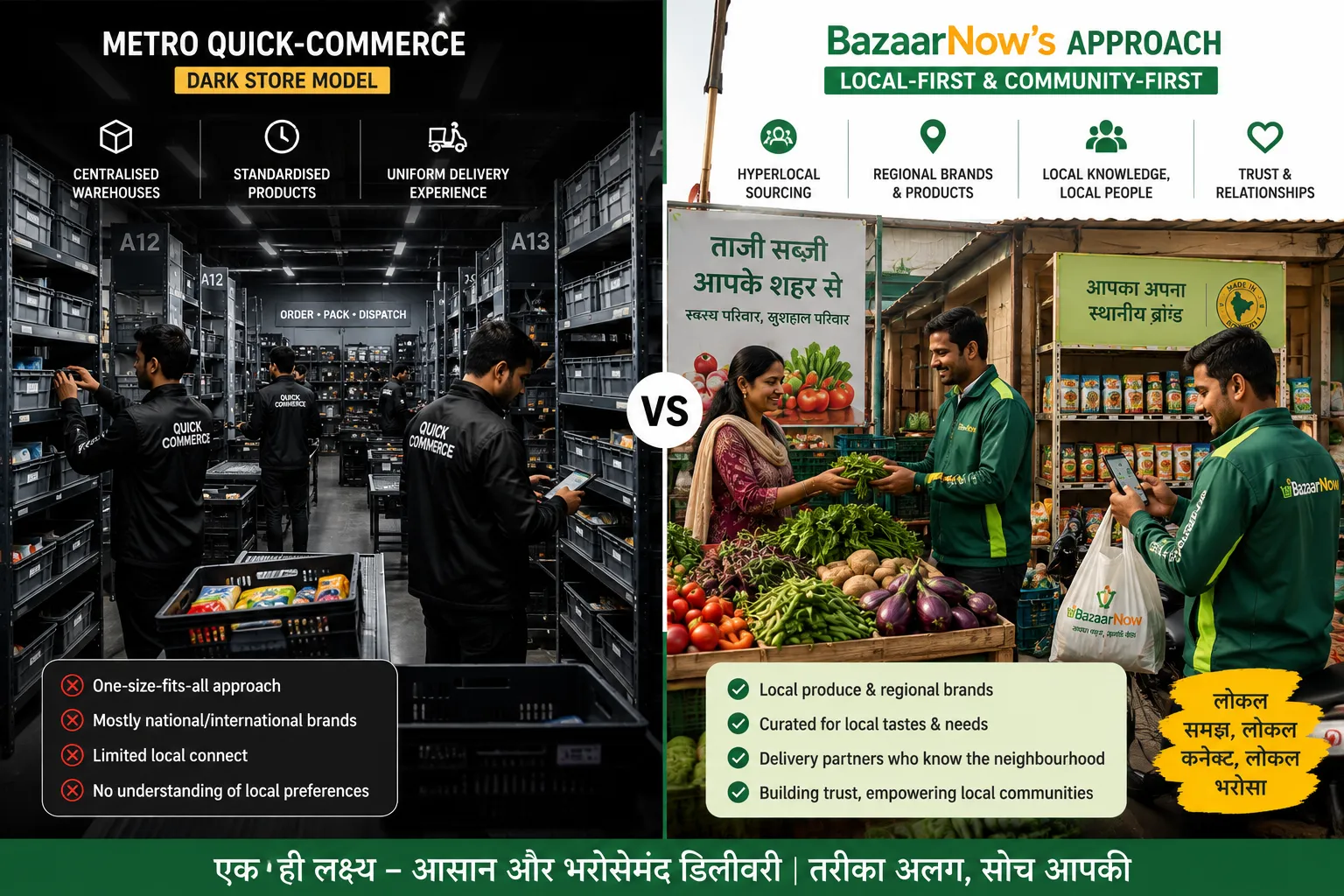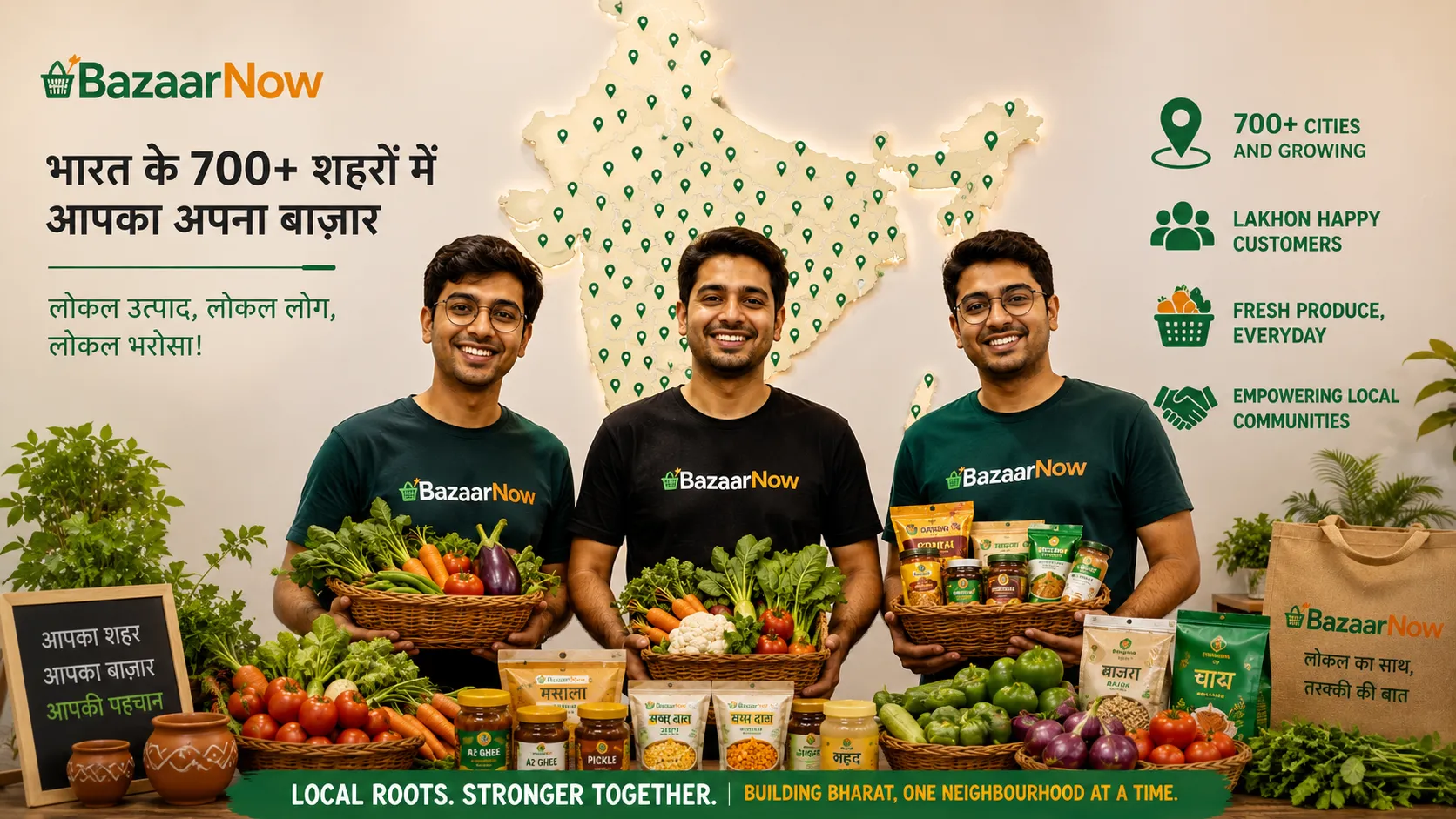
What happens when you take the playbook of 10-minute grocery delivery—built for the frenetic pace of Mumbai, Bengaluru, and Delhi—and try to apply it to the 700+ cities where middle-class India actually lives? You fail. Because grocery buying in Tier-2 and Tier-3 India doesn't look like e-commerce in metros. It's more local, more habitual, and much more value-conscious. Customers don't want complicated coupons, wallets, or discount constructs. They want the right local assortment, fresh produce, simple ordering, and fair pricing—every single day. That's the insight that just convinced Peak XV Partners to lead a ₹72 crore bet on BazaarNow. And it might just be the smartest quick-commerce thesis of 2026.
The quick-commerce wars have been fought and largely won in India's top eight cities. Blinkit, Zepto, Instamart, and Flipkart Minutes have blanketed Mumbai, Bengaluru, Delhi NCR, Hyderabad, and Pune with dark stores, racing to deliver groceries in 10 minutes or less. The battleground has been saturated. The customer acquisition costs have skyrocketed. And the unit economics remain brutal.
But what about the other 700+ cities?
That's the question that Priyanshu Jain, Arjun Harish, and Tarithmay Mandal—three former Zepto, Swiggy, and Myntra executives—asked themselves before founding BazaarNow in 2025. Their answer was simple, audacious, and potentially game-changing: the quick-commerce models built for metros cannot be replicated in smaller cities. They need to be rebuilt from the ground up.
On June 9, 2026, the market validated their thesis. BazaarNow announced it had secured ₹72 crore ($7.54 million) in a funding round led by Peak XV Partners, with participation from Whiteboard Capital and Antler. The round also attracted a who's who of angel investors: Vidit Aatrey (Founder and CEO of Meesho), Karthik Gurumurthy (former Head of Swiggy Instamart), Prashant Sachan (Founder and CEO of AppsForBharat and Sri Mandir), Nitin Saluja (Founder of Chaayos), Siddharth Gadia (Co-founder and CEO of Zeno Health), Ayyappan R (Founder and CEO of FirstClub), Aravind Charanyan V (Co-founder of FirstClub), and Arjun Purkayastha (SVP and MD, Reckitt Greater China and North Asia).
This latest injection brings BazaarNow's total capital raised to date to ₹80 crore, including its pre-seed round.
The Insight: Why Metros Don't Work for Bharat
The BazaarNow founding team brings rare operating depth across India's largest consumer internet companies. Jain previously worked at Zepto, where he built average order value-linked revenue products and pricing systems. Harish held roles across Zepto, Myntra, and Swiggy, spanning revenue planning, cost reduction, and cloud kitchen operations. Mandal worked on category pricing, promotions, and P&L management at Zepto and Myntra.
Their collective experience taught them a crucial lesson: the quick-commerce models that work in metros are fundamentally misaligned with how India's non-metro households buy groceries.
"Grocery buying in Tier 2 and Tier 3 cities does not look like e-commerce in metros," explained Priyanshu Jain, Co-founder and CEO of BazaarNow. "It is more local, more habitual and much more value-conscious. Our view is that quick commerce for the next 700+ Indian cities has to be built differently. Customers should not have to navigate complicated coupons, wallets or discount constructs to buy everyday essentials. They should get the right local assortment, fresh produce, simple ordering and fair pricing every day".
In other words, BazaarNow isn't trying to replicate the metro-first model. It's building a commerce experience that is local, simple, efficient, and deeply relevant to how millions of Indian households already buy.
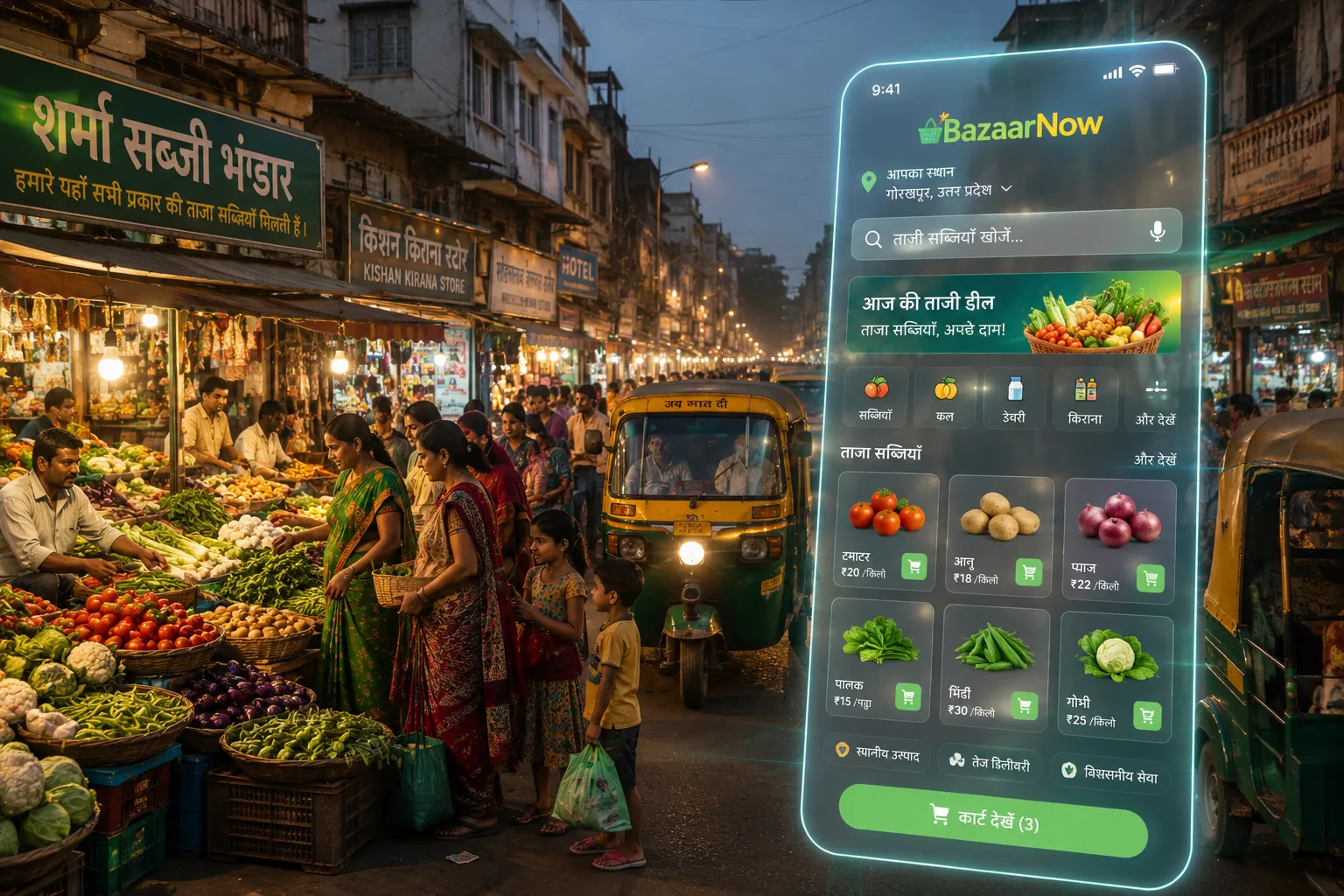
The Product: Built for Local Habits
BazaarNow's platform is designed from the ground up for Tier-2 and Tier-3 India. The company's approach is centered on three pillars:
1. Vernacular-First Experience: The platform offers a vernacular-first app experience with AI-powered local language search, catering to users with varying levels of digital literacy.
2. Local Assortment: Unlike metro players that stock national brands, BazaarNow focuses on regional brands, local assortments, and fresh fruits and vegetables that reflect the eating habits of each specific city.
3. Assisted Commerce: The platform includes an assisted commerce layer, including call-to-order support, designed for customers who prefer a more familiar shopping experience. It also operates an in-house rider management and logistics system to ensure reliable delivery.
The results are already showing promise. BazaarNow claims its first operating market has scaled to more than 1,800 orders per day per store.
The Investor Thesis: Emerging Cities Are the Next Frontier
Abhishek Mohan, Managing Director at Peak XV, articulated the investment thesis with characteristic clarity: "India's emerging cities represent one of the most important consumption opportunities of the next decade, but they need products built with a deep understanding of local habits, price points and operating realities".
"The BazaarNow team brings rare operating depth across e-commerce and quick commerce, and is approaching the category with clarity and discipline," Mohan added. "They are not simply replicating metro-first models across India. They are building a commerce experience that is local, simple, efficient and deeply relevant to how millions of Indian households already buy".
The fundraise comes at a time when quick-commerce companies are increasingly looking beyond major metropolitan markets for growth. While players such as Blinkit, Zepto, Instamart, and Flipkart Minutes have rapidly expanded their dark store networks across large cities, smaller towns remain relatively underpenetrated.
BazaarNow faces competition in this space from platforms such as Accel-backed omnichannel grocery chain Apna Mart and Odisha's Flash Now. But the company believes its deep understanding of local habits gives it a first-mover advantage.
The Road Ahead: Expanding the 700-City Vision
Over the next 6 to 12 months, BazaarNow plans to expand into surrounding towns and nearby density clusters, deepen its assortment across groceries and daily essentials, strengthen its supply chain, and continue improving its local-language and habit-led product features.
The company launched operations in January 2026 with a specific focus on quick delivery of groceries, fruits, and vegetables to residents in Tier-2 and Tier-3 cities. With the fresh capital, it aims to accelerate that expansion significantly.
A New Chapter in India's Quick-Commerce Story
BazaarNow's ₹72 crore funding round is more than just another quick-commerce cheque. It represents a fundamental recognition that India's consumption story isn't just about the top eight cities. It's about the 700+ cities where middle-class households are increasingly connected, increasingly digital, and increasingly demanding of services that understand their local realities.
The metro-first players have built impressive businesses. But they've also built them with assumptions—about income levels, about digital literacy, about shopping habits—that don't hold true outside the top cities. BazaarNow is betting that by starting with those assumptions dismantled, it can build something more durable, more scalable, and more profitable.
As Jain put it: "BazaarNow is being built around these existing habits, not against them". In a world where most startups try to change consumer behaviour, BazaarNow is trying to serve it. And that might just be the winning strategy for the next phase of India's quick-commerce revolution.