The $65,000 Cancer Cure: Inside the Indian Lab That Is Taking on a Half‑Million‑Dollar Industry — and Winning
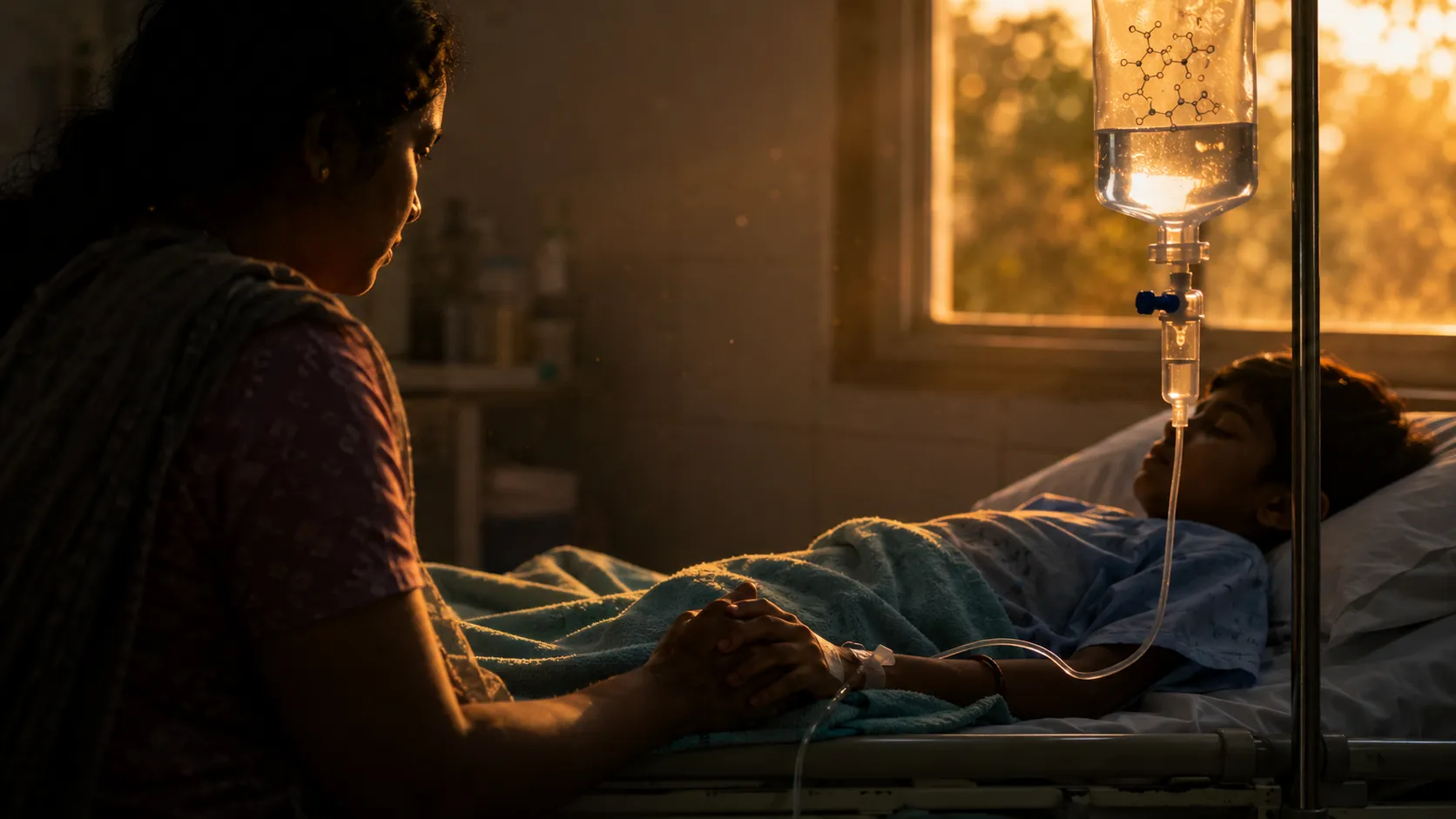
DELHI — May 21, 2026 — On a Tuesday morning in March, a child in Vellore who had exhausted every option became the first patient in India to receive a CAR‑T therapy designed in a Delhi laboratory. The treatment took less than an hour. The child went home. The cost of the infusion — the cells, the engineering, the quality control, the cold‑chain logistics — was roughly one‑eighth of what the same therapy would have cost at a major American cancer center.
The lab belonged to Cellogen Therapeutics, a startup founded in 2021 by two researchers who had spent years watching promising cancer therapies remain permanently out of reach for the patients they treated. Dr. Gaurav Kharya is a pediatric bone‑marrow transplant specialist who has spent more than a decade watching children die of blood cancers that American and European hospitals had learned to cure. Dr. Tanveer Ahmad is a cellular engineer who understood, at the molecular level, why those cures cost half a million dollars — and who believed the cost was an engineering problem, not a law of nature.
Together, they have built something that does not merely compete with the global CAR‑T industry. It undercuts it so dramatically that it threatens to rewrite the economics of one of the most expensive categories of medicine ever invented. "The dominant CAR‑T therapies globally cost between $500,000 and $700,000," Ahmad said. "We aim to bring treatment costs down to approximately $60,000 to $70,000." The math is brutal in its clarity: a 90 percent reduction in cost, achieved not by cutting corners but by rethinking the manufacturing process from first principles.
The Price of a Cure
To understand what Cellogen has accomplished, one must first understand the staggering economics of the technology it is challenging. CAR‑T therapy — chimeric antigen receptor T‑cell therapy — is one of the most significant advances in cancer treatment since chemotherapy. It works by extracting a patient's own immune cells, genetically engineering them to recognize and attack cancer, and infusing them back into the body. For certain blood cancers — acute lymphoblastic leukemia, diffuse large B‑cell lymphoma, multiple myeloma — the results can be extraordinary. Patients who had exhausted every other option walk out of the hospital in remission.
The problem is the price. The first generation of CAR‑T therapies, developed by pharmaceutical giants Novartis and Gilead, were priced at $373,000 to $475,000 for a single infusion — and that is before hospitalization, which can add another $100,000 or more. The total cost of treatment, fully loaded, routinely exceeds $600,000. For patients in the United States with good insurance, that number is terrifying. For patients in India, where per‑capita income hovers around $2,500, it is functionally meaningless. The therapy might as well not exist.
The high cost is not primarily driven by greed, although the pharmaceutical industry is not known for its restraint. It is driven by manufacturing. CAR‑T therapy is not a pill that can be mass‑produced in a factory. It is a personalized treatment — each dose is manufactured individually, from the patient's own cells, in a sterile cleanroom, over a period of weeks, by highly trained technicians using equipment that costs millions of dollars. The process is complex, delicate, and extraordinarily expensive to replicate. The companies that developed it spent billions building the manufacturing infrastructure, and they priced the product accordingly.
Cellogen's insight was that the cost structure was not inherent to the therapy. It was an artifact of how the therapy had been developed — in high‑cost American and European laboratories, for high‑cost American and European healthcare systems, using manufacturing processes optimized for those systems. A therapy designed for India, from the ground up, could look very different.
The Double‑Target Bet
Cellogen's core scientific innovation is a dual‑antigen CAR‑T platform. Conventional CAR‑T therapies are engineered to recognize a single marker on the surface of cancer cells — CD19, for instance, which is found on B‑cell leukemias and lymphomas. The approach works, but it has a known weakness: cancer cells can evolve to stop expressing that marker, a phenomenon called antigen escape. The therapy kills the cells that carry CD19, but the cells that have shed it survive and multiply. The cancer returns. This is one of the most common causes of CAR‑T treatment failure, and it has frustrated researchers for years.
Cellogen's platform is designed to recognize two markers simultaneously — a bispecific approach that the company believes will reduce the risk of antigen escape and improve durability of response. The science is more complex than single‑target CAR‑T, but the logic is straightforward: a cancer cell that wants to evade the therapy must now mutate two targets instead of one, which makes escape far less likely. "Dual‑targeting may help improve anti‑tumor activity and reduce the risk of relapse," the company's research team has written. The platform has been patented in India, and the company is working toward Phase 1 human clinical trials in collaboration with Christian Medical College, Vellore — one of India's most respected medical research institutions.
The manufacturing innovation is equally important. Cellogen has built a GMP‑compliant — Good Manufacturing Practice, the regulatory standard for pharmaceutical production — facility in Delhi that is designed from scratch for the Indian cost environment. The company uses locally sourced reagents where possible, has developed streamlined quality‑control protocols that reduce labor hours, and has structured its supply chain to minimize dependence on imported components. The details of the manufacturing process are proprietary, but the outcome is not: a CAR‑T therapy produced at roughly one‑eighth the cost of the American alternatives.
In May 2026, the company closed a ₹20 crore — approximately $2.4 million — funding round from Kotak Alternate Asset Managers through the Kotak Life Sciences Fund I. The round followed an earlier investment from Hyderabad‑based Natco Pharma, which acquired more than a 5 percent stake for ₹15 crore. The funds will support the clinical programs, the expansion of the gene‑therapy pipeline, and the strengthening of manufacturing capabilities. Beyond oncology, Cellogen is developing early‑stage programs for beta thalassemia and sickle cell disease — genetic blood disorders that affect millions of people in India and throughout the developing world.
The India Biotech Moment
Cellogen is not operating in isolation. It is part of a broader surge in Indian biotechnology that has, over the past five years, transformed the country from a generic‑drug manufacturing hub into a credible center of therapeutic innovation. India now hosts more than 11,000 biotech startups, and the government has made the sector a priority: the Department of Biotechnology's budget has grown substantially, a new Bio‑E3 policy has been introduced to accelerate biomanufacturing, and regulatory pathways for advanced therapies are being streamlined.
Pandorum Technologies, a Bengaluru‑based biotech startup, raised $18 million in February 2026 to advance its regenerative therapy for corneal blindness — a treatment that uses exosomes to stimulate scarless tissue regeneration, and that has already received Orphan Drug Designation from the U.S. Food and Drug Administration. Immuneel Therapeutics, another CAR‑T startup, has partnered with Hospital Clínic de Barcelona to bring cell therapies to Indian patients. The sector is attracting capital, talent, and regulatory attention at a pace that has surprised even optimistic observers.
What distinguishes Cellogen within this landscape is its focus on affordability as a primary design parameter. Most biotech startups — in India as elsewhere — aim to develop novel therapies and price them at whatever the market will bear. Cellogen is aiming to develop a therapy that is already known to work — CAR‑T's efficacy has been demonstrated in thousands of patients globally — and make it radically cheaper. The approach is less glamorous than inventing a new molecule. It is also more urgently needed.

The Road Ahead
Cellogen's path to widespread deployment is not short, and it is not guaranteed. The company must complete Phase 1 clinical trials, demonstrating safety and early efficacy in Indian patients. It must then navigate the regulatory approval process with the Central Drugs Standard Control Organization, India's pharmaceutical regulator. It must scale its manufacturing capacity to serve a country of 1.4 billion people, where the incidence of blood cancers is rising and access to advanced therapies is virtually nonexistent outside of a handful of elite urban hospitals.
The competitive landscape is intensifying. Immuneel Therapeutics, backed by some of the same investors who have funded CAR‑T development globally, is pursuing a parallel path. Global pharmaceutical companies, including Novartis and Gilead, are exploring ways to bring their CAR‑T therapies to India at lower price points — though the discounts they can offer are constrained by the cost structures of their existing manufacturing networks. And the regulatory environment for advanced therapies in India, while improving, remains less predictable than in the United States or Europe.
But the structural forces are powerful and aligned. India's disease burden is enormous. Its healthcare system is underfunded and overstretched. Its population is young but aging, and cancer incidence rises with age. The country cannot afford American‑priced cancer therapies, and it cannot wait for American companies to decide that the Indian market is worth serving. The only path to universal access is to build the therapies at Indian cost structures, using Indian manufacturing, for Indian patients. Cellogen is attempting to do exactly that.
The Larger Meaning
Sometime in the next eighteen months, if the clinical trials proceed as planned and the regulatory approvals arrive on schedule, a child in Chennai or Kolkata or Guwahati will receive a CAR‑T infusion that was designed in Delhi, manufactured in Delhi, and priced at a level that an Indian family can afford. The child will go home. The cancer, if the therapy works as it has worked in thousands of patients in Boston and Houston and London, will be gone.
That moment — if it arrives — will be the culmination of years of painstaking work by Kharya, Ahmad, and the team they have assembled. It will also be a signal. A signal that the geography of medical innovation is shifting, that the cost structures that have kept advanced therapies out of reach for most of the world are not immutable, and that the most important pharmaceutical innovations of the next decade may not come from the glass towers of Cambridge, Massachusetts, but from the laboratories of Delhi and Bengaluru and Hyderabad, where researchers who have watched too many patients die of curable diseases are building the cures themselves.
Cancer does not care about geography. It does not adjust its price to the income of its host. It kills just as efficiently in a village in Bihar as it does in a suburb of Boston. The only difference has been the availability of treatment. Cellogen is trying to close that gap — not with charity, but with engineering, built on the conviction that a therapy that costs half a million dollars to manufacture has not been optimized. It has simply never been challenged.


