The 60‑Second Empire: How India's Microdrama Gold Rush Is Creating a New Generation of Celebrity Entrepreneurs—And Reshaping the Economics of Entertainment Itself
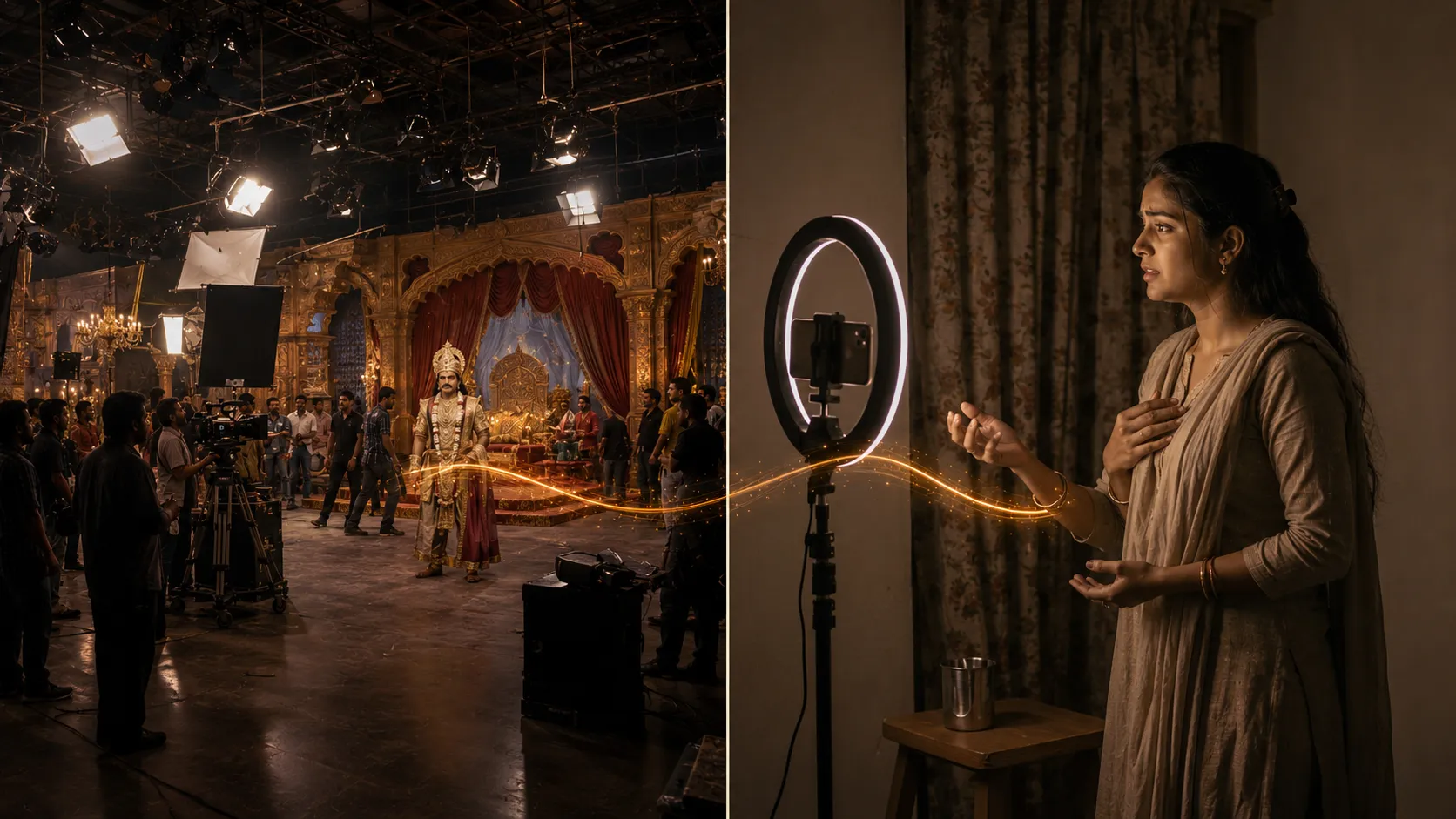
MUMBAI — May 29, 2026 — Sometime in the spring of 2025, a 23‑year‑old from Indore with no film training, no industry connections, and no budget beyond a smartphone and a ring light uploaded a 90‑second video to a platform called Jio Tadka. The video—a melodramatic confrontation between a young woman and her mother‑in‑law, performed in Hindi with a plot twist that would make a television writer blush—was watched 4.7 million times in its first 48 hours. The platform paid her ₹18,000 for the performance, a fraction of what a single day's shooting on a television serial would earn. She uploaded another video the following day. And the day after that. Within six months, she was earning ₹3 lakh a month, supporting her entire family, and fielding calls from talent agencies that had once ignored her existence.
The microdrama economy—60‑to‑120‑second scripted videos, produced for short‑form platforms like Jio Tadka, Amazon Fatafat, and a growing ecosystem of regional and national players—has become, in the space of eighteen months, one of the fastest‑growing segments of the Indian entertainment industry. The category, which barely existed in 2024, is now valued at approximately ₹2,878 crore and is projected to exceed ₹8,000 crore by 2030. It has created a new class of celebrity—the microdrama star, whose fame is measured not in box‑office returns but in views, shares, and the algorithmic favour of the platforms that distribute their work. And it has begun to attract the attention of the traditional entertainment industry, which is watching with a mixture of fascination and alarm as a generation of consumers abandons the half‑hour television serial for the sixty‑second melodrama on their phone.
"The microdrama is the most disruptive format in Indian entertainment since the advent of television. It costs almost nothing to produce. It reaches audiences that the traditional industry cannot touch. It creates stars faster than any talent pipeline in history. And the platforms that control it are building a content ecosystem that the studios and networks are only beginning to understand." — Digital‑media analyst, speaking anonymously to TIGI
The Platform Trinity
The Indian microdrama market is dominated by three major platforms, each of which has adopted a fundamentally different strategy for capturing the emerging audience.
Jio Tadka, the Reliance‑backed platform that launched in early 2025, is the most aggressive player in the market. The platform operates on a revenue‑share model: it commissions microdramas from a network of independent creators and production houses, pays a base fee for each episode, and shares a portion of the advertising revenue with the creators whose content performs best. The Jio Tadka model is designed to create a content flywheel: the platform invests heavily in the early stages to attract creators, the creators produce a high volume of content, the content attracts viewers, the viewers attract advertisers, and the advertising revenue is reinvested in commissioning more content. The model is not yet profitable, but it is scaling rapidly, and the platform's association with the Reliance ecosystem—Jio's telecom network, JioHotstar's streaming platform, and Reliance Retail's distribution infrastructure—gives it a structural advantage that its competitors cannot match.
Amazon Fatafat, which launched in late 2025 as a companion to Amazon's broader content strategy in India, has taken a different approach. The platform is built around Amazon's e‑commerce ecosystem: the microdramas that perform well on Fatafat are rewarded not just with revenue share, but with access to Amazon's merchandising infrastructure—the ability to sell products directly to the audience that the microdrama attracts. The Amazon model is designed to close the loop between content and commerce: a microdrama that features a particular brand of cosmetics, or a particular style of clothing, can generate sales as well as views. The model is still experimental, but it points toward a future in which the microdrama is not merely an entertainment product, but a commerce platform—a way of selling things to an audience that is increasingly resistant to traditional advertising.
The third category of platform is the independent, regional‑language microdrama network—a growing ecosystem of smaller players that are focused on specific linguistic markets and that are building audiences that the national platforms have not yet reached. These platforms are typically bootstrapped, operated by small teams, and sustained by advertising revenue that is modest but growing. They represent the frontier of the microdrama economy—the segment of the market that is least visible to the venture‑capital and corporate‑strategy communities, and that may ultimately be the most transformative, because they are building audiences in the Tier‑3 and Tier‑4 towns that the national platforms are still struggling to reach.
The Celebrity Pipeline
The most significant dimension of the microdrama economy is not the platforms. It is the talent pipeline. The microdrama has become the most accessible entry point into the Indian entertainment industry—a pathway that requires no connections, no training, no capital, and no permission from the gatekeepers who have historically controlled access to the film and television industries.
The microdrama star who builds a following on Jio Tadka or Amazon Fatafat can parlay that following into a career that extends well beyond the platform that launched them. The talent agencies that once scouted exclusively at film schools and theatre festivals are now scouting on microdrama platforms, signing the creators whose content performs best to representation contracts that can lead to television serials, web series, and, in a growing number of cases, film roles. The microdrama has become the new audition—a way for unknown talent to demonstrate their skills to an audience of millions, and for the industry's gatekeepers to discover the next generation of stars without ever leaving their offices.
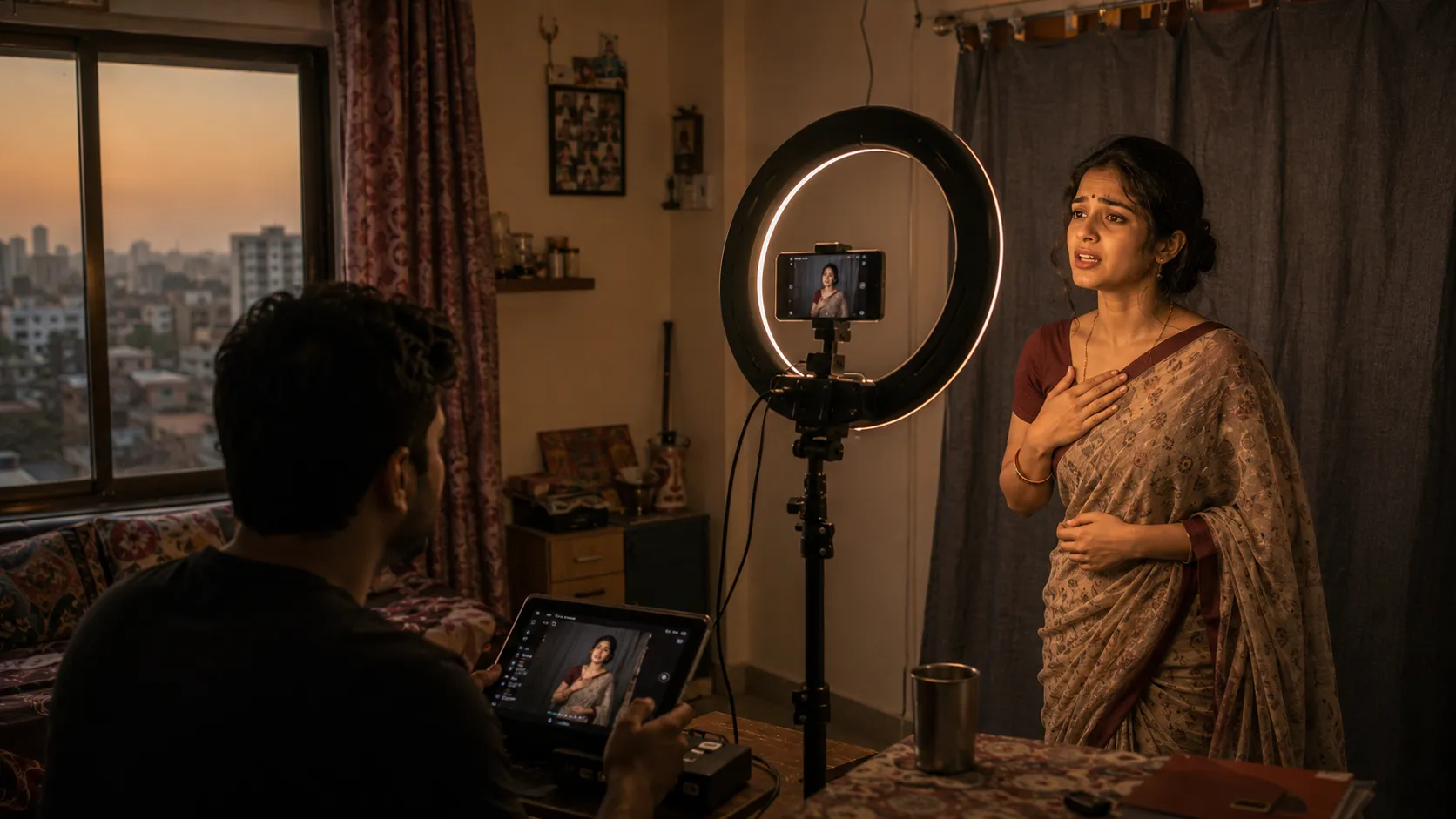
The celebrity pipeline is particularly significant for women. The microdrama economy is dominated by female creators—young women from small towns and modest backgrounds who have found, in the short‑form format, a medium that does not require them to navigate the male‑dominated power structures of the traditional film and television industries. The microdrama star who produces her own content, on her own terms, from her own home, is not dependent on a producer, a director, or a casting agent to give her a chance. She can create her own chance, and the audience's response—measured in views, shares, and the algorithmic favour of the platform—determines her success. The microdrama has become, for a generation of Indian women, a tool of economic and creative empowerment—a way of building a career that the traditional industry would never have allowed them to build.
The Bollywood establishment has begun to take notice. Several major studios have launched their own microdrama divisions, producing short‑form content that serves as a marketing tool for their larger releases and as a talent‑development pipeline for their future projects. Dharma Productions has a dedicated microdrama team that produces content for Jio Tadka. YRF has partnered with Amazon Fatafat on a series of branded microdramas tied to the Dhurandhar franchise. The studios that once dismissed the short‑form format as a trivial distraction are now treating it as a strategic imperative—a way of reaching the audience that has abandoned television and that is increasingly resistant to traditional film marketing.
The Economics of the 60‑Second Format
The most important variable in the microdrama economy is the unit economics of the content itself. The microdrama is dramatically cheaper to produce than any other format in the Indian entertainment industry. A 90‑second episode can be shot in an hour, edited in an afternoon, and uploaded the same day. The production cost—including the creator's fee, the equipment, and the post‑production—rarely exceeds ₹5,000 per episode. The platform that commissions a series of 30 episodes is investing approximately ₹1.5 lakh—roughly the cost of a single day's shooting on a traditional television serial. The risk is minimal, and the potential return—a viral hit that generates tens of millions of views and hundreds of thousands of rupees in advertising revenue—is substantial.
The economics of the microdrama have created a content ecosystem that is more meritocratic, more entrepreneurial, and more volatile than anything the traditional entertainment industry has ever produced. The creator who produces a hit can earn more in a month than a television actor earns in a year. The creator who produces a flop loses almost nothing. The feedback loop between creation and audience response is nearly instantaneous, and the platforms' algorithms amplify the content that performs best, creating a winner‑take‑most dynamic that rewards the most skilled and most prolific creators. The microdrama economy is not for everyone. But for the creators who can master the format—who can write, perform, and produce content that captures the audience's attention in the first three seconds and holds it for the next fifty‑seven—the rewards are extraordinary.
The traditional entertainment industry is watching this new economy with a mixture of envy and terror. The microdrama platform that can produce 10,000 episodes a month, at a cost of ₹1.5 lakh per series, is competing for the same audience attention that the television networks and film studios are spending crores to capture. The microdrama star who earns ₹3 lakh a month from a smartphone and a ring light is competing for the same consumer's entertainment budget as the Bollywood blockbuster that costs ₹300 crore to produce. The competition is not fair, and the incumbents know it. The microdrama is the most disruptive force in the Indian entertainment industry since the advent of streaming—and its impact is only beginning to be felt.
The Celebrity Migration
The most significant development in the microdrama economy over the past six months has been the migration of established celebrities into the format. The Bollywood star who once would not have been seen dead on a short‑form video platform is now commissioning microdramas of their own—using the format to build their personal brand, to connect with younger audiences, and to experiment with creative ideas that would not justify a full‑scale film or television production.
The celebrity migration is being driven by the same structural forces that are reshaping the rest of the entertainment industry: the fragmentation of the audience, the decline of traditional media, and the growing importance of digital platforms as the primary channel for audience engagement. The star who wants to maintain their relevance in an era when the theatrical box office is unpredictable, when the television serial is in decline, and when the streaming platform's algorithm determines who gets seen and who does not—that star must go where the audience is. And the audience, increasingly, is on the microdrama platforms.
The celebrity microdrama is also a commercial enterprise in its own right. The star who commissions a series of branded microdramas—produced in partnership with a platform, featuring product placements, and designed to drive traffic to an e‑commerce store or a streaming release—is creating a new revenue stream that is independent of their traditional film and endorsement income. The celebrity who can produce a microdrama series that generates 100 million views is not merely building their brand. They are building a business—one that is more directly connected to the audience, and more responsive to the audience's preferences, than any film or television project can be.
The celebrity migration is still in its early stages, and the stars who are embracing the microdrama format are the ones who are most attuned to the structural shifts that are reshaping the industry. The stars who are not—who continue to treat the short‑form format as a trivial distraction, unworthy of their attention—are the ones who will find themselves increasingly disconnected from the audience that determines their commercial value. The microdrama is not merely a format. It is the future of audience engagement—and the celebrities who understand that are the ones who will thrive in the years to come.
What This Signals
The microdrama gold rush is not primarily a story about short‑form video. It is a story about the structural transformation of the Indian entertainment industry—a shift from a model in which a small number of large institutions controlled the production, distribution, and monetisation of content, to a model in which a large number of small creators control their own production, their own distribution, and their own monetisation.
The shift is not complete, and it will never be universal. The traditional film and television industries will continue to produce the largest, most expensive, and most culturally significant content for the foreseeable future. But the microdrama economy has created a parallel universe—a content ecosystem that operates on completely different economics, that serves a completely different audience, and that is growing faster than the traditional industry can comprehend. The platforms that control that ecosystem—Jio Tadka, Amazon Fatafat, and the regional networks that are emerging across the country—are building a new infrastructure for Indian entertainment. The creators who are building their careers on those platforms are building a new model of celebrity. And the audience that is consuming their content is building a new relationship with the stories that shape their lives.
The microdrama is not a fad. It is the leading edge of a transformation that will reshape the Indian entertainment industry over the next decade—and the people who are building it today, from their apartments in Indore and their makeshift studios in Tier‑3 towns, are the people who will define what Indian entertainment becomes tomorrow.


