
The Post That Broke the Internet
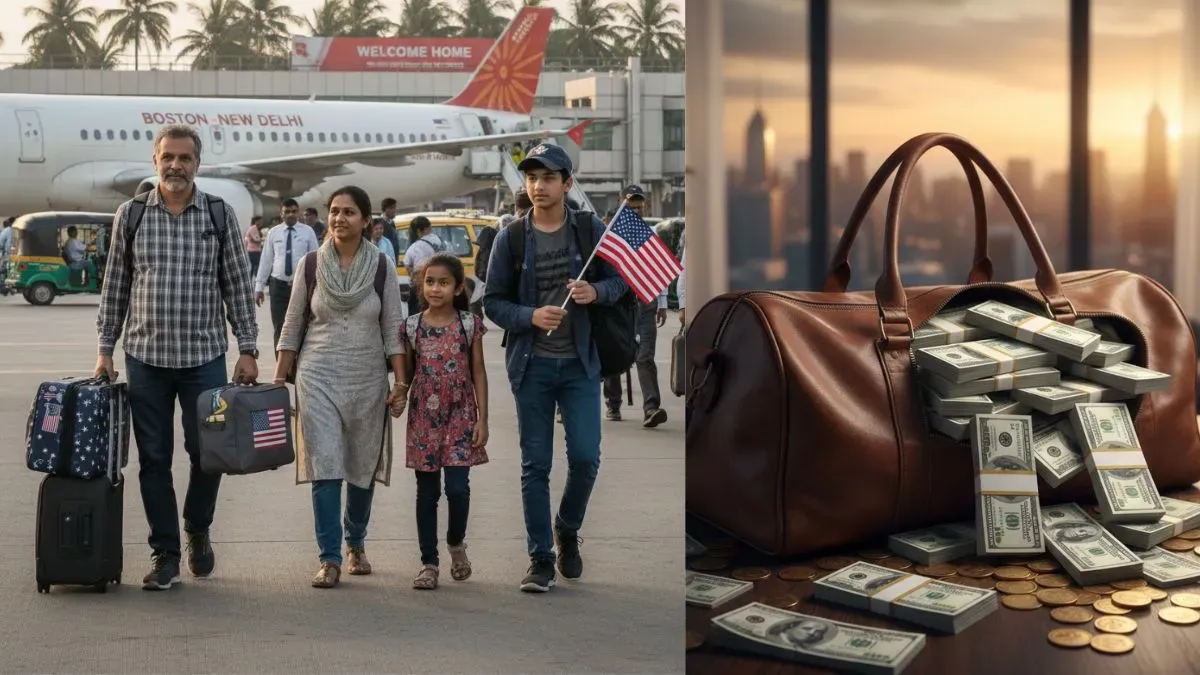
Picture this. You've spent 23 years building a life in America. You have a $6 million (₹56 crore) investment portfolio. You've achieved the American Dream. And then, one day, you decide to give it all up and move back to India.
That's exactly what one Indian-origin man did. And his reason wasn't money. It was something far more profound—and far more unsettling.
On June 23, 2026, a Reddit post titled "After working in the United States for 23 years, I'm getting ready to return to India" went viral, sparking a fierce debate about the true cost of the American Dream.
"Even after all these years in the U.S., I still occasionally feel like an outsider," he wrote. "There is a subtle but persistent sense of distance that is hard to describe. No matter what you achieve, it sometimes feels like you are not fully part of the place."
In an instant, his words struck a chord with millions of NRIs across the globe. The post wasn't just about one man's personal dilemma—it was about the collective experience of an entire generation of Indian immigrants who have spent decades chasing a dream that, for many, still feels just out of reach.
Chapter 1: The Numbers That Tell the Story
Let's start with the hard numbers, because they're staggering.
Metric | Value |
|---|---|
Years in the US | 23 years |
Investment Portfolio | $6 million (₹56 crore) |
Location | Florida |
Status | Actively planning return to India |
This isn't a story of failure. This is a story of someone who has achieved extraordinary financial success—and still feels like he doesn't belong.
The man, who chose to remain anonymous, detailed his dilemma in a post that quickly went viral. He spoke of the "subtle but persistent sense of distance" that has haunted him throughout his two decades in America. Despite his wealth, his career, and his achievements, he has never felt fully accepted.
"No matter what you achieve, it sometimes feels like you are not fully part of the place," he wrote.
Chapter 2: The Internet Reacts – A Nation Divided
The post triggered an avalanche of reactions, with opinions sharply divided.
Some supported his decision, pointing out that with $6 million, life in India could be extremely comfortable. The logic is simple: $6 million in India goes much further than $6 million in the US. A luxurious lifestyle, world-class healthcare, and the comfort of being surrounded by family and culture are powerful draws.
Others urged caution, advising him to take a long trip to India first before making a permanent move. They warned that reverse culture shock is real—that the India he left 23 years ago is not the India of today. The infrastructure may have improved, but the chaos, the bureaucracy, and the day-to-day challenges of life in India can be jarring for someone who has spent decades in the West.
Some questioned the timing. With the US presidential election approaching and anti-immigrant rhetoric on the rise, many speculated that political factors might be influencing his decision. Others pointed to the rising anti-India and anti-Hindu hostility in parts of the US—particularly in Texas, which has become ground zero for such incidents.
Chapter 3: The Dark Side of the American Dream
The man's confession comes at a time when the Indian diaspora is facing unprecedented challenges in the US.
Just days before his post went viral, reports emerged from Texas of a disturbing surge in anti-India, anti-Hindu hostility. A flag torn in broad daylight. A temple mocked online. A Ganesha idol removed on a realtor's advice. A crowd cheering "Go back to India" outside a Texas city hall.
Frisco, Texas—one of the most prosperous Indian-American communities in the US—has become the epicentre of this frightening trend. MAGA-aligned influencers have been framing Indian immigrants as "economic invaders" and Hindu temples as "symbols of foreign takeover".
For many NRIs, the American Dream is no longer what it used to be. The promise of opportunity and acceptance is being eroded by a wave of xenophobia and hate. And for some, like the man with the $6 million portfolio, the question is no longer "Can I make it in America?" but "Is it worth it?"
Chapter 4: The Qatar Tragedy – When Diaspora Dreams Turn Deadly
The same day, another tragedy struck the Indian diaspora. Twelve Indians were among 13 people killed in an explosion at a gas processing facility in Qatar's Ras Laffan Industrial City.
External Affairs Minister S. Jaishankar expressed deep sorrow over the loss of lives and said the Indian embassy was closely monitoring the situation and extending assistance to affected citizens.
"Qatari authorities have confirmed that 12 Indian nationals have unfortunately passed away in the Ras Laffan incident," officials said.
The tragedy serves as a stark reminder of the risks that Indian workers face abroad. For every successful NRI with a $6 million portfolio, there are countless others working in dangerous conditions, far from home, sending money back to their families. The diaspora experience is not monolithic—it is a spectrum of dreams, sacrifices, and sometimes, unimaginable loss.

Chapter 5: The Bigger Picture – Why NRIs Are Reconsidering
The man's decision to return to India is part of a larger trend. NRIs are increasingly reconsidering their place in the West.
The Green Card Backlog: For Indian professionals, the wait for a US Green Card can exceed 150 years. The uncertainty and limbo take a toll on mental health and family planning.
The Rising Cost of Living: While $6 million is a substantial sum, the cost of living in the US has skyrocketed. Healthcare, education, and housing are increasingly unaffordable.
The Cultural Distance: As the man put it, there is a "subtle but persistent sense of distance" that never quite goes away. No matter how successful you become, you are always seen as "other."
The Family Connection: For many NRIs, aging parents in India are a powerful draw. The desire to be close to family, to care for aging parents, and to give children a connection to their roots is a compelling reason to return.
The Rise of India: India's economy is booming. The startup ecosystem is thriving. The quality of life in Indian cities has improved dramatically. For many, the India they left is no longer the India they would be returning to.
Chapter 6: The Financial Math – Why $6 Million Goes Further in India
Let's do the math. $6 million in India is approximately ₹56 crore. Here's what that buys:
A Luxury Home: A sprawling apartment in Mumbai's Worli or a villa in Bengaluru's upscale neighborhoods—fully paid for.
World-Class Healthcare: Access to India's best hospitals, without the astronomical costs of US healthcare.
Education: Top-tier international schools and universities, without the burden of US student loans.
Lifestyle: Domestic help, drivers, and a standard of living that would be impossible to maintain in the US on the same budget.
Investment Income: Even a conservative 5% annual return on ₹56 crore yields ₹2.8 crore per year—enough to live luxuriously without touching the principal.
For the man with the $6 million portfolio, the financial case for returning to India is compelling.
Chapter 7: The Psychological Cost – What Money Can't Buy
But the man's decision isn't just about money. It's about belonging.
"There is a subtle but persistent sense of distance that is hard to describe," he wrote. That distance isn't about language or culture—it's about acceptance. It's about being seen as "Indian" first and "American" second, no matter how many years you've lived in the country.
For many NRIs, this sense of distance is a constant companion. It's the feeling of being an outsider at your child's school play. It's the microaggressions at work. It's the casual racism that never quite goes away. It's the knowledge that, no matter how successful you become, you will never fully belong.
"No matter what you achieve, it sometimes feels like you are not fully part of the place," he wrote.
That feeling is something money cannot buy. And for some, it's reason enough to leave.
Chapter 8: What This Means for India
The return of successful NRIs like the man with the $6 million portfolio is a massive opportunity for India.
These returnees bring with them capital, expertise, global networks, and a deep understanding of international markets. They are perfectly positioned to invest in India's startup ecosystem, mentor young entrepreneurs, and drive innovation.
The Indian government has recognized this opportunity. Initiatives like the Overseas Citizen of India (OCI) card, tax incentives for returning NRIs, and the push to make India a global manufacturing hub are all designed to attract the diaspora back home.
But the challenge is real. Reverse culture shock, bureaucratic hurdles, and the day-to-day chaos of life in India can be overwhelming for those who have spent decades in the West. The government and private sector must work together to make the transition as smooth as possible.
The Final Verdict: The $6 Million Question
June 23, 2026, will be remembered as the day one man's personal dilemma sparked a national conversation about the true cost of the American Dream.
The man with the $6 million portfolio isn't a failure. He's a success story—by any objective measure. But his story reveals that success isn't just about money. It's about belonging. It's about acceptance. It's about feeling like you are part of the place you call home.
"Even after all these years in the U.S., I still occasionally feel like an outsider," he wrote.
For millions of NRIs around the world, those words resonate deeply. They are the unspoken truth of the diaspora experience—the quiet ache of being caught between two worlds, belonging fully to neither.
The question isn't whether he should return to India. The question is: why do so many successful NRIs feel they have to make that choice at all?
"Even after all these years in the U.S., I still occasionally feel like an outsider. There is a subtle but persistent sense of distance that is hard to describe. No matter what you achieve, it sometimes feels like you are not fully part of the place." – Anonymous NRI


