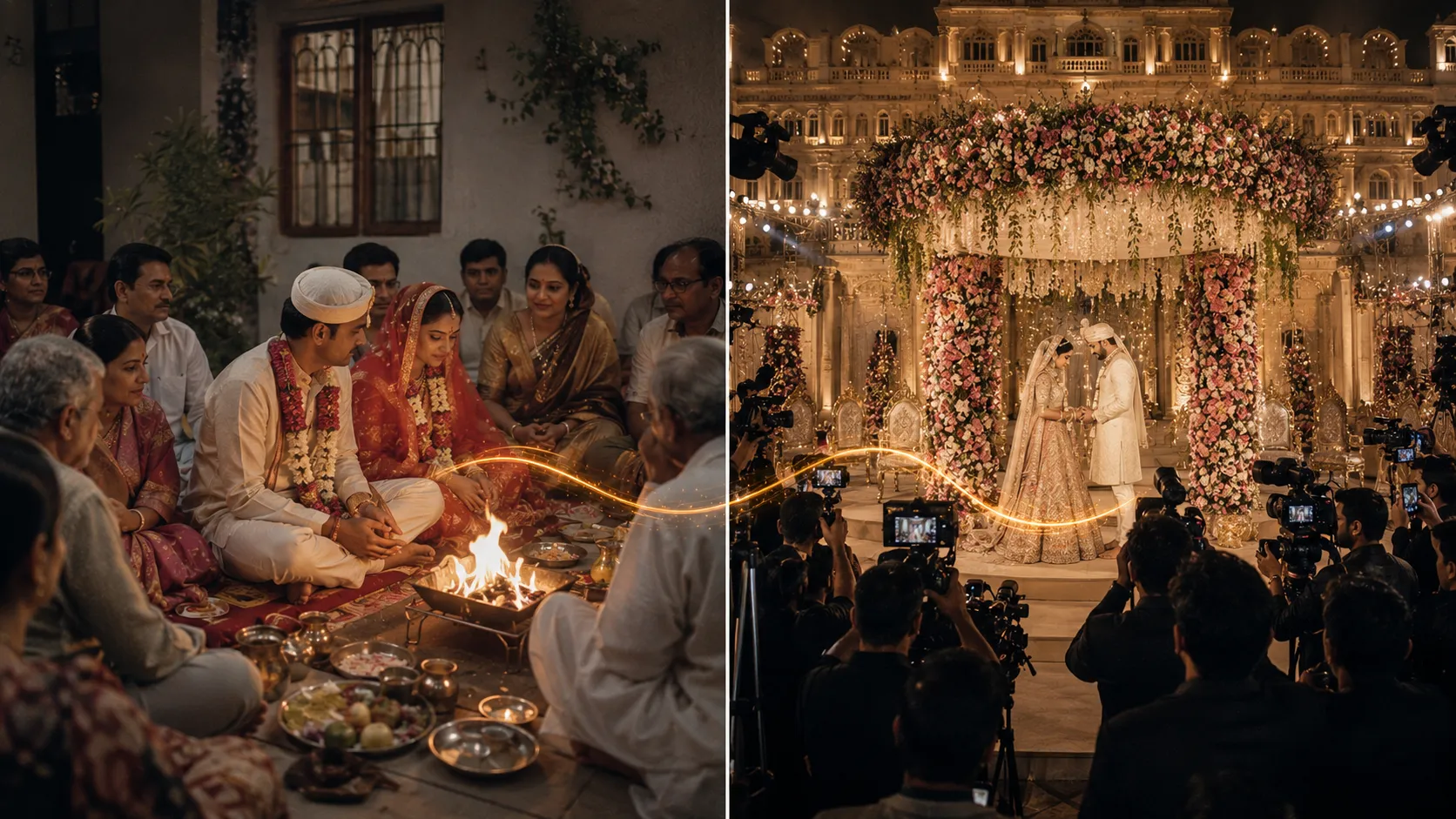
The ₹500 Crore Wedding: How Bollywood's Marriage Industrial Complex Became India's Most Lucrative Unregulated Economy
MUMBAI — May 29, 2026 — On a December evening in 2025, a Bollywood actor who had appeared in two moderately successful films that year married his longtime partner at a heritage palace in Rajasthan. The wedding was attended by approximately 400 guests, lasted three days, and featured performances by two of the most famous playback singers in the country. The bride's lehenga, designed by a leading couturier, cost approximately ₹75 lakh. The groom's sherwani, by a different designer, cost ₹35 lakh. The floral arrangements, imported from the Netherlands and Thailand, cost ₹2 crore. The catering, by a celebrity chef, cost ₹3 crore. The wedding photographers—a team of twelve, led by the most sought‑after wedding photographer in the country—charged ₹1.5 crore for a three‑day package that included a cinematic highlight film, a thousand edited stills, and exclusive rights to publish the images on their social‑media channels. The total cost of the wedding was estimated at approximately ₹28 crore. None of it was paid for by the bride and groom. The designer who made the bride's lehenga provided it for free in exchange for the publicity generated by the wedding's media coverage—coverage that the designer's PR team had been coordinating with the couple's PR team for months. The playback singers performed without charge, their fees covered by the record label that had released the couple's most recent film soundtrack. The floral designer, the caterer, the photographer—all of them provided their services at a significant discount, or entirely free, in exchange for the promotional value of being associated with a celebrity wedding that would be covered by every major media outlet in the country. The couple emerged from their wedding not merely married, but profitable—having monetised an event that, for ordinary families, is the single largest expense of their lives. The celebrity‑wedding industrial complex is not new. It has been building for decades, as the Indian media's appetite for star‑wedding coverage has grown and the brands that serve the wedding industry have recognised the marketing value of celebrity association. But the scale of the phenomenon has expanded dramatically over the past five years, driven by the explosive growth of social media, the professionalisation of the celebrity‑PR ecosystem, and the entry of global luxury brands into the Indian wedding market. The celebrity wedding of 2026 is not merely a personal celebration. It is a commercial enterprise—a carefully orchestrated marketing event in which every element, from the flowers to the photographs, is designed to generate value for the brands that participate in it. And the couple at the centre of it all is not merely getting married. They are building a business.
"The celebrity wedding is the Super Bowl of the Indian marketing industry. It attracts more attention, generates more engagement, and delivers more brand value than any other single event. The couple who understand this—who treat their wedding as a platform rather than a party—can earn more from their marriage than they do from their films." — Brand strategist, speaking anonymously to TIGI
The Vendor Economy
The celebrity‑wedding industrial complex is not merely a phenomenon of the rich and famous. It is a vast, distributed economy of vendors—designers, photographers, caterers, florists, makeup artists, event planners, entertainers—whose livelihoods depend on the celebrity‑wedding cycle. The wedding that costs ₹28 crore to produce generates work for hundreds of people, from the embroidery artisans who hand‑stitch the bride's lehenga to the lighting technicians who illuminate the sangeet stage. The celebrity wedding is, in this sense, an economic engine—an event that concentrates an extraordinary amount of spending in a short period and that sustains an ecosystem of businesses that would not exist without it. The vendor economy is structured around a hierarchy of access. At the top are the "A‑list" vendors—the designers, photographers, and event planners whose names are as well‑known as the celebrities they serve. These vendors can command premium prices for their services—₹1 crore or more for a wedding‑photography package, ₹75 lakh for a bridal lehenga—because their association with celebrity clients is the foundation of their brand. The A‑list vendor who dresses a Bollywood bride is not merely selling a garment. They are selling the association—the Instagram posts, the magazine covers, the cultural cachet that comes from being the chosen designer of the most famous people in the country. Below the A‑list are the "B‑list" vendors—the small and medium‑sized businesses that provide the labour, the materials, and the logistics that make the celebrity wedding possible. The embroidery artisan who spends six months hand‑stitching a bridal lehenga is paid a fraction of the garment's final price. The lighting technician who works eighteen‑hour days through the wedding weekend earns a daily wage that is modest by any standard. The celebrity‑wedding economy is, like every luxury economy, built on a pyramid of labour—a pyramid in which the value created at the base is captured primarily by the brands at the top, and by the celebrity couple whose name generates the attention that drives the entire enterprise. The vendor economy is also highly seasonal. The Indian wedding season—roughly October through March—is a period of intense, concentrated activity, during which the A‑list vendors work virtually non‑stop and the B‑list vendors are stretched to their limits. The off‑season is a period of relative inactivity, during which the same vendors must manage their cash flows, retain their staff, and prepare for the next cycle. The seasonal nature of the wedding economy creates a structural precarity for the vendors who depend on it—a precarity that is invisible to the consumers of the celebrity‑wedding spectacle, but that defines the lives of the people who produce it.
The Monetisation Machine
The most sophisticated dimension of the celebrity‑wedding industrial complex is the monetisation strategy that surrounds it. The celebrity couple who approach their wedding as a business opportunity can generate revenue from multiple sources, each of which is calibrated to the scale and the reach of the event. The first revenue stream is the direct sponsorship. The couple who sell the exclusive rights to their wedding photographs to a magazine, or to a digital platform, can earn between ₹5 crore and ₹20 crore depending on the scale of the event and the star power of the couple. The magazine that pays for the rights is not merely buying photographs. It is buying the attention of the audience that will consume them—an audience that can be monetised through advertising, subscriptions, and brand partnerships. The sponsorship model is the most established revenue stream in the celebrity‑wedding economy, and it has been practised by Bollywood stars for decades. The second revenue stream is the vendor partnership. The couple who select a particular designer, or a particular photographer, or a particular caterer—and who grant that vendor the exclusive right to publicise their participation in the wedding—can negotiate a significant discount, or a complete waiver, of the vendor's fee. The vendor who provides their services for free is not being charitable. They are making a marketing investment, and the return on that investment—measured in media impressions, social‑media engagement, and brand awareness—can substantially exceed the cost of the services they have provided. The vendor partnership model is less visible than the direct‑sponsorship model, but it is equally significant, and the celebrity couple who understand it can reduce the cost of their wedding to near‑zero. The third revenue stream is the content‑licensing model. The couple who produce a documentary, a reality series, or a social‑media content package based on their wedding can license that content to a streaming platform for a fee that can range from ₹3 crore to ₹15 crore depending on the couple's star power and the platform's need for content. The content‑licensing model is the newest and fastest‑growing revenue stream in the celebrity‑wedding economy, driven by the streaming platforms' insatiable appetite for original content and their willingness to pay for access to the celebrity audience. The fourth revenue stream is the affiliate‑commerce model. The couple who tag the designers, the jewellers, the caterers, and the venues that participate in their wedding—and who share affiliate links to those vendors' products and services—can earn a commission on every sale that results from their posts. The affiliate‑commerce model is still in its early stages, but it points toward a future in which the celebrity wedding is not merely a marketing platform for brands, but a direct‑sales channel—a way of converting the audience's attention into transactions in real time.
The Privacy Paradox
The most uncomfortable dimension of the celebrity‑wedding industrial complex is the privacy paradox at its core. The celebrity wedding is simultaneously the most public and the most private event in the life of a famous person—a ceremony that is, by its nature, intimate and personal, and that is, by its commercial structure, a product designed for public consumption. The couple who sell their wedding photographs to a magazine, or who license their wedding content to a streaming platform, are making a decision that cannot be unmade. The images and videos of their most intimate moments—the vows, the tears, the private exchanges that would, in any other context, be shared only with family and close friends—become permanent public property, available to anyone with an internet connection, forever. The privacy that the couple surrender in exchange for the commercial value of their wedding is a cost that cannot be calculated in rupees. It is a cost that is borne not just by the couple, but by their families, their friends, and, in some cases, their children, who will grow up in a world where the most intimate moments of their parents' lives are available for public consumption. The privacy paradox has become more acute in the social‑media era. The celebrity couple who once could have controlled the distribution of their wedding images through a single magazine deal now face a much more complex environment—an environment in which every guest has a smartphone, every moment is captured from multiple angles, and the boundary between what is public and what is private is impossible to maintain. The couple who attempt to enforce a "no‑phone" policy at their wedding are fighting a losing battle against the combined forces of technology and human nature. The images will leak. The videos will circulate. The privacy that the couple might have hoped to preserve will be eroded, regardless of the commercial arrangements they have made. The most sophisticated celebrities have responded to the privacy paradox by embracing it. The couple who produce their own content, on their own terms, and who release it through their own channels, can retain a degree of control over the narrative—even as they surrender the privacy that the narrative requires. The couple who treat their wedding as a content‑production exercise, rather than a private ceremony, can approach the event with the same creative and commercial discipline that they bring to their film work. The wedding is not a departure from their career. It is an extension of it—a new format, a new platform, a new way of monetising the fame that they have spent their lives building.
The Second‑Tier Aspiration
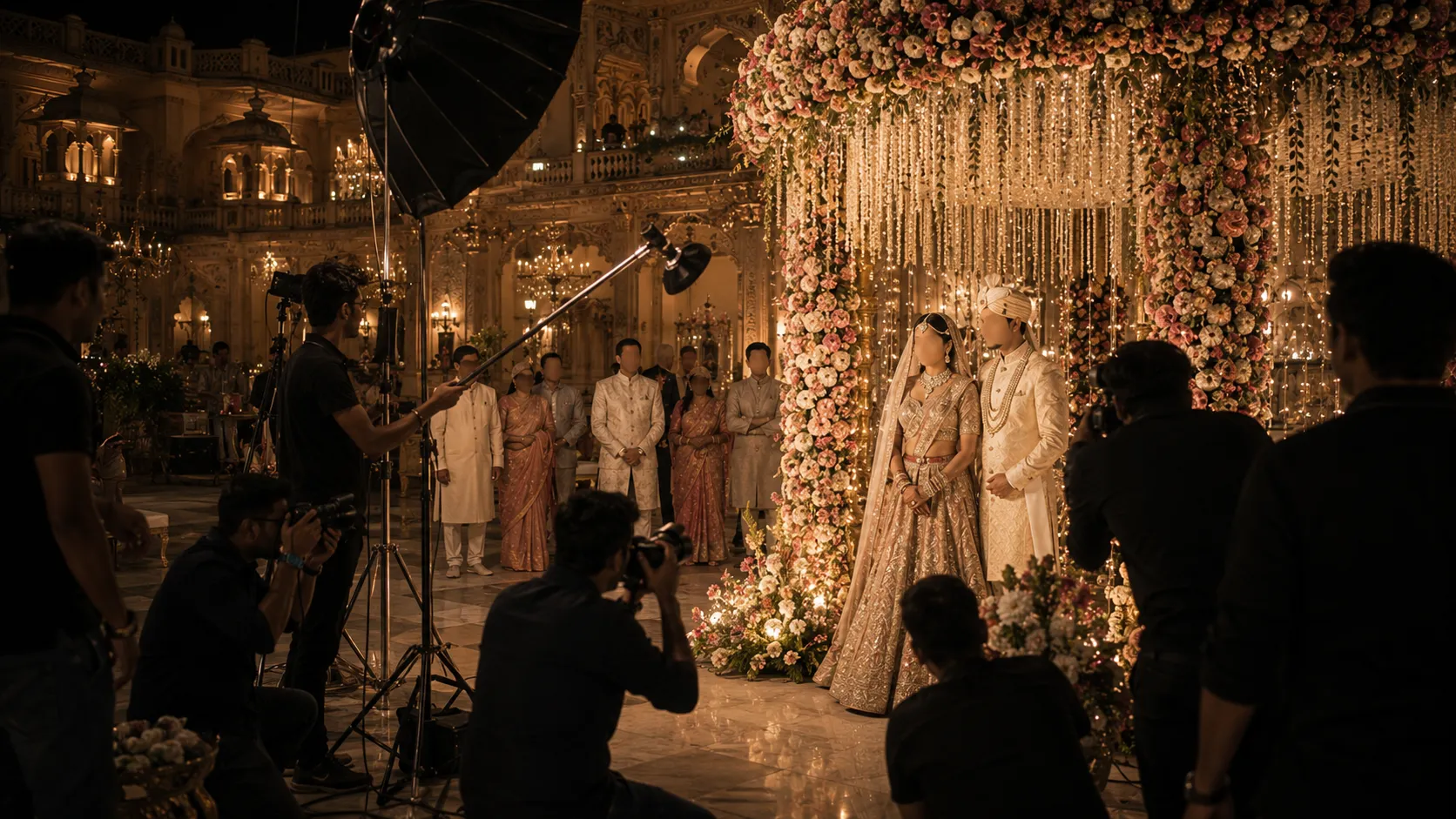
The most powerful engine of the celebrity‑wedding economy is not the celebrity couple themselves. It is the aspirational consumer—the millions of ordinary Indians who consume celebrity‑wedding content, who follow the designers and photographers on Instagram, and who bring those images to their own wedding planners with a simple instruction: "Make mine look like that." The celebrity wedding sets the aesthetic standard for an entire generation of Indian weddings. The floral installations that debut at a Bollywood star's reception become, within months, the most requested designs at wedding‑planning agencies across the country. The photographer whose work appears on the cover of a bridal magazine after shooting a celebrity wedding sees their booking rate triple, and their prices rise accordingly. The designer whose lehenga is worn by a famous bride becomes, overnight, the most sought‑after name in the bridal‑wear market. The celebrity wedding is not merely a private event. It is a cultural signal—a broadcast of taste, style, and aspiration that shapes the consumption patterns of millions of consumers who will never meet the couple whose wedding they are trying to emulate. The aspirational economy is, in many ways, more significant than the celebrity economy that drives it. The ₹28 crore celebrity wedding generates hundreds of crores in downstream spending by consumers who want to replicate elements of that wedding in their own ceremonies. The florist who designed the celebrity mandap will receive hundreds of inquiries from brides who want the same design, scaled to their own budgets. The photographer who shot the celebrity wedding will be booked for years in advance, at prices that reflect the celebrity association. The designer who dressed the bride will see their collection sell out, their brand awareness surge, and their business grow at a rate that no advertising campaign could match. The celebrity wedding is the engine of an aspirational economy that is measured not in the tens of crores, but in the thousands.
What This Signals
The celebrity‑wedding industrial complex is not merely a curiosity of the rich and famous. It is a window into the structural transformation of the Indian consumer economy—a transformation in which the boundary between the personal and the commercial, the private and the public, the authentic and the manufactured, has become impossible to locate. The celebrity couple who monetise their wedding are not unusual. They are simply the most visible example of a phenomenon that is reshaping every dimension of Indian life—the phenomenon of the personal brand, the curated identity, the life that is lived not just for its own sake, but for the audience that consumes it. The wedding is the most concentrated expression of that phenomenon, because the wedding is the most personal event in most people's lives—the moment when the private self is most fully expressed, and when the commercial potential of that expression is most fully realised. The celebrity wedding is the logical endpoint of the personal‑brand economy: an event in which everything is authentic and nothing is real, in which every emotion is genuine and every image is staged, in which the couple are simultaneously the subjects and the products of the spectacle they have created.


