The ₹500 Crore Floor: How the New Indian Blockbuster Got So Expensive, So Global, and So Unforgiving
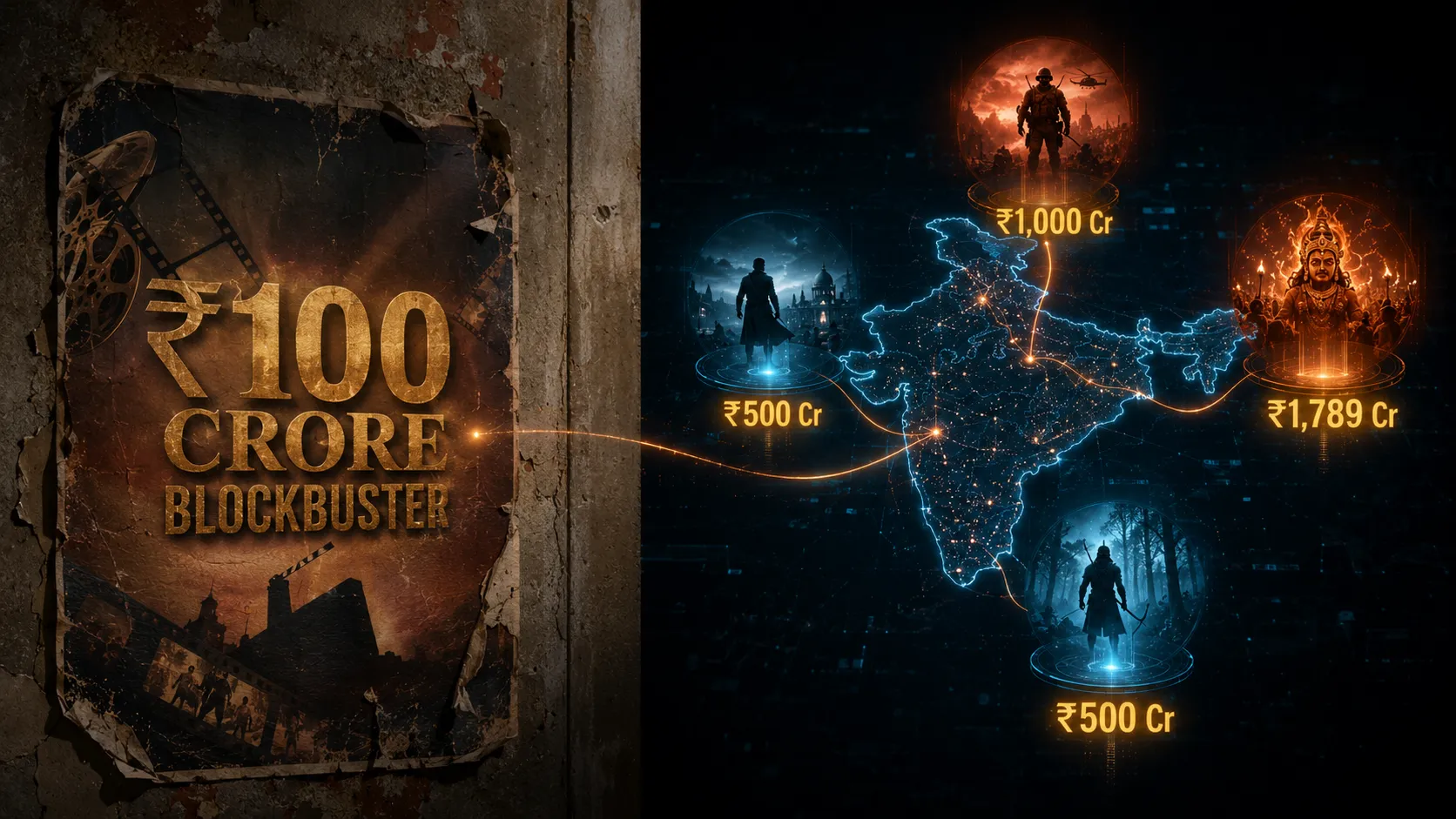
MUMBAI — May 29, 2026 — There was a time, not very long ago, when a film that earned ₹100 crore was a blockbuster. The number was round, aspirational, and attainable only by the largest stars in the largest languages, and it conferred a status that no marketing campaign could manufacture. That era is over. It ended quietly, without ceremony, somewhere between the second weekend of Dhurandhar 2 and the first Monday of Border 2, when the trade stopped asking whether a film would cross the century mark and started asking, with the casualness of people who have recalibrated their expectations, whether it would cross ₹500 crore. The floor has risen. The ceiling has disappeared. And the economics of the ₹500 crore blockbuster—the budgets required to produce it, the marketing spends required to open it, the distribution networks required to deliver it, and the profit margins that determine whether it was worth making at all—have become the central obsession of the Indian film industry.
Four films released in the first five months of 2026 have crossed the ₹500 crore global gross mark. Dhurandhar 2: The Revenge, the Ranveer Singh spy thriller directed by Aditya Dhar, leads the pack with approximately ₹1,789 crore worldwide—a figure that places it among the five highest-grossing Indian films in history. Border 2, the Anurag Singh-directed war epic produced by JP Dutta and Bhushan Kumar, has earned approximately ₹687 crore globally, driven by a massive domestic run and surprisingly strong performance in the Gulf and the United Kingdom. Karuppu, the Suriya-starrer fantasy action drama directed by RJ Balaji, has crossed ₹300 crore worldwide and is still climbing, having shattered the actor's thirteen-year-old personal record within its opening weekend. And Kantara: Chapter 1, Rishab Shetty's prequel to his 2022 breakout, has earned approximately ₹538 crore globally—a figure that is all the more remarkable for having been achieved almost entirely on the strength of its Kannada and Hindi versions, without the benefit of a major star from any of the four southern industries.
The four films could not be more different in their origins, their genres, their target audiences, and their financial structures. Dhurandhar 2 is a Hindi-language spy thriller built around a Bollywood star at the peak of his commercial powers, produced by a major studio (Yash Raj Films) with a marketing budget that reportedly exceeded ₹60 crore. Border 2 is a war epic that draws on patriotic sentiment and nostalgia for the 1997 original, mounted on a scale that required three separate international location shoots and a VFX budget that consumed nearly 40 percent of its total cost. Karuppu is a Tamil fantasy film rooted in folk mythology, directed by a radio jockey who had never handled a production of this scale, and carried by the devotional fervour of an audience that treats the deity Karuppusamy as an object of veneration. Kantara: Chapter 1 is a Kannada-language period epic that serves as a prequel to a film that was itself a surprise global sensation, made by a director who also stars in the lead role, and financed by a production house (Hombale Films) that has become one of the most valuable intellectual-property creators in the country.
What unites them is not their genre or their language or their star cast. It is their economics. Each of these films was budgeted at over ₹100 crore—Dhurandhar 2 reportedly cost close to ₹300 crore—and each of them was designed, from inception, to earn a substantial portion of its revenue from overseas markets and non-theatrical rights. Each of them was released on a scale that would have been unthinkable a decade ago—4,000 screens in India alone for the largest Hindi releases, with dubbed versions targeting every major linguistic market. And each of them was marketed with a sophistication that treats the film not as a one-time event but as a franchise asset, with pre-release merchandise, strategic content drops, and a post-theatrical digital strategy that extends the film's revenue life well beyond its theatrical window.
The Overseas Engine
The single most important variable in the rise of the ₹500 crore floor is not the domestic audience. It is the diaspora. For the four films that have crossed the threshold this year, overseas revenue has accounted for between 30 and 45 percent of their total global gross—a share that is substantially higher than the 15 to 20 percent that was typical of the largest Indian blockbusters as recently as 2019. The shift is structural, not cyclical, and it reflects a fundamental change in how Indian films are distributed and consumed outside India.
Dhurandhar 2 is the most visible beneficiary of this shift. The film's global gross of approximately ₹1,789 crore includes approximately ₹720 crore from overseas markets—a figure that exceeds the entire worldwide gross of every Indian film released before 2015 except Dangal and Baahubali 2. The Gulf contributed approximately $12 million (₹100 crore), North America approximately $18 million (₹150 crore), and the United Kingdom approximately £4 million (₹41 crore). The film's performance in China—where it was released on approximately 8,000 screens in a dubbed Mandarin version—is particularly notable, given the deterioration in India‑China diplomatic relations over the past five years. The China gross of approximately $22 million (₹183 crore) suggests that the audience for Indian spectacle has decoupled, at least partially, from the geopolitical tensions that were supposed to have closed the Chinese market to Indian content.
Border 2 tells a different story. The war epic's overseas performance was driven almost entirely by the Gulf and the United Kingdom—markets where the Indian diaspora is large, patriotic sentiment runs deep, and the appetite for military spectacle is well-established. The film earned approximately $6 million in the Gulf and £2.5 million in the United Kingdom, but its North American performance was modest ($4 million) and its China release was cancelled entirely due to regulatory complications. The divergence between the two films' overseas trajectories illustrates a broader truth about the global market for Indian cinema: it is not a single market, but a patchwork of linguistically and culturally distinct audiences, each of which responds to different stimuli. The spy thriller travels well in North America, where the diaspora is younger and more English-speaking. The war epic travels well in the Gulf, where the diaspora is older and more connected to the homeland. The fantasy film travels well in Southeast Asia, where the Tamil diaspora is large and culturally engaged. The blockbuster that can reach all of these audiences simultaneously—the film that is, in the industry's parlance, "pan‑Indian plus"—is the film that crosses ₹1,000 crore.
Karuppu represents a third model: the regionally rooted film that achieves global scale through the intensity of its domestic audience's engagement, amplified by the diaspora. The film's overseas gross of approximately $7 million (₹58 crore) is modest by the standards of Dhurandhar 2, but it represents a substantial increase over Suriya's previous overseas best, and it was achieved without the benefit of a major marketing push in international markets. The Tamil diaspora—in Malaysia, Singapore, the Gulf, and North America—turned out for the film with a fervour that no advertising campaign could have generated, driven by the combination of Suriya's star power, the devotional intensity of the Karuppusamy mythology, and the word‑of‑mouth that spread through diaspora WhatsApp groups and community networks. The lesson for producers is that the overseas market is not merely a function of marketing spend. It is a function of cultural resonance, and the films that resonate most deeply with their domestic audiences are often the films that travel furthest.
Kantara: Chapter 1 completes the quartet with the most improbable overseas story of all. A Kannada‑language period epic set in the forests of coastal Karnataka, made by a director who also stars in the lead role, with no major Bollywood or Tollywood names attached—the film had no business earning ₹538 crore globally. And yet it did, driven by a combination of critical acclaim, word‑of‑mouth, and the growing global appetite for Indian cinema that is not merely Bollywood. The film earned approximately ₹175 crore from overseas markets, with particularly strong performances in the Gulf (₹55 crore), North America (₹48 crore), and Australia‑New Zealand (₹18 crore). Its success, following the breakout of the original Kantara in 2022, is evidence that the global audience for Indian cinema has matured beyond the star‑driven, spectacle‑oriented blockbusters that have historically dominated the overseas market. The audience is now willing to engage with films that are culturally specific, linguistically rooted, and narratively ambitious—provided those films are executed with the production values and the distribution infrastructure that global audiences demand.
The VFX Arms Race
The second major driver of the ₹500 crore floor is the escalating cost of visual effects. The four films that have crossed the threshold this year are, to varying degrees, VFX‑driven spectacles, and the cost of producing those spectacles has risen sharply as Indian studios have invested in the infrastructure required to compete with Hollywood.
Dhurandhar 2 reportedly spent approximately ₹100 crore on visual effects—roughly a third of its total budget—on sequences that included a mid‑air helicopter extraction over the mountains of Kashmir, a submarine infiltration of a Karachi naval base, and a climactic firefight in a collapsing skyscraper. The VFX work was handled by a combination of YRF's in‑house studio, yFX, and international vendors including DNEG and Weta FX. The investment was designed to create a visual language that could compete with the Mission: Impossible and James Bond franchises—a deliberate strategy to position Dhurandhar as a global action brand rather than a domestic spy thriller.
Kantara: Chapter 1 took a different approach. The film's VFX budget—approximately ₹80 crore, or nearly half its total cost—was devoted primarily to the rendering of the forest itself: the lush, primordial jungle of the Western Ghats, which functions as both setting and character in the film's mythological framework. The VFX work was handled by Hombale's in‑house visual effects division, with key sequences outsourced to international studios specialising in photorealistic environment rendering. The result is a film that looks, in its most ambitious moments, like a Terrence Malick film crossed with a Lord of the Rings epic—a visual language that is entirely original in Indian cinema, and that required an investment that no Indian studio would have been willing to make even five years ago.
Karuppu's VFX budget—approximately ₹40 crore, or roughly 40 percent of its total cost—was focused primarily on the rendering of the deity Karuppusamy himself: the fiery aura, the supernatural powers, the visual grammar of divine intervention that transforms a folk hero into a superhero. The VFX work was handled by a combination of Chennai‑based studios and international vendors, and the film's repeated delays—from Diwali 2025 to Pongal 2026 to its eventual May 2026 release—were driven primarily by the complexity of the CGI work. RJ Balaji, the director, defended the delays publicly, explaining that the extra time was essential to perfect the visual effects. The audience's response—the BookMyShow Day 2 record, the ₹100 crore Tamil Nadu gross in nine months—suggests that the investment was justified.
The broader implication of the VFX arms race is that the barrier to entry for the ₹500 crore club is rising, and it is rising fastest for the films that aspire to compete globally. A film that spends ₹50 crore on visual effects can look impressive to an audience that has never seen a Hollywood blockbuster. It will look shoddy to an audience that has grown up on Avatar and Avengers. The Indian studios that are investing in their own VFX infrastructure—YRF's yFX, Hombale's in‑house division, Prime Focus's work on Ramayana—are building a competitive moat that will be difficult for smaller producers to cross. The result is a film industry that is consolidating around a small number of well‑capitalised studios capable of financing the spectacles that the global market demands. The ₹500 crore floor is, in this sense, not merely a box‑office threshold. It is a barrier to entry, and the studios that can cross it consistently will dominate the industry for the next decade.
The Franchise Imperative
The third structural force driving the ₹500 crore floor is the franchise imperative. Of the four films that have crossed the threshold this year, three are part of established franchises—Dhurandhar 2, Border 2, and Kantara: Chapter 1—and the fourth, Karuppu, is widely expected to spawn a sequel. The franchise model, which has been the dominant paradigm in Hollywood for two decades, is now the dominant paradigm in Indian cinema as well. The reasons are not mysterious. A franchise film carries a pre‑existing audience, a pre‑existing brand, and a pre‑existing set of expectations that reduce the risk of a catastrophic failure. The studio that invests ₹300 crore in Dhurandhar 2 is not betting on an unknown quantity. It is betting on a character, a world, and a star that have already proven their commercial viability. The return on that bet—₹1,789 crore worldwide—is the argument that will drive every major studio's slate for the foreseeable future.
The franchise model also creates a structural advantage for the studios that own the intellectual property. YRF's Dhurandhar franchise, which now encompasses two films and a planned third instalment, is an asset that will generate revenue for decades—through sequels, spin‑offs, streaming rights, merchandise, and theme‑park attractions. The studio that owns the IP controls the terms on which the stars, the directors, and the distributors participate in that revenue. The shift from star‑driven cinema to franchise‑driven cinema is, in this sense, a shift in power from the talent to the studio—and it is a shift that the studios are pursuing with the same intensity that the stars are pursuing their back‑end deals. The two dynamics are in tension, and the resolution of that tension will determine the shape of the industry for the next generation.
Kantara: Chapter 1 illustrates the power of the franchise model even when the franchise is built around a director rather than a star. Rishab Shetty, who directed and stars in both Kantara and Kantara: Chapter 1, is not a conventional star. He is a filmmaker who happens to act, and his films are driven by his vision rather than his box‑office draw. But the Kantara franchise—which now includes two films, a planned third instalment, and a growing merchandise business—is one of the most valuable intellectual properties in Indian cinema. Hombale Films, which owns the franchise, has built a vertically integrated studio around it: the production, the visual effects, the distribution, and the marketing are all handled in‑house, and the returns flow back to the company rather than being dispersed among external partners. The model is closer to Marvel than to traditional Bollywood, and its success is a template for every other studio that is trying to build a franchise‑driven slate.
The contrasting example is Karuppu, which is not a franchise film—at least, not yet—and whose financial structure reflects that difference. Dream Warrior Pictures, the production house behind Karuppu, locked in over ₹110 crore in pre‑release business through non‑theatrical avenues before the film reached theatres. The strategy reduced the risk of the project, but it also limited the upside. The studio that sells its digital rights to Netflix before the film releases captures a guaranteed return, but it sacrifices the windfall that would come from selling those rights after the film has proven its commercial value. The franchise model, by contrast, allows the studio to retain more of the upside—because the value of the franchise increases with each successful instalment, and the studio that owns the franchise can negotiate from a position of strength for every deal that follows. The lesson for producers is that the ₹500 crore floor is easier to reach with a franchise than without one, and the studios that are building franchises today will be the studios that dominate the ₹500 crore club tomorrow.
The Single‑Screen Squeeze
The most uncomfortable dimension of the ₹500 crore club is what it leaves behind. The four films that have crossed the threshold this year are, by design, multiplex‑first experiences—spectacles that demand the premium screens, the immersive sound, and the higher ticket prices that multiplexes provide. The single‑screen theatres that were once the backbone of the Indian film economy are being squeezed out of the value chain, their audiences cannibalised by the streaming platforms that acquire the digital rights, their economics undermined by the percentage‑sharing models that the multiplexes have already adopted and that the single‑screen exhibitors are still fighting to secure.
The Telangana theatre war—the standoff between single‑screen exhibitors and producers over the rental system, which was resolved only through the personal intervention of Chiranjeevi—is a symptom of this squeeze. The exhibitors who threatened to boycott Peddi were not demanding special treatment. They were demanding the same percentage‑sharing model that multiplexes already enjoy, and that they had been denied for years. The resolution of the standoff—the rental system ends on July 3, and percentage‑sharing begins—is a victory for the single‑screen exhibitors, but it is a qualified one. The percentage‑sharing model distributes risk more equitably between producer and exhibitor, but it does not change the fundamental economics of the single‑screen theatre: the seat count is lower, the ticket price is lower, the F&B spend is lower, and the overall revenue per screen is a fraction of what a multiplex generates. The ₹500 crore club is being built on the backs of multiplex audiences, and the single‑screen theatres that once defined Indian cinema are being left behind.
The contrast between Dhurandhar 2 and Karuppu on this dimension is instructive. Dhurandhar 2 earned approximately 72 percent of its domestic gross from multiplexes—a reflection of its premium positioning, its urban audience, and its reliance on the higher ticket prices that multiplexes command. Karuppu, by contrast, earned a substantially higher share of its domestic gross from single‑screen theatres—a reflection of its deeper penetration into the Tamil Nadu heartland, where single‑screen theatres remain the dominant exhibition format. The difference is not merely a matter of distribution strategy. It is a matter of survival. The film that can reach both audiences—the multiplex premium and the single‑screen mass—is the film that can maximise its domestic revenue. The film that can reach only one will leave money on the table. The ₹500 crore club is, in this sense, a balancing act, and the films that cross the threshold most consistently are the ones that balance best.
TABLE: THE ₹500 CRORE+ CLUB — FIRST FIVE MONTHS OF 2026
Film | Global Gross (₹ Cr) | Budget (₹ Cr) | Overseas Share | VFX Spend | Franchise |
|---|---|---|---|---|---|
Dhurandhar 2 | 1,789 | ~300 | ~40% | ~100 | Yes (YRF) |
Border 2 | 687 | ~180 | ~28% | ~60 | Yes (JP Dutta) |
Kantara: Chapter 1 | 538 | ~170 | ~32% | ~80 | Yes (Hombale) |
Karuppu | 300+ (still running) | ~100 | ~22% | ~40 | Planned |
The Profitability Paradox
The most counterintuitive fact about the ₹500 crore club is that crossing the threshold does not guarantee profitability. The budgets required to produce films at this scale have risen faster than the revenues they generate, and the profit margins on some of the largest films of the year are thinner than the trade headlines suggest.
Border 2, which has earned approximately ₹687 crore globally on a budget of approximately ₹180 crore, is the most profitable film in the quartet—a reflection of its relatively disciplined budget, its strong domestic performance, and its ability to recoup a substantial portion of its cost through satellite and digital rights. Kantara: Chapter 1, which earned ₹538 crore on a budget of ₹170 crore, is also comfortably profitable, though its margins are thinner than Border 2's because of its heavier reliance on VFX and its more limited penetration into the Hindi‑speaking market. Dhurandhar 2, despite its record‑breaking global gross, is estimated to have generated a return on investment of approximately 35 percent—solid, but not spectacular for a film that required an investment of nearly ₹300 crore. Karuppu, the smallest film of the four in budget terms, has already generated a substantial return for its producers, thanks to the ₹110 crore in pre‑release revenue that de‑risked the project before its theatrical release.
The profitability paradox—that the highest‑grossing films are not necessarily the most profitable—is a structural feature of the ₹500 crore club, and it has implications for how studios allocate their capital. The film that costs ₹300 crore and earns ₹1,000 crore may be more glamorous than the film that costs ₹100 crore and earns ₹300 crore, but the latter is almost certainly the better investment. The studios that internalise this lesson—that prioritise profitability over gross, and that invest in franchise IP rather than star‑driven spectacle—will be the studios that survive the consolidation that the ₹500 crore floor is driving. The studios that do not will be remembered, in retrospect, as the ones that spent the most and earned the least, in the era when the floor rose and the ceiling disappeared.
What This Signals
The rise of the ₹500 crore floor is not primarily a box‑office phenomenon. It is a structural transformation of the Indian film industry—a transformation that is being driven by the same forces that reshaped Hollywood in the 1990s and 2000s. The overseas market has expanded. The VFX arms race has escalated. The franchise imperative has taken hold. And the single‑screen theatre, which was once the backbone of the Indian film economy, is being squeezed out of the value chain. The ₹500 crore club is not merely a list of the year's biggest hits. It is a portrait of an industry in transition—an industry that is consolidating around a small number of well‑capitalised studios, a small number of bankable stars, and a small number of franchise properties that can deliver returns at a scale that justifies the investment.
The four films that have crossed the threshold in the first five months of 2026 represent four different models for success in the new economics of Indian cinema. Dhurandhar 2 is the star‑driven franchise spectacle, built on the back of a Bollywood star at the peak of his commercial powers. Border 2 is the nostalgia‑driven patriotic epic, leveraging the memory of a beloved original to deliver a sequel that exceeds it in scale and ambition. Kantara: Chapter 1 is the director‑driven regional franchise, built on the vision of a filmmaker who has become an IP in his own right. Karuppu is the devotional fantasy, rooted in the folk mythology of a specific linguistic community, carried by the fervour of an audience that treats the film as a religious experience. Each of these models has proven its viability. Each of them will be replicated. And each of them will contribute to the further rise of the floor—the slow, inexorable process by which the ₹500 crore club becomes the ₹750 crore club, and then the ₹1,000 crore club, and then whatever comes after.
The ₹100 crore blockbuster of 2016 is the ₹500 crore blockbuster of 2026. The films that defined the earlier era—the Dabanggs, the Golmaals, the Housefulls—would not cross the threshold today, because the threshold has moved. The audience has globalised. The spectacle has intensified. The franchises have consolidated. The floor has risen, and it will continue to rise, and the films that reach it will be fewer, larger, and more expensive than anything that came before. The era of the ₹100 crore blockbuster is over. The era of the ₹500 crore floor has just begun.


