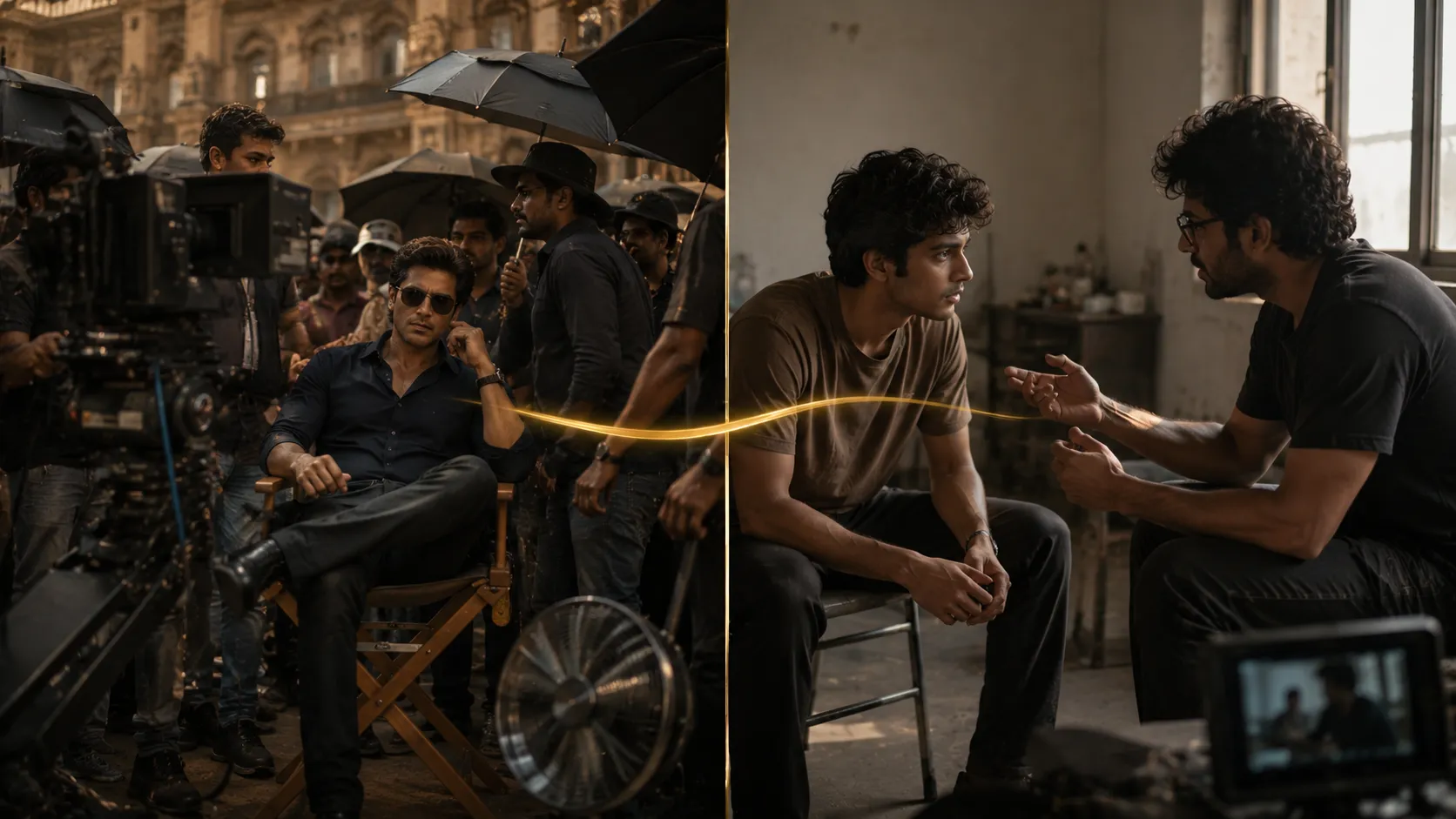
The ₹50 Crore Debut: Why Bollywood Studios Are Betting on Complete Strangers—And What It Reveals About the Death of the Star System
MUMBAI — May 29, 2026 — In the summer of 2024, a 21‑year‑old woman with no film lineage, no social‑media following, and no prior acting experience walked into a casting office in Andheri and auditioned for a role that would, within eighteen months, make her one of the most talked‑about faces in the country. The film was Saiyaara, a romantic drama produced by Dharma Productions and directed by a debutant. Its budget was approximately ₹60 crore. Its lead actor, who had appeared in two moderately successful films, was paid ₹3 crore. Its lead actress, the 21‑year‑old who had walked into the casting office, was paid ₹35 lakh. The film grossed nearly ₹500 crore worldwide, and the actress is now negotiating her fourth film, with offers that reportedly exceed ₹8 crore per project. The studio that bet on her—that bet on an unknown face, a modest budget, and a script that had been rejected by three established stars—has earned a return on investment that no star‑driven blockbuster of the same period has matched.
The Saiyaara story is not an anomaly. It is the most visible example of a structural shift that is reshaping the economics of the Hindi film industry: the rise of the ₹50 crore debut. Across the major studios—Dharma, YRF, T‑Series, Jio Studios—a growing share of the production slate is being allocated to films built around newcomers, mounted on disciplined budgets, and designed to generate returns through story and craft rather than through the gravitational pull of an established star. The shift is not a rejection of the star system. It is an adaptation to its costs—and a bet that the audience, after years of being told that only stars can open films, is ready to be told something different.
The numbers tell the story. In 2019, the last pre‑pandemic year, the top five highest‑grossing Hindi films were all star‑driven vehicles: War (Hrithik Roshan), Kabir Singh (Shahid Kapoor), Uri: The Surgical Strike (Vicky Kaushal), Bharat (Salman Khan), and Mission Mangal (Akshay Kumar). The combined star fees for those five films exceeded ₹350 crore—roughly 30 percent of their total production budgets. In the first five months of 2026, the top five highest‑grossing Hindi films include two star‑driven franchise sequels (Dhurandhar 2, Border 2), one mid‑budget star vehicle (Saiyaara), and two debut‑led films whose combined star fees were less than ₹10 crore. The shift is not yet complete, but it is accelerating, and the studios that are driving it are the ones that have concluded that the star system, for all its box‑office power, is an increasingly unreliable engine of profitability.
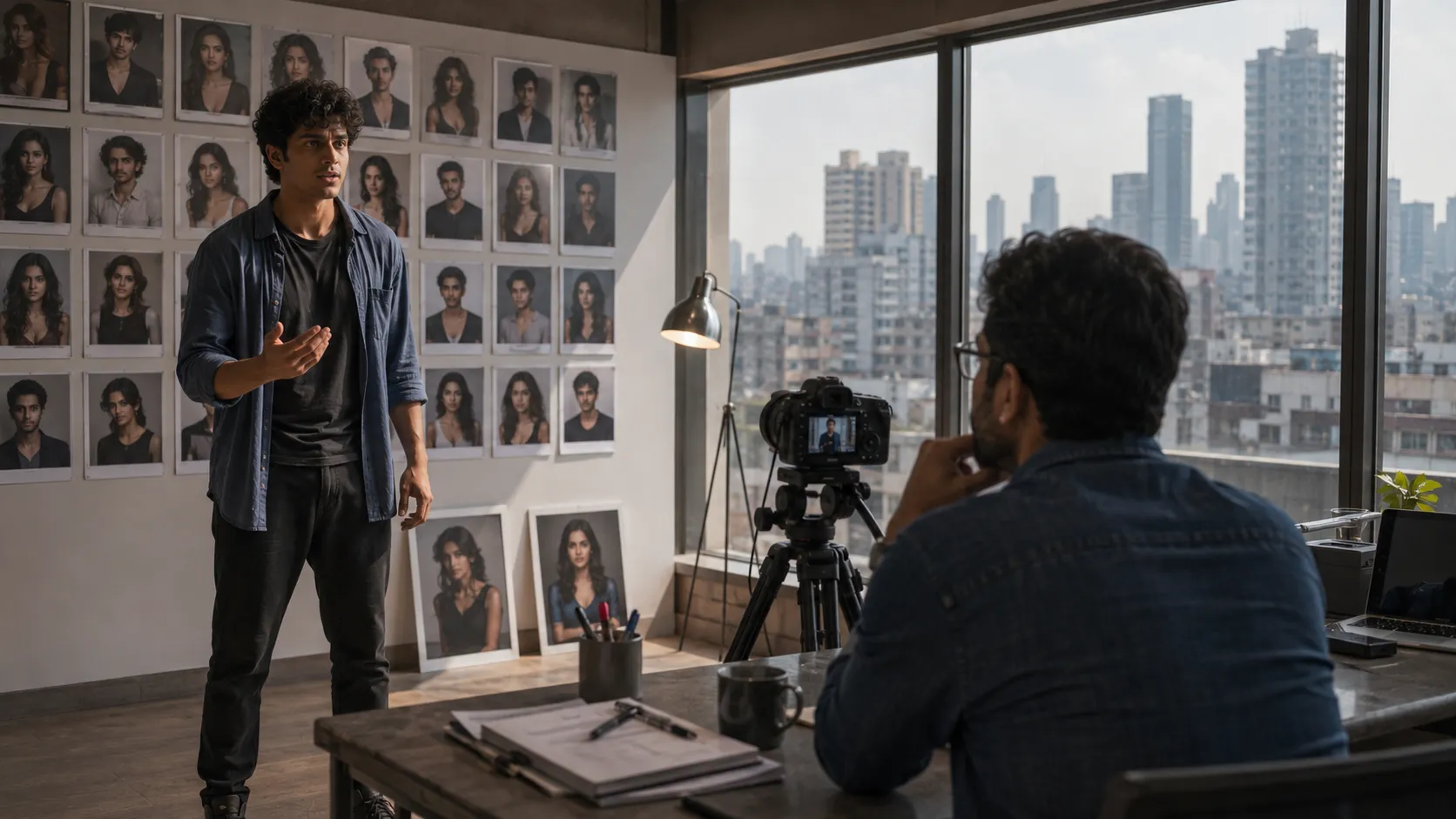
The Arithmetic of the Star Fee
The single most important variable driving the shift toward newcomer‑led cinema is the star fee. The economics of the Hindi film industry have, for decades, been defined by a paradox: the star is the most important determinant of a film's opening‑weekend box office, and the star is also the single largest cost in the film's budget. The paradox was sustainable as long as the star's box‑office draw was reliable enough to justify the expense. It is no longer sustainable, because the reliability has evaporated.
The post‑pandemic box office has been brutal to the established stars. Salman Khan, who was once the safest bet in the business, endured eight consecutive underperforming films between 2023 and early 2025. Akshay Kumar, the most prolific star in the industry, went through a similar drought. Shah Rukh Khan, who delivered three of the biggest hits of his career in 2023, took a hiatus and has not released a film since. Aamir Khan's Laal Singh Chaddha was one of the most expensive disappointments in recent memory. The stars who once guaranteed a ₹20 crore opening day can no longer be relied upon to guarantee a ₹10 crore one. And yet, their fees—the upfront payments they demand before a single frame is shot—have not declined. They have risen.
The arithmetic is unsustainable, and the studios have begun to respond. The star who demands ₹50 crore for a film that may or may not open is being replaced by a newcomer who costs ₹50 lakh and whose film, if it connects with audiences, can earn almost as much. The Saiyaara model—a modest budget, an unknown lead, a strong script, and a marketing campaign built around the film rather than the star—has demonstrated that the audience does not need a famous face to buy a ticket. It needs a reason to care. And the reason, increasingly, is the story, not the star.
The studios are not abandoning the star system entirely. They cannot. The franchise sequels that generate the largest returns—Dhurandhar 2, Border 2, K.G.F 3, Salaar 2—depend on stars who have been associated with those franchises from their inception. The star is the franchise, and the franchise is the studio's most valuable asset. But for the non‑franchise films that constitute the majority of any studio's slate—the romantic comedies, the thrillers, the dramas, the horror films—the star is becoming optional. And the studios that are treating the star as optional are discovering that the economics of their business improve dramatically when the largest line item in the budget is no longer the largest line item.
The Streaming Multiplier
The second major force driving the shift toward newcomer‑led cinema is the streaming platforms. Netflix, Amazon Prime Video, and JioHotstar have become the most important buyers of post‑theatrical rights, and their acquisition decisions are driven by a different calculus than the one that governs the theatrical box office. The streaming platform does not care about the star's opening‑weekend draw, because the platform does not sell tickets. It sells subscriptions. The film that attracts a large streaming audience is the film that is good, not the film that is famous—and the platform's data, which tracks viewer behaviour with a granularity that the theatrical box office cannot match, has demonstrated that the correlation between star power and streaming viewership is weaker than the industry assumed.
The streaming multiplier has changed the risk calculus for the studios. A film that is built around a newcomer and mounted on a disciplined ₹50 crore budget can recover a substantial portion of its cost through the pre‑sale of its digital rights—a transaction that is independent of the film's theatrical performance. The studio that secures a ₹20 crore streaming deal for a ₹50 crore film has, in effect, de‑risked the project before a single ticket is sold. The theatrical run becomes the upside, rather than the entire business case. The model is not viable for the ₹200 crore star vehicle, whose digital rights may be worth ₹80 crore but whose total cost leaves a much larger gap that the box office must fill. The ₹50 crore debut, by contrast, can be profitable before it reaches theatres. The arithmetic is compelling, and it is driving a reallocation of studio capital toward the films that can be profitable without the star.
The streaming platforms are also investing directly in newcomer‑led content, commissioning original films with unknown actors that bypass the theatrical window entirely. The Netflix film that stars a newcomer and premieres directly on the platform is, in effect, a debut that never had to open. The platform assumes the risk that the theatrical distributor would otherwise bear, and the economics of the deal—a fixed acquisition price, no marketing spend, no exhibitor share—are often more favourable to the producer than a theatrical release would be. The streaming‑first debut is a category that barely existed five years ago. It is now one of the most active segments of the Indian film industry, and it is producing a pipeline of new talent that is feeding back into the theatrical market.
The Talent Pipeline
The third force driving the shift is the talent pipeline itself. The Indian film industry has, for decades, been notoriously difficult to enter without connections. The star kids—the children of established actors and filmmakers—have dominated the pipeline, and the outsiders who broke through were the exceptions that proved the rule. The system was self‑perpetuating, and the barriers to entry were high enough to discourage all but the most determined aspirants.
That is changing. The streaming platforms, the casting agencies, and the growing number of talent‑development programmes run by the major studios have created a pipeline that is more open, more meritocratic, and more productive than anything the industry has seen before. The actor who would have spent years struggling to get a single audition can now upload a self‑taped scene to a casting platform and be seen by a dozen casting directors within a week. The director who would have spent a decade as an assistant can now make a short film, upload it to YouTube, and be discovered by a studio executive looking for fresh talent. The pipeline is not yet fully open, but it is wider than it has ever been, and the talent that is emerging from it is more diverse, more skilled, and more audience‑ready than the talent that the old system produced.
The success of Saiyaara and its lead actors is, in this sense, a product of the pipeline. The actress who walked into the Andheri casting office had no connections, but she had spent two years training at an acting school, uploading self‑taped auditions, and working in theatre. The director who cast her had been discovered through a short film that had gone viral on YouTube. The script that became Saiyaara had been developed through a studio‑run writers' programme that was designed specifically to identify and nurture new talent. The film was not an accident. It was the output of a system that has been built, over the past decade, to produce exactly this kind of result—and the studios that are investing in that system are the ones that are reaping the rewards.
The Dharma Model
The most instructive case study in the newcomer‑led strategy is Dharma Productions, the studio that has historically been associated with the largest stars and the most opulent productions in the Hindi film industry. Dharma, under the leadership of Karan Johar, has undergone a significant strategic shift over the past three years. The studio that once produced My Name Is Khan and Ae Dil Hai Mushkil—films built around the biggest stars of their era—is now producing a slate that is dominated by debutant directors, unknown actors, and disciplined budgets.
The Dharma model is not a rejection of the star system. It is a diversification of risk. The studio still produces star‑driven franchise films when the economics justify it—Dhurandhar 2 is a Dharma‑YRF co‑production, and the studio has several star‑led projects in development. But the bulk of the slate is now allocated to the mid‑budget, newcomer‑led films that the studio's own data suggests are the most profitable segment of the market. The Dharma production executive who spoke to us described the shift in terms that were almost brutally pragmatic: "We can make five ₹40 crore films for the cost of one ₹200 crore star vehicle. If two of the five work, we're profitable. If three work, we're very profitable. If all five work, we've had the best year in the studio's history. The star vehicle has to be a blockbuster just to break even. The arithmetic is not complicated."
The Dharma model is being replicated, in varying degrees, across the other major studios. YRF, the most successful studio in the Hindi film industry, has allocated a growing share of its production budget to its YRF Entertainment division, which focuses on smaller, director‑driven films. T‑Series, the music‑label‑turned‑studio that has become one of the largest producers in the country, has built its film business almost entirely on mid‑budget, content‑driven projects. Jio Studios, the Reliance‑owned content arm that has been acquiring IP and commissioning original productions at an aggressive pace, has made the newcomer‑led film a central pillar of its strategy. The shift is not uniform, and the star system is far from dead. But the direction of travel is unmistakable, and the studios that are moving fastest in that direction are the ones that are generating the highest returns on their invested capital.
The Star Who Adapts
The most fascinating dimension of the newcomer‑led shift is the response of the stars themselves. The actors who have built their careers on the traditional star‑system model are not blind to the structural changes that are reshaping the industry, and the most intelligent among them are adapting rather than resisting.
Akshay Kumar, who was once the most prolific user of the star‑vehicle model—four films a year, each one a franchise or an event film built around his persona—has shifted his strategy significantly. His production house, Cape of Good Films, now produces mid‑budget, content‑driven films with newcomers, and Akshay himself has begun taking smaller roles in films that are built around scripts rather than stars. The actor who once demanded ₹100 crore per film and a share of the profits is now, according to trade reports, negotiating deals that include reduced upfront fees in exchange for larger back‑end participation—a model that aligns his interests with the film's commercial performance and that acknowledges the new reality of the star‑studio relationship.
Ranveer Singh, whose Dhurandhar franchise has made him the most commercially potent star in the Hindi film industry, has been similarly strategic. His production company, Ma Kasam Films, is developing a slate of newcomer‑led projects that are independent of his own acting commitments. The star who can deliver a ₹1,700 crore franchise is also the star who is investing in the next generation of talent—and the combination of the two roles, star and producer, is the model that the most successful actors of the next decade will follow. The star who adapts to the new economics will thrive. The star who does not will find that the industry has moved on without them.
The Pralay dispute—the standoff between Ranveer Singh and Excel Entertainment over the actor's exit from Don 3—is, in this context, a revealing episode. The dispute was, at one level, a disagreement over compensation and contractual obligations. At a deeper level, it was a conflict between two different models of the star‑studio relationship: the old model, in which the star is a hired gun who can walk away from a project with limited financial consequences, and the new model, in which the star is a partner who shares in both the risk and the reward. The resolution of that dispute—which remains unresolved as of this writing—will shape the terms on which stars and studios negotiate for years to come. The Pralay zombie epic may or may not rise. But the structural questions it has raised about who bears the risk, who captures the upside, and who controls the future of the industry are questions that will not be resolved by a single settlement. They will be resolved, over time, by the market—and the market, as the ₹50 crore debut is demonstrating, is increasingly favouring the model that puts the story ahead of the star.
What This Signals
The rise of the ₹50 crore debut is not primarily a story about casting. It is a story about the structural transformation of the Hindi film industry's economic model—a shift from a system built on star power to a system built on story power, from a system that concentrated risk in a small number of expensive, high‑stakes projects to a system that distributes risk across a larger number of modestly budgeted, content‑driven films.
The shift is not complete, and it may never be. The star system has survived every previous prediction of its demise, and the largest franchise films will continue to depend on the stars who are inextricably linked to their success. The Dhurandhar franchise without Ranveer Singh is not a franchise at all. The K.G.F franchise without Yash is a different film. The star is not dead, and the obituaries that have been written for the star system are premature. But the star system's monopoly on the industry's economics is over, and the studios that are diversifying away from it are discovering that the alternatives are more profitable, more reliable, and more creatively rewarding than the model they are leaving behind.
The 21‑year‑old who walked into the Andheri casting office in 2024 is now one of the most sought‑after actors in the country. The film that launched her career was built on a ₹60 crore budget and a script that three established stars had rejected. The studio that backed that film—and the dozen other newcomer‑led films that are now in development—has earned a return on its investment that no star‑driven blockbuster of the same period has matched. The arithmetic is clear. The pipeline is open. The stories are working. The ₹50 crore debut is here, and it is not going away.


