The ₹5 Sachet That's Quietly Building India's Next FMCG Giant—One Village at a Time
BENGALURU — May 22, 2026 — Ankur Dahiya has spent the past twelve months doing something that most FMCG executives would describe as commercially irrational. He has been selling shampoo, detergent, and cooking oil in single-use sachets priced at ₹5—roughly six cents—to customers in villages that are not connected by paved roads, in districts that do not appear on any consumer brand's growth map, through a network of women micro-entrepreneurs who had never sold anything before his company trained them.
The average transaction is less than the cost of a cup of chai at a roadside stall. The logistics are a nightmare. The margins are paper-thin. And the business just crossed a ₹100 crore annualized revenue run rate in three months. Samuh, the rural-focused FMCG brand launched by Rozana in late 2025, is built on a thesis that is either visionary or delusional, depending on whom you ask. India's rural economy—home to roughly 65 percent of the country's 1.4 billion people—has been the great untapped market for a generation of consumer companies. Hindustan Unilever has been trying to crack it for decades. ITC's e-Choupal was the most ambitious rural distribution experiment of the early 2000s. Dabur, Emami, and Patanjali have all poured resources into village-level distribution. The results have been mixed.
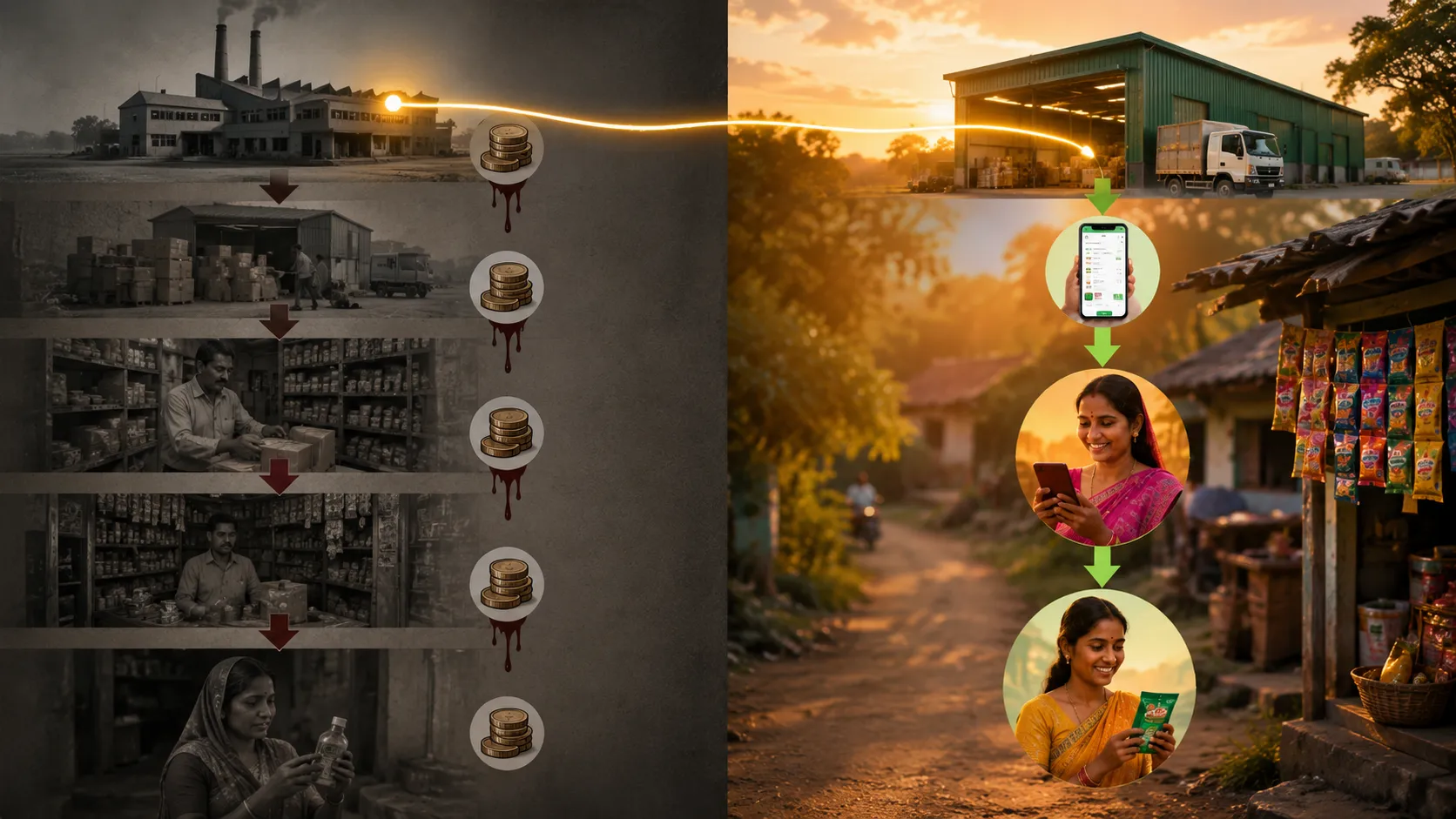
Rural India is vast, dispersed, infrastructure-poor, and price-sensitive in ways that make urban India look like a luxury market. Dahiya's bet is that the problem was never the consumer. It was the distribution model. The traditional approach—push inventory through wholesalers to rural retailers, hope it sells, accept that 40 percent of it will come back unsold—is too expensive for the margins that rural FMCG generates. Samuh's alternative is to bypass the traditional supply chain entirely. The company recruits women in each village, trains them as micro-entrepreneurs, and gives them a smartphone app that allows them to order inventory, track sales, and manage customer relationships. The women sell to their neighbors, their relatives, and their social networks. The company handles the logistics—warehousing, transportation, quality control—and delivers inventory directly to the micro-entrepreneurs. There are no wholesalers. No distributors. No retail markups. Just a direct line from the brand to the village, powered by a network of women who know their customers better than any market research firm ever could.
The Unit Economics That Shouldn't Work
The ₹5 sachet is the cornerstone of Samuh's strategy, and its economics require a moment of explanation. The sachet format is not new. Hindustan Unilever pioneered the single-use shampoo sachet in India in the 1980s, and the format has since become ubiquitous across FMCG categories. What is new is the supply chain that delivers the sachet to a village that is not connected by paved road, at a price that covers the cost of production, transportation, and the micro-entrepreneur's margin, while still leaving enough for the company to build a sustainable business. The math works because Samuh has eliminated the intermediary layers that consume margin in traditional FMCG distribution. In a conventional model, a ₹5 sachet might cost ₹2 to produce. The manufacturer sells it to a distributor for ₹2.50. The distributor sells it to a wholesaler for ₹3. The wholesaler sells it to a retailer for ₹3.50. The retailer sells it to the consumer for ₹5. Each layer takes a cut, and by the time the product reaches the village shop, the margin for the manufacturer has been squeezed to near-zero. Samuh collapses that chain. The sachet costs roughly ₹2 to produce. Samuh sells it to the micro-entrepreneur for ₹3.50, who sells it to the consumer for ₹5, earning ₹1.50 per sachet—a 43 percent margin on her inventory investment. Samuh retains ₹1.50 per sachet to cover logistics, technology, and overhead. The math is sustainable because the supply chain has been flattened from four layers to two. The micro-entrepreneur captures the margin that would have gone to the distributor, the wholesaler, and the retailer combined. The company captures a margin that is thin but scalable.
The ₹100 crore annualized run rate—achieved in three months—is not a fluke. It is the result of a distribution model that aligns the incentives of the company and the seller. The micro-entrepreneur is not a passive retailer waiting for customers to walk into a shop. She is an active salesperson, motivated by a margin that is significantly higher than what a traditional rural retailer earns. She knows her customers. She knows when they get paid—harvest season, festival bonuses, remittances from migrant workers—and she times her inventory accordingly. She is not selling to strangers. She is selling to people she has known her entire life. The trust she has earned over years transfers to the brand she represents.
The Women Who Sell
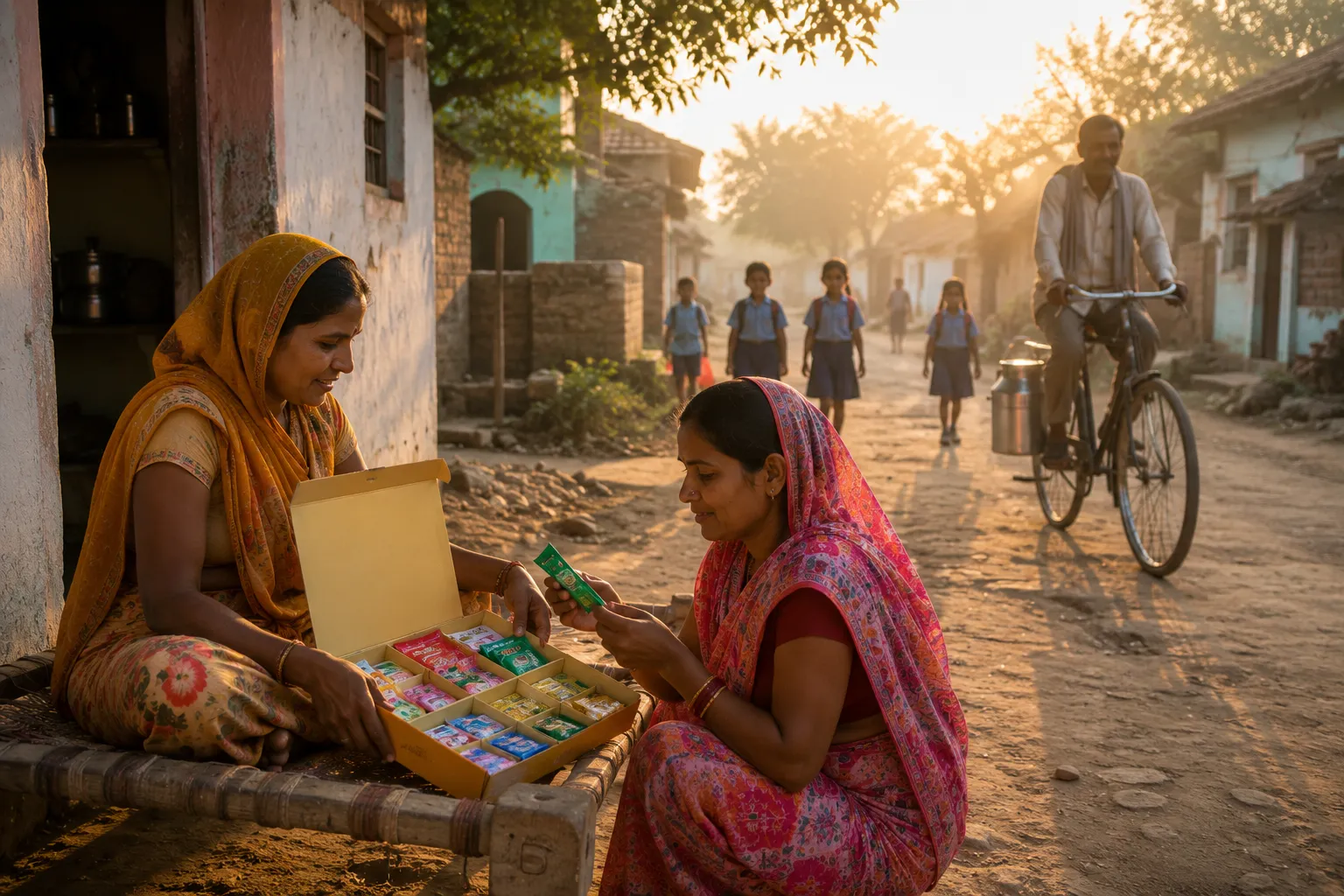
The most significant innovation in the Samuh model is not technological. It is human. The micro-entrepreneurs who sell Samuh products are predominantly women who have never participated in the formal economy. They are homemakers, farmers, and daily-wage workers who live in the villages they serve. They have deep social networks, intimate knowledge of their communities' consumption patterns, and a level of trust that no outside salesperson could replicate. Samuh recruits these women through a combination of local outreach and digital onboarding. The training covers basic financial literacy, inventory management, and customer relationship skills. The smartphone app handles ordering, payments, and sales tracking. The women typically start with a small inventory investment—a few hundred rupees—and scale up as their customer base grows. The average micro-entrepreneur earns between ₹3,000 and ₹8,000 per month, a meaningful supplement to household income in villages where median monthly earnings are often below ₹10,000. The model is not charity. It is a commercial proposition that happens to have powerful social externalities. The women who earn through Samuh gain financial independence, decision-making power within their households, and a status in their communities that they did not previously possess. The company gains a distribution network that is more efficient, more trusted, and more deeply embedded in the community than any traditional channel could be.
The rural market that Samuh is targeting is vast. India has approximately 664,000 villages, of which roughly 500,000 have populations between 500 and 5,000—large enough to sustain a micro-entrepreneur, small enough that traditional FMCG distribution has never reached them efficiently. Samuh currently operates in 21,000 villages, roughly 4 percent of the addressable market. The 3,000 new villages the company is adding each month suggest that the model is scaling faster than even Dahiya anticipated.
What This Signals
The Samuh story is not primarily about shampoo sachets. It is about the structural transformation of rural distribution—a transformation that has been promised for decades and is finally being delivered, not by a government program or a corporate initiative, but by a startup that has figured out how to make the unit economics work. The implications extend beyond FMCG. The distribution network that Samuh is building—a network of tens of thousands of women micro-entrepreneurs, connected by a digital platform, serving villages that have never been served by modern retail—is a platform on which other products and services can be built. The same network that sells shampoo can sell insurance. The same women who earn money from sachet sales can become banking correspondents, healthcare workers, or e-commerce delivery agents. The village that was once the final frontier of Indian consumption is becoming a node in a digitally connected supply chain that is as efficient as any urban distribution network.
The ₹5 sachet is a wedge. The micro-entrepreneur is the door. The 500,000 villages are the market. And the company that is building the door, village by village, entrepreneur by entrepreneur, is quietly constructing the rural FMCG giant that the incumbents spent decades trying—and failing—to build. The ₹100 crore run rate is the beginning. The 21,000 villages are the foundation. The next 479,000 are the opportunity.


