The ₹5 Crore Miracle: How a Gujarati Film Just Crossed ₹100 Crore—And What It Reveals About India's Most Overlooked Film Industry
AHMEDABAD — May 30, 2026 — For most of Indian cinema's history, the Gujarati film industry has been an afterthought. It produced films for a regional audience that was assumed to be small, price‑sensitive, and culturally conservative—an audience that would watch a Gujarati film if it was convenient, but that would not seek one out. The industry's output was modest: a few dozen films a year, produced on shoestring budgets, screened in a handful of theatres, and forgotten within weeks of their release. The last time a Gujarati film had earned ₹100 crore at the box office was never—because no Gujarati film had ever done so. The industry was not in decline. It was in a state of permanent, unremarkable stasis.
In the spring of 2026, that stasis shattered. Laalo–Krishna Sada Sahaayate, a devotional drama produced on a budget of approximately ₹5 crore and released in February, crossed the ₹100 crore mark in its seventh week of release—the first Gujarati film in history to achieve the milestone. The film's success was not an accident. It was the product of a structural shift that has been building in the Gujarati film industry for several years, driven by the same forces that have transformed the other regional industries: the migration of audiences from television to theatres, the growing cultural confidence of regional‑language cinema, and the entry of professional, business‑minded producers who have brought financial discipline and marketing sophistication to an industry that had historically lacked both. The Gujarati film industry, which was once the most overlooked sector of Indian cinema, is now the fastest‑growing—and the studios that are investing in it are betting that the ₹100 crore milestone is not a ceiling, but a floor.
The Infrastructure Revolution
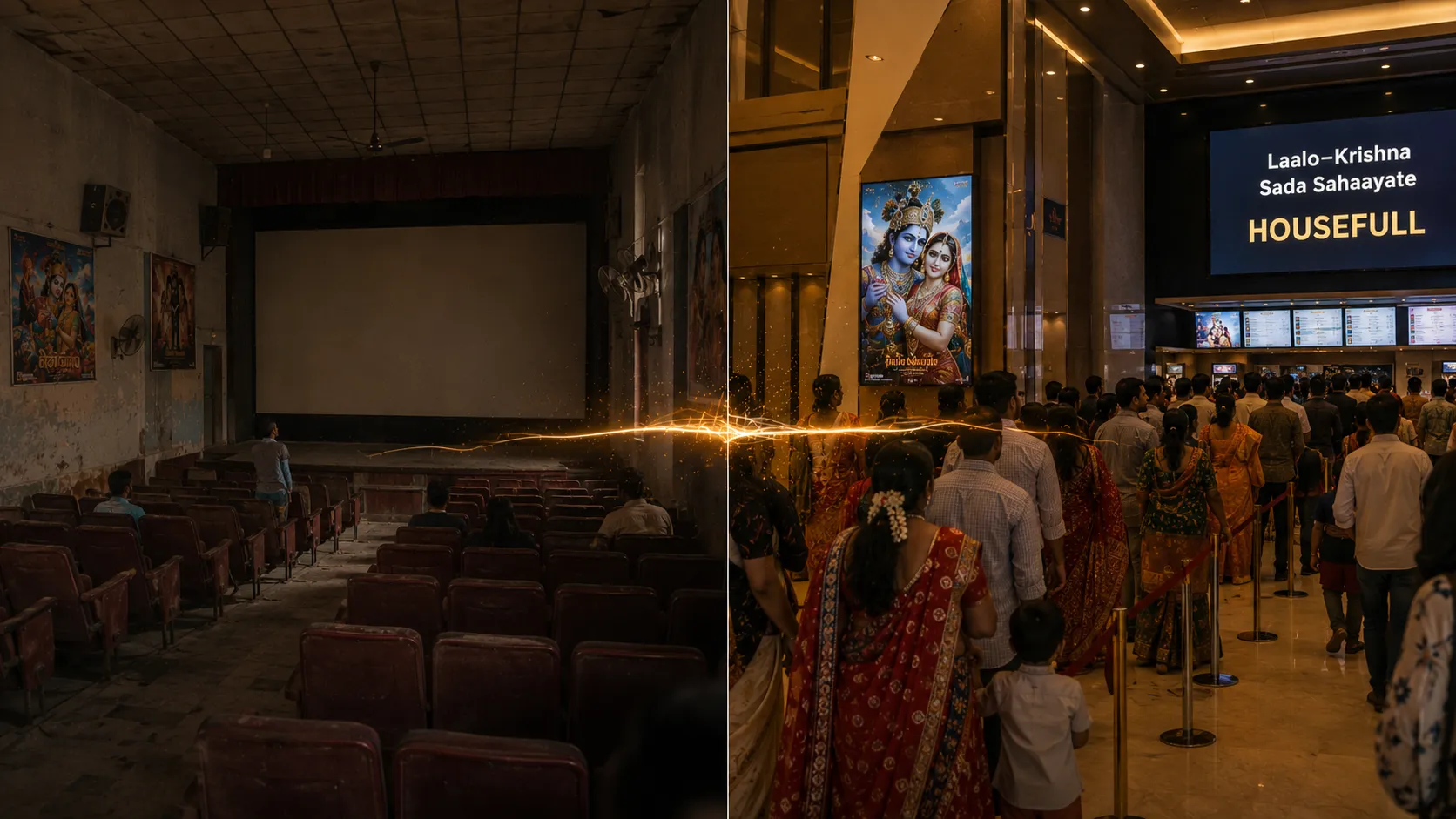
The most important variable in the Gujarati film industry's transformation is infrastructure. A decade ago, Gujarat had approximately 300 single‑screen theatres, most of them in disrepair, and fewer than 50 multiplex screens. The audience that wanted to watch a Gujarati film often could not find a theatre that was screening one—and the theatre that was screening one was not a place that most audiences wanted to visit. The collapse of the single‑screen exhibition sector, which had been underway for decades, had hit the Gujarati market particularly hard, because the multiplex revolution that replaced the single screens had been concentrated in the larger cities and the more affluent states. Gujarat, for all its economic prosperity, had been underserved by the multiplex chains—a gap that was only beginning to be filled by the expansion of PVR INOX, INOX, and Cinepolis into the state's Tier‑2 and Tier‑3 cities.
The infrastructure that has been built over the past five years has transformed the Gujarati exhibition market. The state now has over 200 multiplex screens, concentrated in the urban centres of Ahmedabad, Surat, Vadodara, and Rajkot, and a growing number of single‑screen theatres that have been renovated, modernised, and integrated into the multiplex chains' programming networks. The audience that was once forced to drive an hour to the nearest city to watch a film can now walk to a multiplex in their own neighbourhood—and the multiplex, which programs Gujarati films alongside the Hindi and English blockbusters that dominate the national market, has made the Gujarati film accessible to an audience that had never been given a reason to watch one.
The exhibition infrastructure has been complemented by a distribution infrastructure that was previously nonexistent. The Gujarati film that was once released in a handful of theatres in Gujarat now releases simultaneously across the state's multiplex network, in the Gujarati‑speaking diaspora markets of Mumbai, London, and New Jersey, and, increasingly, in the Hindi‑speaking markets of North India, where the dubbed or subtitled version can reach an audience that is larger than the Gujarati‑language market alone. The Laalo–Krishna film that crossed ₹100 crore earned approximately 15 percent of its revenue from outside Gujarat—a figure that is small by the standards of the pan‑Indian blockbusters, but that represents a structural shift for an industry that was once confined to a single state.
The production infrastructure has also been professionalised. The Gujarati film industry was once dominated by small, family‑run production houses that operated on shoestring budgets and treated filmmaking as a side business rather than a primary enterprise. The new generation of Gujarati producers—the businessmen, the real‑estate developers, the diaspora entrepreneurs—have brought a different approach. They have invested in professional crews, in modern production technology, in the marketing and distribution infrastructure that the industry had historically lacked. They have treated the Gujarati film not as a cultural obligation, but as a commercial opportunity—and the market has responded. The Laalo–Krishna film's ₹5 crore budget was, by the standards of the major Indian film industries, modest. But it was, by the standards of the Gujarati industry, transformative—a level of investment that allowed the producers to hire a professional crew, to shoot on location in the state's most visually spectacular settings, and to mount a marketing campaign that reached the diaspora audiences that had never before been targeted by a Gujarati release.
The Devotional Goldmine
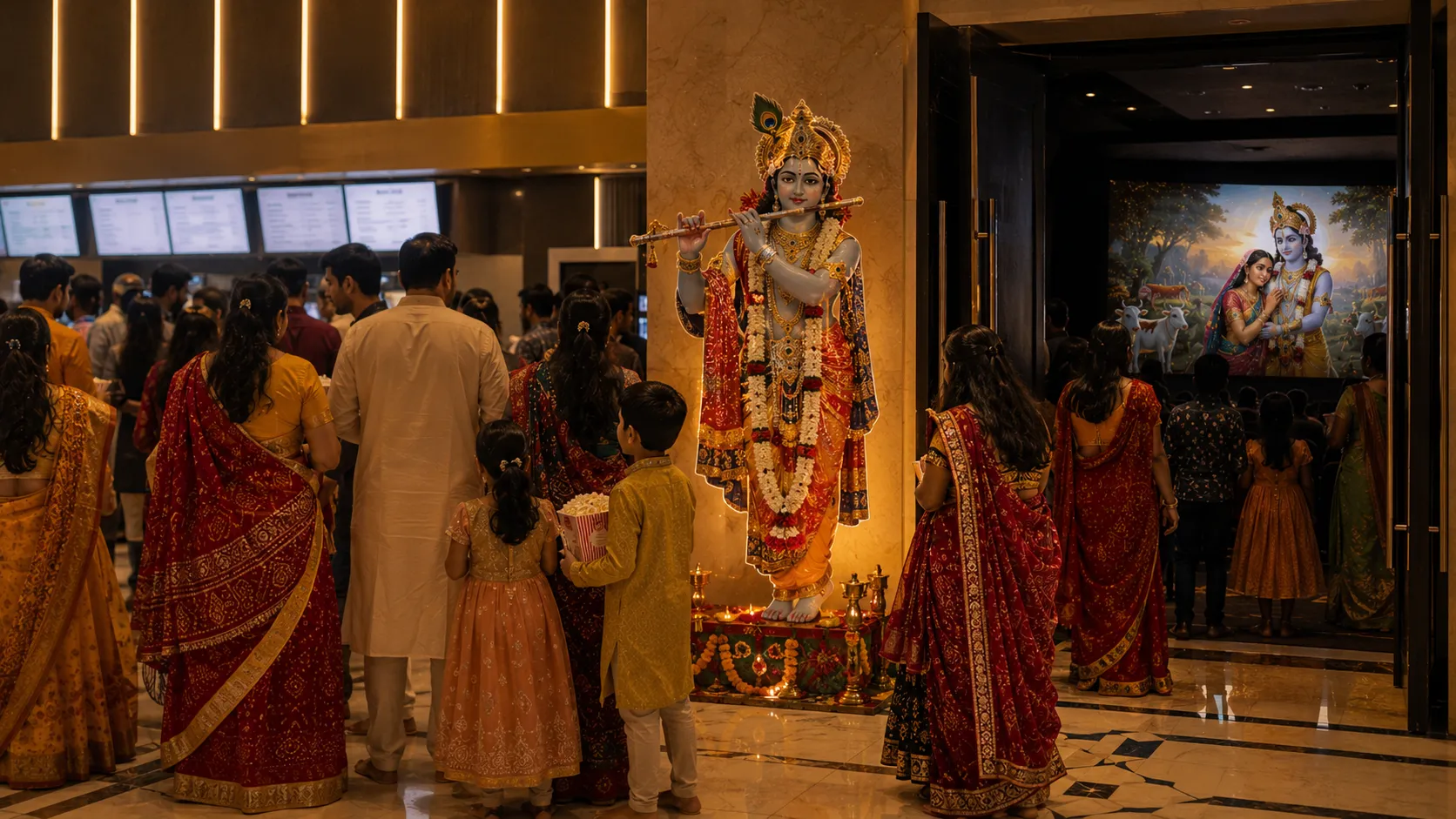
The single most successful genre in the Gujarati film industry's resurgence is the devotional film. The Laalo–Krishna franchise, which spans multiple films and has become the most valuable intellectual property in the history of Gujarati cinema, is built on a simple premise: the stories of Lord Krishna, told in the Gujarati language, with the visual spectacle and emotional intensity of a major commercial release. The audience for these films is not merely the Gujarati‑speaking population of Gujarat. It is the global Gujarati diaspora—the millions of families who trace their roots to the state, who speak the language at home, and who have a deep, enduring cultural and religious connection to the stories that the films tell. The devotional film is not merely a movie. It is a cultural event—a way of connecting with a heritage that the diaspora has preserved across generations, and that the films are now amplifying on a scale that the diaspora has never experienced before.
The devotional genre's commercial potential is enhanced by the specific demographics of the Gujarati diaspora. The Gujarati community is among the wealthiest and most globally dispersed of any Indian linguistic group, with significant populations in the United Kingdom, the United States, Canada, East Africa, and the Gulf. The diaspora's willingness to pay for cultural experiences—the Gujarati film that screens in a London multiplex, the devotional music concert that tours North America, the religious festival that is celebrated with the same intensity in New Jersey as in Ahmedabad—is well‑established. The Laalo–Krishna franchise is the first Gujarati film property to tap that willingness at scale, and the returns—₹100 crore and counting—are a signal to every other producer in the industry that the devotional market is larger, wealthier, and more accessible than anyone had assumed.
The devotional genre also benefits from a structural quirk of the Gujarati exhibition market: the absence of competition. The major Hindi and English releases that dominate the multiplex screens in the rest of India are, in many Gujarati theatres, competing with a film that the audience actively wants to see in preference to the national alternatives. The Gujarati film that opens during a festival window—Janmashtami, Diwali, the Gujarati New Year—is not merely another option on the multiplex menu. It is the default choice, the film that the audience has been waiting for, and the multiplex that programs it is guaranteed a full house for the duration of the festival period. The devotional film that is timed to a religious holiday is a product that the market absorbs with a reliability that no other genre can match.
The Diaspora Dollar
The most underappreciated dimension of the Gujarati film industry's resurgence is the diaspora economy that is funding it. The Gujarati diaspora, which is estimated at approximately 30 million people globally, is one of the wealthiest and most entrepreneurial of any Indian community, and its members have been among the most active investors in the Gujarati film industry's revival. The producer who wants to finance a Gujarati film can raise capital from a network of diaspora investors—businesspeople, professionals, family offices—who are motivated by a combination of cultural pride, commercial ambition, and the simple, powerful desire to see their language and their heritage represented on screen. The capital that is flowing into the Gujarati film industry from the diaspora is not being deployed as charity. It is being deployed as an investment, and the returns—the Laalo–Krishna franchise's profitability, the growing pipeline of commercially viable Gujarati films—are justifying the investment.
The diaspora is also the market. The Gujarati film that releases in London, New York, Toronto, or Dubai is not merely an export. It is a domestic product for the diaspora audience—a way of maintaining a cultural connection that is increasingly difficult to sustain across generations. The diaspora audience is willing to pay a premium for that connection. The ticket prices for a Gujarati film in a London multiplex are comparable to the ticket prices for a Hollywood blockbuster—and the audience that pays them is doing so not because the Gujarati film is cheaper, or more convenient, or more accessible than the alternatives, but because it is culturally meaningful in a way that the alternatives can never be. The diaspora market is the most profitable segment of the Gujarati film industry's audience—and the producers who are targeting it most effectively are the ones who are generating the highest returns.
The Bollywood Connection
The Gujarati film industry's resurgence has attracted the attention of the major Bollywood studios, which are beginning to explore the Gujarati market as a source of content and a source of revenue. The studios that have historically treated the Gujarati industry as an afterthought—a small, regional niche that was not worth their attention—are now investing in Gujarati‑language productions, acquiring the rights to successful Gujarati films for remake or adaptation, and building relationships with the Gujarati producers who have demonstrated an ability to connect with the diaspora audience.
The Bollywood‑Gujarati connection is a natural fit. The Gujarati community has been, for decades, one of the most important sources of capital, talent, and audience for the Hindi film industry. The stars, directors, and producers who dominate Bollywood are, in many cases, Gujarati by origin—and the cultural bridges that have been built between the two industries over decades are now being used to channel Bollywood's resources into the Gujarati market. The Bollywood studio that invests in a Gujarati film is not merely diversifying its slate. It is deepening its relationship with a community that is essential to its own survival—a community that constitutes a disproportionate share of the Hindi film industry's most loyal audience, its most reliable investors, and its most influential cultural gatekeepers.
The Bollywood connection also provides a distribution infrastructure that the Gujarati industry could not build on its own. The Gujarati film that is distributed by a major Bollywood studio can access the same multiplex screens, the same streaming platforms, and the same international markets that the studio's Hindi releases command. The distribution bottleneck that has historically limited the Gujarati industry's growth is being broken by the studios that have the most to gain from breaking it—and the Gujarati producers who are partnering with those studios are the ones who are achieving the widest reach and the highest returns.
What This Signals
The Gujarati cinema gold rush is not primarily a story about a single film or a single milestone. It is a story about the structural transformation of India's most overlooked film industry—a shift from a market that was defined by scarcity to a market that is defined by growth, from an audience that was assumed to be small and unsophisticated to an audience that is proving to be large, wealthy, and culturally engaged, and from a production culture that was dominated by amateurs to a production culture that is increasingly professional, increasingly ambitious, and increasingly capable of competing with the larger industries that once ignored it.
The Gujarati film industry will not, in the foreseeable future, challenge the scale of Bollywood or the South Indian powerhouses. But it does not need to. The ₹5 crore film that earns ₹100 crore is generating a return on investment that no Bollywood blockbuster can match—and the producers who are generating those returns are building a sustainable, profitable, culturally resonant business that serves an audience that has been waiting, for decades, to be taken seriously. The Gujarati cinema gold rush is just beginning, and the producers who are staking their claims today are the ones who will own the richest veins tomorrow.


