
The Letter That Sent Shockwaves Through Dalal Street
On a sleepy Tuesday morning, as the Indian stock market braced for another lackluster session, a letter landed on shareholders' desks. Within hours, Info Edge shares surged 4%. The reason? A single number: ₹41,300 crore.
That's the current value of Info Edge's startup investment portfolio—against a cumulative investment of just ₹4,900 crore across 135 startups. An 8.4x return multiple. A gross IRR of 33%.
Let that sink in. For every ₹1 invested, Info Edge has created ₹8.40 in value. In an era where venture capital is struggling, where unicorns are tumbling, where the global tech selloff is bleeding portfolios dry, one company has quietly built an empire that would make Silicon Valley blush.
The architect behind this quiet revolution? A man who started with a job portal and ended up building one of India's most formidable investment machines. A man who saw AI coming before anyone else did. A man named Sanjeev Bikhchandani.
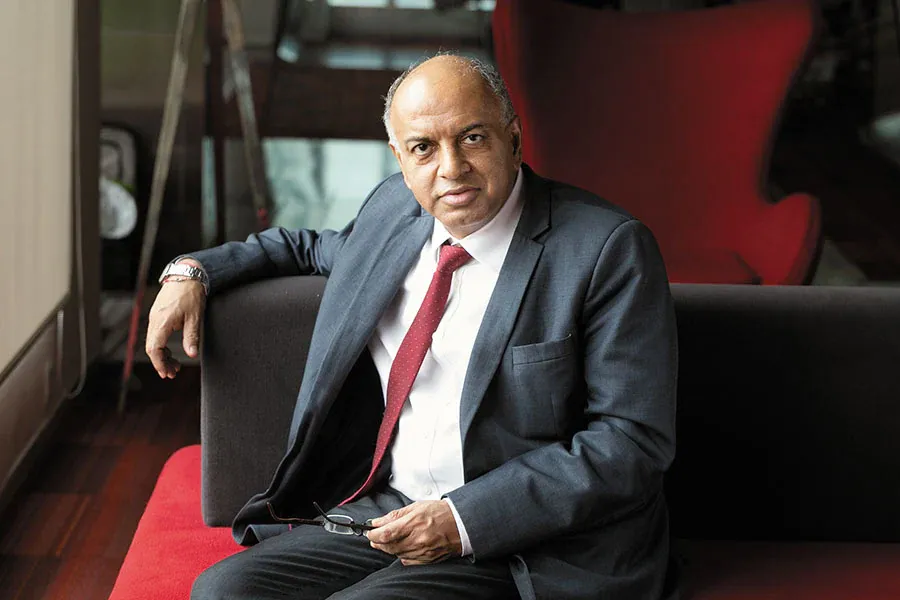
The Backstory: From Naukri to India's Most Active Startup Investor
To understand the magnitude of June 23, 2026, you need to understand the man behind the machine.
Sanjeev Bikhchandani didn't start as a venture capitalist. He started as a job seeker. In 1997, frustrated by the lack of good employment platforms, he founded Naukri.com from his home. It was a simple idea: connect employers with job seekers. No AI. No deep tech. Just a website.
Today, Naukri is India's largest online job portal. But Bikhchandani wasn't satisfied with just running a successful company. He wanted to build an ecosystem.
So he did something unusual. He started investing in startups—not as a side hobby, but as a core business strategy. Through vehicles like Redstart Labs, Capital 2B, and three Info Edge Ventures funds, he began deploying capital into India's most promising early-stage companies.
His strategy was deceptively simple but brutally effective: identify exceptional founders early, invest before consensus forms, and stay invested longer than most others are willing to.
The Consumer Tech Empire: The ₹37,214 Crore Elephant in the Room
Let's start with the crown jewel of Info Edge's portfolio.
₹37,214 crore.
That's the current value of Info Edge's consumer technology portfolio—built on an investment of just ₹2,755 crore across 45 companies. A 13.5x return multiple. An estimated gross IRR of 34%.
What's in this portfolio? The names will make your head spin: Eternal (the parent of Zomato and Blinkit), PB Fintech (PolicyBazaar and Paisabazaar), and a constellation of companies spanning quick commerce, food delivery, insurance aggregation, travel, healthcare, fintech, gaming, and education.
These aren't just good investments. They're category-defining companies that have reshaped how India eats, shops, travels, and insures itself.
"We prefer to invest in companies domiciled in India and with Indian founders, irrespective of whether building for India or for the world," Bikhchandani said in the shareholder letter.
That conviction has paid off—spectacularly.

The AI Bet: How Info Edge Saw the Future Before Anyone Else
But the real story of June 23 isn't about consumer tech. It's about something far more exciting: the AI bet that doubled in value.
In 2020, while the world was still reeling from COVID-19, Info Edge began deploying capital into artificial intelligence and deep-tech startups. At the time, AI wasn't the buzzword it is today. ChatGPT didn't exist. The global AI funding frenzy hadn't begun.
Bikhchandani saw something others didn't.
"We began investing in AI and deeptech in 2020 – ahead of the broader market wave," he said.
Today, that early conviction has paid off in spectacular fashion.
Info Edge's AI portfolio comprises 28 companies, with investments of ₹614 crore. The current valuation? ₹1,268 crore. A 2.1x multiple. An estimated gross IRR of 31%.
Fifteen of these 28 companies have already raised externally led follow-on funding rounds from global heavyweights including Insight Partners, Peak XV, SIG, and Vertex.
The portfolio reads like a who's who of Indian AI innovation: Aftershoot, Attentive AI, Gnani.ai, Lumiq, Phot.ai, Pascal AI, and Kris@Work.
The Deep-Tech Frontier: Robotics, Semiconductors, and Space Tech
If AI is Info Edge's hottest bet, deep-tech is its boldest.
The deep-tech portfolio comprises 30 companies, with investments of ₹455 crore. The current valuation stands at ₹559 crore. A 1.2x multiple. An estimated gross IRR of 15%.
But here's the catch: the deep-tech portfolio is young. Most investments were made at the IP creation and R&D stage. These are long-term bets—the kind that take a decade to mature.
"Deeptech businesses typically require longer development cycles," Bikhchandani cautioned.
What's in this portfolio? The names are enough to make any tech enthusiast's heart race: Unbox Robotics (warehouse swarm robotics), ePlane (electric aircraft), Manastu Space (satellite propulsion), Bharat Semi (semiconductors), Botsync, Matter Motors, and Avammune.
The Government Backing: When Private Capital Meets Sovereign Ambition
Here's where the story gets even more interesting.
Several of Info Edge's portfolio companies have secured backing under flagship government technology initiatives.
Voice AI startup Gnani.ai was selected under the IndiaAI Mission and received ₹177 crore worth of GPU compute credits to help build sovereign voice AI foundation models.
Deep-tech startups ePlane and Manastu Space secured allocations under the government's Research, Development and Innovation (RDI) scheme. EPlane received ₹285 crore—the single largest national allocation—while Manastu Space secured ₹115 crore.
These allocations are conditional on the startups raising matching capital from investors. But the message is clear: private capital and sovereign ambition are converging.
"We believe future value creation will be driven by three themes predominantly—AI, Deeptech and Consumer Technology—with AI expected to reshape both startups and established internet businesses," the company said in its letter.
The Big Picture: ₹41,300 Crore and Counting
Now, let's zoom out and look at the full picture.
Info Edge and its managed funds have deployed approximately ₹4,900 crore across 135 startups.
The portfolio is currently valued at roughly ₹41,300 crore.
The combined gross IRR of these investments stands at approximately 33%.
Of the total investment, around ₹3,600 crore has come directly from Info Edge and its group entities, while approximately ₹1,300 crore has been contributed by external limited partners through alternative investment funds managed by the group.
The combined gross IRR of these managed funds stands at around 22%.
The Philosophy: What Makes Info Edge Different
So what's the secret sauce? Why has Info Edge succeeded where so many others have failed?
1. Early entry. Info Edge entered AI and deep-tech in 2020, well before the global AI wave turned these themes into a consensus bet. In Bikhchandani's own words, the strategy was to "identify exceptional founders early, invest before consensus forms, and stay invested longer than most others are willing to".
2. Sector focus. Info Edge didn't scatter its bets across every sector. It focused on three themes: AI, deep-tech, and consumer technology. This focus allowed it to build deep expertise and networks in these areas.
3. Patient capital. Unlike many VCs that pressure startups for quick exits, Info Edge takes a long-term view. The company said a large part of its value is yet to be realized and reiterated its preference for IPOs as the primary exit route.
4. Government alignment. Several portfolio companies have secured backing under flagship government initiatives like the IndiaAI Mission and the RDI scheme. This alignment with sovereign technology priorities creates a powerful tailwind.
5. Indian founders, Indian domicile. "We prefer to invest in companies domiciled in India and with Indian founders, irrespective of whether building for India or for the world," Bikhchandani said.
The Final Verdict: What June 23 Means for Indian Startups
June 23, 2026, will be remembered as the day Info Edge proved that Indian startups aren't just for show—they're for serious money.
An 8.4x return on a ₹4,900 crore portfolio. A ₹41,300 crore empire built on job search, matrimony, real estate, and education websites. A company that saw AI coming in 2020 and is now reaping the rewards. A founder who turned a job portal into one of India's most formidable investment machines.
"In our view, India is entering a period where globally relevant technology companies will increasingly be built from India, not just for India," the company said.
That's not just a prediction. It's a statement of fact.
From Naukri to the Narendra Modi Stadium naming rights, from job search to ₹41,300 crore in startup investments—Sanjeev Bikhchandani has built something extraordinary.
And the best part? He's just getting started.
"We believe future value creation will be driven by three themes predominantly—Artificial Intelligence, Deeptech and Consumer Technology." – Sanjeev Bikhchandani, Founder & Vice Chairman, Info Edge
"We began investing in AI and deeptech in 2020 – ahead of the broader market wave." – Sanjeev Bikhchandani


