The ₹30 Crore Miracle Chip: How Two IIT Madras Engineers Are Building India's First Secure IoT Brain—and Taking On the Global Semiconductor Giants
CHENNAI — May 21, 2026 — Shashwath T.R. and Sharan Srinivas J. were graduate students at IIT Madras when they decided to do something that most graduate students do not do. They decided to build a semiconductor company. Not a software platform. Not an app. Not a marketplace. A chip company—in a country that had never produced a commercial-grade, high-performance microcontroller system-on-chip designed entirely within its borders.
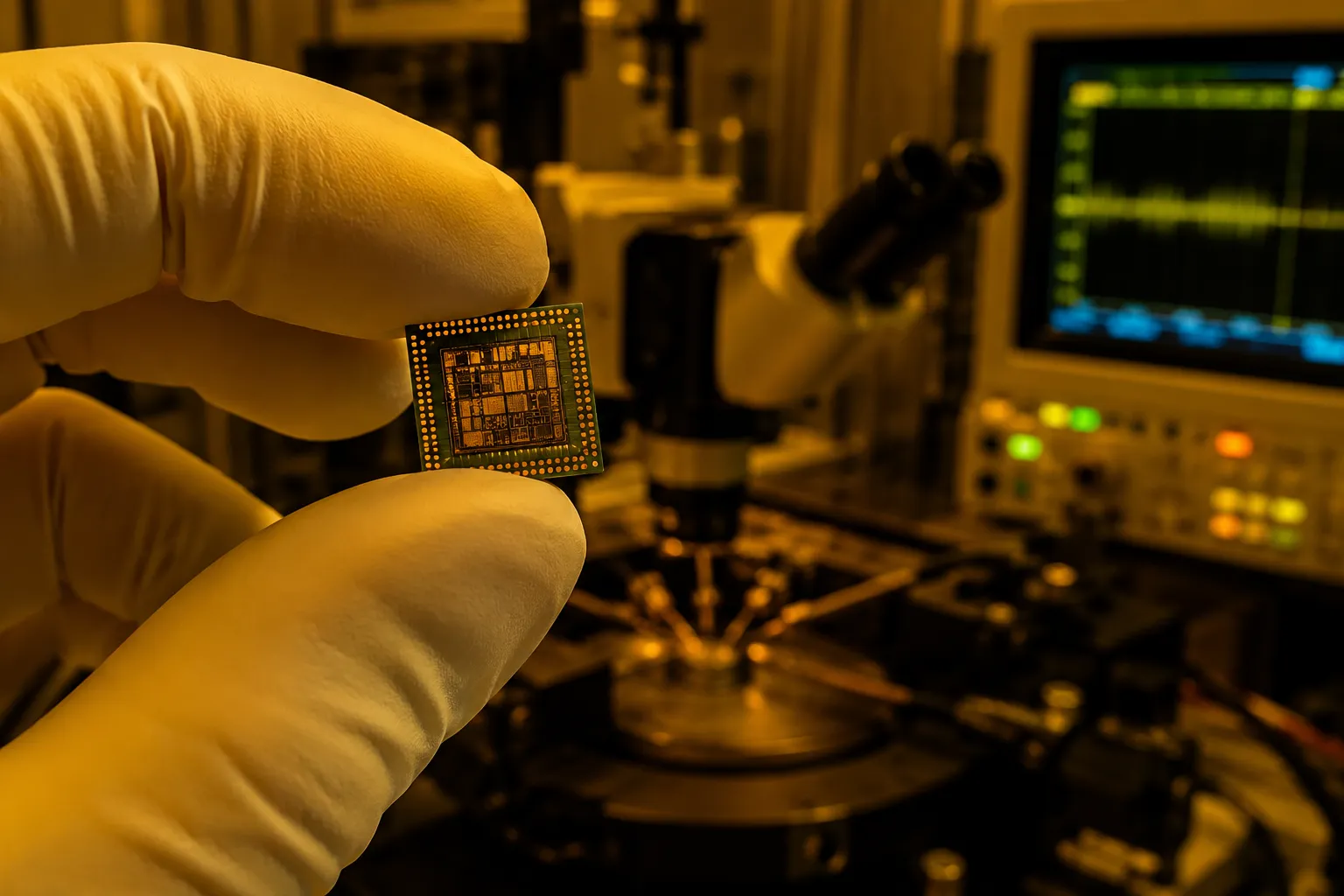
Four years later, the chip is real. Mindgrove Technologies, the fabless semiconductor startup they founded in 2021, is on the cusp of commercial production for its Secure IoT chip—a RISC-V-based microcontroller SoC built at 28 nanometers, running at 700 megahertz, and designed to power everything from biometric scanners and smart meters to electric vehicle battery management systems and industrial IoT devices.
The company has already taped out the chip. Prototype versions are in the hands of customers across secure biometrics, industrial automation, and EV applications. And the pitch is simple: a chip designed in India, built on the open-source RISC-V architecture, that can reduce overall device costs by nearly 30 percent compared to imported alternatives.
The RISC-V Bet
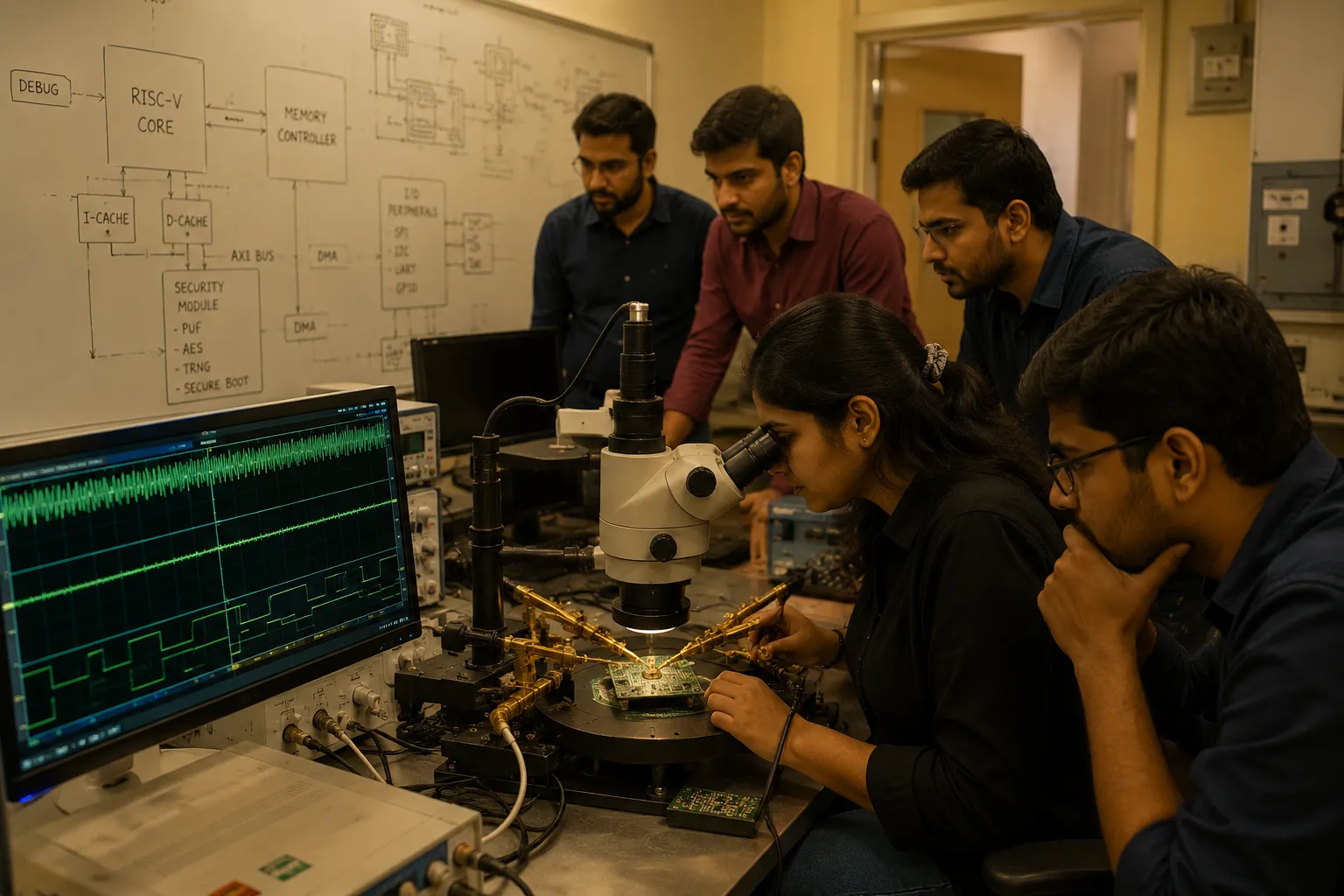
The single most important strategic decision Mindgrove made was not about transistor count or clock speed. It was about the instruction set. The company built its chip on RISC-V—an open-source architecture that has emerged over the past decade as the most credible challenger to the proprietary architectures that dominate the microcontroller market.
To understand why this matters, it helps to know a little about how chips are designed. Every processor needs an instruction set architecture—a set of basic commands that the chip understands. For decades, the market has been dominated by two proprietary architectures: ARM, designed by the British company of the same name, and x86, designed by Intel. Companies that build chips on these architectures pay licensing fees—sometimes substantial ones—to the architecture's owner. They are also constrained by the architecture's design choices, which may or may not be optimized for their specific use case.
RISC-V is different. It is open-source. Anyone can use it without paying a license fee. Anyone can modify it, extend it, and customize it for their specific application. For a startup in a country with no history of commercial chip design, the advantages are obvious. No licensing fees means lower development costs. Design freedom means the ability to optimize the chip for Indian use cases—voltage-tolerant circuits for India's unstable grid, security features for India's biometric identity infrastructure, power efficiency for India's battery-operated devices.
Mindgrove has positioned the Secure IoT chip as India's first commercial-grade high-performance microcontroller SoC built on RISC-V. The company's focus is on reducing the total cost of electronic devices, not simply lowering chip prices. By integrating multiple functions into a single system-on-chip, the company enables device manufacturers to eliminate additional hardware components and reduce deployment complexity. The approach, Shashwath believes, could become a major differentiator as Indian electronics manufacturers look to reduce dependence on imported semiconductor components.
The Supply Chain at the Last Mile
For all the technical achievement, Mindgrove is now confronting the less glamorous reality of semiconductor manufacturing: the supply chain. The company has been dealing with last-mile bottlenecks linked to semiconductor packaging and manufacturing as it prepares for commercial production. Some packaging components—lead frames and substrates—have seen disruptions because of natural gas availability issues affecting parts of the global supply chain, particularly in Taiwan where key suppliers operate.
These are not unusual problems. Every chip startup faces them during the transition from prototype to mass production. But they are a reminder that designing a chip is only half the battle. Manufacturing it at scale, with consistent quality, at a price that customers will pay, requires an entirely different set of capabilities—capabilities that the Indian semiconductor ecosystem is still building.
The government's semiconductor incentive programs, including the Design Linked Incentive scheme that is supporting Mindgrove's next-generation "Vision" chip for edge computing applications, are designed to accelerate that ecosystem development. But incentives take years to translate into manufacturing capacity, and Mindgrove needs packaging and testing partners now. "Such changes require additional testing and validation before production-scale deployment," Shashwath said, describing the industry-wide nature of the disruptions and the company's efforts to qualify alternative suppliers.
The First Wave of Demand
Mindgrove's initial customers are coming from a sector that is both mundane and strategically significant: secure biometrics. India's Aadhaar identity system is the largest biometric database in the world, and the government mandates secure authentication infrastructure for telecom onboarding, financial services, and identity verification. The devices that perform these authentications—fingerprint scanners, iris readers, access-control systems—require secure microcontrollers that can process biometric data without exposing it to tampering.
"The government sets the standards for these systems, while private players procure and deploy the devices," Shashwath explained. Mindgrove's Secure IoT chip is designed specifically for these applications, with hardware-level security features that make it harder to extract or manipulate biometric data.
The company has signed a two-year commercial partnership with Pune-based Pinetics to integrate Mindgrove's chips into biometric access-control systems, smart locks, and camera applications. The partnership aims to create an indigenous "system on module" stack around Mindgrove's silicon—offering Indian OEMs and ODMs an alternative to imported semiconductor modules that currently dominate the market.
Beyond biometrics, the chip targets smart meters, industrial IoT devices, wearables, and EV battery management systems—a range of applications that reflects the versatility of the RISC-V architecture and the breadth of Mindgrove's ambition. The company's next chip, the Vision SoC, is being built for edge computing and vision-processing applications such as CCTV cameras, dashcams, ADAS systems, and smart TVs. It is being developed with support from the government's Design Linked Incentive scheme.
The Indian semiconductor moment is arriving—not in a single, dramatic breakthrough, but in a series of incremental milestones that are beginning to accumulate. A chip designed in Chennai. A customer in Pune. A biometric device that does not need an imported microcontroller. The Secure IoT chip is not a response to the global chip shortage. It is a bet that India can build the brains of its own devices—and that the world, eventually, will buy them.


