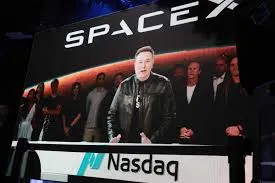
Elon Musk's rocket-and-AI empire raised $86 billion in the biggest IPO in history, pushing its valuation past $2 trillion and making Musk the world's first trillionaire. Days later, SpaceX is preparing to issue at least $20 billion in bonds. The reason isn't expansion. It's a bridge loan — taken out to merge with xAI — that's coming due. The question isn't whether SpaceX can raise the money. It's whether the market can stomach the bill.
The celebration lasted less than a week.
On June 12, SpaceX made its historic debut on the Nasdaq, raising $86 billion in the largest initial public offering in history — a record that will likely stand for years. The stock surged, pushing the company's valuation past $2 trillion and making Elon Musk the world's first trillionaire. By Tuesday, shares had climbed above $225 apiece. The triumph was complete.
Then came the hangover.
By Thursday, SpaceX shares had fallen roughly 20% from their peak, closing at $184.98. And on Friday, reports emerged that the company's bankers were preparing to meet investors as early as next week to discuss a bond offering of at least $20 billion.
The proceeds would refinance a temporary bridge loan that SpaceX took out earlier this year — after acquiring Musk's AI startup xAI in February. The same five Wall Street banks that provided the bridge financing — Bank of America, Citigroup, JPMorgan Chase, Goldman Sachs, and Morgan Stanley — are expected to run the bond deal. The loan matures in September 2027 and represents the bulk of SpaceX's $29.1 billion in long-term debt.
The bond sale is not a sign of distress. It is a sign of how expensive the AI arms race has become — and how quickly even a $2 trillion company can burn through capital.
The Merger That Changed Everything
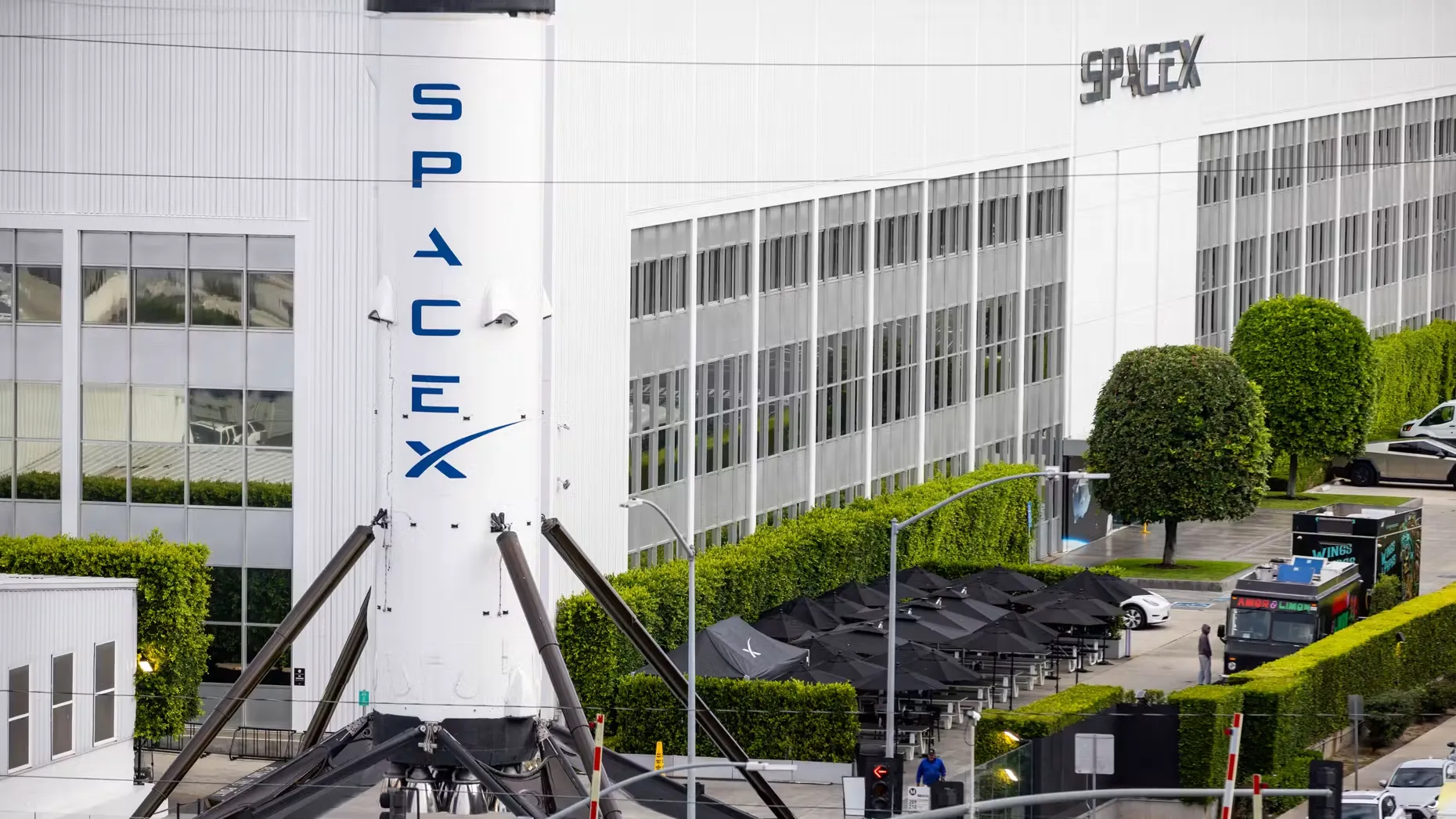
In February 2026, SpaceX finalized a merger with xAI, Musk's AI venture behind the Grok family of large language models. The all-stock tax-free transaction valued SpaceX at $1 trillion and xAI at $250 billion, bringing AI research talent, proprietary language models, and data center capacity under the SpaceX umbrella. The merger was a bet on convergence — that rockets and AI would become inseparable, that the company that built the infrastructure for space would also build the intelligence that makes it useful.
To finance the deal, SpaceX took out a $20 billion bridge loan from Wall Street's biggest banks. The loan was always intended to be temporary — a placeholder until the company could access permanent financing through the public markets. The IPO was supposed to be the permanent solution. But the IPO, even at $86 billion, didn't fully solve the problem.
SpaceX had said it planned to use IPO proceeds to extinguish around $20 billion in debt related to legacy loans tied to X, the social media platform formerly known as Twitter, and xAI. But the proceeds were also needed for AI compute infrastructure, launch infrastructure, and Starlink expansion. The IPO was big, but so were the demands on the capital.
Now, the company is turning to the bond market.
The Bond Sale: $20 Billion, BBB-Rated, and Coming Next Week
The bond offering is expected to be at least $20 billion, with investor calls potentially beginning as early as Monday. It would mark the first time SpaceX has issued investment-grade dollar bonds. The company received ratings in the BBB tier from all three major bond graders on Thursday — Moody's at Baa1, Fitch at BBB+, and S&P Global at BBB — paving the way for cheaper borrowing.
The 10-year debt is expected to be priced at around 1.35 to 1.5 percentage points above US Treasuries during initial discussions. The final pricing and deal size will depend on market conditions. The banks that provided the initial bridge financing — Bank of America, Citigroup, JPMorgan Chase, Goldman Sachs, and Morgan Stanley — are expected to run the deal.
The bond sale is not about expansion. It is about refinancing. "The company will likely want to establish a track record in debt markets soon," CreditSights analyst Matt Woodruff told Bloomberg ahead of the potential bond sale. "They will need money down the road for capital expenditure, so from that perspective, the sooner the better".
The AI Black Hole
The bond sale is a reminder of just how expensive the AI arms race has become. SpaceX's AI ambitions come with a steep price tag, requiring tens of billions of dollars in investment for data centers, computing hardware, and power infrastructure.
The financials are sobering. SpaceX posted a net loss of $4.28 billion on revenue of $4.69 billion for the first quarter of 2026, compared with a net loss of $528 million on revenue of about $4 billion a year earlier. The company disclosed in its IPO filing that capital expenditure will increase "substantially" and that it planned to tap "a range of debt and equity financing solutions" for future investments.
The company is not alone in its hunger for capital. Google has committed $30 billion for computing power under a cloud deal running through mid-2029. Anthropic has a roughly $45 billion agreement spanning about three years. Nvidia sold $25 billion of investment-grade debt this week in its first bond sale in five years. The AI buildout is the most capital-intensive technology investment since the internet itself — and every player is scrambling for funding.
The Stock Correction: From $225 to $185
The bond sale comes as SpaceX's stock has given back most of its post-IPO gains. After soaring above $225 on Tuesday, shares have fallen roughly 20%, closing Thursday at $184.98. The stock was down 3.6% on Thursday and 6% at one point in afternoon trading. Despite the decline, the company's market capitalization remains about $2.4 trillion, making it the sixth biggest company in the world.
The correction reflects investor uncertainty about whether SpaceX's rich valuation can be justified by its costly AI push. The IPO was a bet on convergence — that SpaceX would become the dominant player in both space and AI. The bond sale is a reminder that convergence comes with a price tag. And the market is still deciding whether the price is worth paying.
The Bottom Line
SpaceX raised $86 billion in the biggest IPO in history, pushing its valuation past $2 trillion and making Elon Musk the world's first trillionaire. Days later, the company is preparing to issue at least $20 billion in bonds. The proceeds will refinance a bridge loan taken out to acquire xAI — a loan that represents the bulk of SpaceX's $29.1 billion in long-term debt.
The bond sale is not a sign of distress. It is a sign of ambition — and of the enormous cost of the AI arms race. SpaceX's AI ambitions require tens of billions in spending on data centers, power, and computing hardware. The company's net loss ballooned to $4.28 billion in the first quarter. Capital expenditure will increase "substantially." And every major tech company is scrambling for the same finite pool of capital.
The bond market is ready. SpaceX received investment-grade ratings from all three major agencies. The same banks that provided the bridge financing are expected to run the deal. Investor calls could begin as early as Monday. The $20 billion bond sale is likely to be oversubscribed.
But the larger question remains: can SpaceX justify its $2.4 trillion valuation? The IPO was a bet on convergence — that rockets and AI would become inseparable, that the company that built the infrastructure for space would also build the intelligence that makes it useful. The bond sale is a reminder that convergence comes with a price. And the market is still deciding whether the price is worth paying.
For now, Musk is playing a familiar game: raise money, build infrastructure, repeat. The bridge loan was temporary. The bond sale will be permanent. And the AI buildout will continue, one billion at a time.


