The €180 Million Bet That Went Quietly Wrong: Inside the Metacore Meltdown—and Supercell's Gamble to Salvage It
HELSINKI — May 22, 2026 — In the autumn of 2020, a small Finnish game studio released a mobile puzzle title that should not have worked. The game involved no shooting, no racing, no combat of any kind. Its central mechanic was merging—dragging one garden tool onto another to create a slightly better garden tool, then using that tool to renovate a crumbling mansion. The protagonist was a grandmother. The story, such as it was, involved a family mystery buried somewhere in the estate. The name, Merge Mansion, sounded like a retirement-home hobby.
It became a global phenomenon. Tens of millions of players downloaded it. They spent hours merging rakes and pruning shears, clearing cobwebs from virtual ballrooms, and piecing together the soap-opera backstory of Grandma Ursula and her mysterious past. The game generated approximately $30 million in monthly revenue at its peak, created an entirely new genre—"merge 2"—and made Metacore, the Helsinki studio behind it, one of the most celebrated mobile gaming startups in Europe. Supercell, the Finnish juggernaut behind Clash of Clans and Brawl Stars, invested first €25 million, then a €150 million credit line. The partnership looked like a masterstroke: the world's most disciplined mobile-game company backing the creator of the world's most addictive new puzzle genre.
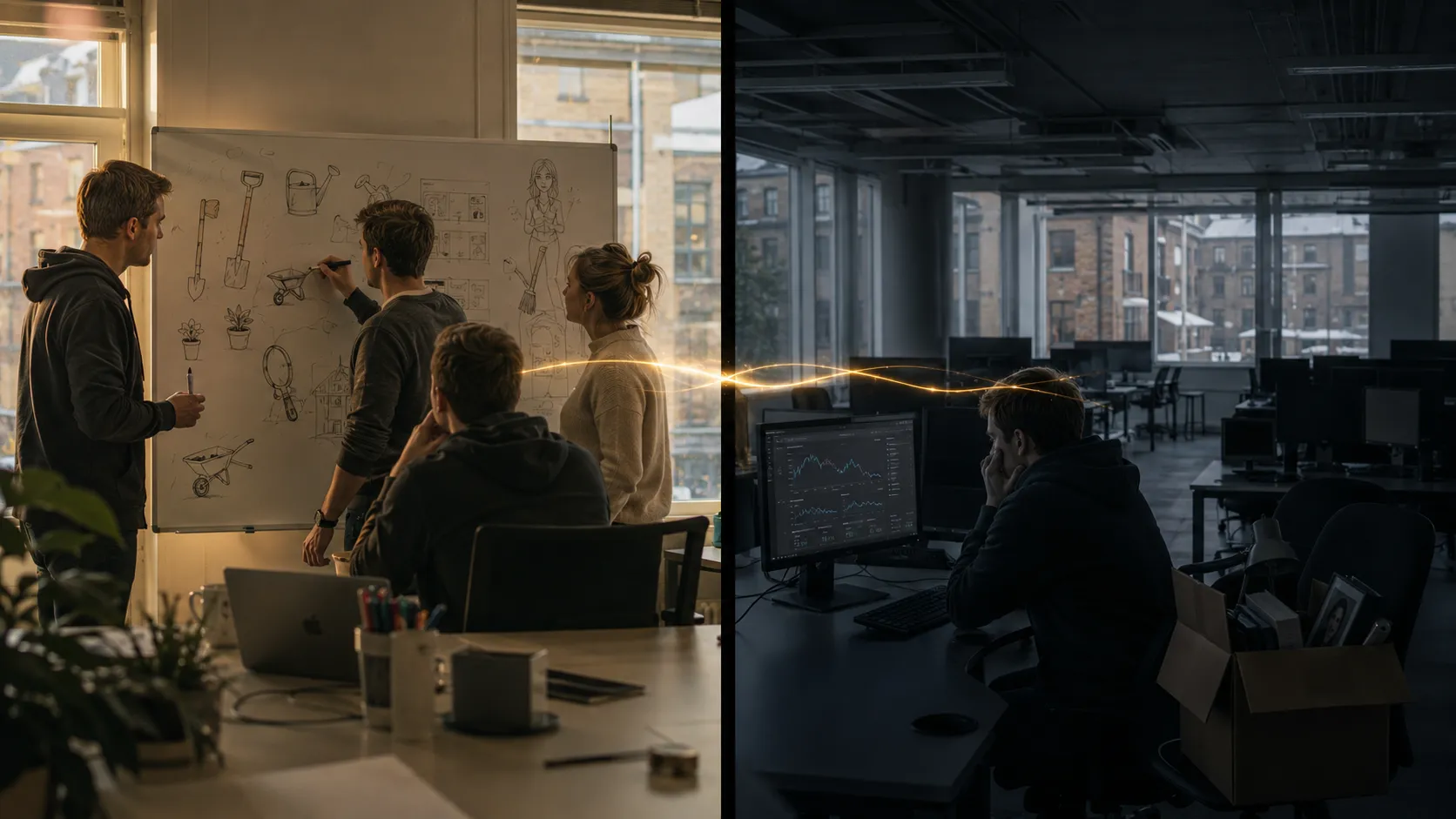
On May 5, 2026, the partnership ended. Or, depending on how you read the announcement, it entered a new phase that looked a lot like a surrender. Supercell announced it would fully acquire Metacore and absorb Merge Mansion into its live-game portfolio. Metacore, meanwhile, announced a restructuring that would cut up to 160 jobs in Finland—roughly 70 percent of its workforce—and review its operations in Germany and Sweden. The €180 million that Supercell had poured into the company had not produced a single new hit. The growth ambitions that Metacore had built its organization around had "not materialized as expected." The merger genre had been invaded by competitors—Gossip Harbor, Travel Town—and Merge Mansion's growth had plateaued. The fairy tale had run out of pages.
The Category That Metacore Built—Then Lost
To understand what went wrong at Metacore, one must first appreciate what the company got right. Before Merge Mansion, the mobile puzzle category was dominated by match-3 games—Candy Crush, Homescapes, and a thousand imitators. The mechanic was simple: swap adjacent tiles to create rows of three or more identical objects, which then disappear and grant points. The formula had been refined over a decade into a science, and the incumbents—particularly King, the Activision-owned maker of Candy Crush—had built moats of user data, live-operations expertise, and advertising spend that were nearly impossible to breach.
Merge Mansion changed the grammar of the puzzle genre. Instead of matching, players merged. Two identical items—a rake and a rake—combined into a single, more powerful item. That item could then be used to complete a task—clearing leaves, fixing a fountain, uncovering a hidden room. The mechanic was slower than match-3, more deliberate, but it generated longer session times and deeper player investment. Players did not just solve puzzles; they restored a mansion. They followed a story. They became attached to Grandma Ursula in a way that no one had ever become attached to a candy-colored tile grid.
The "merge 2" category—named for the two-object merging mechanic—was born with Merge Mansion, and Metacore was its undisputed pioneer. The category grew rapidly, attracting tens of millions of players and, inevitably, competitors. Gossip Harbor, a merge game with a narrative about a woman rebuilding her family's seaside restaurant, became a breakout hit in 2024. Travel Town, another merge title, carved out its own audience. By early 2026, Metacore estimated the merge 2 category was on track to surpass match-3 as the largest puzzle genre in mobile gaming. The irony was bitter: Metacore had created the category, but it no longer owned it.

The €180 Million Question
Metacore's failure was not a failure of ambition. It was, if anything, a failure of too much ambition, funded too generously, without the discipline that a capital-constrained startup is forced to develop.
The €150 million credit line that Supercell extended in 2021—one of the largest ever granted to a European game studio—was designed to fund two things simultaneously: the scaling of Merge Mansion to ever-larger audiences and the development of new games that would diversify Metacore beyond a single title. The logic was sensible. Single-game studios are fragile. A hit can fade, and if there is no successor in development, the studio fades with it. Supercell, which had built its own empire on a portfolio of multiple live hits, understood this better than anyone. The credit line was a bet that Metacore could replicate its success.
It could not. Over the next four years, Metacore grew its headcount from a few dozen to several hundred, built out teams for multiple new game projects, and invested heavily in user acquisition to keep Merge Mansion growing. None of the new games launched globally. The user-acquisition costs for Merge Mansion rose as competitors drove up the price of mobile advertising in the merge category. The revenue plateaued. And the organization—now sized for growth that never arrived—found itself with a cost structure it could not sustain.
The layoffs of up to 160 employees in Finland, combined with the review of operations in Germany and Sweden, represent a brutal acknowledgment of that reality. Metacore is not being shut down. But it is being shrunk, dramatically, to fit the shape of a single-game studio—the shape it was in 2020, before the €180 million arrived and convinced everyone that the future was bigger than the present.
Supercell's Salvage Operation
Supercell's acquisition of Metacore is not a triumphant consolidation. It is a salvage operation—a bet by one of the world's most successful mobile-game companies that Merge Mansion, even in its plateaued state, has a core of loyal players and a brand strong enough to justify intervention.
Supercell's track record with live games is among the best in the industry. Clash of Clans, launched in 2012, still generates hundreds of millions of dollars annually. Brawl Stars, launched in 2018, has grown steadily for nearly a decade. The company's philosophy—small teams, high autonomy, ruthless willingness to kill projects that do not meet its "very high standards"—has produced one of the most durable portfolios in mobile gaming. The bet on Metacore is that Supercell can apply the same live-operations discipline to Merge Mansion—refining the user-acquisition strategy, improving the in-game economy, and reigniting growth in a title that still has millions of active players.
The deal also reflects a broader shift in Supercell's strategy. For most of its history, the company focused exclusively on its own internal studios, developing its own intellectual property. In the past two years, it has begun acquiring outside studios—Space Ape Games in the UK, a majority stake in Trailmix—and bringing external titles into its portfolio. The Metacore acquisition is the largest of these moves, and it signals that Supercell is willing to deploy its live-operations expertise on games it did not create, in genres—like merge 2—where it has no prior experience.
The risks are real. Supercell has never operated a merge game. The live-operations playbook that works for Clash of Clans—clan wars, seasonal events, new character releases—may not translate cleanly to a narrative-driven puzzle title. The user base for Merge Mansion skews older and more female than Supercell's core audience. And the underlying problem—that the merge category has become crowded, expensive, and fiercely competitive—will not be solved by a change of ownership.
What This Signals
The Metacore story is not an outlier. It is a parable for the post-ZIRP era of venture-backed gaming—the era in which capital was abundant, growth was assumed, and the hard questions about profitability and sustainability were deferred until they could no longer be deferred.
The mobile gaming industry has entered a structural squeeze. User-acquisition costs have risen as privacy changes—Apple's App Tracking Transparency framework, Google's evolving sandbox—have made targeted advertising more expensive and less effective. The pandemic-era surge in mobile gaming has receded. The platforms—Apple and Google—take 30 percent of every transaction. And the hit-driven nature of the business means that a studio's entire future can depend on a single game that, eventually, will plateau.
Metacore's €180 million credit line was a bet that the company could beat those odds. It could not. Supercell's acquisition is a bet that the company can salvage something from the attempt—and that Merge Mansion's best days, as Ilkka Paananen said, "are still ahead." The Finnish mobile-gaming ecosystem, which has produced some of the most valuable entertainment companies on Earth, is watching closely. The lesson, for the studios that remain independent, is not subtle: capital buys time. It does not buy hits.


