The 18‑Month Countdown: When Microsoft’s AI Chief Predicted the End of Office Work as We Know It
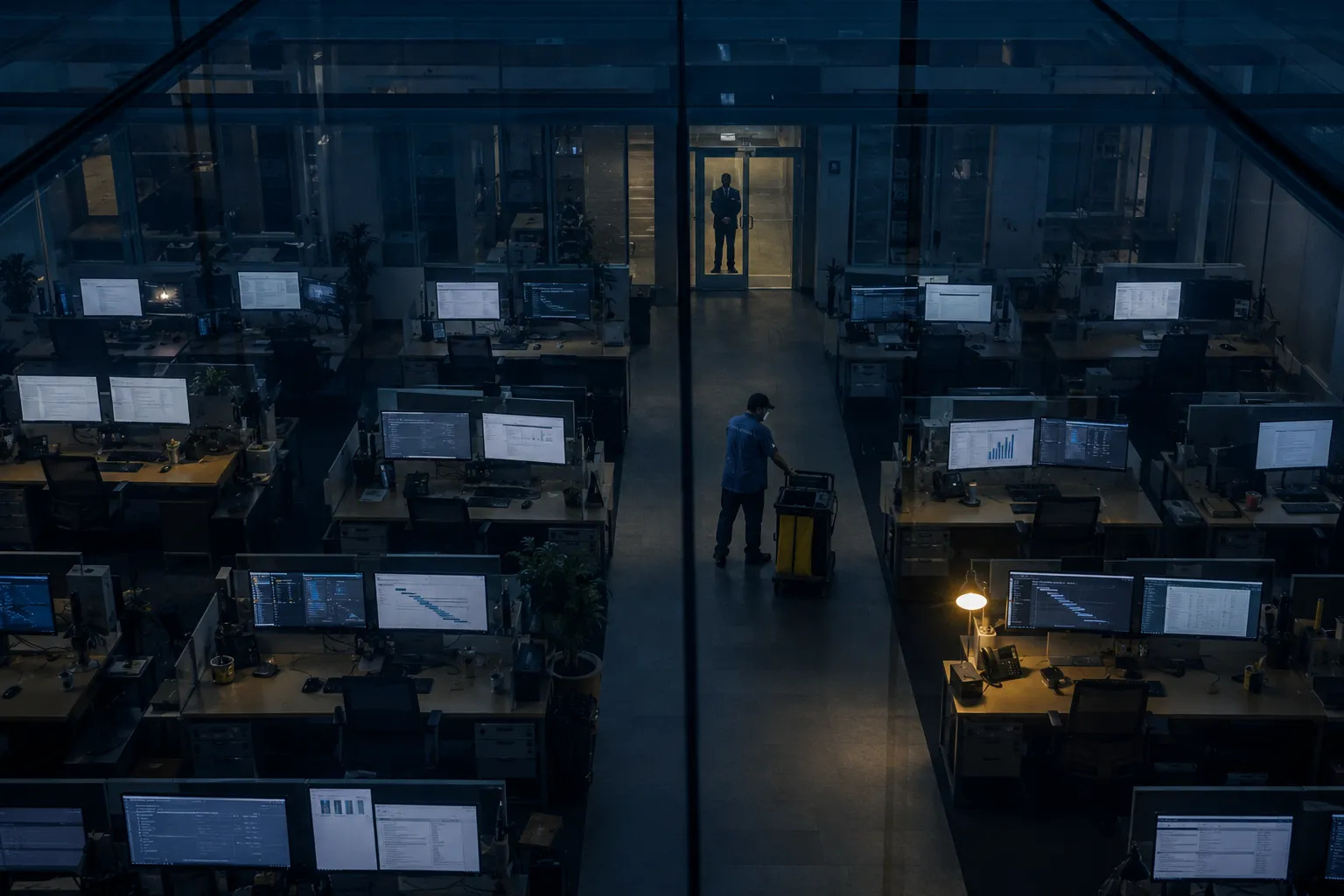
LONDON — May 18, 2026 — In early February, Mustafa Suleyman sat down for an interview with the Financial Times and said something that has been ricocheting through boardrooms, universities, and dinner tables ever since. The CEO of Microsoft AI, a man who oversees one of the largest artificial intelligence research organizations on Earth, looked into the camera and delivered a timeline so precise, so sweeping, and so close that it landed with the force of a thunderclap. Within 12 to 18 months, he said, artificial intelligence would achieve “human‑level performance on most, if not all professional tasks.” The lawyer reviewing contracts. The accountant reconciling ledgers. The project manager coordinating workflows. The marketer drafting campaigns. All of them, he argued, are performing work that “will be fully automated by AI within the next year or 18 months.”
The prediction was not a vague warning about the distant future. It was a calendar event. If Suleyman is right, the summer of 2027 will mark the moment when the cognitive work that defines modern professional life — the spreadsheets, the briefs, the slide decks, the status meetings — ceases to be a human monopoly. And the speed of the timeline, more than its content, is what has made the prediction one of the most debated and dissected statements in the recent history of technology.
Suleyman’s timeline did not arrive in a vacuum. It landed in the middle of a February that was already thick with warnings. Matt Shumer, the CEO of the AI company OthersideAI, had just published an essay that ricocheted across the internet, racking up more than 80 million views in a matter of days. Shumer compared the present moment to February 2020 — the weeks before the Covid‑19 pandemic shut down the global economy, when the evidence of what was coming was already clear to those who were looking, but the broad public had not yet absorbed it. “This will be more dramatic,” Shumer wrote, referring to the AI disruption. His essay struck a nerve that was already raw.
Days later, The Atlantic published its March cover story. Staff writer Josh Tyrangiel had spent months reporting from Silicon Valley, and his conclusion was blunt. The United States, he argued, was not prepared for the speed or scale of the transformation bearing down on professional work. He described the silence of many chief executives on the subject as akin to seeing “a shark fin break the water” — the surface calm masking a predator moving fast beneath. The metaphor was vivid because it was accurate: the data suggesting a coming wave was accumulating, but the public conversation had not caught up.
The Data Behind the Prediction
What makes Suleyman’s timeline more than just another executive’s provocation is the infrastructure that undergirds it. Microsoft is not merely observing the AI acceleration from a distance. It is building the hardware, training the models, and — critically — pushing toward what Suleyman calls “true AI self‑sufficiency.” In his Financial Times interview, he revealed that Microsoft is developing its own frontier‑class foundation models, trained with gigawatt‑scale compute, designed to compete directly with the systems built by OpenAI — a company in which Microsoft still holds a roughly 27 percent stake valued at approximately $135 billion.
The push for independence is strategic and urgent. Microsoft has forecast capital expenditures of $140 billion in its fiscal year ending June 2026, as it races to build the infrastructure required to train and deploy advanced AI systems. The company has restructured its relationship with OpenAI, securing long‑term access to its models until at least 2032 while simultaneously investing in rival developers — Anthropic, Mistral — and accelerating its own in‑house efforts. Suleyman confirmed that new Microsoft‑built models could debut before the end of 2026.
This is the computational foundation on which his 18‑month prediction rests. He cited the exponential growth in processing power as the primary driver. As “compute” advances, he argued, models will be able to write and review code better than most human programmers, with cascading effects across every profession that relies on computers. He was not describing a speculative breakthrough. He was describing an extrapolation from the hardware and training curves already in motion — curves that Microsoft, perhaps more than any other company, is actively shaping.
Suleyman also struck what some observers found to be an unexpectedly democratizing note. “Creating a new model is going to be like creating a podcast or writing a blog,” he said. “It is going to be possible to design an AI that suits your requirements for every institution, organisation, and person on the planet.” The statement implied a future in which AI is not a centralized, monolithic force controlled by a handful of technology giants, but a ubiquitous, customizable tool as accessible as the smartphone. Whether that vision is optimistic or unsettling depends largely on where one sits.
The Chorus of Warnings
Suleyman is not alone in his conviction that white‑collar work is approaching an inflection point. The past 18 months have produced a cascade of predictions from technology leaders, each more urgent than the last, each compressing the timeline further.
Anthropic CEO Dario Amodei warned in May 2025 that AI could eliminate half of all entry‑level white‑collar jobs within one to five years, potentially pushing the unemployment rate as high as 20 percent. He later revisited and expanded upon that prediction in January 2026, maintaining the urgency even as he refined the details. The jobs he identified as most vulnerable — entry‑level positions in law, consulting, administration, and finance — are precisely the roles that Suleyman now says could be automated within 18 months, not five years.
Ford CEO Jim Farley told Fortune in mid‑2025 that AI would cut the number of white‑collar jobs in the United States by half. He framed the prediction not as a warning about AI’s dangers but as a reflection of what he called the “essential economy” — skilled trade jobs in manufacturing, construction, and maintenance that cannot be automated as easily as knowledge work. The implication was stark: the jobs that two generations of Americans were told to pursue — the degrees, the office towers, the professional licensures — are now the jobs most exposed.
Elon Musk, speaking at Davos in January 2026, said he believed artificial general intelligence — AI that matches or exceeds human‑level intelligence across all tasks — could arrive as early as this year. OpenAI CEO Sam Altman has written publicly about what he described as personal sadness at watching the technology he helped build begin to render earlier forms of skilled work obsolete.
The accumulation of these warnings has produced a peculiar cultural moment. On one side, the technology industry’s most informed insiders are describing a transformation that, if accurate, will rival the Industrial Revolution in speed and scope. On the other, the daily experience of most office workers remains largely unchanged. The dissonance between the forecast and the present is itself a source of anxiety — and, for some, a reason to dismiss the warnings as self‑serving hype from an industry that benefits from a climate of urgency.
The Evidence on the Ground
For all the intensity of the predictions, the data on what is actually happening inside professional workplaces tells a more complicated story — one that neither confirms the most alarming timelines nor refutes the underlying trajectory.
A 2025 Thomson Reuters report found that lawyers, accountants, and auditors are experimenting with AI for targeted tasks — document review, routine analysis, contract drafting — but that productivity improvements have so far been modest. Professionals surveyed by the firm projected they could save roughly five hours per week through AI within the next year, or approximately 240 hours annually. That is meaningful but hardly transformational. It represents a shift in workflow, not a wholesale replacement of labor.
In some documented cases, AI has made workers less productive, not more. A study by the nonprofit Model Evaluation and Threat Research found that AI’s impact on software developers was uneven — sometimes accelerating output, sometimes introducing errors that required additional human intervention to correct. The Thomson Reuters data also revealed a persistent gap between executive expectations and professional reality: 90 percent of C‑suite leaders told the firm they expected AI to have a “high” or “transformational” impact on their industries within five years, but only 76 percent of accountants and 80 percent of lawyers agreed.
An Anthropic study published in March 2026 added further nuance. Analyzing millions of anonymized Claude conversations, the company’s researchers found that AI usage remains concentrated in software development and technical writing. Adoption in other professional fields — law, accounting, management — is growing but remains modest. Roughly 57 percent of AI use currently involves augmentation rather than automation: the technology is assisting human workers, not replacing them. Only 43 percent of usage could be classified as direct automation.
The gap between the predictions and the present data is not necessarily a contradiction. Technology adoption curves are rarely linear. They tend to be S‑shaped — slow and halting during the early phase, then suddenly accelerating as capabilities cross a threshold and organizational resistance collapses. The argument that Suleyman and others are making is that we are currently in the flat part of the S, and the steep part is imminent. Whether that argument proves correct will depend less on the capabilities of AI models — which are advancing rapidly by any measure — and more on the speed at which institutions absorb and deploy them.
What This Means for the American Professional
Suleyman’s prediction, whether it arrives on schedule or takes twice as long, has already succeeded in one respect: it has made the abstract threat of AI automation feel concrete, imminent, and personal. For millions of American professionals who spent their twenties and thirties acquiring credentials they were told would guarantee security, the 18‑month timeline is not an intellectual debate. It is a countdown.
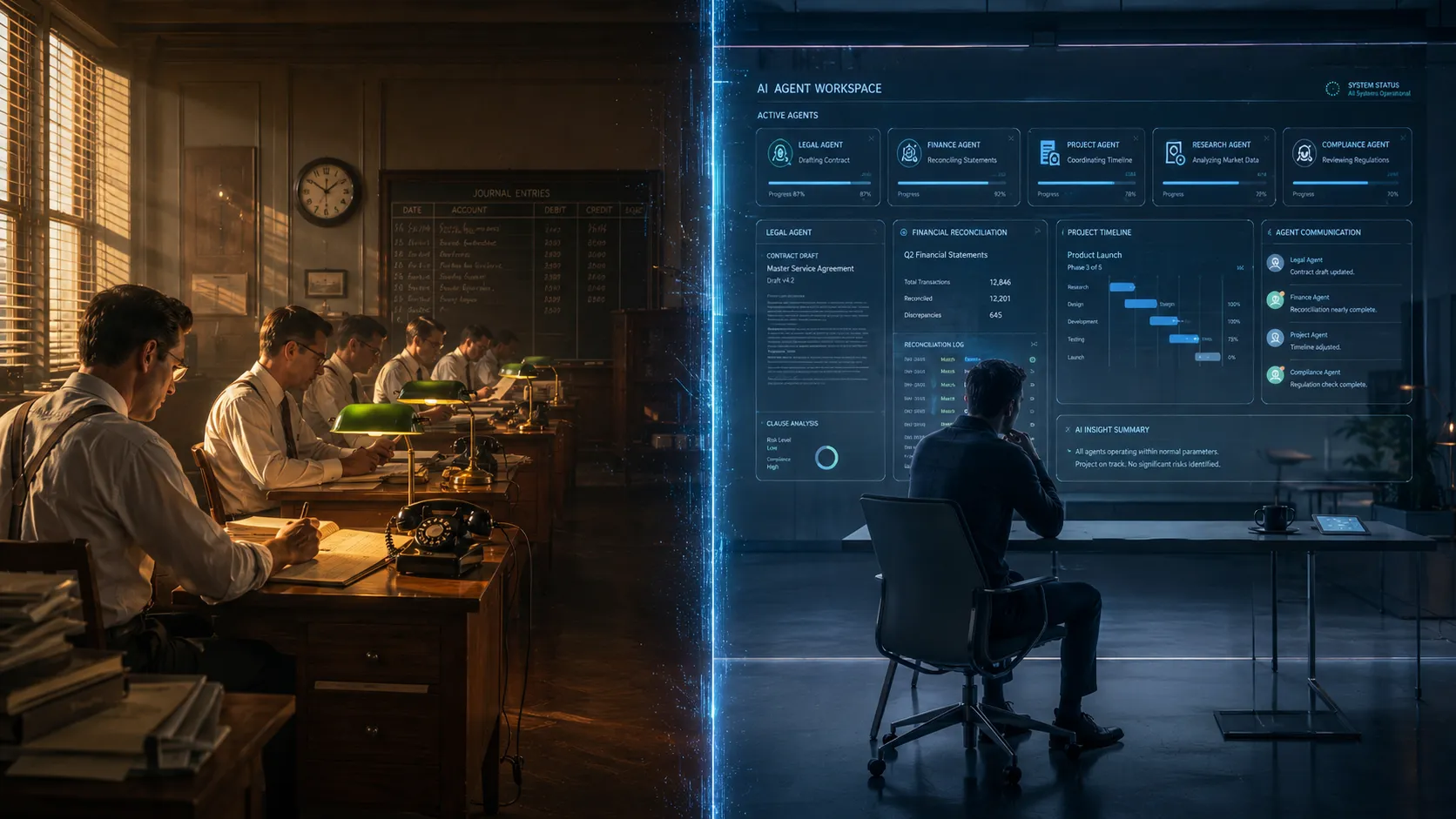
The most unsettling implication may not be that AI will eliminate jobs. It is that AI will redefine what a job is. Tasks that once consumed 40 hours a week may be compressed into 10. The role of the human professional may shift from doing the work to reviewing the work, from executing processes to defining objectives, from producing output to exercising judgment. That shift will require skills — critical thinking, emotional intelligence, ethical reasoning — that are not easily automated but are also not easily taught at scale.
Suleyman himself has acknowledged this ambiguity. In the same Financial Times interview, he described AI agents that, within two to three years, could coordinate more effectively across the workflows of large institutions than human managers currently can. He framed this not as a warning but as a description of an engineering reality already under construction. “These tools will continue to learn and improve over time,” he said, “taking increasingly autonomous actions.”
The question that remains unanswered — by Suleyman, by Microsoft, by any of the CEOs who have issued similar predictions — is what happens to the people whose work is automated during the transition. The optimistic answer is that new jobs will emerge, as they did after the mechanization of agriculture and the digitization of manufacturing. The pessimistic answer is that the speed of this particular transition will outpace the ability of individuals, institutions, and governments to adapt. The honest answer is that no one knows — and that the 18‑month countdown is as much a test of human institutions as it is of machine intelligence.