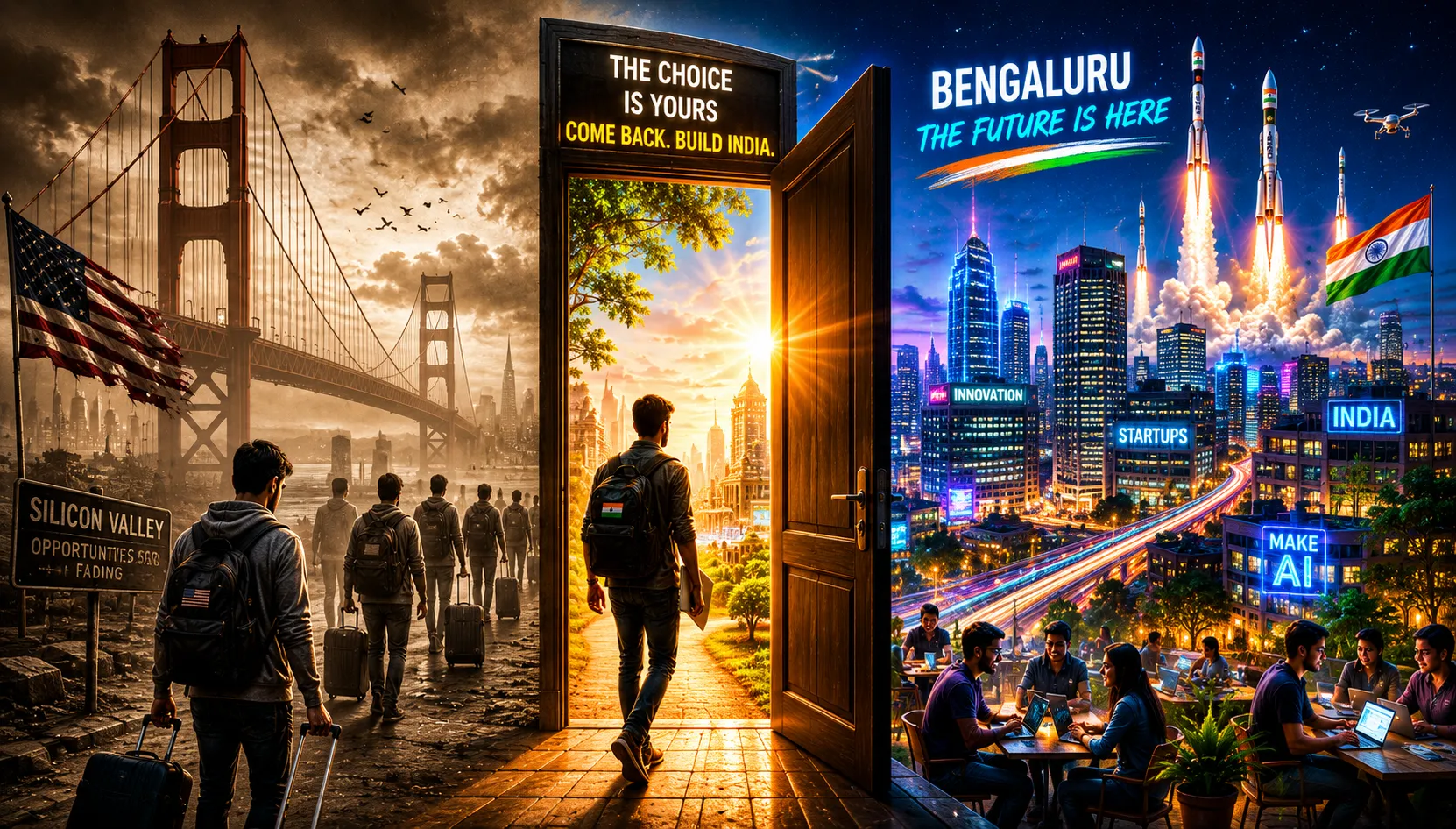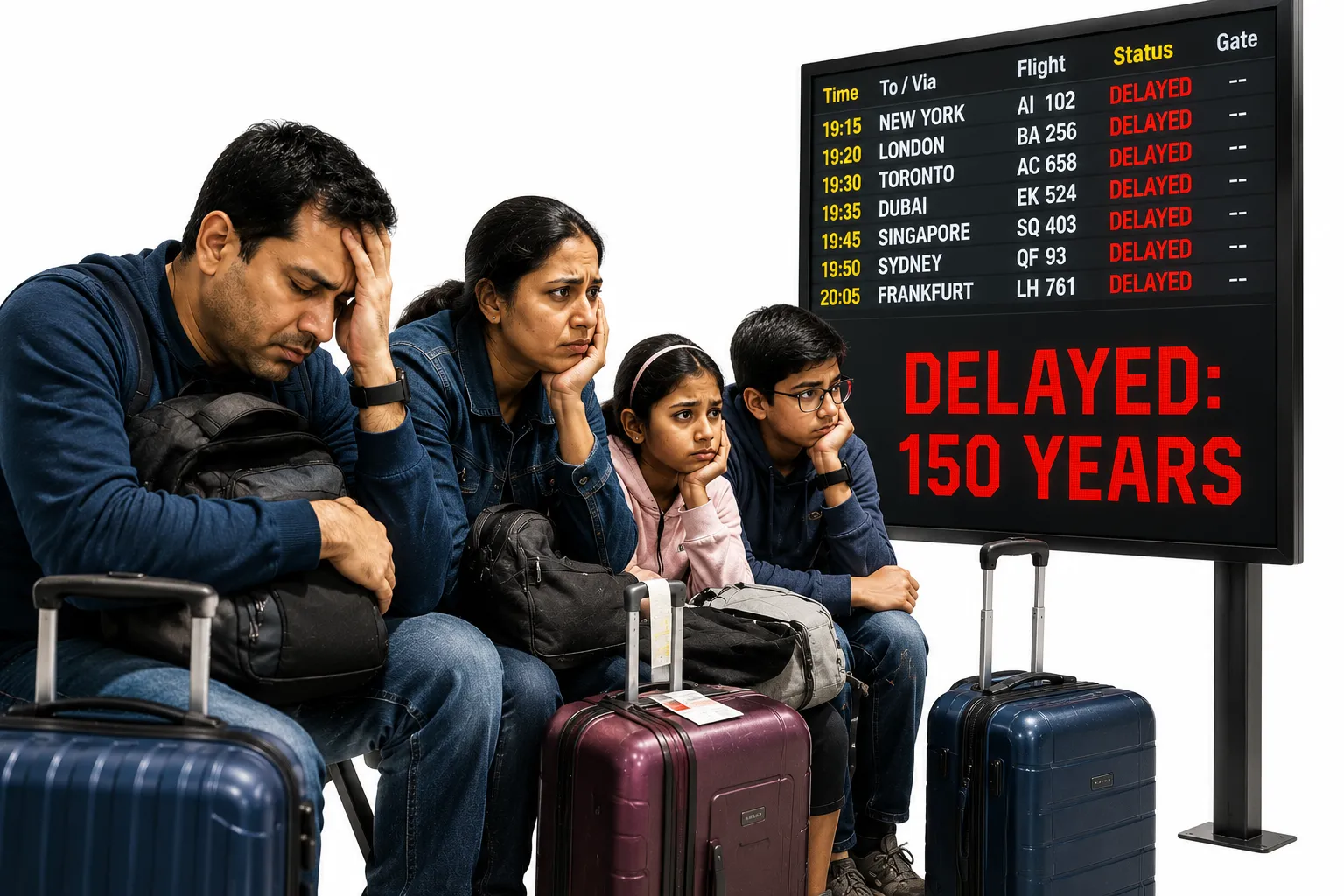
Imagine spending 13 years in a country, paying taxes, building products used by billions, and raising children who know no other home—only to be told one morning that your wait for permanent residency just stretched to longer than the United States has existed as a nation. That's not hyperbole. That's the June 2026 Visa Bulletin. And it's triggering the single largest talent redistribution in modern tech history.
The American tech industry was built on a simple bargain: come here, work hard, innovate, and we'll make you one of us. For Indian engineers, that bargain is officially dead.
The June 2026 Visa Bulletin dropped like a neutron bomb on the diaspora. For Indian-born professionals in the EB-2 and EB-3 categories, the State Department is still processing priority dates from September 2013. That's a thirteen-year backlog on paper, but actuarial tables tell a crueler story. Given the annual per-country caps—just 7% of total green cards—experts now project that a skilled Indian worker applying today faces a realistic wait of 50 to 190 years. Let that sink in. 190 years. Your great-great-grandchildren might get a green card. You will not.
Then came the Trump administration's May 2026 hammer blow: all FY2026 EB-2 visas for Indian nationals were officially exhausted. Embassies and consulates worldwide were instructed to stop issuing these visas effective May 22. The next batch doesn't arrive until October 1, but the allotment is so tiny that it's a drop in an ocean of 1.2 million waiting Indians. For context, the annual quota for all employment-based green cards for India is roughly 9,800. With over a million pending applications, simple division tells you that clearing the backlog would take over a century even if no new applications were filed. But new applications keep coming. The line grows longer every single day.
The final gut-punch came from the Department of Homeland Security's new policy on "adjustment of status." Historically, Indian techies on H-1B visas could apply for a green card while continuing to work in the US. They could stay in their jobs, keep their kids in school, and wait out the backlog in relative stability. No longer. The new rules mandate that applicants must return to their home countries—packing up homes, leaving jobs, uprooting children mid-semester—to file their applications from abroad. For many, it's a forced choice between career suicide and starting over from scratch. One software engineer from Hyderabad, who has been in the US since 2012, told The Economic Times: "I have to choose between my career and my family's stability. If I go back, I lose my job. If I stay, I lose my green card. There is no winning move."
Panic doesn't begin to describe it. Internal company Slack channels at FAANG firms exploded with anguish. One senior Google engineer, who has been in the US since 2011, wrote: "I've paid more in US taxes than most citizens will in their lifetime. I've built products that generated billions. And now I'm told to go back and wait in a line that moves one day for every month that passes. This isn't a system. It's a cruel joke." Another, a Principal Engineer at Amazon, posted a farewell message to his team: "I've trained over 50 junior engineers. I've shipped code that runs on every continent. But apparently, that's not enough to be 'needed' here. India will get my best work now."

But desperation is a powerful catalyst. Within 72 hours of the bulletin, Zoho founder Sridhar Vembu posted a clarion call that went viral across Indian Twitter and LinkedIn. His message was simple, emotional, and unapologetically patriotic: "Please come home. Even if you feel it is hardship and sacrifice, self-respect should dictate your course. Let's make Bharat proud." It wasn't jingoism; it was an economic pitch. India's startup ecosystem—now the third-largest in the world—is hungry for the exact kind of product management, AI/ML, and systems architecture expertise that these engineers possess. Vembu's tweet was shared over 50,000 times in 48 hours, and it sparked a wave of "Welcome Back" campaigns from Indian companies offering relocation bonuses, retention bonuses, and even matching US dollar salaries for senior talent.
The data is already moving in real time. Canadian immigration consultants report a 300% spike in Express Entry profile inquiries from Indian nationals currently in the US. Canada's points-based system offers permanent residency in 6–12 months, not 150 years. Meanwhile, Indian VC firms are hosting "Welcome Home" webinars, offering bridging salaries and ESOPs to returnees. The Indian government is reportedly fast-tracking OCI (Overseas Citizen of India) cards for returning professionals, and several state governments—particularly Karnataka and Telangana—have launched dedicated "Return to India" portals to streamline the relocation process.
And they are coming. In just the first two weeks of June, Bengaluru's Indiranagar and Hyderabad's Gachibowli saw a noticeable uptick in rental inquiries from families moving back from San Jose and Austin. One returnee, a former Amazon Principal Engineer who relocated to Bengaluru in the first week of June, told YourStory: "I took a 40% pay cut to come back. But I also took a 100% reduction in anxiety. Here, I'm not a 'visa holder.' I'm a founder. I'm somebody. In San Jose, I was just 'that Indian guy on the H-1B who might get deported.' Here, I'm a mentor, a leader, a citizen. That's worth more than any stock option."
Silicon Valley is waking up to a nightmare it created for itself. The US innovation machine ran on H-1B fuel for three decades. Indian engineers founded or co-founded over 30% of all Silicon Valley startups. They hold senior positions at Google, Microsoft, Apple, Amazon, and Meta. They are the architects of the cloud, the builders of the AI models, and the guardians of the cybersecurity infrastructure that keeps America running. Now, the fuel tank is empty, and the mechanics are packing their tools and flying east.
The global tech talent map isn't just shifting—it's being torn up and redrawn. Canada is positioning itself as the new default destination for global tech talent. India is transforming from a back-office outsourcing hub into a front-line innovation powerhouse. And America, once the undisputed magnet for the world's best and brightest, is becoming a cautionary tale of bureaucratic rigidity and shortsighted policy. The irony is brutal: in trying to "protect" American jobs by limiting immigration, the US has guaranteed that the next generation of world-changing companies will be built elsewhere.
As one immigration lawyer in San Francisco put it: "The visa backlog isn't a line. It's a graveyard. And we just buried the American Dream in it."