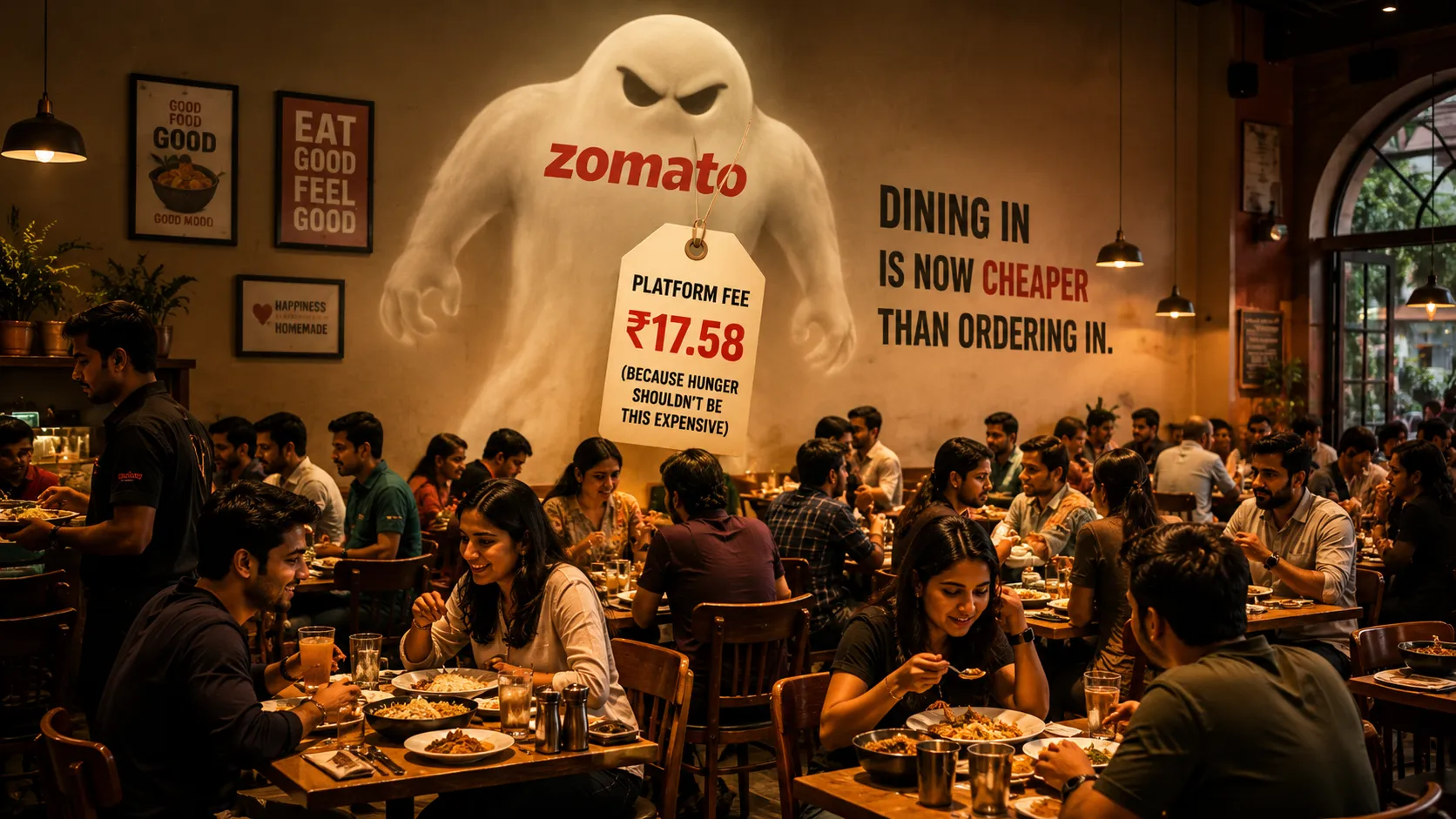
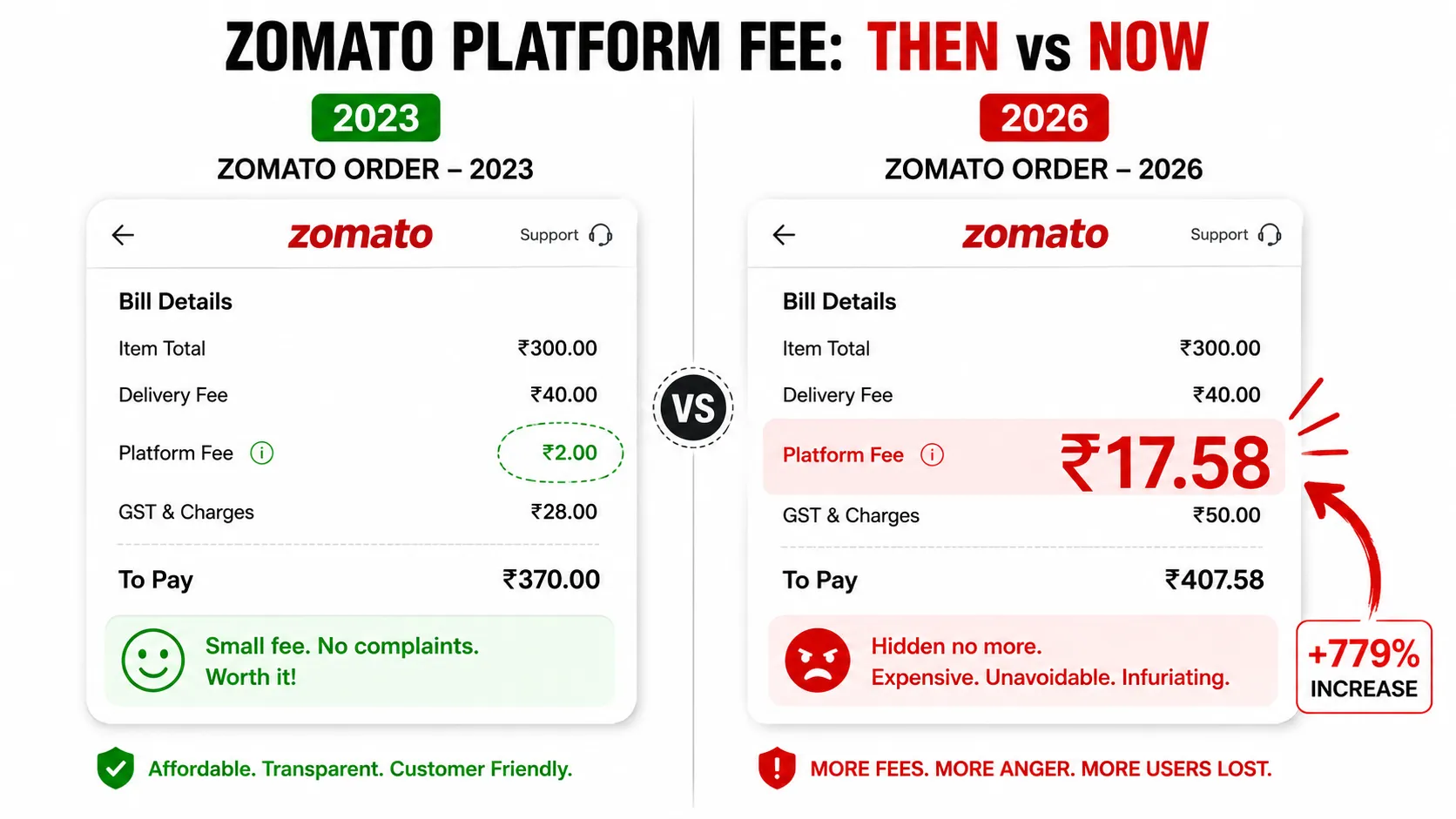
Remember when ordering food online felt like a miracle? A few taps, a small delivery charge, and hot food appeared at your door. Those days are dead. In March 2026, Zomato did what it has done 17 times since 2023—it raised fees again. But this time, something snapped. Users didn't just grumble. They threatened to leave. They did the math. And the math was brutal: platform fees alone have ballooned from ₹2 to ₹17.58 in under three years. That's not inflation. That's a heist. And India's food delivery giants just got caught with their hands in the cookie jar.
It started as a whisper. A ₹2 fee here, a ₹5 charge there. Nothing to notice, really. Just the cost of doing business in a world where convenience is king. But somewhere between August 2023 and March 2026, that whisper became a roar. And on March 20, 2026, Zomato dropped the hammer: platform fees were going up again—this time to ₹14.90 per order, a 19.2% hike from the previous ₹12.50.
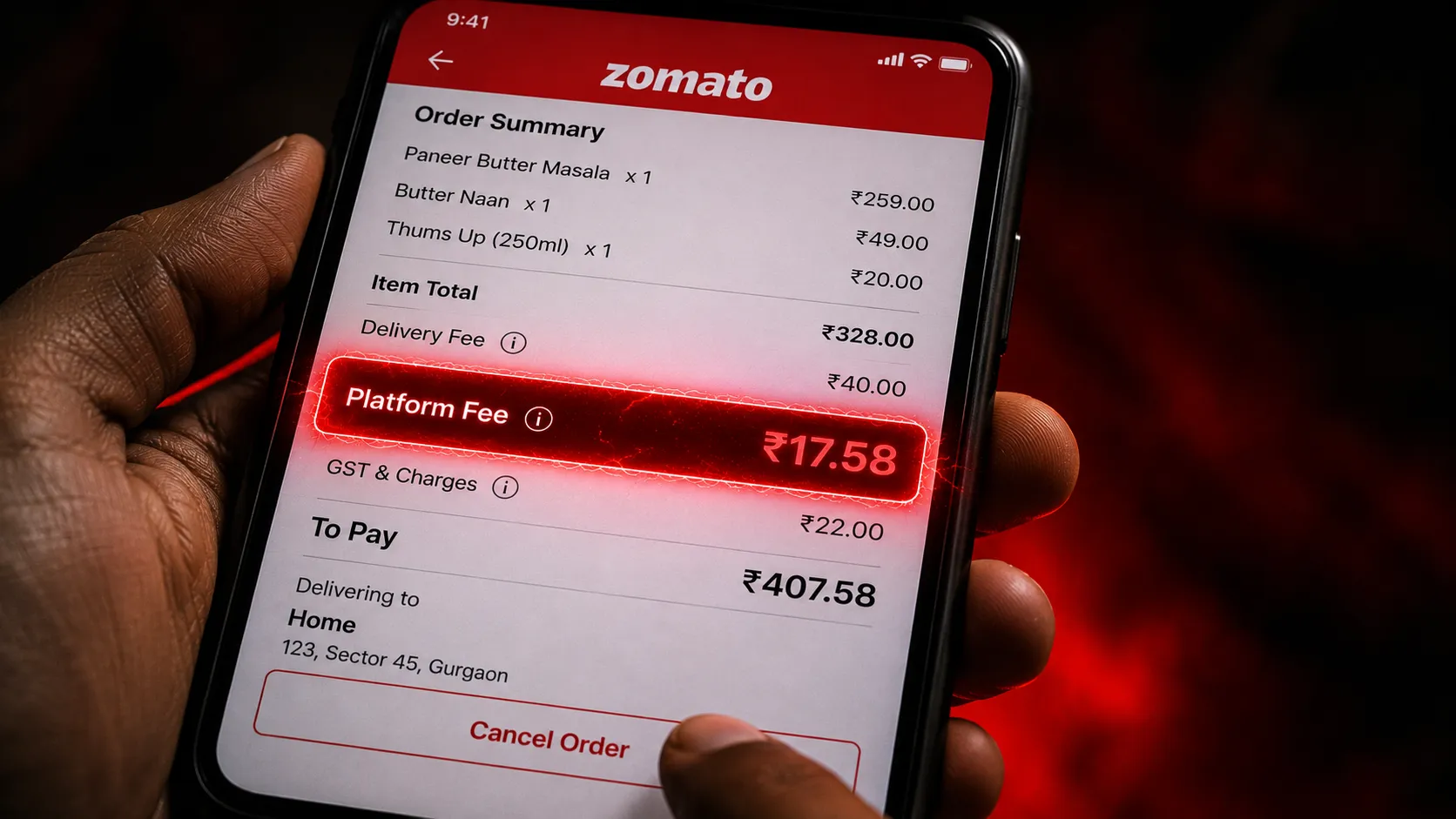
The math is devastating. When you add GST, the effective platform fee now stands at ₹17.58 per order. And that's just the platform fee. Add delivery charges, restaurant markups, packaging fees, and GST on the entire bill, and a single order can now carry ₹60 to ₹100 in additional costs. A meal that costs ₹300 at the restaurant can easily land at your doorstep for ₹400 or more.
For context, Zomato introduced the platform fee in August 2023 at a modest ₹2. By September 2025, it had reached ₹12. Six months later, it's at ₹14.90. That's a 745% increase in under three years. And rival Swiggy has followed suit, raising its platform fee to ₹17.58 (inclusive of GST), creating an effective duopoly where consumers have no escape.
The backlash was immediate and visceral. Social media erupted with fury. Users posted screenshots of their bills, showing the platform fee prominently displayed alongside delivery charges and GST. "Zomato has lost its mind," wrote one user on X (formerly Twitter). "₹17.58 just for the privilege of using the app? That's insane." Another posted: "I used to order 5 times a week. Now I'm down to once. It's just not worth it anymore."
The anger isn't just about the money. It's about the erosion of trust. When Zomato introduced the platform fee in 2023, it was framed as a small, temporary measure to cover operational costs. Instead, it has become a permanent, ever-growing tax on convenience. "Every time I open the app, there's a new fee," complained a regular user from Mumbai. "First it was delivery, then surge pricing, then platform fees, then GST on the platform fee. When does it end?"
The company's defense is predictable. Rising fuel costs, increased LPG prices, and the need to improve unit economics. Zomato has framed the hike as a necessary step to fund its quick-commerce ambitions and strengthen its balance sheet. Last year alone, platform fees contributed over ₹1,500 crore to Zomato's topline—a sum that's hard to walk away from, regardless of user sentiment.
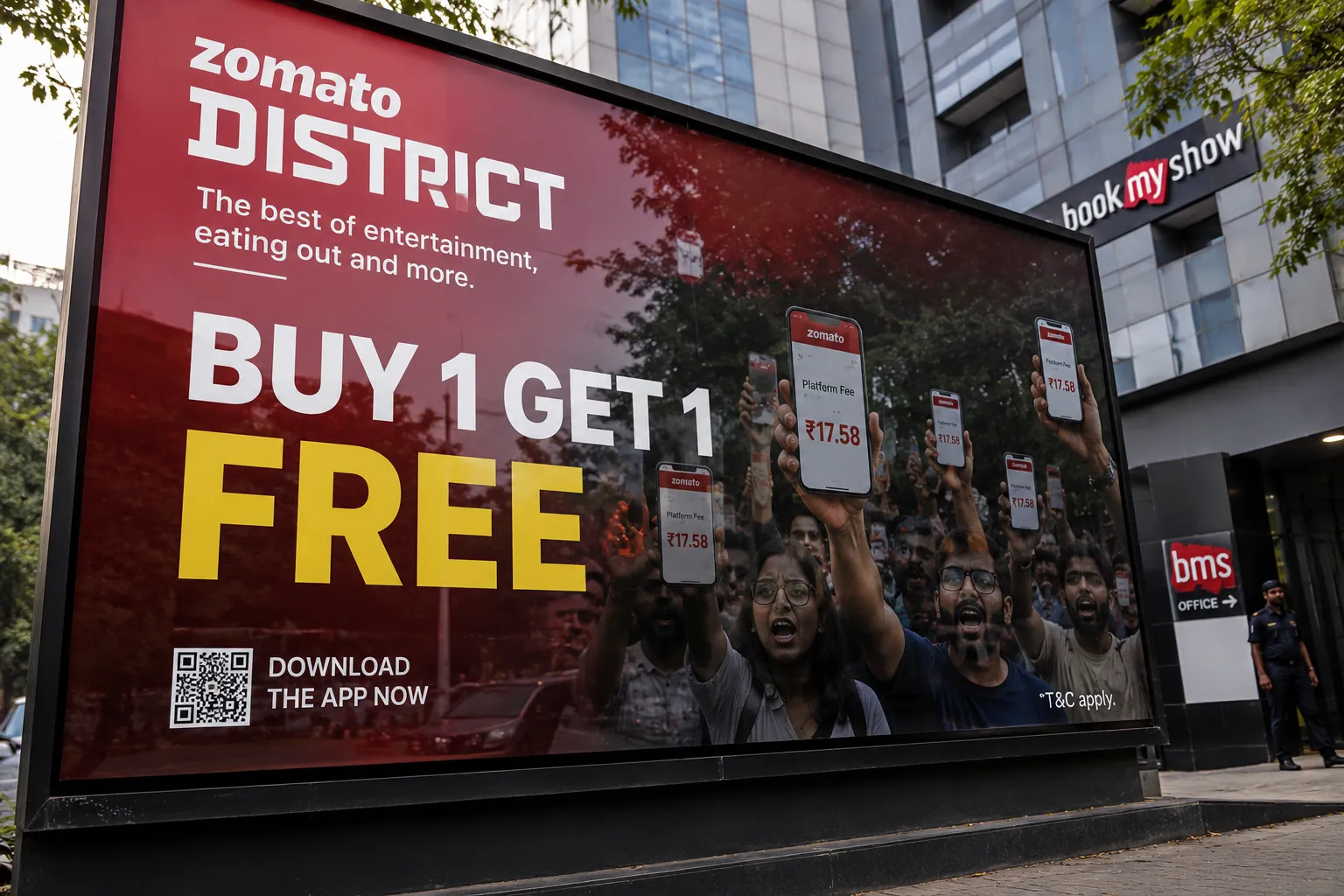
But there's a growing sense that Zomato has miscalculated. The company's "District" super-app strategy—which bundles food delivery, dining, and event bookings into a single platform—was supposed to be the future. And in many ways, it has succeeded. By March 2026, District had climbed to nearly 12 million weekly active users and reported revenue of more than ₹970 crore in its first full financial year. It has even placed a massive billboard directly outside BookMyShow's Mumbai headquarters, a daring declaration of war in the live events space.
But that success may be its undoing. The platform fee hike isn't just irritating food delivery users—it's angering the same users Zomato is trying to convert into District customers. And with competitors circling, the timing couldn't be worse.
BookMyShow, the incumbent in the events space, is watching closely. Flipkart is planning to enter the live events and ticketing market. And users are increasingly questioning whether Zomato's "convenience" is worth the premium. One LinkedIn user recently highlighted being charged ₹250 as a "convenience fee" for a single reservation on District—a fee so steep it sparked a call for transparency.
The platform fee hike has also drawn regulatory attention. Consumer rights groups have questioned whether such opaque, additive fees violate transparency norms. Unlike delivery charges or GST, which are clearly explained, the platform fee feels like a hidden tax—a line item that appears at checkout with no clear justification. "If Zomato needs to charge more, they should be upfront about it," said a consumer advocate. "Hiding behind a 'platform fee' is just a way to make the bill look smaller until the last moment."
Meanwhile, delivery fatigue is setting in. A growing number of users are reverting to dine-in or direct restaurant orders. One survey found that food delivery apps now charge up to 50% more than restaurant prices. For a generation that grew up on the convenience of Swiggy and Zomato, the calculation is shifting: is it really worth paying a 50% premium to avoid leaving the house?
Zomato's response has been defiant. In a recent analyst call, the company argued that the fee hike would boost margins without significantly hurting demand. The logic is simple: users who are truly price-sensitive have already left. Those who remain are willing to pay for convenience. And with Swiggy matching Zomato's pricing, there's no competitive pressure to roll back the hike.
But that logic assumes user loyalty is infinite. It assumes that the habit of ordering in is so deeply ingrained that users will absorb any fee increase. History suggests otherwise. When Ola and Uber raised prices too aggressively, users switched to public transport. When Netflix cracked down on password sharing, users canceled in droves. The same could happen to Zomato.
The company has tried to soften the blow. The new rates were initially introduced as a "pilot" or temporary change, effective only until March 22, 2026. But the pilot has become permanent. And with each new hike, the threshold of what users are willing to tolerate moves higher—but not indefinitely.
One thing is certain: the era of cheap food delivery is over. The venture capital subsidies that fueled a decade of growth have evaporated. In their place is a brutal, profit-driven reality where every click, every swipe, and every order comes with a price tag. Zomato's bet is that users will pay up. The backlash suggests they're not so sure.
As one user put it on social media: "Zomato, I've been with you since 2016. I've seen you grow from a small app to a giant. But ₹17.58 just to use your platform? That's not a fee. That's an insult." And insults, as any brand knows, have a way of coming back to haunt you.