The 138-Vulnerability Wake-Up Call: How a Single Patch Tuesday Exposed the AI Security Arms
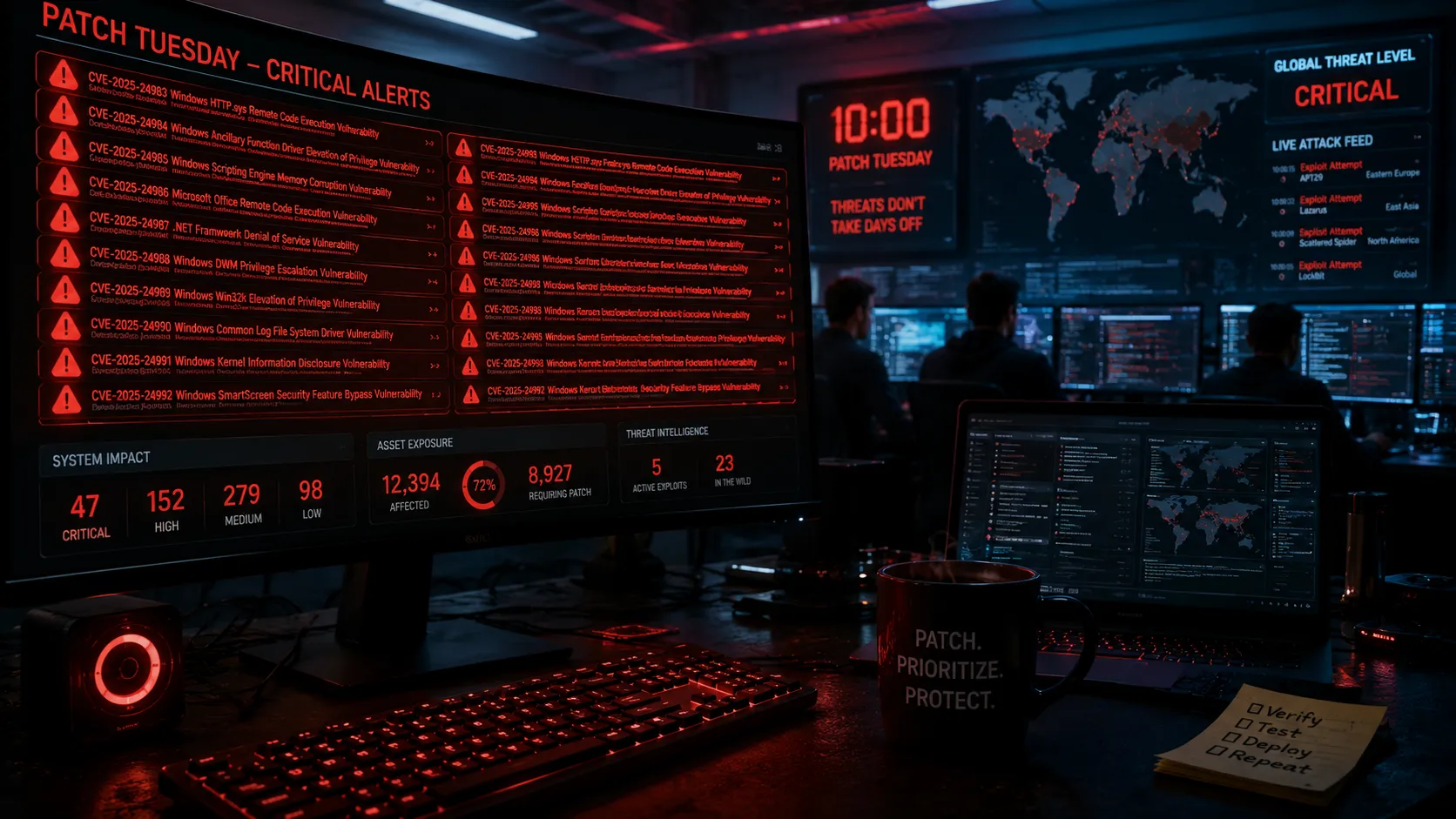
REDMOND, Wash. — May 2026 – On the second Tuesday of May, at precisely 10:00 a.m. Pacific Time, Microsoft released its monthly security update. The cadence was familiar. The scale was not. One hundred and thirty-eight vulnerabilities. Two zero-days actively exploited in the wild before patches were available. The affected systems spanned the entire Microsoft ecosystem: Windows, Office, Edge, Azure, .NET, Visual Studio. The release was not the largest in the company's history, but it was the most symbolically charged. Because buried in the technical details of CVE-2026-1142 and CVE-2026-1143—the two zero-days—was evidence of something new. The attacks had been generated, at least in part, by AI.
The cybersecurity industry has spent three years warning that artificial intelligence would accelerate the offense. May 2026 was the month those warnings became a compliance item. Microsoft's Patch Tuesday was not just a software update. It was a proof point in a broader rearmament that is reshaping the $200 billion global cybersecurity market, redrawing the boundary between human and machine threat detection, and forcing every enterprise on Earth to confront an uncomfortable question: if the attackers are already using AI, why aren't your defenders?
The Two Zero-Days
The two zero-days that punctuated Microsoft's May release carried code names that have already entered the industry lexicon: YellowKey and GreenPlasma. YellowKey was a privilege escalation vulnerability in the Windows kernel that allowed an attacker with local access to gain SYSTEM-level control. GreenPlasma was a remote code execution flaw in Microsoft Edge's JavaScript engine that could be triggered simply by visiting a compromised website. Both had been discovered in active exploitation, meaning attackers had found and weaponized them before Microsoft's security teams even knew they existed.
What distinguished these zero-days from the thousands that preceded them was the forensic trail. According to Microsoft's threat intelligence team, the exploitation attempts showed signatures consistent with AI-assisted development: polymorphic shellcode that mutated between attacks, phishing lures with context-awareness that suggested large language model generation, and reconnaissance patterns that had been accelerated far beyond human capability. The attackers had not simply used AI to find vulnerabilities. They had used AI to build, test, and deploy exploits in a continuous, automated pipeline.
The implications of this shift are difficult to overstate. Traditional zero-day development is a craft. It requires deep expertise, months of research, and a chain of manual steps from discovery to weaponization. An AI-assisted pipeline compresses that timeline from months to days, and from days to hours. The result is an attack surface that is not just expanding—it is evolving in real time, under the direction of adversaries who can iterate faster than the monthly patch cycle that has been the backbone of enterprise defense for two decades.
The raw data from the patch release underscores the scale of the problem. Of the 138 vulnerabilities, 32 were classified as Critical, the highest severity rating, meaning they could be exploited remotely without user interaction. Another 104 were classified as Important. Two were under active attack. The vulnerabilities spanned 15 product families. The cumulative CVSS scores—the industry's standard measure of severity—painted a picture of an ecosystem under siege, and the siege was accelerating.
The AI Offense
The arrival of AI-generated attacks is not a sudden rupture. It is the culmination of a trend that cybersecurity researchers have tracked since the first large language models became publicly available in late 2022. But 2026 is the year the trend crossed into measurable operational reality.
Multiple threat intelligence firms now report that dark-web marketplaces offer AI-powered phishing kits as subscription services, complete with natural-language generators that produce flawless, context-aware emails in dozens of languages, and automated reconnaissance modules that scrape LinkedIn, corporate websites, and SEC filings to build targeting dossiers. Malware-as-a-service platforms have integrated generative AI to produce polymorphic code that evades signature-based detection by rewriting itself with each deployment. And nation-state actors—particularly those operating out of North Korea, Iran, and Russia—have been observed using large language models to accelerate vulnerability research, compressing the discovery-to-exploitation pipeline in ways that are still being understood.
The economics of the shift are brutal in their simplicity. A sophisticated spear-phishing campaign that once required a team of intelligence analysts, linguists, and malware developers can now be executed by a single operator with access to generative AI tools and a modest budget. The barrier to entry for advanced cyber operations has dropped from nation-state resources to a credit card and a basic understanding of English. The result is a democratization of offense that the defense has not yet matched.
Microsoft's own data bears this out. The company's Digital Defense Report, released in late 2025, documented a 300% increase in AI-assisted attack attempts year over year. The May 2026 Patch Tuesday was not an outlier. It was the leading edge of a new normal in which the tempo of vulnerability discovery and exploitation is set by machines, not by the calendar.
The Defensive Reckoning
The defensive side of the cybersecurity industry is not standing still, but it is being forced to reorganize around a new tempo. The traditional model—monthly patches, signature-based detection, manual threat hunting—was designed for an era when attackers were also human, and therefore limited by human speed. That era is ending.
Microsoft's response to the May zero-days was instructive. The company released patches within hours for its most critical enterprise customers, bypassing the normal testing cycle. It deployed AI-driven telemetry across its Azure and Defender networks to hunt for similar exploitation patterns in near-real time. And it publicly attributed the attacks—a move that, in previous years, would have taken weeks of diplomatic and legal review, but was now completed in days. The tempo of the defense is being forced to match the tempo of the offense, and the pressure is only intensifying.
The broader industry is responding in kind. Venture funding for AI-native cybersecurity startups has surged, with companies like Exaforce, which closed a $125 million Series B at a $725 million valuation in March 2026, building AI agents that can reason about threats in real time rather than simply flagging anomalies for human review. CrowdStrike has embedded generative AI into its Falcon platform to automate the triage of alerts. SentinelOne has acquired two AI security startups in the past year. Palo Alto Networks has rearchitected its entire detection stack around machine learning models that update continuously, not monthly.
The common thread across all these efforts is a recognition that the defender's advantage—if it can be rebuilt at all—will come from speed, not scale. The defender that can reason about a threat in seconds, rather than hours, and respond in milliseconds, rather than minutes, will have a structural advantage that no amount of offensive firepower can overcome.
The Zero-Day That Wasn't
One of the most telling details of the May Patch Tuesday cycle was not a vulnerability at all. It was a detection.
On May 8, four days before the scheduled patch release, Microsoft's AI-driven telemetry flagged a pattern of anomalous behavior on a small number of enterprise networks. The pattern did not match any known signature. It did not trigger any rule in the existing detection stack. But an AI model, trained on years of attack data and running continuously across Microsoft's cloud infrastructure, identified it as statistically similar to privilege escalation chains that had been seen in previous campaigns. The anomaly was escalated. A human analyst confirmed it. The vulnerability that would become YellowKey was discovered not by a researcher, but by a machine that had learned what an attack looks like before the attack had a name.
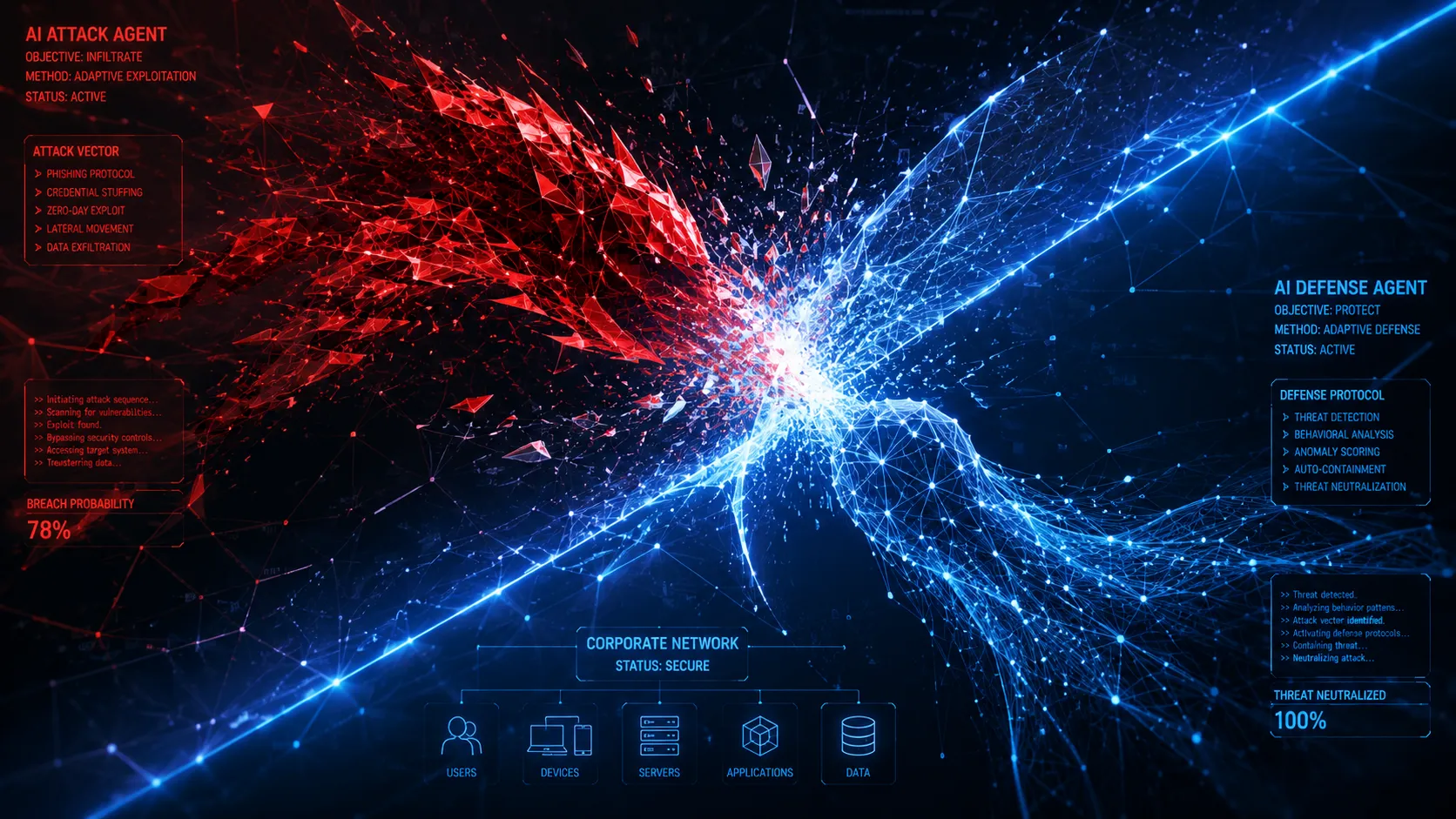
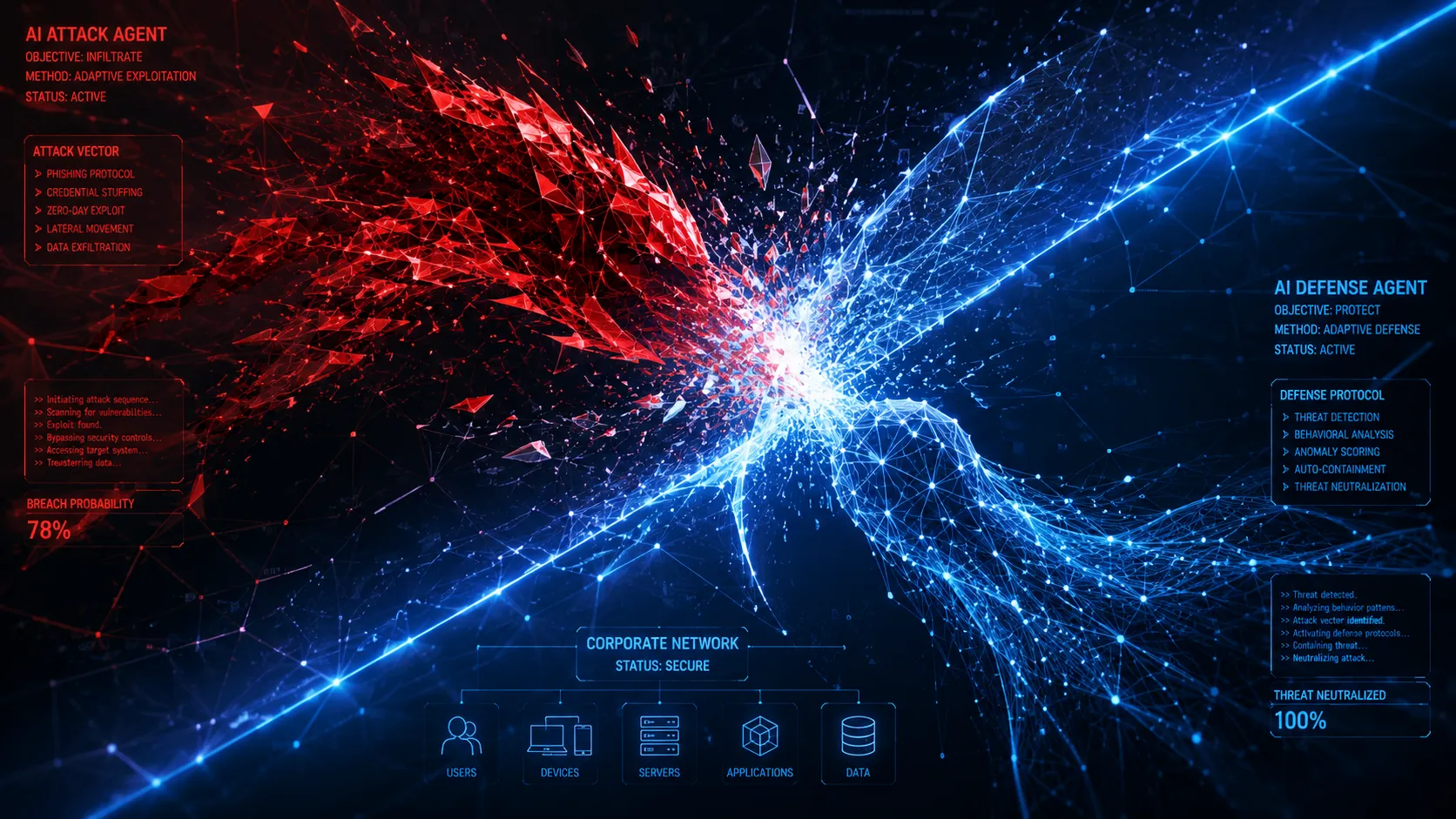
This is the future toward which the cybersecurity industry is racing. A world in which threats are detected not by matching signatures to a database of known attacks, but by recognizing statistical patterns that are too subtle for human analysts to perceive. A world in which the time between intrusion and detection is measured in milliseconds, not months. A world in which the defender's AI and the attacker's AI are in constant, silent competition—two intelligence systems probing each other's defenses, learning from each encounter, and adapting in real time.
It is also a world that raises profound questions. Who is accountable when an AI defense system makes a mistake and blocks legitimate traffic? How do you audit a decision made by a model whose reasoning is not fully transparent? What happens when both sides are operating at machine speed, and the window for human judgment collapses to nothing? The cybersecurity industry is only beginning to grapple with these questions, and the answers will shape the architecture of trust for the rest of the decade.
What Every Entrepreneur Can Learn
The AI cybersecurity arms race offers lessons that extend well beyond the security industry.
First, asymmetry is a market signal. When the offense has a structural advantage over the defense, there is money to be made in restoring balance. This principle applies to fraud detection, regulatory compliance, supply chain integrity, identity verification, and any other domain where bad actors have adopted new tools faster than good actors. The entrepreneur who can close that gap fastest can name their price.
Second, speed of reasoning is a moat. The cybersecurity startups commanding the highest valuations in 2026 are not those with the most data or the largest installed base. They are those with the fastest, most accurate automated reasoning engines. In an era when every enterprise is drowning in data, the company that can reduce time-to-insight by an order of magnitude becomes impossible to displace.
Third, sell to the pain that is already burning. The fastest enterprise sales cycles in cybersecurity are not built on visionary storytelling about future threats. They are built on solving a problem that the buyer is already losing sleep over. The CISOs who bought Exaforce's platform in its first year of operation did not need to be convinced that AI-powered attacks were coming. They were already living the reality. The pitch was not a prediction. It was a solution to a present-tense crisis.
Fourth, the monthly patch cycle is a business opportunity. The fact that the world's largest software company still releases security updates on a fixed monthly schedule—while attackers iterate daily—is not just a technical liability. It is a market gap. Any startup that can shorten the window between vulnerability discovery and remediation, even by hours, creates measurable value for every enterprise on the internet.
The Road Ahead
The cybersecurity industry is entering its most consequential decade since the invention of the firewall. The attackers have AI. The defenders are racing to catch up. The gap between the two is the single most important variable in the security of the global digital economy, and it is being contested in real time by startups, incumbents, and nation-states with radically different incentives and capabilities.
The May 2026 Patch Tuesday will not be remembered as the worst security release in Microsoft's history. It will be remembered as the moment the AI security arms race became visible to everyone, not just the practitioners who had been watching it build for years. The 138 vulnerabilities, the two zero-days, the AI-generated attack signatures—these are not anomalies. They are the new operating conditions. The companies that adapt fastest to those conditions will define the next generation of cybersecurity. The ones that do not will become case studies in what happens when the defense runs on a calendar and the offense runs on a clock.


