The 11,000-Film Bridge to Beijing: Inside Eros International's Landmark iQIYI Content Deal—And the $1 Billion Library Sale That Could Redefine the Global Market for Indian Cinema
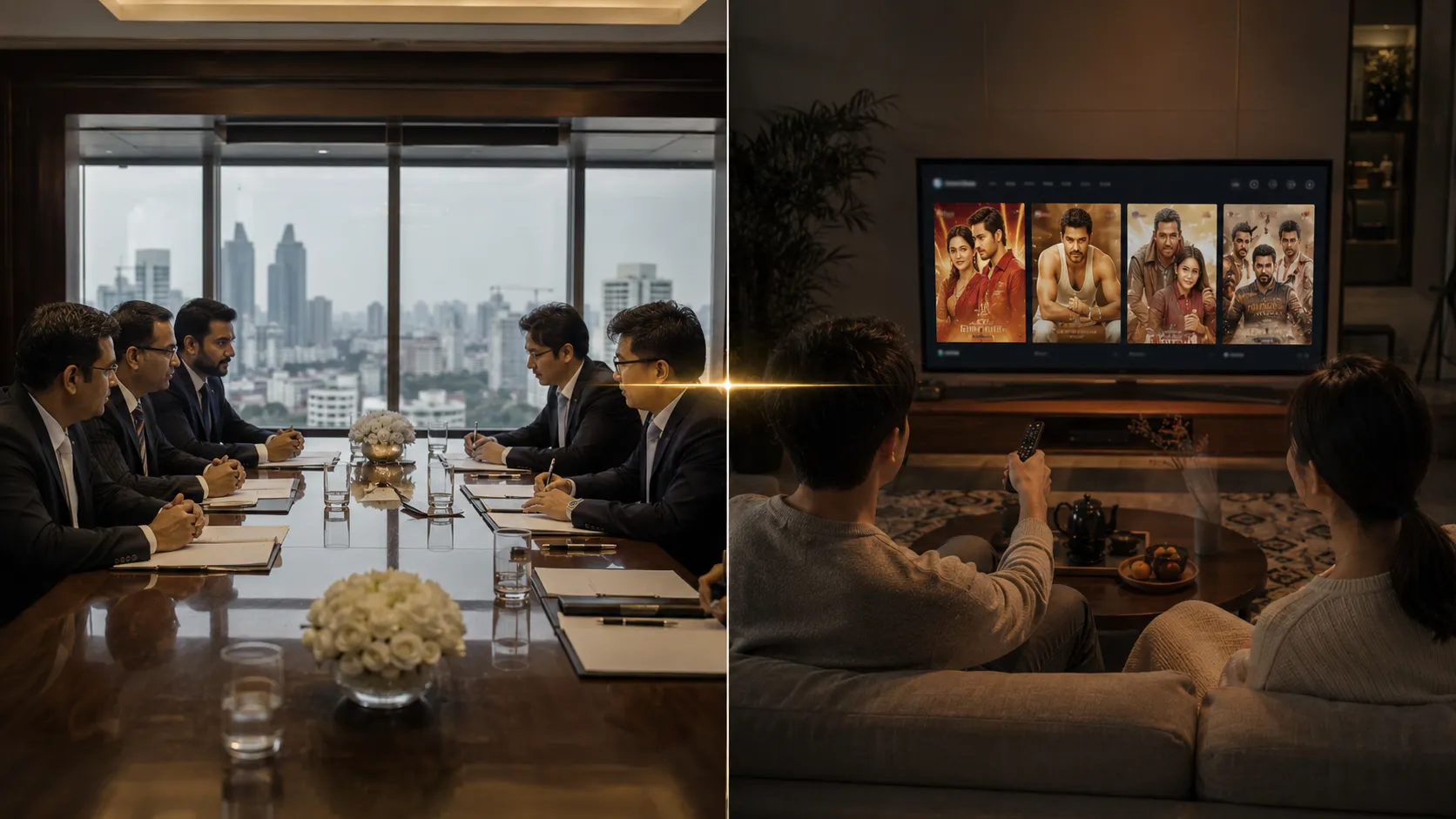
MUMBAI — May 28, 2026 — In September 2018, in a conference room in Mumbai, the executives of a company that had spent four decades building the world's largest library of Indian cinema signed a document that would, in retrospect, become the foundation of Bollywood's entire streaming strategy in China. Eros International—the distributor, producer, and streaming platform that owns or controls the rights to more than 11,000 Indian films spanning Hindi, Tamil, Telugu, Malayalam, and every other major language of the subcontinent—had just concluded a content-licensing agreement with iQIYI, the Baidu-owned streaming giant often described as the "Netflix of China." The deal, the companies announced, would make Eros Now "the first South Asian OTT player to make inroads into the Chinese digital space." iQIYI, which at the time claimed over 500 million monthly active users, would begin streaming titles from Eros's catalogue—from Shah Rukh Khan's Devdas to Salman Khan's Dabangg—to Chinese audiences who had demonstrated, through the theatrical success of films like Dangal (₹1,200 crore in China alone) and Secret Superstar, an extraordinary appetite for Indian cinema. The financial terms were not disclosed, but Eros International CEO Kishore Lulla told Reuters at the time that the company was "targeting about US$10 million in revenue in the first year through this deal."
Eight years later, that single licensing agreement has become the template for an entirely new architecture of cross-border content distribution between the world's two most populous nations—and the company that pioneered it is now at the centre of a $1 billion library auction that could fundamentally reshape the global market for Indian cinema. In March 2026, Reuters and VCCircle reported that Eros was in early-stage talks with Apple, Amazon, and Netflix to sell its entire film and music library—more than 3,000 titles, including some of the most valuable intellectual property in Indian entertainment history. The library includes blockbusters like Bajrangi Bhaijaan, Dabangg, Bajirao Mastani, and Happy Bhag Jayegi, as well as a deep catalogue of regional-language films that are among the most culturally significant works in Indian cinema. The sale, if completed, would be the largest content-library transaction in Indian entertainment history—and its outcome will be determined, in part, by the value that buyers place on the Chinese market access that the iQIYI partnership helped create.
The 2018 Framework
The Eros-iQIYI deal of 2018 was, in its time, a pioneering arrangement—the first time a South Asian streaming platform had secured a direct content pipeline into the Chinese digital market. Under the terms of the agreement, iQIYI would stream titles from Eros Now's catalogue of more than 11,000 Bollywood and Indian regional-language films, with approximately 100 films available within the first month and the number scaling to roughly 1,000 within the first year. The Chinese platform would handle the localisation—subtitling, dubbing, marketing—while Eros would provide the content and receive a share of the revenue. The partnership was not exclusive, but it was the first of its kind, and it demonstrated that the Chinese streaming market, which had historically been resistant to foreign content beyond Hollywood blockbusters, was open to Indian cinema if the content was delivered through the right platform.
The context for the deal was a surge in Chinese theatrical demand for Indian films that had taken the industry by surprise. Aamir Khan's Dangal, released in China in 2017, had earned approximately ₹1,200 crore in the territory—more than it had earned in India—becoming the highest-grossing non-Hollywood foreign film in Chinese history. Secret Superstar, another Aamir Khan production, followed with approximately ₹750 crore. Hindi Medium, starring Irrfan Khan, earned a respectable ₹200 crore. The Chinese audience, which had long been fed a diet of local blockbusters and Hollywood imports, was discovering Indian cinema—specifically, Indian films that addressed social themes with emotional directness—and the theatrical pipeline was beginning to fill. The Eros-iQIYI deal was designed to capture the streaming dimension of that demand, offering Chinese viewers access to the deep catalogue of Indian cinema beyond the handful of films that secured theatrical releases.
The financial returns from the deal were modest by the standards of the theatrical successes that preceded it. Lulla's projection of US$10 million in first-year revenue was a fraction of what Dangal had earned in Chinese theatres, and the streaming economics of the Chinese market—where subscription prices were lower than in the United States or Europe, and where the dominant platforms operated on thin margins—meant that even a successful licensing deal would generate only incremental revenue for the content owner. The strategic value of the partnership lay not in its immediate financial returns, but in the market access it provided: the Eros-iQIYI deal was the first step in a long-term strategy to build an Indian content pipeline into the world's largest streaming market, and the company that established that pipeline first would have a structural advantage over competitors who arrived later.
The deal was also a signal of Eros's broader international ambitions. In the same period, the company announced a partnership with Xiaomi to carry Eros Now on the Mi TV platform in India and Indonesia, a multi-territory expansion that reflected CEO Lulla's conviction that the future of Indian cinema lay in global distribution, not just domestic theatrical revenue. The Eros Now platform, which at the time claimed 113 million registered users worldwide with 10.1 million paying subscribers, was being positioned as a global streaming hub for Indian content—a competitor to Netflix and Amazon Prime Video in the specific niche of Bollywood and regional-language cinema. The iQIYI deal was the most ambitious expression of that strategy, and its legacy would extend well beyond the initial term of the agreement.
The 2026 Library Sale and the China Premium
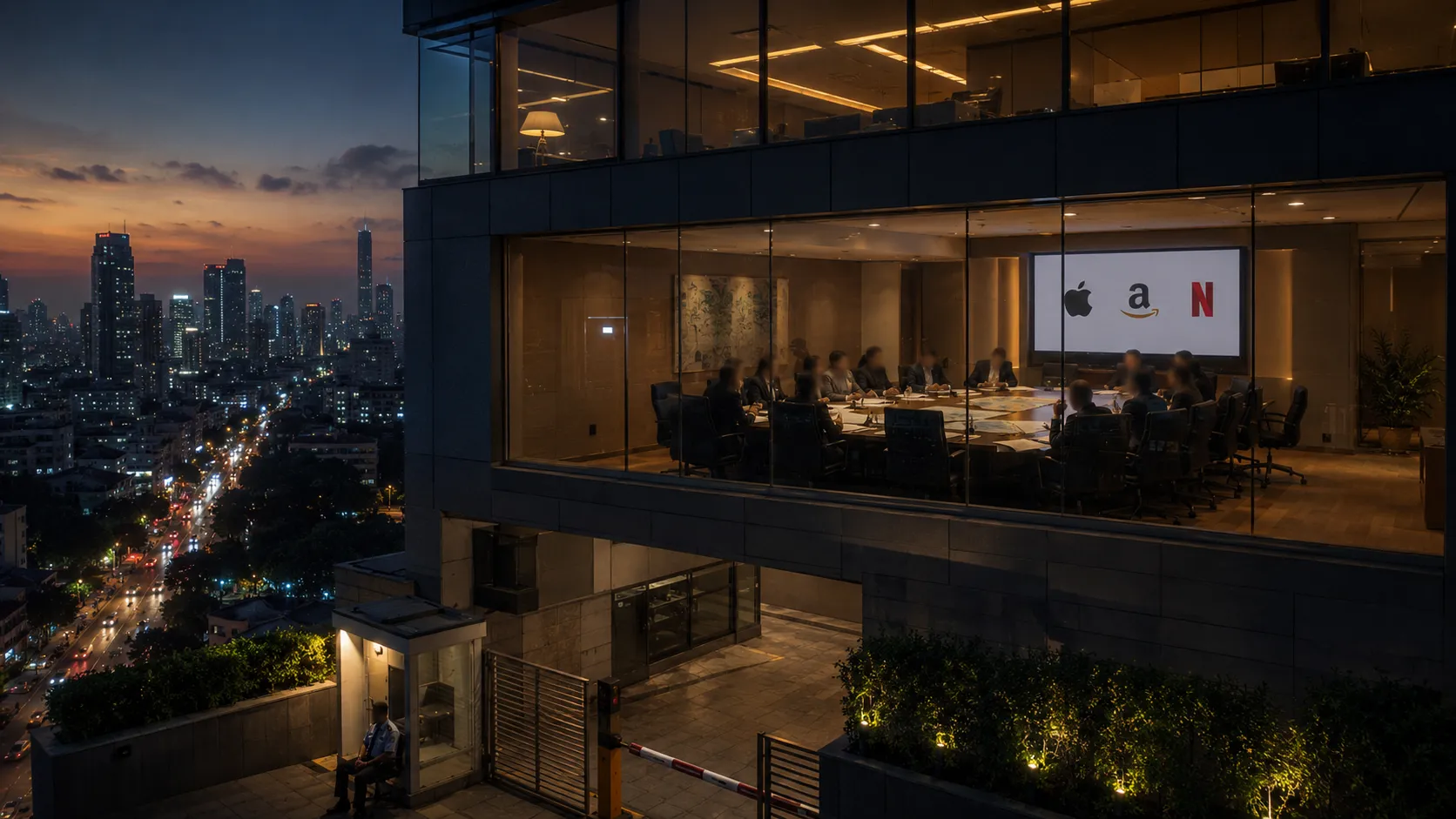
The most significant dimension of the Eros story in 2026 is not the iQIYI deal itself. It is the $1 billion library auction that the deal helped enable. In March 2026, Reuters reported that Eros was in early talks with Apple, Amazon, and Netflix to sell its entire film and music library. The talks were preliminary, the source cautioned, and the final valuation could be significantly lower than the $1 billion figure that had been floated in earlier reports. But the very fact that three of the world's largest technology companies were competing for the rights to a library of Indian cinema was a validation of the market that Eros had spent decades building—and of the international distribution architecture that the iQIYI deal had helped pioneer.
The library's value is a function of two intersecting demand curves. The first is domestic: Indian streaming platforms, facing intense competition for subscribers, are increasingly willing to pay premium prices for exclusive access to the most popular films in the Bollywood canon. The second is international: the global audience for Indian cinema—driven by the 32-million-strong Indian diaspora and by the growing popularity of Bollywood and regional-language films in markets from the Middle East to Southeast Asia to China—is expanding faster than the supply of high-quality Indian content on global platforms. The library that can satisfy both demand curves simultaneously—that can provide exclusive Bollywood blockbusters for domestic platforms and a deep catalogue of regional-language films for international buyers—commands a premium that no single market could justify on its own. The iQIYI deal demonstrated, for the first time, that the Chinese streaming market was part of that international demand curve. The Apple-Amazon-Netflix auction is, in effect, the market's verdict on the value of the pipeline that the iQIYI deal helped establish.
The China dimension of the library's value is particularly significant because it is the least developed and most potentially lucrative segment of the international market. China has approximately 1.1 billion internet users, the world's largest streaming subscriber base, and a demonstrated appetite for Indian films that is constrained primarily by distribution—most Indian films are never released in China, and those that are face a regulatory process that can take years. A library that is already licensed, subtitled, and culturally vetted for the Chinese market—as the Eros catalogue is, through the iQIYI partnership—carries a premium that a library without Chinese market access cannot command. The Apple-Amazon-Netflix auction is, in part, a bidding war for that premium, and the outcome will determine not just the value of the Eros library, but the market's assessment of the long-term commercial potential of Indian cinema in China.
The source who confirmed the talks to Reuters cautioned that the library was worth "less than the $1 billion quoted in the ET report," but declined to provide a specific valuation. The discrepancy between the $1 billion headline figure and the more conservative private assessment reflects the fundamental uncertainty that surrounds the market for Indian content: the demand is real, but the monetisation mechanisms—particularly in China, where streaming revenue per user is a fraction of U.S. levels—are still being developed. The library that sells for $1 billion today might be worth $3 billion in five years if the Chinese streaming market matures and the global appetite for Indian cinema continues to grow. The library that sells for $500 million today might look like a bargain in retrospect for the same reasons. The uncertainty is the market, and the market is still being built.
The iQIYI Strategy and the Indian Opportunity
The most instructive dimension of the Eros-iQIYI partnership is not what it achieved for Eros. It is what it reveals about iQIYI's global strategy—and about the role that Indian content is playing in that strategy.
iQIYI is, by subscriber count, one of the largest streaming platforms in the world, with approximately 500 million monthly active users as of 2018 and a growing international footprint that now extends across Southeast Asia, the Middle East, and Latin America. But the platform has historically been dependent on Chinese-language content, and its international growth has been constrained by the limited appeal of Chinese dramas and films outside the Chinese-speaking world. The Eros partnership was, in one sense, an experiment: could the addition of Indian content—Bollywood blockbusters, regional-language films, the deep catalogue of the world's most prolific film industry—attract and retain subscribers in markets where Chinese content alone was not sufficient?
The experiment has, by iQIYI's own metrics, been a success. The company's overseas membership revenue grew more than 40 percent year-over-year in the first quarter of 2026, driven in part by the expansion of its content library beyond Chinese-language programming. Global views for Chinese content rose 114.5 percent in 2025, but the growth was complemented by the addition of non-Chinese content—Korean, Japanese, Thai, and Indian—that broadened the platform's appeal. iQIYI's content distribution revenue grew 94 percent year-on-year, a metric that reflects the value of the licensing agreements the platform has signed with content owners around the world. The Eros deal, one of the earliest of those agreements, has become a template for a global content-acquisition strategy that is increasingly focused on the emerging markets of Asia, Africa, and Latin America—markets where the competition for subscribers is intensifying, and where the platforms with the deepest and most diverse content libraries will have a decisive advantage.
The Indian dimension of iQIYI's strategy is particularly significant because it represents a convergence of two of the world's largest entertainment markets. India, with its 1.4 billion people and its voracious appetite for content, is the largest market in the world that iQIYI has not yet fully penetrated. China, with its 1.4 billion people and its rapidly growing demand for international content, is the largest market that Indian film producers have not yet fully monetised. The Eros-iQIYI deal is the bridge between the two—a content pipeline that flows in both directions, carrying Indian films to Chinese audiences and, potentially, Chinese content to Indian audiences through the same distribution infrastructure. The pipeline is still under construction, but the Eros library auction is the market's judgment that it is worth building. The company that owns the bridge when it is completed will control the most valuable piece of infrastructure in the global entertainment economy.
The Dangal Precedent and the China Box-Office Bridge
The most important film in the history of Indian-Chinese cinema relations is not a Bollywood romance or a Telugu action epic. It is a sports drama about a wrestler from Haryana. Dangal, directed by Nitesh Tiwari and starring Aamir Khan, was released in China in 2017—roughly seven months after its Indian premiere—and earned approximately ₹1,200 crore ($196 million) in the territory, making it the highest-grossing non-Hollywood foreign film in Chinese history. The film's success was not merely commercial. It was structural. It demonstrated that an Indian film, properly marketed and distributed, could compete with the largest Hollywood productions in the world's second-largest box-office market. It opened the door for the wave of Indian films that followed—Secret Superstar, Hindi Medium, Bajrangi Bhaijaan, Andhadhun, Article 15—each of which found audiences in China that were larger, in some cases, than their domestic audiences in India.
The Dangal precedent is directly relevant to the Eros-iQIYI story because it established the commercial thesis that the licensing deal was built on. The Chinese audience that had paid to watch Aamir Khan wrestle on the big screen was, the theory went, the same audience that would pay to watch Shah Rukh Khan romance on a streaming platform. The theatrical success of Dangal proved that the demand existed. The Eros-iQIYI deal was designed to capture that demand—to convert the theatrical audience into a streaming audience, and to build the habit of Indian content consumption among Chinese viewers who might never have set foot in a cinema.
The results, eight years on, are mixed. No Indian film since Dangal has come close to matching its Chinese box-office performance, and the theatrical pipeline for Indian films in China has been disrupted by geopolitical tensions, regulatory restrictions, and the post-pandemic decline in Chinese cinema attendance. But the streaming pipeline has continued to grow. iQIYI has expanded its Indian content library beyond the Eros catalogue, licensing films from other Indian studios and investing in original content that targets the Indian diaspora in Southeast Asia and the Middle East. The platform's overseas growth—40 percent year-over-year in Q1 2026—suggests that the streaming audience for Indian content is larger than the theatrical audience ever was, and that the long-term commercial potential of the China-India content bridge has been underestimated by the market.
The Ramayana project, directed by Nitesh Tiwari—the same filmmaker who directed Dangal—is the most ambitious attempt yet to build a content bridge between the two markets. The film's producers have reportedly been in discussions with the China Film Group to handle distribution in China, and the combination of Tiwari's track record, the universal appeal of the Ramayana story, and the visual spectacle of a ₹4,000 crore production is designed to replicate, and potentially exceed, the Dangal precedent. The Eros-iQIYI deal, which established the streaming infrastructure for Indian content in China, is the foundation on which the Ramayana team is building. The bridge that was built in 2018 is now being tested by the heaviest traffic it has ever carried.
The Apple-Amazon-Netflix Triangle and What It Reveals
The most strategically revealing dimension of the Eros library auction is not the names of the bidders. It is what their participation reveals about the state of the global streaming market.
Apple, which is bidding for the Eros library, has been the most cautious of the major technology companies in its streaming investments. Apple TV+ has built a reputation for quality over quantity, with a small slate of critically acclaimed original series and films, but it has not pursued the kind of aggressive library acquisition that has defined Netflix and Amazon's strategies. Apple's interest in the Eros library—a deep catalogue of Indian films, most of which are not in English and not in the Apple TV+ brand's primary demographic—suggests that the company is preparing a significant expansion of its international content strategy. The Eros library would give Apple instant access to the Indian diaspora, one of the wealthiest and most digitally engaged demographic groups in the world, and to the Chinese market through the iQIYI partnership. The strategic logic is compelling, and the price that Apple is willing to pay will be a signal of how seriously the company is taking the international streaming opportunity.
Amazon, which is also bidding, already has a significant presence in the Indian streaming market through Prime Video, which has invested heavily in original Indian content and which has built a large subscriber base in the country. The Eros library would deepen Amazon's content moat in India—adding thousands of Bollywood blockbusters to a catalogue that already includes some of the most popular Indian original series—and would extend the company's reach into the Chinese market through the iQIYI partnership. The library acquisition would also serve as a defensive move, preventing Netflix or Apple from gaining access to the most valuable Indian film catalogue in the world.
Netflix, the third bidder, has the most to gain—and the most to lose—from the Eros auction. The company has invested billions of dollars in Indian content over the past decade, producing original series like Sacred Games, Delhi Crime, and Heeramandi, and licensing Bollywood films from every major studio. But Netflix's subscriber growth in India has lagged behind expectations, and the company has struggled to compete with the pricing and localisation strategies of domestic platforms like JioHotstar and ZEE5. The Eros library—3,000-plus films, spanning every major Indian language, with proven appeal in the Chinese market—would be a transformative acquisition for Netflix's India strategy, giving the platform a depth of catalogue that no competitor could match. The question is whether Netflix, which has been under pressure from investors to moderate its content spending, is willing to pay the price that the library commands.
The auction is in its early stages, and none of the parties has commented publicly on the negotiations. But the very fact that three of the world's largest technology companies are competing for the rights to an Indian film library is a structural signal. The global streaming market, which was once dominated by English-language content produced in Hollywood, is becoming increasingly multilingual and increasingly multipolar. The library that was built over four decades by a Mumbai-based distributor is now being valued by the same companies that determine the market capitalisation of the world's largest entertainment conglomerates. The valuation that the auction produces will be a benchmark for every Indian content library that follows—and a measure of how far Indian cinema has come since the days when its international distribution was an afterthought.
The Regulatory Hurdle and the China Uncertainty
The most significant risk factor in the Eros story—and the one that is most difficult for potential buyers to price—is the regulatory environment in China. The iQIYI deal was signed in 2018, when relations between India and China were strained but functional. Since then, the border standoff of 2020, the diplomatic freeze that followed, the Chinese government's tightening of content regulations, and the broader deterioration of the bilateral relationship have made the Chinese market for Indian content more uncertain than it has been at any point since the Dangal era. The Eros library is valuable in China only to the extent that Chinese regulators permit it to be distributed, and Chinese regulators have demonstrated a willingness to restrict foreign content when geopolitical relations deteriorate.
The Dhurandhar 2 satellite deal provides a recent illustration of the uncertainty. When the producers of the Ranveer Singh spy franchise negotiated a worldwide television transmission deal for both parts of the film—a landmark agreement that covered all major global markets—the agreement specifically excluded China, Taiwan, and Macau. The exclusion was not accidental. It was a recognition that the Chinese market, for all its commercial potential, carries regulatory risks that make it difficult to include in multi-territory licensing agreements. The Eros library, which has already been licensed and distributed in China through the iQIYI partnership, does not face the same barrier to entry that new content does. But the regulatory environment can change, and the value of the library to a buyer depends on the assumption that the Chinese market will remain open to Indian content for the foreseeable future.
The broader context is a global streaming industry in which the regulatory barriers to international content distribution are rising, not falling. The European Union's content quotas, India's data-localisation requirements, and the Chinese government's increasingly assertive content regulation are all expressions of the same structural trend: the global internet is fragmenting into national and regional jurisdictions, and the platforms that operate across those jurisdictions must navigate a regulatory landscape that is becoming more complex, more expensive, and more unpredictable. The Eros library, which has already been licensed and distributed in multiple international markets, is a hedge against that fragmentation—a catalogue of content that has already cleared the regulatory barriers in some of the world's most restricted markets. The Apple-Amazon-Netflix auction is, in part, a bet that the value of that hedge is increasing.
What This Signals
The Eros-iQIYI story is not primarily about a content-licensing deal. It is about the structural transformation of the global market for Indian cinema—and about the company that built the first bridge between the world's largest film industry and the world's largest streaming market.
For decades, Indian cinema was distributed internationally through a patchwork of territorial licensing agreements that were negotiated one territory at a time, with little coordination and less strategic intent. The films that succeeded in international markets—Dangal in China, Baahubali in Japan, the Shah Rukh Khan catalogue in the Middle East—were the exceptions that proved the rule: Indian cinema had global appeal, but it lacked the distribution infrastructure to convert that appeal into sustainable revenue. The Eros-iQIYI deal of 2018 was the first step toward building that infrastructure. It demonstrated that an Indian streaming platform could secure a direct content pipeline into the Chinese market, that Chinese audiences would consume Indian content on streaming platforms as well as in theatres, and that the commercial model for cross-border content licensing—while still nascent—was viable.
The $1 billion library auction that is now underway is the market's verdict on the value of the infrastructure that the iQIYI deal helped establish. The three largest technology companies in the world are competing for the rights to a library of Indian films that was built over four decades by a Mumbai-based distributor—not because they have suddenly discovered an appreciation for Bollywood, but because they have recognised that the Indian film library is one of the most undervalued content assets in the global entertainment economy. The library's value is a function of the international distribution architecture that Eros spent years building: the iQIYI partnership in China, the Mi TV partnership in Indonesia, the NBC Universal partnership in the United States, and the web of territorial licensing agreements that now spans more than 135 countries. The library without the distribution infrastructure would be worth a fraction of what it commands with it. The distribution infrastructure without the library would be an empty pipeline. The combination of the two—the content and the channel—is what the Apple-Amazon-Netflix auction is valuing.
The Eros story is also a reminder that the most valuable assets in the entertainment industry are not always the most visible. The company that built the world's largest library of Indian cinema did not produce a single blockbuster. It did not launch a streaming platform that rivalled Netflix or Amazon. It spent four decades acquiring, licensing, and distributing the films that other people made, building a catalogue that now spans 11,000 titles across every major Indian language. The catalogue was not glamorous, but it was comprehensive, and its comprehensiveness is what the market is now valuing. The lesson for the rest of the industry is that the library is the asset—and that the company that builds the most valuable library will, eventually, be valued accordingly.
The Eros-iQIYI bridge to Beijing was built in 2018, tested through eight years of geopolitical turbulence, and is now being crossed by the largest content-library auction in Indian entertainment history. The 11,000 films are waiting. The three bidders are calculating. The $1 billion price tag may or may not be reached, but the value of the bridge itself is no longer in doubt. The market has spoken. The library is worth whatever the highest bidder is willing to pay.


