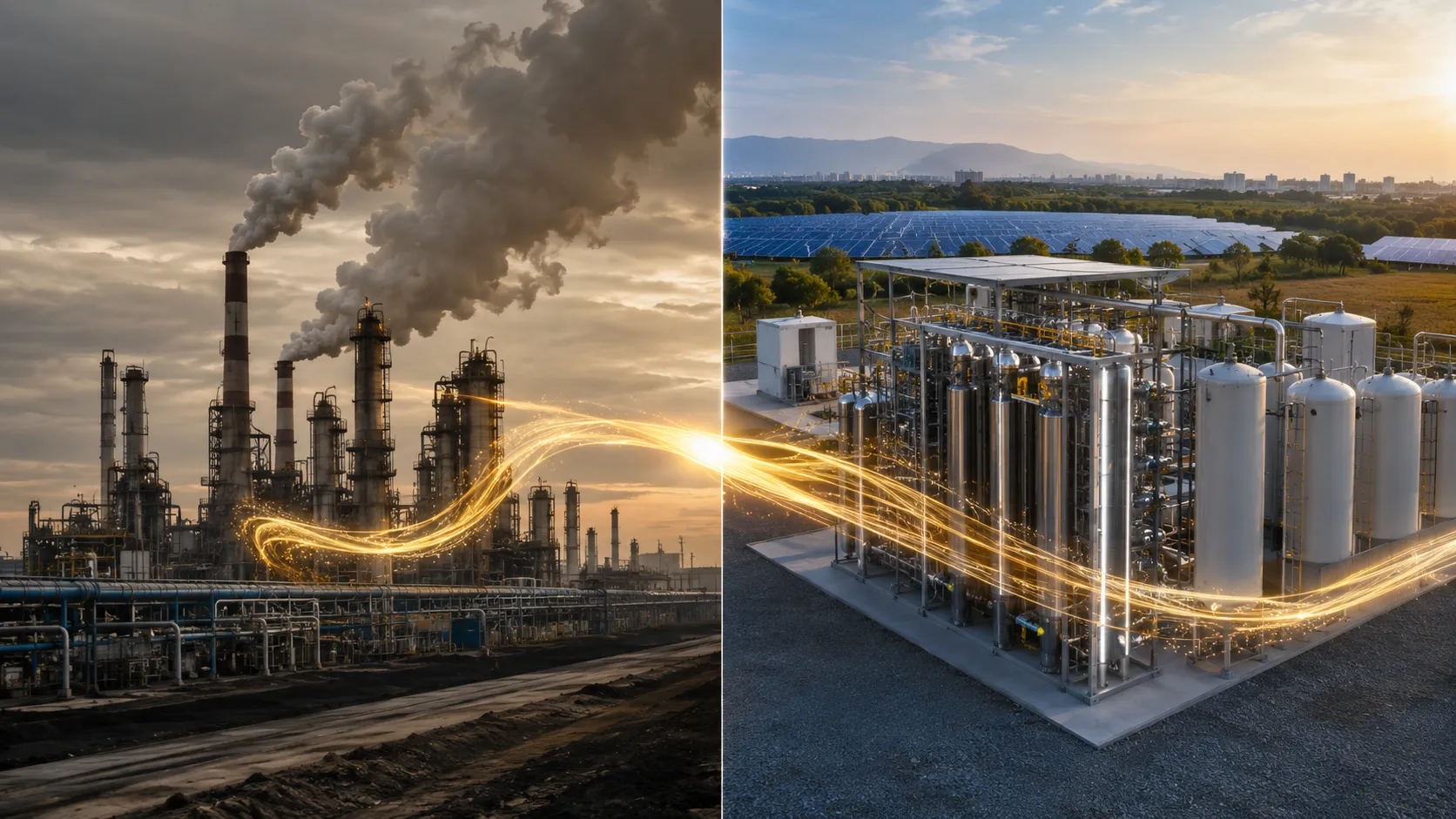
The ₹100/Kilo Breakthrough: How a Pune Startup Cracked the Green Hydrogen Equation, Hit a Billion‑Dollar Valuation, and Started a Global Race to $1
PUNE — May 31, 2026 — For as long as the hydrogen economy has been a dream, it has been defined by a single, brutal number: the cost of production. Green hydrogen—the kind made by splitting water molecules with renewable electricity—has historically cost between $4 and $6 per kilogram to produce. The number is too high to compete with fossil fuels in any industrial application, too high to justify the enormous infrastructure investments that a hydrogen economy would require, and too high to make the hydrogen fuel cell a viable alternative to the lithium‑ion battery in the electric‑vehicle market. The hydrogen dream has been trapped behind an economic wall, and the wall has been impenetrable for decades.
In February 2026, a Pune‑based startup called H2 Electro punched a hole in it. The company, which was founded in 2021 by three scientists from the National Chemical Laboratory—Dr. Rajesh Gokhale, Dr. Smita Patwardhan, and Dr. Aniruddha Kelkar—announced that its proprietary electrolyser technology had achieved a production cost of approximately ₹100 ($1.20) per kilogram of green hydrogen, at a pilot plant that had been operating continuously for six months. The announcement, which was initially met with scepticism from the global hydrogen industry, was subsequently validated by an independent audit conducted by the consulting firm DNV. The validation triggered a feeding frenzy. In April 2026, H2 Electro closed a $250 million Series C funding round led by Temasek, the Singaporean sovereign wealth fund, and Breakthrough Energy Ventures, the climate‑tech investment firm founded by Bill Gates. The round valued the company at $1.2 billion—making H2 Electro India's first green‑hydrogen unicorn—and it provided the capital to begin construction of the company's first commercial‑scale electrolyser factory, which is expected to begin production in 2027.
"The hydrogen economy has been waiting for someone to break the $2‑per‑kilogram barrier. H2 Electro has broken the $1.50 barrier. At $1.20, green hydrogen is competitive with grey hydrogen made from natural gas in most of the world. The economic wall that has trapped the hydrogen dream for decades has been breached. The question now is not whether the hydrogen economy will happen. It is how fast." — Climate‑tech investor, speaking anonymously to TIGI
The Membrane Breakthrough
The most important technological innovation that H2 Electro has developed is not the electrolyser itself—the basic technology for splitting water into hydrogen and oxygen using electricity has been understood for over a century—but the membrane that sits at the heart of the electrolyser, separating the anode from the cathode and allowing the ions to pass while keeping the gases apart. The conventional electrolyser membrane, known as a proton‑exchange membrane or PEM, is made from a fluorinated polymer that is expensive to manufacture, degrades over time, and requires a platinum‑group metal catalyst that adds significantly to the cost. The H2 Electro membrane, which the company calls the "ceramic‑anion‑exchange membrane" or CAEM, replaces the fluorinated polymer with a ceramic material that is cheaper, more durable, and more efficient—and it replaces the platinum‑group catalyst with a nickel‑based alternative that costs a fraction of the price.
The CAEM breakthrough was the product of six years of research at the National Chemical Laboratory, one of India's premier chemical‑research institutions, where Gokhale, Patwardhan, and Kelkar had been working on advanced materials for energy applications. The team had been investigating ceramic membranes for a different application—a high‑temperature fuel cell—when they discovered that the material they had developed had properties that made it suitable for electrolysis as well. The discovery was serendipitous, but the development was not. The team spent the next four years refining the membrane, testing it under a variety of operating conditions, and developing the manufacturing processes that would be required to produce it at scale. By the time H2 Electro was founded in 2021, the CAEM technology was ready to be commercialised.
The CAEM membrane's advantages over the conventional PEM are multiple. It operates at a higher temperature—approximately 120 degrees Celsius, compared with 80 degrees for a conventional PEM—which improves the efficiency of the electrolysis reaction and reduces the amount of electricity required to produce a kilogram of hydrogen. It is more durable, with a projected lifespan of over 80,000 operating hours—roughly double the lifespan of a conventional PEM. And it is cheaper to manufacture, because it does not require the expensive fluorinated polymers or the platinum‑group catalysts. The combination of higher efficiency, longer lifespan, and lower manufacturing cost is what enables the ₹100‑per‑kilogram production cost that H2 Electro announced in February—and it is the foundation of the company's competitive advantage.
The Manufacturing Scale‑Up
The most significant challenge facing H2 Electro is not the technology. It is the manufacturing. The CAEM membrane has been demonstrated to work at the pilot scale—the pilot plant that achieved the ₹100‑per‑kilogram cost is producing approximately 50 kilograms of hydrogen per day—but scaling it to the commercial volumes that the market demands will require a manufacturing infrastructure that does not yet exist. The factory that the company is building with its Series C capital is designed to produce electrolyser stacks with a total capacity of approximately 2 gigawatts per year—enough to produce approximately 300,000 tonnes of green hydrogen annually. The factory is expected to begin production in 2027, and the company has already secured letters of intent from several major industrial customers, including a consortium of fertiliser manufacturers who are looking to replace the grey hydrogen that they currently use with green hydrogen.
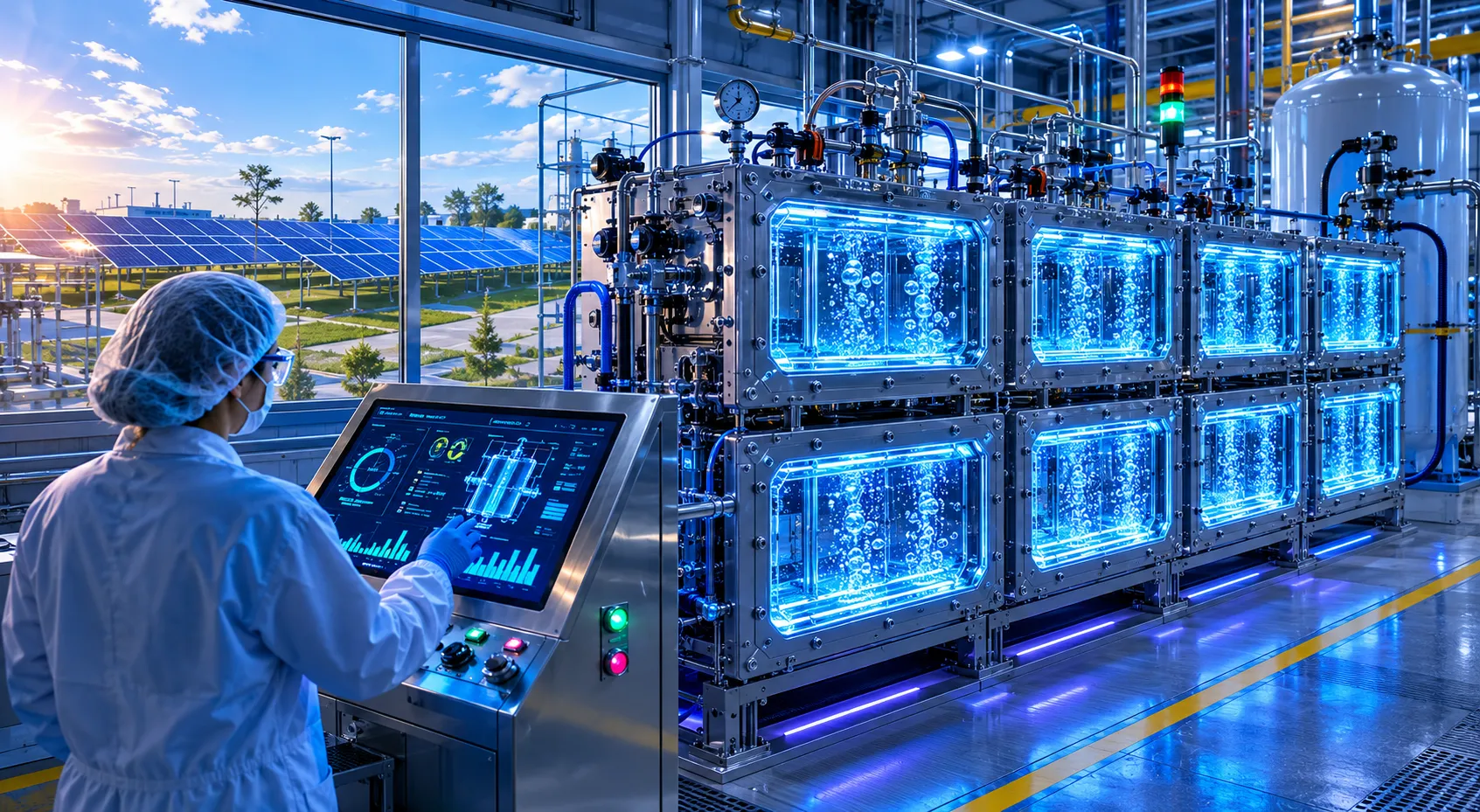
The manufacturing scale‑up is being supported by the Indian government, which has identified green hydrogen as a strategic priority. The National Green Hydrogen Mission, launched in 2023 with a budget of ₹19,744 crore, aims to make India the global hub for green‑hydrogen production and export, and it includes a set of incentives—capital subsidies, tax breaks, and infrastructure support—that are designed to attract private investment. The mission's target is to achieve a production cost of $1 per kilogram of green hydrogen by 2030, a target that H2 Electro is now within striking distance of achieving. The government has also been negotiating with potential export markets—Japan, South Korea, the European Union—that are looking for reliable, cost‑competitive sources of green hydrogen to meet their own decarbonisation targets.
The manufacturing scale‑up also has a competitive dimension. The global electrolyser market is currently dominated by a handful of large manufacturers—Nel Hydrogen in Norway, ITM Power in the United Kingdom, Plug Power in the United States—who have been building their own manufacturing capacity and who are racing to reduce their own production costs. The H2 Electro CAEM technology, if it can be manufactured at scale, has the potential to leapfrog the incumbents—to offer an electrolyser that is both cheaper and more efficient than anything that the established players can produce. The incumbents are not standing still—they are investing billions in their own manufacturing capacity and their own technology development—but the H2 Electro breakthrough has changed the competitive dynamics of the market, and the incumbents are now racing to respond.
The Global Race to $1
The H2 Electro breakthrough has intensified a global race that was already underway. The U.S. Department of Energy's Hydrogen Shot programme, launched in 2021, has set a target of $1 per kilogram of green hydrogen by 2030—the "1 1 1" goal: $1 for 1 kilogram in 1 decade. The European Union's Green Deal has set a similar target. China, which is the world's largest producer and consumer of hydrogen, has been investing heavily in electrolyser technology and has been driving down costs through scale. The global race to $1 is the most important competition in the clean‑energy industry, because the country or the company that achieves $1 first will have a structural advantage in every market that green hydrogen serves—the fertiliser industry, the steel industry, the chemical industry, the heavy‑transport industry—and the advantage will compound over time as the manufacturing infrastructure scales and the production costs continue to fall.
The H2 Electro breakthrough has demonstrated that the $1 target is achievable sooner than most analysts had anticipated. The company's current production cost of approximately $1.20 per kilogram is already competitive with grey hydrogen in many markets, and the company's manufacturing scale‑up is expected to reduce the cost further—to $1.00 or below—within the next several years. The trajectory is not guaranteed, and the manufacturing challenges are real, but the direction of travel is unmistakable. The economic wall that has trapped the hydrogen dream for decades is crumbling, and the company that has done the most to crumble it is based in Pune.
What This Signals
The H2 Electro unicorn is not primarily a story about a single startup. It is a story about the structural transformation of the global energy system—a shift from a fossil‑fuel economy that was defined by the cost of extraction to a clean‑energy economy that is defined by the cost of manufacturing, and from a hydrogen industry that was dependent on natural gas to a hydrogen industry that is powered by renewable electricity. The $1.20‑per‑kilogram production cost that H2 Electro has achieved is a milestone, but it is not the destination. The destination is $1.00, and then $0.80, and then whatever number is required to make green hydrogen the cheapest, most abundant, and most versatile fuel in the world. The race to that destination is the most important competition in the global economy, and the Indian startup that is leading it—for now—has just become a unicorn.


