Sarvam AI just became India's newest unicorn — raising $234 million at a $1.5 billion valuation, with HCLTech leading the charge. The message to Silicon Valley is unmistakable: India is building its own AI stack, and it's not asking for permission.
The funding round closed on a Monday evening. By Tuesday morning, the news had rippled through every tech boardroom in Bengaluru, every venture capital office in Silicon Valley, and every policy meeting in New Delhi. Sarvam AI, a three-year-old startup that had quietly been building India's first full-stack sovereign AI platform, had raised $234 million in the first close of its Series B round at a post-money valuation of $1.5 billion. HCLTech, one of India's largest IT services companies, had led the round with a strategic investment of $150.7 million, acquiring a 10.5% stake. Sarvam was now India's newest AI unicorn.
The numbers alone are impressive. But the story behind the numbers is what matters. Sarvam is not a wrapper on OpenAI. It is not a fine-tuned version of Meta's Llama. It is not a thin layer of Indian branding on foreign technology. It is a full-stack sovereign AI company — building foundational models from scratch, trained on Indian data, deployed on Indian infrastructure, designed for Indian languages and Indian contexts. And with this funding round, it has declared that India is no longer just a consumer of AI. It is a builder.
What Makes Sarvam Different
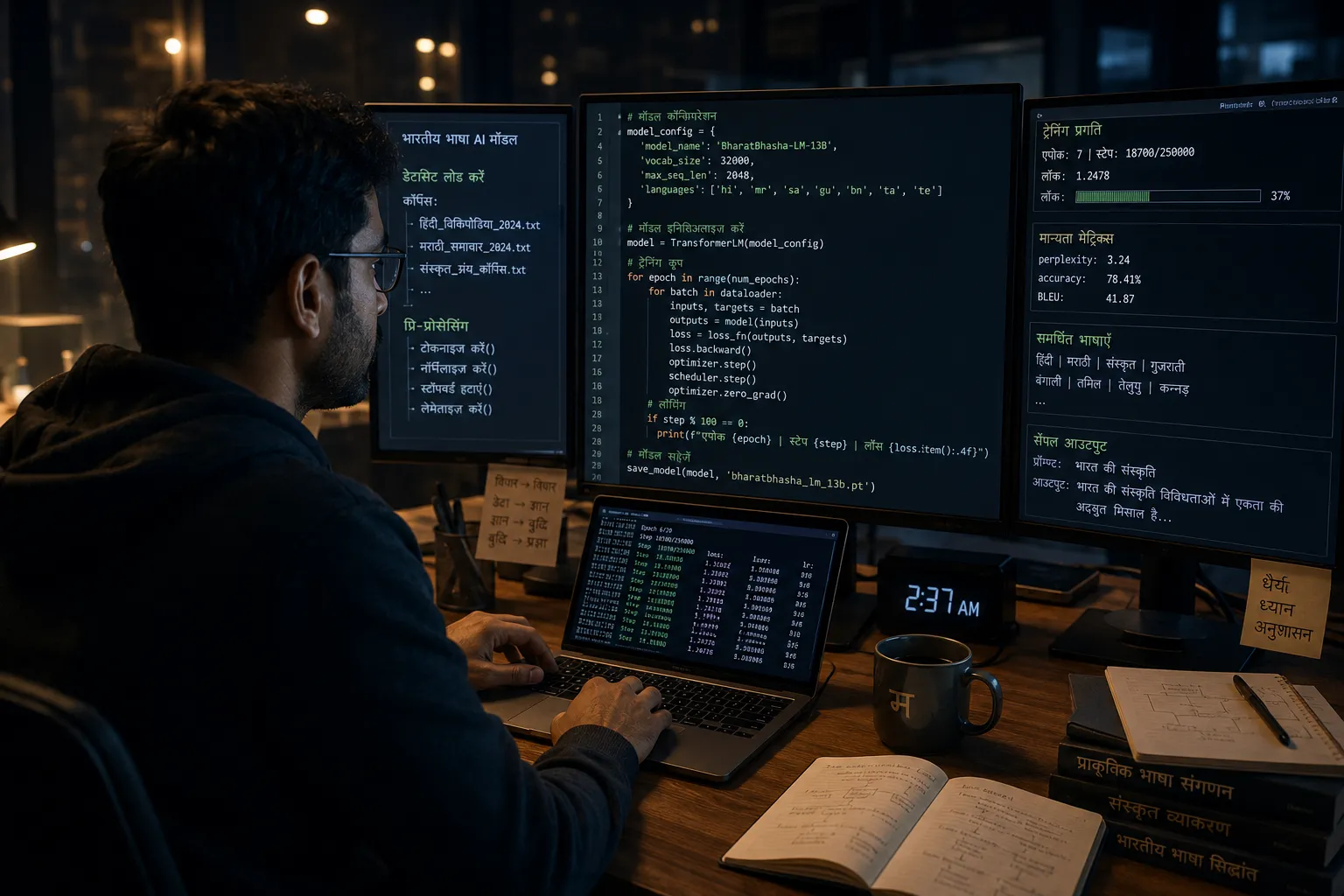
In an era when hundreds of Indian AI startups have raised millions on the back of GPT-4 APIs and open-source weights, Sarvam took the unfashionable path. It trained its own models from scratch. It built its own infrastructure. It developed its own evaluation frameworks. It created a sovereign AI stack that does not depend on foreign models, foreign servers, or foreign regulators.
The company was founded on July 14, 2023 — a date chosen deliberately to mark a new independence for Indian artificial intelligence. Its founders believed that India's AI future could not be built on platforms controlled by American or Chinese companies. They believed that Indian languages, Indian data, and Indian regulatory requirements demanded an Indian solution.
They were right. In 2026, data sovereignty is not a nice-to-have. It is a regulatory requirement that is coming. The Ministry of Electronics and Information Technology has signaled that it will require AI models operating on Indian data to be trained and hosted within India's borders. European regulators are already investigating OpenAI for GDPR violations. Indian regulators are watching closely.
Sarvam is positioned perfectly for this shift. Its models are trained on Indian infrastructure. Its training data is curated to respect Indian copyright and privacy laws. Its deployment architecture is designed to keep data within Indian borders. For a bank like SBI Life, or an insurance company like LIC, that is not a differentiator. It is a requirement.
The Customer Base That Matters
Sarvam's customers are not early-adoption startups. They are regulated financial institutions. SBI Life. LIC. IDFC. Tata Capital. CRED. These are organisations with zero tolerance for hallucination and data leakage. They chose Sarvam because Sarvam offers something no foreign model can: data sovereignty, language accuracy, and regulatory compliance.
The company's unaudited turnover for FY 2026 was ₹45.10 crore — up from ₹1.50 crore the previous year and zero the year before. That is not billion-dollar revenue. But for a deep-tech startup that only began commercial operations in late 2024, it is proof of product-market fit. Customers are paying. Customers are renewing. Customers are expanding their usage.
The growth trajectory suggests that Sarvam is not just a research project. It is a business. And with the HCLTech investment, it now has the capital to scale.
The HCLTech Partnership
HCLTech's investment is not just financial. It is strategic. The IT giant will use its stake to develop industry-specific language models and AI solutions for its global clients. It will expand multilingual AI capabilities beyond India, targeting markets in Southeast Asia, the Middle East, and Africa where Indian languages have diaspora reach. It will accelerate sovereign AI deployments for governments and regulated industries.
"This is not a financial investment in the traditional sense," an industry analyst said. "This is strategic alignment. HCLTech needs sovereign AI to sell to its clients. Sarvam builds sovereign AI. The marriage makes perfect sense."
The partnership gives Sarvam access to HCLTech's enterprise clients, global sales network, and deep technology expertise. It gives HCLTech access to Sarvam's foundational models, AI talent, and sovereign AI narrative. Both companies win.
The Unicorn Club
Sarvam is not the only Indian AI unicorn. Krutrim, backed by Ola's Bhavish Aggarwal, has also achieved unicorn status. Others are close behind. But Sarvam is different. It is not a consumer play. It is an enterprise play. And the enterprise market is larger, stickier, and more profitable.
"Sarvam is positioned perfectly for the enterprise market," the analyst said. "Krutrim is a consumer play. CoRover is a government play. Sarvam is an enterprise play. Those are different markets with different dynamics."
The enterprise market requires reliability, security, and scale. Sarvam has demonstrated all three. Its models are deployed in production at some of India's largest financial institutions. Its infrastructure is secure and compliant. Its team is deep and experienced.
The Sovereign AI Narrative
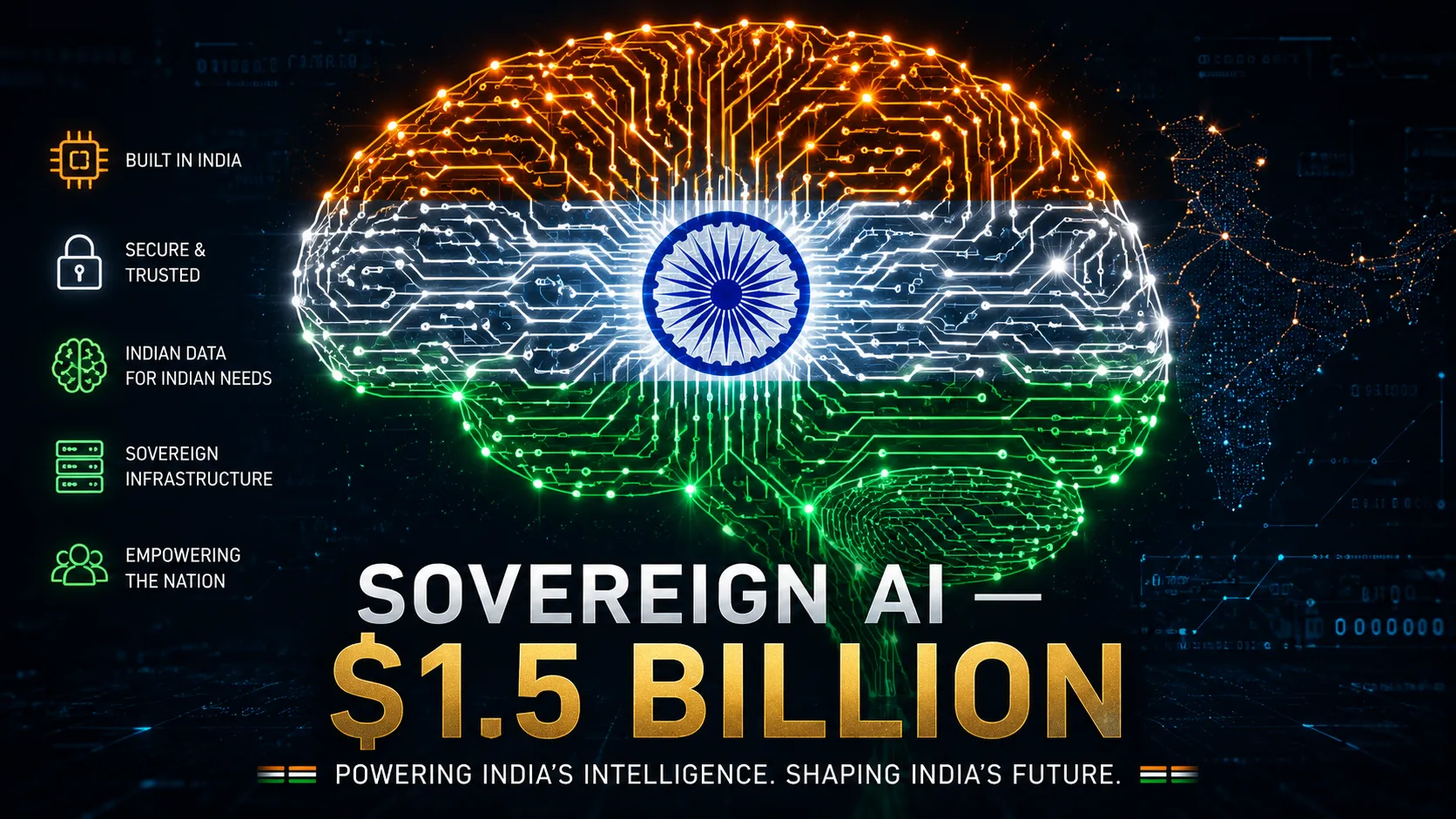
The phrase "sovereign AI" sounds like marketing jargon. It is not. It describes a fundamental shift in how governments and enterprises think about artificial intelligence.
When a French bank uses an American AI model hosted on American servers, whose laws govern the data? Who has access to the prompts? Who owns the outputs? If the model is trained on global data that includes copyrighted material, who is liable?
These are not hypothetical questions. European regulators are already investigating OpenAI for GDPR violations. Indian regulators are watching closely. The Ministry of Electronics and Information Technology has signaled that it will require AI models operating on Indian data to be trained and hosted within India's borders.
Sarvam is banking on that requirement. Its models are trained on Indian infrastructure. Its training data is curated to respect Indian copyright and privacy laws. Its deployment architecture is designed to keep data within Indian borders. For a bank like SBI Life, that is not a differentiator. It is a requirement.

What's Next for Sarvam
The funding round is not complete. Sarvam is targeting a broader $300 million raise. The first close of $234 million brings it most of the way there. The remaining capital will come from additional investors in the coming weeks.
The funds will be used to expand the company's model training capabilities, hire additional AI talent, and scale its go-to-market operations. Sarvam plans to release new models in the coming months, including a large language model specifically designed for Indian legal and regulatory texts, and a speech model that can handle all 22 official Indian languages.
The company is also exploring international expansion. Its models are already being evaluated by organisations in Southeast Asia, the Middle East, and Africa. The HCLTech partnership will accelerate that expansion.
The Bottom Line
Sarvam AI's $234 million funding round is not the largest AI investment in India. It is not the largest valuation. It is not the most headline-grabbing. But it may be the most significant.
For the first time, a major Indian IT services company has placed a strategic bet on an Indian AI foundational model company — not as a side project, not as a hedge, but as a core pillar of its future growth strategy.
If Sarvam succeeds, HCLTech succeeds. If Sarvam's models become the standard for enterprise AI in India, HCLTech will be the default integrator. If sovereign AI becomes a regulatory requirement, HCLTech will have a solution ready.
The message to Silicon Valley is clear: the Indian AI ecosystem has come of age. It is no longer a consumer of foreign technology. It is a builder. And it is ready to compete.


