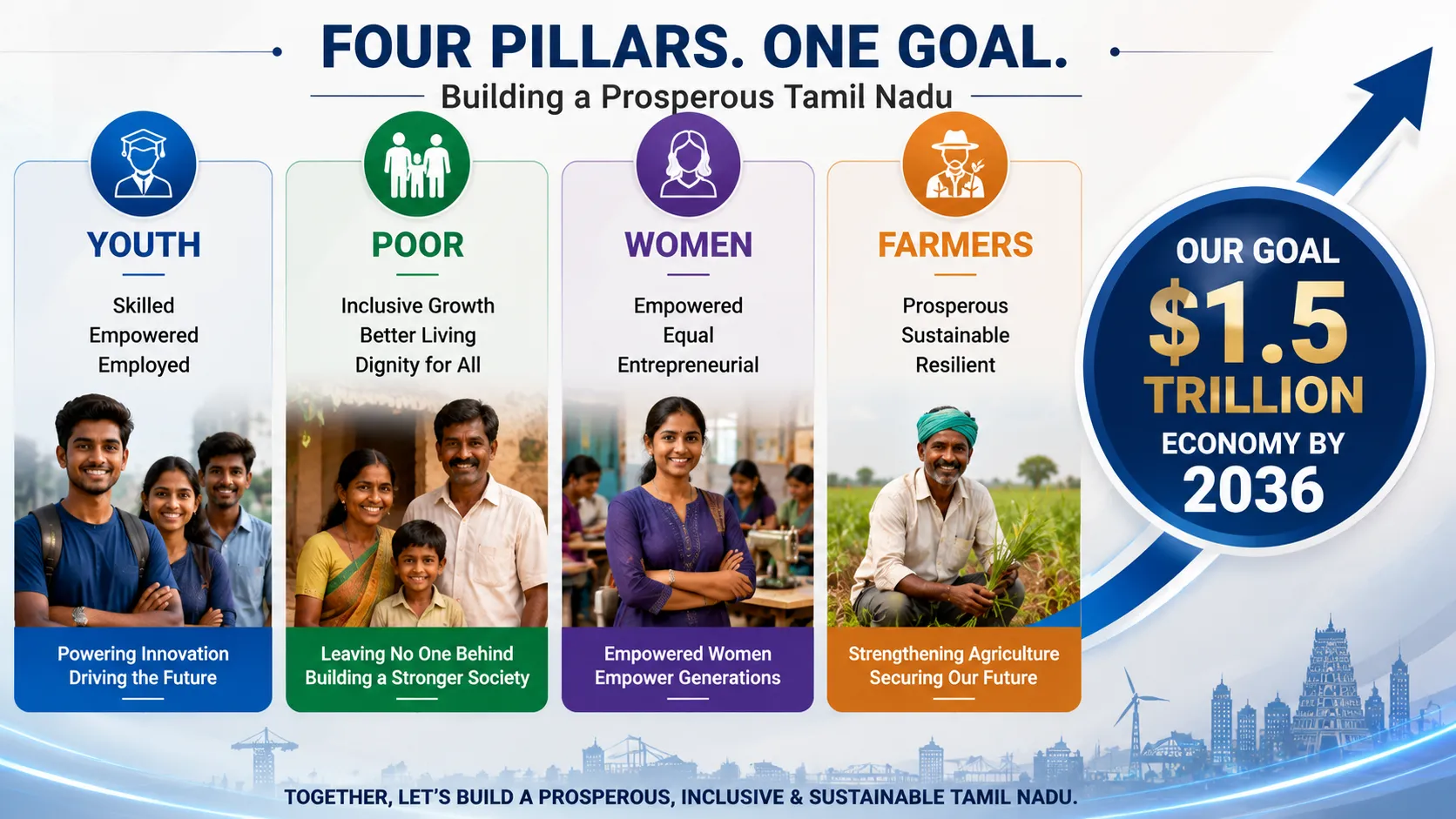
At the NITI Aayog Governing Council meeting, a Chief Minister stood up and promised something audacious: a $1.5 trillion state economy in ten years. That's 11% annual growth. That's 8,200 new jobs from just one deal. And that's only the beginning.
The room at the NITI Aayog Governing Council meeting in New Delhi was filled with Chief Ministers, Union Ministers, and economists who have seen every promise, every vision document, every five‑year plan. They have heard it all before. Then C. Joseph Vijay, the Chief Minister of Tamil Nadu, stood up. He did not speak about schemes or subsidies. He did not recite statistics from last year's budget. He said two numbers: $1.5 trillion. And 2036.
The room went quiet. Not because the numbers were unbelievable — though they were — but because Vijay spoke with the calm certainty of someone who has already done the math. Tamil Nadu's economy is currently around $450 billion. To reach $1.5 trillion by 2036, the state needs to grow at nearly 11% annually for a decade. That is more than double India's current growth rate. It is faster than China's best years. It is, by any measure, audacious.
And yet, when Vijay sat down, no one laughed. Because the numbers on the table before his speech told a different story. Tamil Nadu's economy grew by nearly 11% in the past fiscal year — the fastest among all major Indian states. Industrial investment in the state has crossed ₹40,000 crore in the last six months. The state's tax revenue is up 18%. The unemployment rate, at 3.8%, is the lowest in the country. If any state can make the audacious plausible, it is Tamil Nadu.
Vijay's vision is anchored on four pillars: youth, the poor, women, and farmers. It sounds like political rhetoric. But behind each pillar is a set of policies, investments, and measurable targets that have already been set in motion.
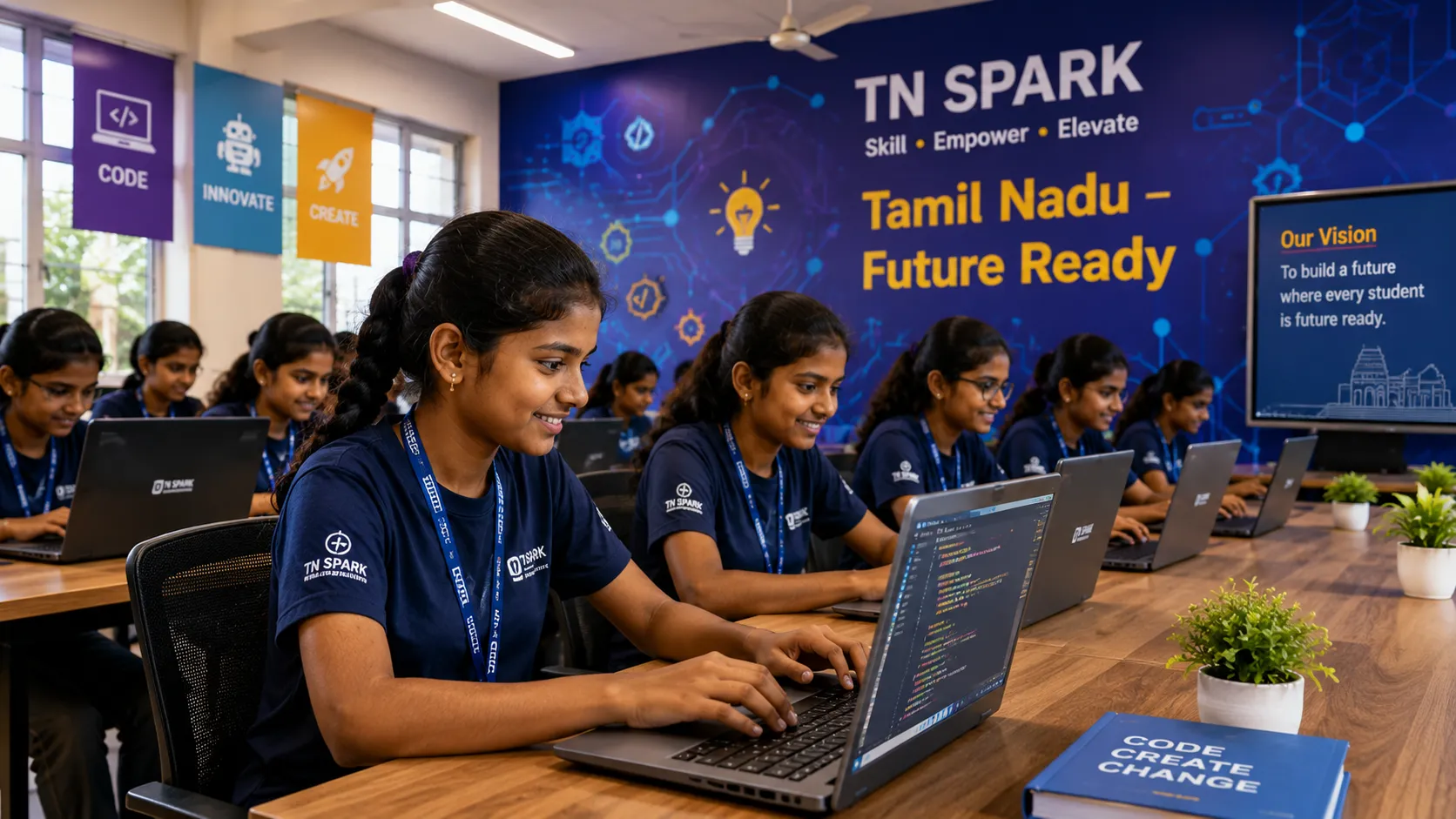
The youth pillar is the most visible. TN SPARK, the AI education programme, is training 900,000 students in coding and robotics. The government has set a target of skilling 2 million young people over five years, with a focus on advanced manufacturing, AI, and renewable energy. Every industrial investment — like the L&T ₹18,600 crore deal — comes with a skills component, ensuring that Tamil Nadu's youth are not just spectators of growth but participants.
The poor pillar is about economic mobility. The government has expanded its free bus travel scheme for women to cover all low‑income families. It has launched a housing scheme that aims to eliminate slums in Chennai and other cities by 2030. It has raised the minimum wage for unorganised sector workers by 22%. The goal is not charity. The goal is to ensure that the poor have the dignity and the means to become the next generation of middle‑class consumers.
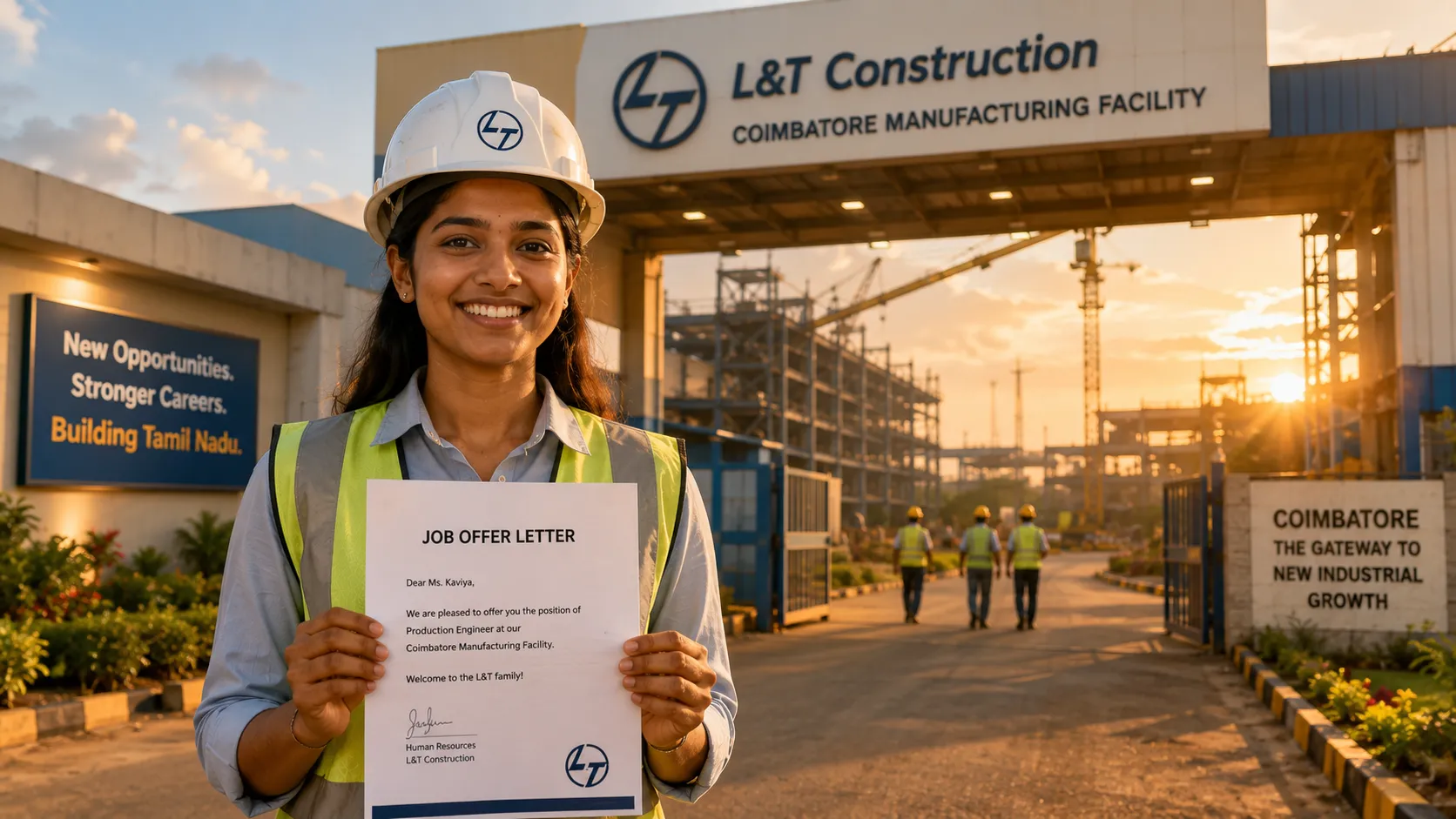
The women pillar is arguably the most ambitious. Tamil Nadu already has one of the highest female workforce participation rates in India — 42%, compared to the national average of 32%. Vijay wants to take it to 55% by 2030. His government has announced free bus travel for women, subsidised childcare in industrial zones, and a ₹5,000 crore fund for women entrepreneurs. The L&T investment alone is expected to reserve 30% of its 8,200 jobs for women.
The farmers pillar is the most politically sensitive. Agriculture remains a challenge in Tamil Nadu, with erratic monsoons and falling groundwater levels. Vijay's government has launched a "soil health mission" to reduce fertiliser dependence, a solar irrigation scheme to cut electricity costs, and a farm produce logistics network that promises to reduce post‑harvest losses. The target: double farmer incomes by 2030.
The four pillars are not separate. They are interlocking. A young woman from a poor family, trained in AI through TN SPARK, gets a job at the new L&T factory in Coimbatore. She earns enough to move her family out of a slum. Her mother, a farmer, benefits from the soil health mission and sells her produce through the new logistics network. That is the virtuous cycle Vijay is trying to build.
The numbers are daunting. An 11% growth rate for ten years is not impossible — China did it — but it requires sustained investment, global demand, and a stable policy environment. Tamil Nadu has the investment and the policy stability. What it cannot control is the global economy. A recession in the West, a war in the Middle East, a pandemic — any of these could derail the projection.
Vijay's response is to diversify. Tamil Nadu's economy is not dependent on any single sector. Automobiles, electronics, textiles, defence, renewable energy, IT services — the state has multiple engines. The L&T investment adds high‑end engineering to the mix. The TN SPARK programme ensures a pipeline of talent. The CMDA reform ensures that infrastructure can keep pace.
At the NITI Aayog meeting, Vijay was not just presenting a vision. He was making a demand. He argued that states like Tamil Nadu, which are already driving India's growth, need more fiscal autonomy. He asked for a greater share of central taxes. He asked for permission to raise funds internationally. He asked for a special package for industrial corridors that are already overcrowded and underfunded.
The central government's response was cautious but not dismissive. Prime Minister Modi, who chaired the meeting, praised Tamil Nadu's growth but stopped short of committing to any of Vijay's demands. The negotiation will continue. But Vijay's message was clear: we are willing to grow at 11%. Give us the tools, and we will do it.
For the people of Tamil Nadu, the $1.5 trillion vision is not abstract. It is a new L&T factory that might hire their son. It is a CMDA approval that might build an apartment they can afford. It is a TN SPARK lab where their daughter learns to code. It is, as Vijay put it in his closing remarks, "not a promise we make to you. It is a future we build with you."
The next decade will tell whether that future arrives. But on a June afternoon in Delhi, a Chief Minister stood up and dared to dream. And for the first time in a long time, no one in the room tried to stop him.