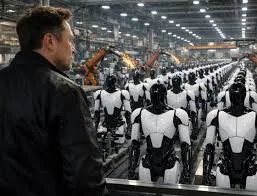
The robot revolution has officially clocked in. Tesla has deployed 10,000 Optimus humanoid robots across its Fremont, Shanghai, and Berlin factories, marking the largest industrial rollout of humanoid robotics in history. The Optimus Gen 2 units are now performing repetitive assembly tasks, material handling, and quality inspection – work that until recently required human hands. The age of the humanoid coworker has begun, and Elon Musk is betting that it will be bigger than Tesla’s car business.
The deployment did not happen overnight. Tesla has been quietly testing Optimus in its factories for over a year, with a handful of prototypes learning to pick up battery cells, insert components into door panels, and scan finished vehicles for defects. In June 2026, the company flipped the switch. Ten thousand robots now work alongside 120,000 human employees, handling the most monotonous, physically demanding, and ergonomically punishing tasks. The result, according to Tesla’s internal metrics, is a 25% increase in line throughput and a 60% reduction in assembly errors.
“This is not a gimmick,” said Elon Musk during a rare factory tour. “Optimus is a fundamental productivity tool. A human worker can do fine work for eight hours, but they get tired, they make mistakes, they need breaks. Optimus works 20 hours a day, with perfect consistency. It doesn’t complain. It doesn’t unionize. And it costs about $30,000 a unit today – less than the annual fully loaded cost of a line worker.”
The numbers are staggering. A factory worker in Fremont costs Tesla roughly $65,000 per year in wages, benefits, overtime, and training. A single Optimus robot, at current production cost, amortizes over two years. By 2027, when Tesla expects to produce 100,000 units annually, the cost will drop to $20,000 per robot – or about the cost of a modest sedan. For the price of three factory workers, a manufacturer can buy a robot that works three shifts, never takes a day off, and improves with every software update.
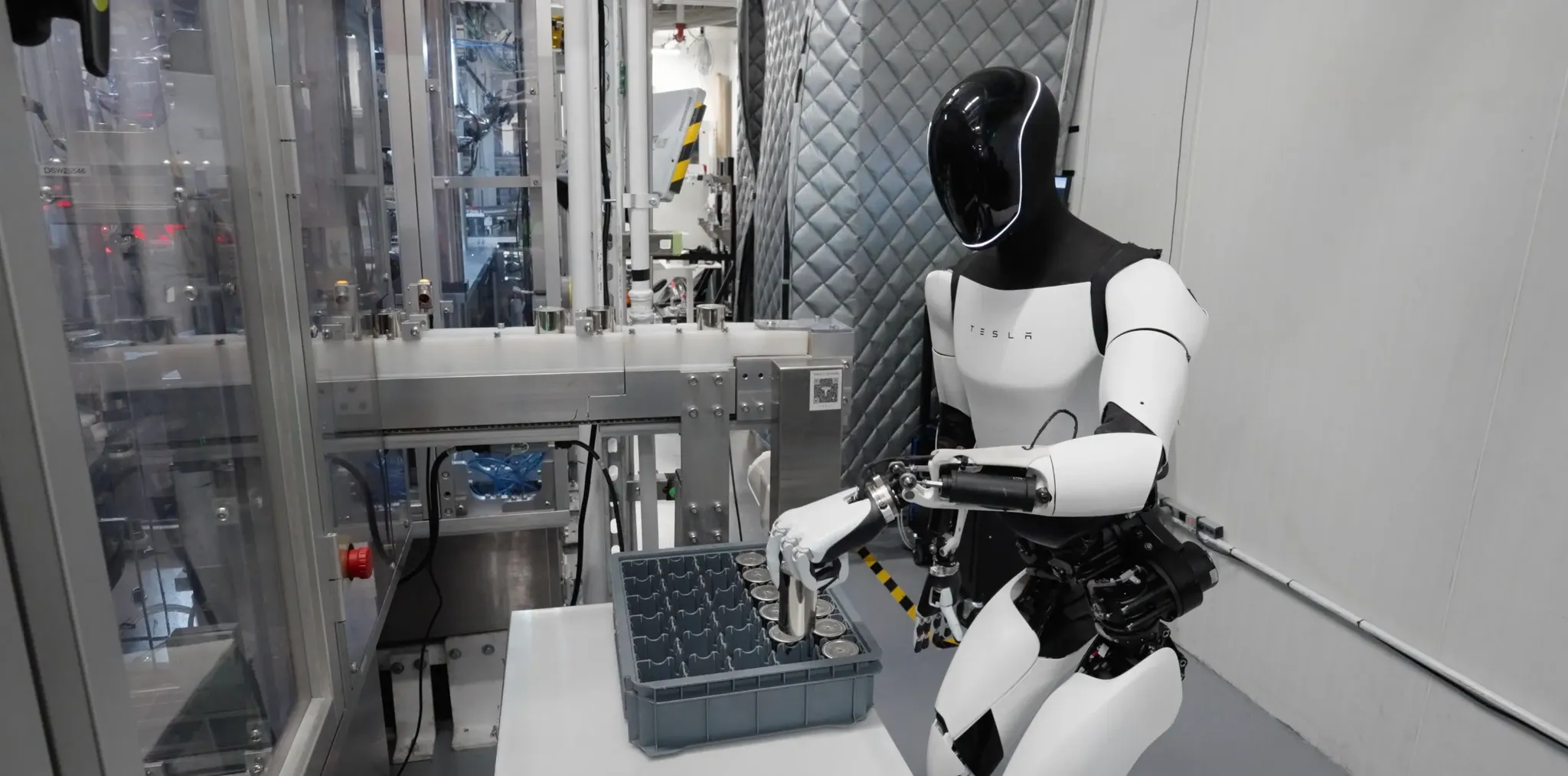
Optimus Gen 2 is a significant upgrade from the prototype shown on “AI Day” in 2022. It has 40 actuators (electric motors that mimic human joint movement), a 2.5 kWh battery that lasts 8 hours on a charge, and a lifting capacity of 20 kilograms (44 pounds). It walks at 5 miles per hour and can climb stairs, squat, and manipulate small objects with fingertips that have tactile sensors. The robot’s “brain” is a version of Tesla’s Dojo AI chip, which processes visual input from eight cameras and decides actions in real time. The entire control system runs on a custom Linux distribution.
“The secret sauce is the data,” said Milan Kovac, Tesla’s director of robotics. “We have millions of miles of driving data from Tesla cars, which taught our AI about the physical world. But for Optimus, we also have thousands of hours of human demonstration. Workers wear motion capture suits, perform tasks, and the robot learns by imitation. It’s the same technique used for self‑driving, but applied to limbs instead of wheels.”
In practice, Optimus excels at tasks that are difficult to automate with traditional industrial robots. Welding and painting are already automated; those jobs belong to large, single‑purpose arms. But tasks like picking a cable connector from a bin, routing it through a clip, and snapping it into place – that requires dexterity and adaptability that traditional robots lack. Human workers do it by feel. Optimus has learned to do it by combining computer vision with force feedback.
The rollout has not been without hiccups. Early units had a tendency to drop parts, and some robots struggled with reflective surfaces (the cameras would get confused). Tesla’s engineers have since added polarizing filters and updated the grasping algorithm. The robots now have a 99.7% success rate on the most common tasks. The remaining 0.3% is flagged for human review, and the robot’s logs are used to improve the next software release.
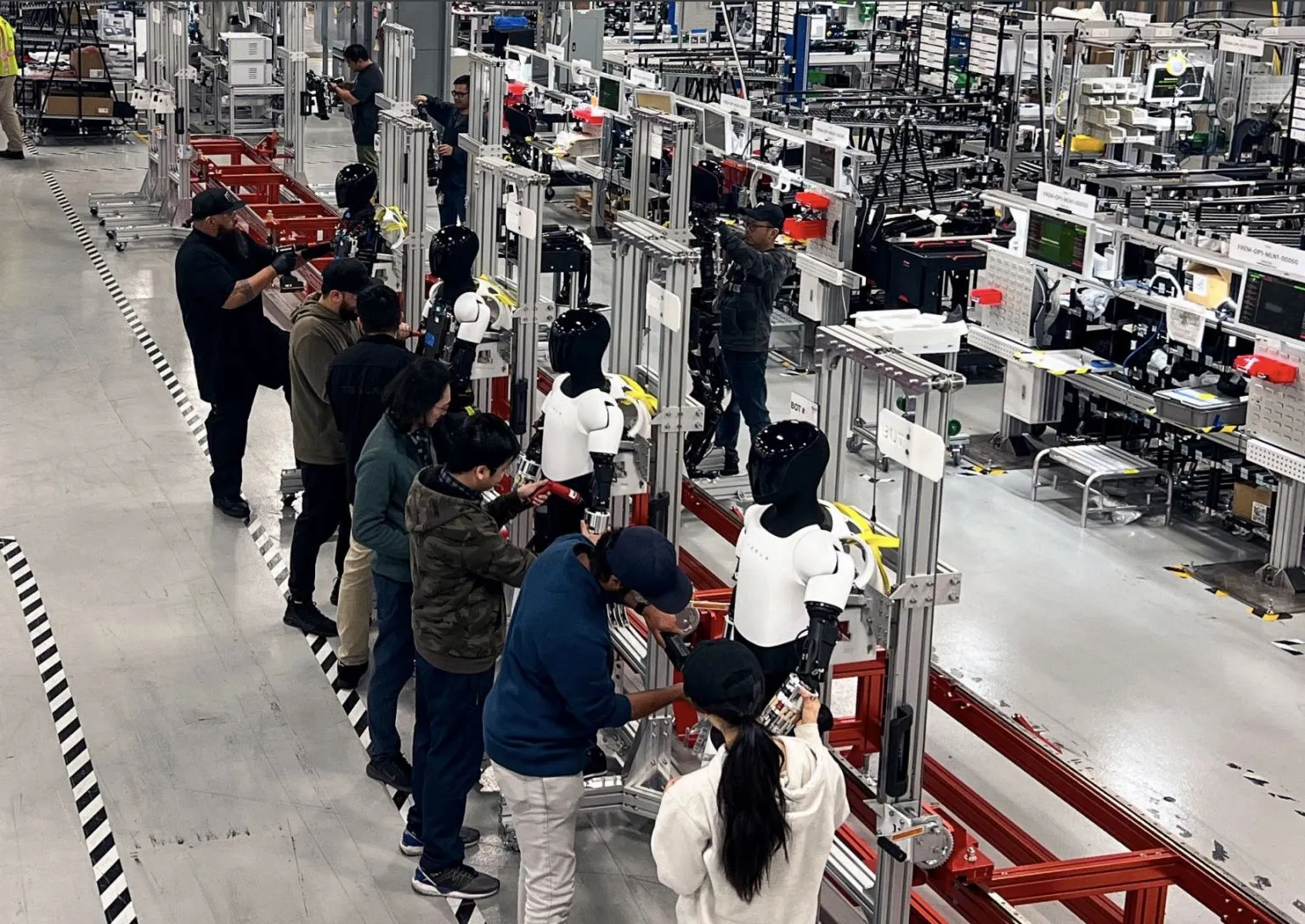
Worker reactions have been mixed. At the Fremont factory, some employees have embraced Optimus as a helper that takes over the worst jobs. “I used to spend four hours a day walking back and forth, picking up bins of components,” said line worker Maria Estrada. “Now Optimus does that. I can focus on the skilled work. It’s like having an assistant who never gets tired.” Others are less enthusiastic. “I don’t trust it,” said another worker, who asked not to be named. “They say it’s not taking jobs, but I’ve already seen two people not get their contracts renewed. The robots are cheaper. What do you think will happen?”
Tesla has stated publicly that no layoffs have occurred as a result of Optimus deployment. The company is instead retraining workers as “fleet supervisors” – employees who monitor a bank of 20 to 30 robots, intervene when necessary, and collect data for improvement. “The role of the human changes,” said Kovac. “They are no longer doing repetitive physical labor. They are doing system management, quality assurance, and continuous improvement. That is a promotion, not a replacement.”
Whether workers see it that way is another question. The United Auto Workers (UAW), which has been trying to unionize Tesla’s factories for years, has seized on Optimus as a symbol of automation threatening livelihoods. “Elon Musk is replacing American workers with machines,” said UAW president Shawn Fain. “He says it’s about productivity. We say it’s about greed.” Tesla counters that the US manufacturing sector has a persistent labor shortage – there are not enough workers to fill open positions. “We are not replacing people who want to work,” said a Tesla spokesperson. “We are filling jobs that humans don’t want to do.”
The economics suggest the UAW may be fighting the tide. Manufacturing employment in the US has remained stable for decades, even as automation has exploded. The reason: productivity gains allow companies to produce more without hiring proportionally more people. But the nature of work changes. Low‑skill, repetitive jobs disappear; high‑skill, supervisory jobs appear. Whether the workers who lose the former can transition to the latter is the central question of the automation age.
Tesla is betting that they can. The company has launched an internal training program called “Optimus Operator” that teaches employees how to manage robot fleets, interpret data dashboards, and perform basic maintenance. The program is free and takes four weeks. Graduates receive a pay bump of $5 per hour. So far, 2,000 Tesla workers have completed the training.
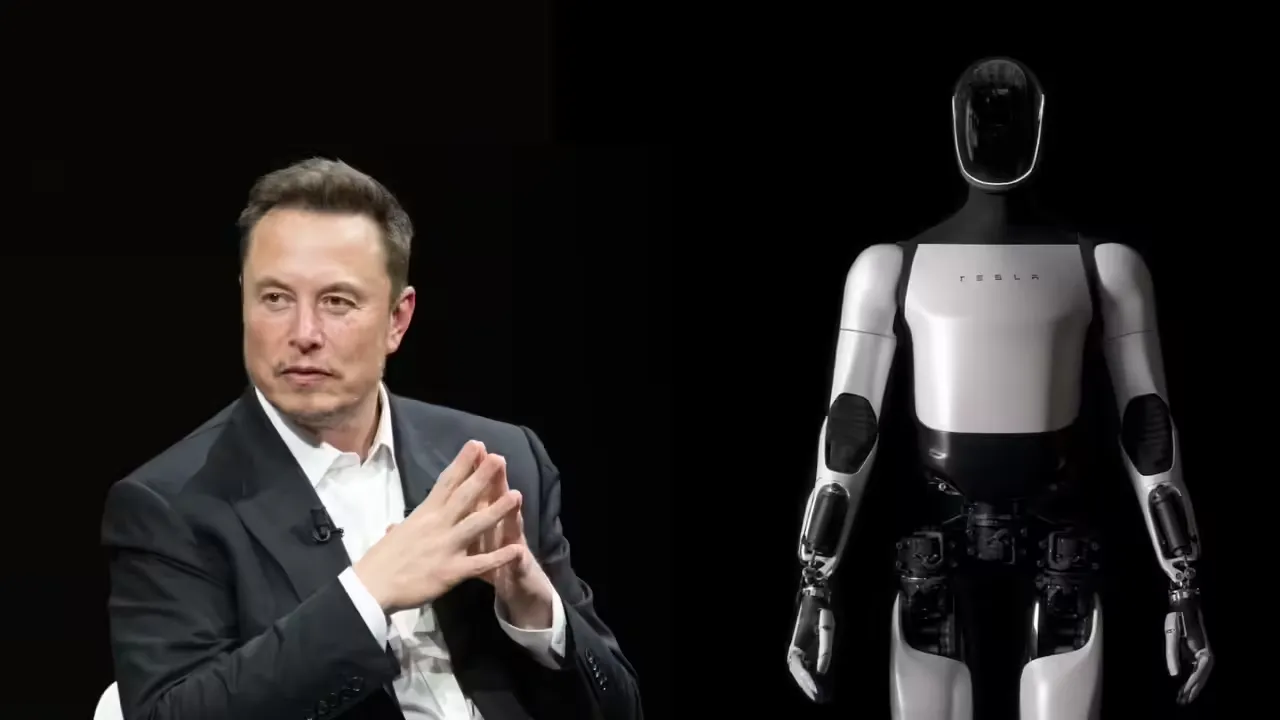
The implications extend far beyond Tesla. Once Optimus is proven at scale, Musk intends to sell the robot to other manufacturers. The potential market is enormous: any factory that assembles anything – cars, electronics, furniture, appliances – could use Optimus. Goldman Sachs estimates that humanoid robots could replace up to 25% of manufacturing jobs globally by 2030, a market worth $150 billion annually. Tesla is positioning itself to dominate that market, just as it dominates EVs.
Competitors are scrambling. Boston Dynamics’ Atlas is more acrobatic but not commercially available and costs an estimated $1 million per unit. Figure’s 01 robot is in pilot production but lacks Tesla’s manufacturing scale. Sanctuary AI, a Canadian startup, has a robot with human-like hands but limited mobility. None have the combination of cost, capability, and production capacity that Tesla brings.
The biggest challenge is software. Optimus is still far from general intelligence; it can perform tasks it has been trained on, but cannot improvise or adapt to novel situations. When a part is misaligned or a tool is missing, Optimus stops and calls for help. This limits its usefulness to structured, predictable environments. Tesla’s AI team is working on a “foundation model for robotics” – a large language model fine‑tuned on physical actions – that would allow Optimus to reason about novel tasks. Early demos show promise, but a shipping version is at least two years away.
For now, 10,000 robots are working 20 hours a day, six days a week, in Tesla’s factories. They do not eat, sleep, or complain. They do not ask for raises or file grievances. They simply work – and they work well. The future that science fiction promised has arrived, not with a bang, but with the quiet hum of 10,000 actuators moving in sync.
Musk, never one for understatement, tweeted: “Optimus will be bigger than Tesla’s car business. Long‑term, $20,000 per unit. Everyone will have one.” That may be hyperbole. But for the workers on the factory floor, the robot standing beside them is not a prediction. It is a coworker. And it is not going away.


