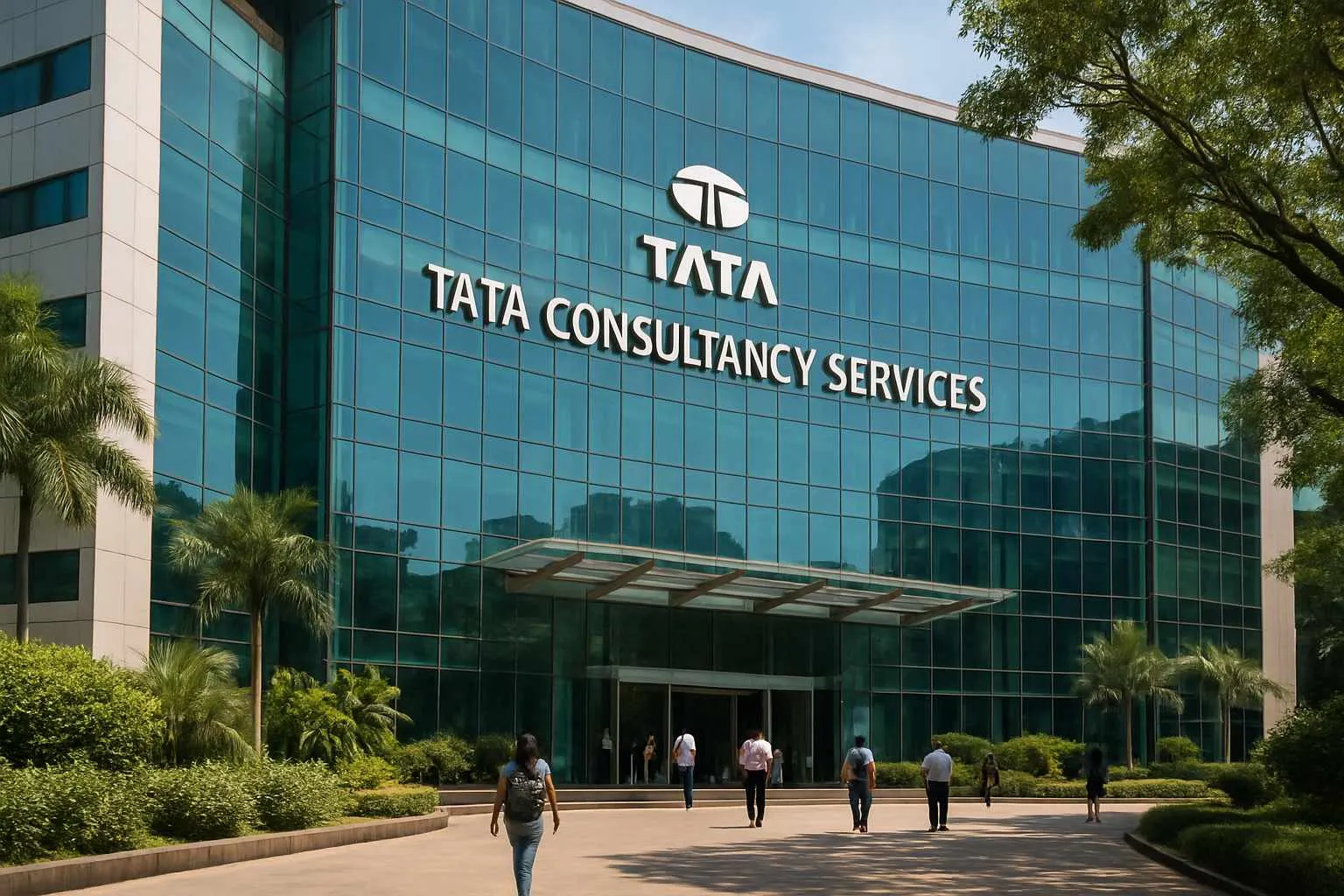
In one of the more significant developments for India's technology infrastructure ambitions in recent memory, Tata Group's data centre business has signed OpenAI as a customer, according to reports citing people familiar with the arrangement. The deal marks a notable milestone for India's fast-growing data centre sector, positioning a homegrown conglomerate directly within the supply chain of one of the world's most closely watched artificial intelligence companies at a moment when global demand for AI computing capacity is running far ahead of available supply.
While the specific commercial terms of the arrangement, including contract value and the scale of computing capacity involved, have not been publicly disclosed in full detail, the mere fact of the relationship carries outsized symbolic and strategic weight. OpenAI, the company behind ChatGPT and one of the most prominent players driving the current global wave of AI investment, has been aggressively expanding its computing infrastructure footprint worldwide as it races to keep pace with surging demand for its AI models, and its decision to source capacity from an Indian provider signals a meaningful vote of confidence in India's data centre capabilities.
The news landed at a moment when India's technology and investment community has been closely tracking the country's evolving role in the global AI value chain, with debate largely centred on whether India would primarily serve as a consumer and adapter of AI technologies developed elsewhere, or whether it could carve out a more substantial role within the physical infrastructure layer that underpins the entire global AI ecosystem. A confirmed commercial relationship with a company of OpenAI's global stature offers a meaningful, concrete data point in favour of the latter, more ambitious positioning.
Why OpenAI Needs External Data Centre Capacity
Training and running large-scale AI models requires an enormous and rapidly growing amount of specialised computing infrastructure, particularly graphics processing units and the data centre facilities purpose-built to house, power and cool them at scale. OpenAI, like other leading AI companies, has pursued a multi-pronged infrastructure strategy that combines capacity from its primary cloud partner, Microsoft, with a growing web of additional data centre and compute partnerships across multiple geographies, a diversification strategy that both hedges against capacity constraints at any single provider and allows the company to position compute resources closer to specific user bases and markets it is seeking to serve.
Industry analysts tracking the global AI infrastructure buildout note that this kind of geographic diversification has become an increasingly common strategy among the largest AI companies, driven by a combination of factors: the sheer difficulty of securing sufficient data centre capacity, power supply and specialised chips at the pace current AI demand requires, the desire to reduce latency for users in specific regions, and increasingly, data residency and sovereignty considerations that make it commercially and strategically advantageous to have compute infrastructure located within or near key markets rather than routing all traffic through a small number of centralised facilities.

Tata's Data Centre Buildout
Tata Group's data centre ambitions have been under deliberate development for several years, anchored primarily through Tata Communications, which has built out a network of data centre facilities across India, and increasingly supported by the broader group's substantial balance sheet and access to capital through entities including Tata Power, which brings direct relevance given the enormous electricity demands of large-scale data centre operations. The group has, over recent years, signalled clear ambitions to become a major player not just in traditional enterprise data centre hosting but specifically in the higher-value, faster-growing segment of AI-optimised data centre infrastructure, capable of housing the dense, power-hungry GPU clusters that modern AI workloads require.
This buildout has involved substantial capital investment in new facilities specifically engineered for AI workloads, including advanced cooling systems capable of managing the intense heat generated by high-density GPU deployments, and direct engagement with global chip suppliers and cloud infrastructure providers to secure the hardware and technical partnerships necessary to compete for exactly the kind of large-scale AI compute contracts that the OpenAI relationship represents.
India's Broader AI Infrastructure Ambitions
The Tata-OpenAI arrangement arrives at a moment when India's broader ambitions to position itself as a serious hub for global AI infrastructure have been receiving significant attention, both from domestic policymakers and international observers. India's combination of a large, increasingly skilled technology workforce, relatively competitive electricity and land costs compared to several Western markets, and a rapidly growing domestic market for AI-powered products and services has made the country an increasingly attractive location for global technology companies looking to expand their AI infrastructure footprint beyond the traditional hubs of the United States and a small number of other developed markets.
This ambition has not been without its complications, however. India's efforts to position itself prominently on the global AI stage have, at times, run into friction, illustrated by the reported cancellation of a keynote address by a prominent global technology figure at a major India AI summit, a development that underscored the still-evolving and occasionally uneven nature of India's relationships with the biggest names in global technology, even as substantive commercial deals like the Tata-OpenAI arrangement continue to advance on a parallel track.
The Global Data Centre Race
Tata's emergence as an AI infrastructure supplier to a company like OpenAI places the group within an intensely competitive global landscape, one that includes not just traditional cloud computing giants such as Amazon Web Services, Microsoft Azure and Google Cloud, but an increasingly crowded field of specialised data centre operators and sovereign wealth-backed infrastructure funds racing to build out AI-optimised capacity across multiple continents. This global race has been characterised by eye-watering levels of capital investment, with individual data centre campuses now routinely requiring capital commitments running into the billions of dollars given the scale of power infrastructure, specialised cooling and high-density computing hardware required.
For Tata to have secured a customer relationship with OpenAI specifically suggests the group's data centre infrastructure has met the exacting technical and operational standards that a company at the frontier of AI development requires, a validation that industry analysts say could open doors to further large-scale AI infrastructure contracts from other major global AI companies looking to diversify their own compute supply chains in the way OpenAI appears to be doing.
Economic And Policy Implications For India
Beyond its significance for Tata Group specifically, the deal carries broader implications for India's economic and policy landscape. Large-scale data centre investments of this nature typically generate substantial direct capital expenditure, meaningful long-term employment in specialised technical and operational roles, and significant incremental demand for electricity — a factor that ties directly into India's parallel, large-scale investments in renewable energy generation capacity, an area where Tata Power and other major Indian energy companies have also been aggressively expanding in recent years.
Indian policymakers have, over recent years, actively courted this kind of large-scale technology infrastructure investment through a combination of favourable land and power policies in specific states, alongside broader national initiatives aimed at positioning India as an attractive destination for global AI investment. A high-profile deal of this nature, involving one of the world's most recognisable AI companies and one of India's most prominent industrial conglomerates, is likely to be cited by policymakers as concrete validation of this broader strategic push, even as questions remain about how comprehensively India's data centre buildout can scale to meet the country's own longer-term ambitions in the global AI infrastructure race.
How The Deal Fits Tata's Broader Digital Strategy
The OpenAI relationship is best understood within the context of Tata Group's broader, multi-year strategic pivot toward technology and digital infrastructure as an increasingly central pillar of the conglomerate's overall growth strategy, a shift that has seen the group make substantial investments across semiconductor manufacturing, electronics assembly, and now, AI-optimised data centre infrastructure, in addition to its long-established strengths in information technology services through Tata Consultancy Services. This diversification into deeper technology infrastructure represents a deliberate effort by group leadership to position Tata for the next several decades of technology-driven economic growth, rather than relying solely on its traditional strongholds in more mature industrial and consumer sectors.
Group-level capital allocation toward this technology infrastructure push has been substantial, with Tata entities collectively committing significant capital expenditure toward data centre construction, semiconductor fabrication facilities, and related infrastructure over the past several years — investments that industry analysts say are only now beginning to translate into the kind of high-profile customer relationships, exemplified by the OpenAI deal, that validate the underlying strategic thesis behind this sustained capital commitment.
Investor Reaction And Market Interpretation
News of the OpenAI relationship has been closely parsed by investors and analysts tracking Tata Group's various listed entities, given the potential implications for the medium-term earnings trajectory of the group's data centre and digital infrastructure businesses. While the specific listed entity most directly benefiting from the arrangement has not been definitively confirmed in public reporting, analysts covering Tata Communications and other group technology entities have generally characterised the news as a meaningfully positive signal for the broader group's digital infrastructure ambitions, even without precise financial details to model the deal's exact earnings contribution.
Market commentary in the aftermath of the news has generally framed the development within the broader context of India's technology sector re-rating story, with several analysts noting that concrete, high-profile commercial validation of this nature tends to carry outsized positive signalling value for how global investors perceive the credibility and investability of India's broader technology infrastructure sector, extending well beyond the specific financial contribution of any single contract.
What This Means For India's Technology Talent Pipeline
Beyond the direct infrastructure and capital investment implications, deals of this nature carry meaningful significance for India's broader technology talent ecosystem, given the specialised engineering, operations and technical support roles required to run AI-optimised data centre infrastructure at the scale and reliability standards a customer like OpenAI would demand. Industry observers note that securing marquee AI infrastructure customers tends to create a virtuous cycle for talent development, as the specific technical expertise gained servicing cutting-edge AI infrastructure workloads becomes increasingly valuable and transferable, helping India build a deeper, more globally competitive pool of specialised AI infrastructure engineering talent over time.
This talent development dimension aligns closely with broader Indian government and industry initiatives aimed at positioning the country not just as a source of AI infrastructure capacity, but as a genuine centre of technical expertise in the operation and management of large-scale AI computing systems — an ambition that high-profile commercial validation from a company like OpenAI can meaningfully accelerate by attracting further investment and talent into the sector.

Power And Sustainability Considerations
AI-optimised data centres are exceptionally power-intensive, with a single large facility capable of consuming as much electricity as a mid-sized town, a reality that places enormous emphasis on the availability of reliable, cost-competitive and, increasingly, sustainably sourced power for any operator hoping to compete for large-scale AI infrastructure contracts. Tata Power's parallel, substantial investments in renewable energy generation capacity across India position the broader Tata Group with a potentially significant structural advantage in this regard, offering the prospect of powering AI-optimised data centre operations with a meaningfully cleaner energy mix than facilities reliant primarily on conventional grid power in markets with a heavier fossil fuel generation base.
This power-and-sustainability dimension has become an increasingly important consideration for global AI companies selecting data centre partners, given the growing scrutiny major technology companies face over the environmental footprint of their rapidly expanding AI infrastructure operations, making Tata's integrated group-level capability spanning both data centre construction and renewable power generation a potentially meaningful differentiator relative to data centre operators without comparable in-house energy generation capabilities.
What Comes Next
Looking ahead, industry watchers will be closely tracking whether the Tata-OpenAI relationship expands in scale over time, and whether it serves as a template for similar arrangements between other major global AI companies and Indian data centre operators, several of which — including Reliance Industries' emerging data centre ambitions and a range of other Indian and international players — have also been actively building out AI-focused infrastructure capacity in India over the past several years.
For Tata Group specifically, the deal represents a further, tangible step in the conglomerate's broader strategic pivot toward technology and digital infrastructure as a core growth pillar, complementing its more traditional strengths in areas ranging from steel and automobiles to consumer products and financial services. As global AI infrastructure demand continues to outstrip supply, Tata's early positioning as a credible supplier to a company of OpenAI's stature could prove to be a meaningfully consequential strategic advantage as the broader AI infrastructure buildout continues to accelerate over the coming years.


