StartupsTrending7 MIN READ

Swiggy Bets on Exclusive Products and Private Labels to Differentiate Instamart, Guides to Cash Break-Even in Two Quarters

Swiggy has outlined a strategy centred on exclusive products, private labels and brand partnerships to differentiate its quick-commerce arm Instamart, even as it reiterated a path to overall cash break-even within the next two quarters.

By Shaym Kumar · Author6 August 2026
Swiggy Bets on Exclusive Products and Private Labels to Differentiate Instamart, Guides to Cash Break-Even in Two Quarters

BENGALURU — Swiggy has laid out a fresh strategy for its quick-commerce arm Instamart centred on exclusive products, private labels and brand partnerships rather than network expansion alone, according to commentary from its Q1 FY27 earnings call. The strategy shift comes as Instamart reached contribution-margin break-even in May 2026, a target management had guided toward for five consecutive quarters, while the company reiterated its expectation of achieving overall cash break-even within the next two quarters.

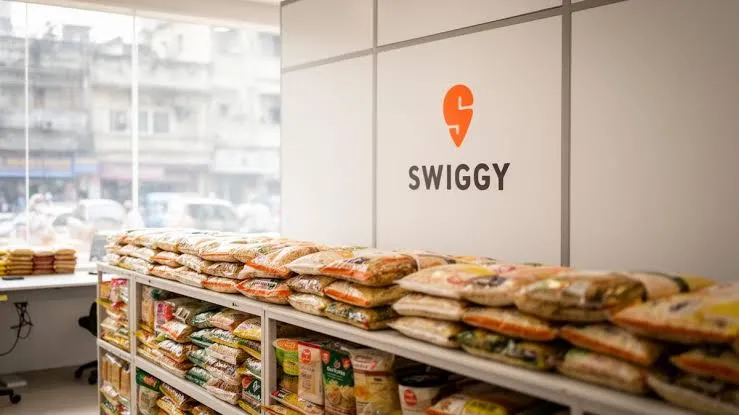
A key announcement during the call was the launch of "Switch to Better," a programme aimed at offering differentiated products available only on Instamart. According to management, the initiative brings together large FMCG companies, challenger brands and Swiggy's own private labels to develop products exclusive to the platform — with exclusivity often applying to individual SKUs rather than entire brands, and the programme now covering roughly 50 product categories.

A Quarter of Narrowing Losses and Slowing Growth

Swiggy's consolidated net loss narrowed to ₹791 Cr in the April-June quarter from ₹1,197 Cr a year earlier, as revenue surged 37% to ₹6,812 Cr. Instamart's gross order value (GOV) rose 39.8% year-on-year to ₹7,907 Cr — a deceleration from the 48.8% growth rate recorded in the preceding March quarter, which Swiggy attributed to a deliberate culling of unprofitable users and orders, including the removal of more than 4 million loss-making users over the past three quarters.

Curation Over Chasing Volume

"In a period where quick commerce competition has only intensified, we prioritised improving unit economics over fleeting headline growth," Swiggy CEO Sriharsha Majety said, describing the Instamart milestone. "Our efforts over the last few quarters to reset our user base, economics and experience have together made the business much stronger and increased its staying power. This milestone marks a pivotal transition, as growth increasingly serves as a driver for profitability rather than a compromise against it."

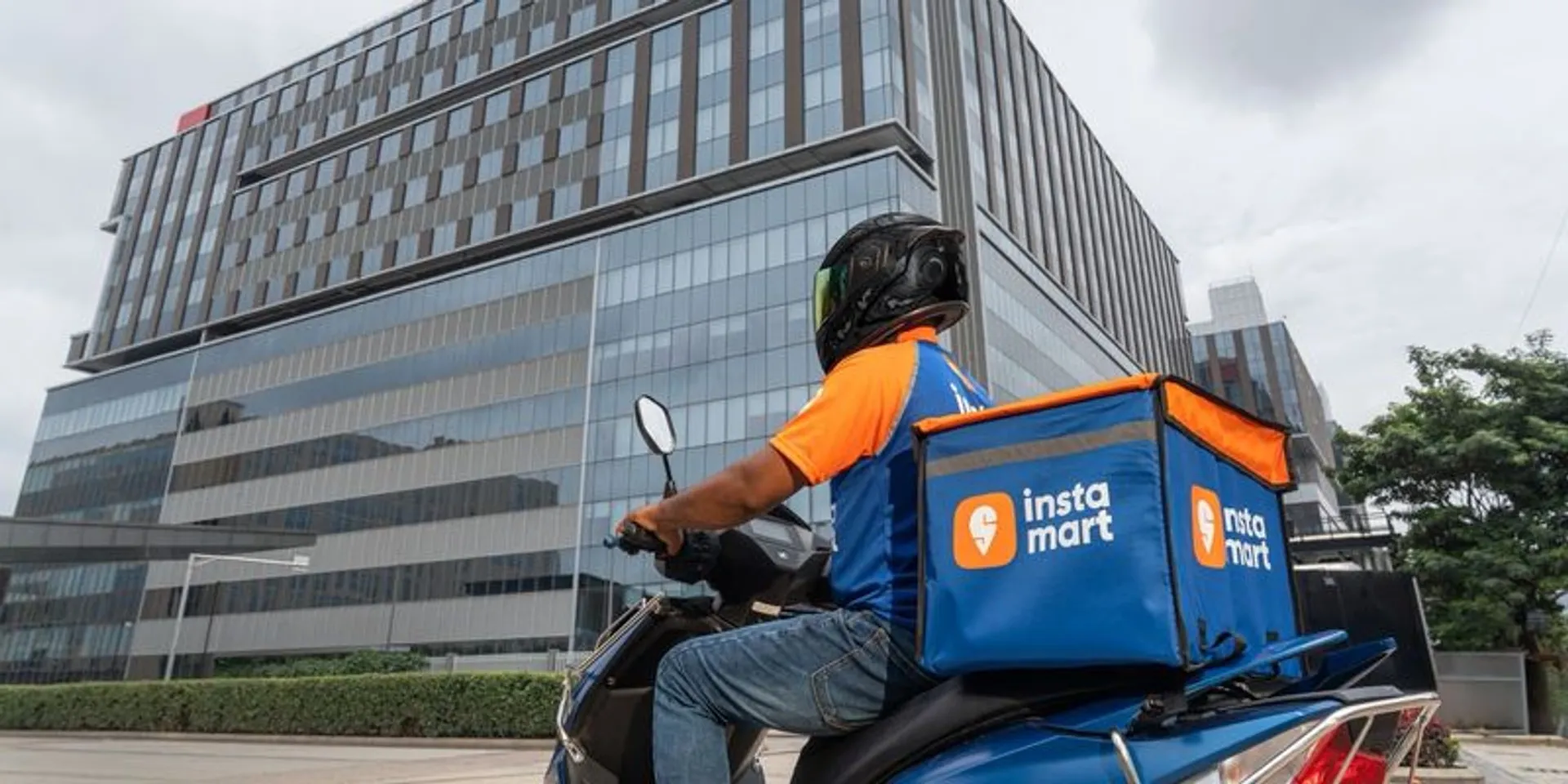
Instamart's contribution margin improved to -0.2% of GOV in the quarter, a 440-basis-point improvement year-on-year and 165 basis points sequentially. Its adjusted EBITDA loss narrowed by ₹80 Cr quarter-on-quarter to ₹778 Cr, with the adjusted EBITDA margin improving by 105 basis points to -9.8%. The company's dark store network grew to 1,171 stores across 131 cities, with more than 45% of stores achieving a positive contribution margin during the quarter, up from 30% in the prior three months.

In a period where quick commerce competition has only intensified, we prioritised improving unit economics over fleeting headline growth.
Sriharsha Majety, CEO, Swiggy

image.png

Profitability Path Leans on Food Delivery and Treasury Income

Beyond merchandising strategy, Chief Financial Officer Rahul Bothra said improving margins in the food delivery business, alongside treasury income, are expected to help Swiggy achieve overall cash break-even within the next two quarters, even as quick-commerce investment continues. Management also outlined a capital allocation framework for newer businesses: emerging initiatives are first evaluated for product-market fit and business-market fit before receiving additional investment, with capital increasing only once those milestones are met.

The mixed signals — narrower losses alongside slower growth guidance — split brokerage opinion following the results. "They've been giving guidance back and forth," Karan Taurani, executive vice president at Elara Capital, told Inc42. "While the earlier guidance from the company had stated focus on contribution profitability, which did happen this quarter, now they are back on increasing the growth guidance and saying that profitability won't come for the two quarters." Swiggy shares fell nearly 5% following the results as investors weighed slowing growth in both food delivery and Instamart against the margin gains.

Why It Matters

Instamart's shift toward exclusive, private-label-driven differentiation reflects a broader maturing of India's quick-commerce sector, where the initial land-grab phase — built on dark-store expansion and heavy discounting — is giving way to margin-focused curation strategies as Blinkit, Zepto and Instamart all compete for the same dense set of urban customers. Whether Swiggy can sustain both the cash break-even timeline and a renewed growth push simultaneously will be a key test of the company's execution over the next two quarters.

• Instamart reached contribution-margin break-even in May 2026, five quarters after management first guided toward the target.

• Swiggy's Q1 FY27 net loss narrowed to ₹791 Cr from ₹1,197 Cr YoY; revenue rose 37% to ₹6,812 Cr.

• The new 'Switch to Better' programme offers Instamart-exclusive SKUs across roughly 50 product categories.

• CFO Rahul Bothra reiterated guidance for overall cash break-even within two quarters.

• Instamart's dark store network grew to 1,171 stores across 131 cities.

TagsSwiggyInstamartQuick CommercePrivate LabelSwitch to BetterRahul BothraSriharsha MajetyEcommerceCash Break EvenStartup EcosystemDark StoresBlinkitZepto

Reader reviews

Sign in to rate and review this article.
Loading reviews…

