The Wellness Market Spent Decades Building for the Top. SuperLiving Raised $7 Million to Build for the Rest.
There is a specific kind of market insight that looks obvious in retrospect and counterintuitive in real time. The insight that millions of people in Tier 2 and 3 Indian cities want personalised, trusted health guidance and have never had access to it. The insight that a nutritionist, a sleep coach, a fitness trainer, and a lifestyle consultant are unaffordable for most of India not because the desire does not exist but because the supply has always been geographically and financially concentrated at the top of the pyramid. The insight that AI can change that equation entirely — not by approximating the quality of those specialists, but by making the guidance they offer accessible at ₹99 to ₹250 per month rather than ₹1,000 per session.
SuperLiving was built on that insight. And on June 24, 2026, Lightspeed led a $7 million Series A round into the company — with existing investors Kae Capital and All In Capital also participating — to fund the next phase of building it.
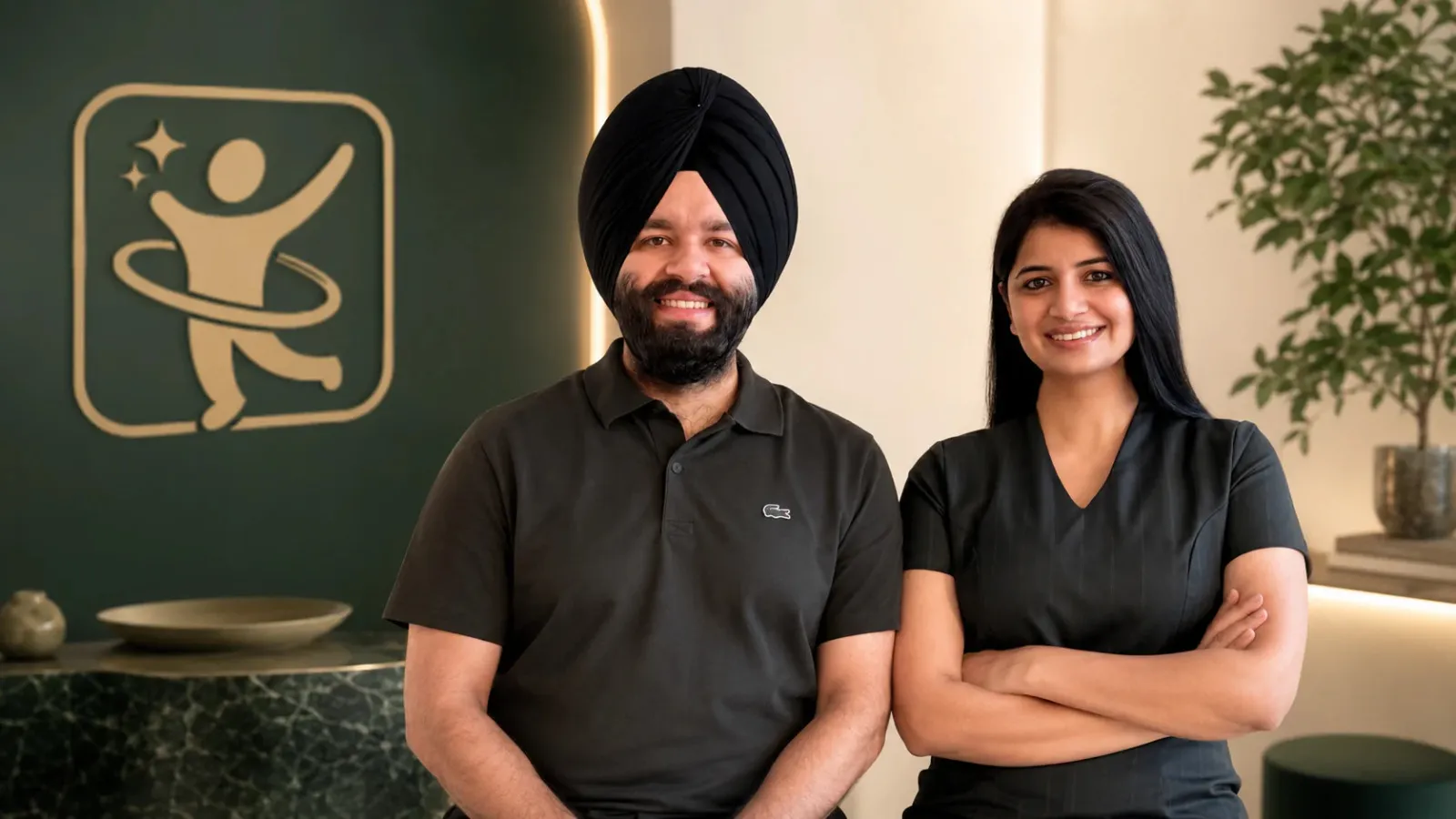
The traction that preceded the raise is the most direct argument for the investment. Founded in 2025 by Manavdeep Singh Grover and Gurjot Kaur — former leaders at Meesho and Pocket FM respectively — SuperLiving crossed 1.5 million app installs in less than a year. It has over 100,000 paying users. And 73 per cent of those paying users are from cities that the wellness industry has historically treated as afterthoughts: Meerut, Gangtok, Agra, Nashik, Bhiwadi, Varanasi, Hisar, Jalandhar, Indore, Jaipur, Visakhapatnam.
That last number is the number that matters most. Not the installs — installs are easy to get. Not the 100,000 paying users — paying users are meaningful but they exist in every major metro market. The 73 per cent Tier 2 and 3 composition is the evidence that SuperLiving has built something that small-city India is willing to pay for, and that the product works in the specific context of users who cannot fall back on a human specialist when the AI falls short.
What SuperLiving Actually Built — The Memory Layer That Makes It Different
SuperLiving covers five wellness pillars: nutrition, movement, sleep, stress management, and daily habits. Across each of these, the platform provides personalised journeys, educational content delivered in bite-sized formats, and a 24x7 AI companion that users can access whenever they need guidance.
This is not a novel category. HealthifyMe has been building AI-powered nutrition and fitness guidance for Indian users for a decade. Many other wellness platforms offer content libraries and coaching in similar areas. What SuperLiving has built that distinguishes its approach is a proprietary contextual memory layer — and that distinction is the product insight the company is making its most important bet on.
Most wellness apps treat every interaction independently. You log your food. The app responds. The next day you log again. The app responds again, with no accumulated understanding of who you are, what you have tried before, what worked and what did not, how your goals have evolved, or what the specific pattern of your behaviour suggests about what kind of guidance will actually help you.
SuperLiving's architecture captures and builds on user interactions over time. The AI companion learns individual goals, challenges, habits, and progress with increasing depth and context as the relationship develops. Its recommendations evolve alongside each user rather than resetting with every session. A user who has been on the platform for three months receives guidance that reflects three months of learning about their specific physiology, lifestyle, and response patterns — not the same generic entry point that a new user sees.
This persistent memory architecture is the feature that makes the platform sticky in a category where churn is typically very high. Wellness apps that reset with every interaction give users no reason to stay once the novelty wears off. SuperLiving's memory layer gives users a reason to stay that compounds over time: the longer they use it, the more the platform knows about them, and the more precisely it can help.
The vernacular content dimension compounds the Tier 2 and 3 thesis. A wellness platform that operates only in English excludes a large proportion of the users who have the most to gain from preventive health guidance and the least access to specialist alternatives. SuperLiving's investment in regional language content is not a feature addition — it is a foundational commitment to the market it is building for.

The Founders — and Why Their Backgrounds Produced This Specific Product
Manavdeep Singh Grover's background at Meesho — one of India's most successful mass-market e-commerce platforms, built specifically for the same Tier 2 and 3 user base that SuperLiving is now targeting — explains several structural decisions in the product.
The pricing model — ₹99 to ₹250 per month — is not simply a low-price-point strategy for a wellness app. It is a deliberate pricing design for users whose willingness to try a new digital product is high but whose tolerance for financial risk is low, and whose network effects drive adoption differently from metro consumers. At Meesho, the insight that small-city India could become a digital commerce powerhouse if the product, price, and experience were built for that user rather than adapted down from a metro-facing product was the founding thesis. Grover brings that insight to wellness.
Gurjot Kaur's background at Pocket FM — the audio storytelling platform that demonstrated that vernacular, serial content drives deep engagement among Indian users who have been underserved by English-language digital media — contributes the content strategy. The format decisions at SuperLiving reflect someone who understands how Tier 2 and 3 users consume content, what keeps them coming back, and why vernacular is not a concession but a competitive advantage in those markets.
Harsha Kumar, Partner at Lightspeed India, described the investment thesis in terms that capture the market opportunity precisely. Most wellness platforms are built for the top of the pyramid. SuperLiving is building for the rest of India — affordable, vernacular, culturally grounded, and genuinely sticky. The early traction from Tier 2 and 3 users tells you everything about where the real demand is.
What the $7 Million Is Building
The capital deployment plan is specific and sequenced.
AI capability strengthening means deepening the contextual memory layer, improving the quality of personalisation across the five wellness pillars, and expanding the AI companion's ability to handle the range of health and lifestyle questions that users in different geographies and demographic contexts bring to it. A user in Gangtok asking about altitude adaptation and a user in Varanasi asking about managing stress during festival seasons represent meaningfully different contexts. The AI that serves them well needs the contextual intelligence to understand that difference.
Vernacular content expansion means scaling the regional language content ecosystem beyond its current state to serve the full linguistic diversity of Tier 2 and 3 India. Hindi, Tamil, Telugu, Kannada, Marathi, Bengali — each of these is a market, not a feature, and investing in vernacular content is investing in the distribution advantage that makes the platform relevant to the user before they have even opened the app.
Product development acceleration means the expansion beyond wellness content and coaching into adjacent preventive health categories: diagnostics, health commerce, and personalised care experiences. This is the second phase of the platform — moving from guidance and coaching into the services that users need once they have been guided toward a specific health goal. A user who has been told by the platform that they should get their HbA1c tested needs a frictionless way to order that test. A user who has been coached on improving their sleep needs access to products that support that goal. The platform that can close those loops — from guidance to diagnostic to product to coaching — becomes a genuinely comprehensive preventive health ecosystem rather than a content and coaching app.
User acquisition scaling across Tier 2 and 3 cities is the growth investment that the strong organic traction has validated and the Series A capital can now accelerate systematically.
India's digital health market is projected to grow to $106.97 billion by 2033. The preventive health segment within that projection is the fastest growing and the least developed — the category where the gap between the size of the potential market and the quality of the current supply is widest. SuperLiving raised $7 million to close that gap, starting with the 73 per cent of its paying users who live in cities the wellness industry spent decades ignoring.


