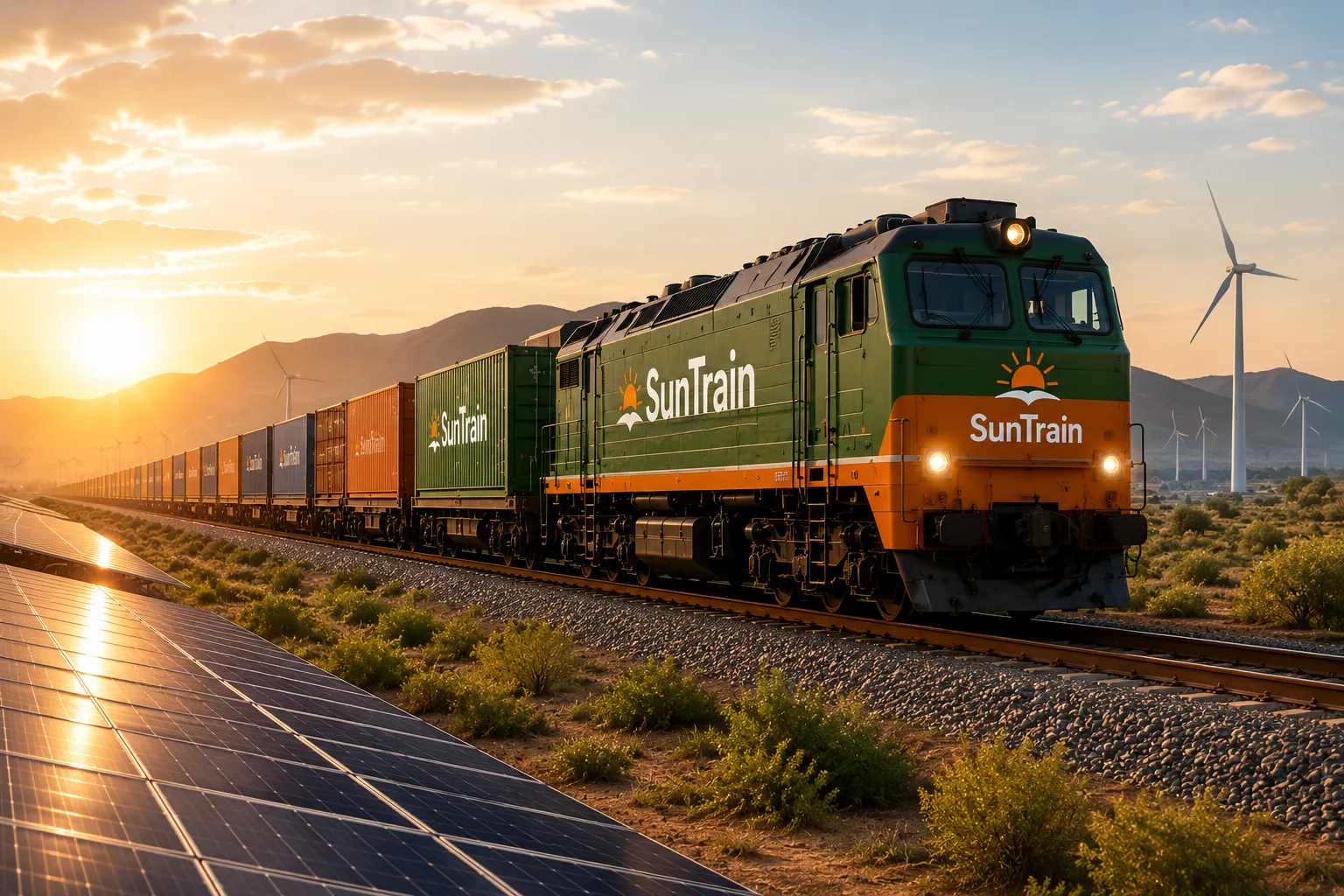
Indian Railways moves 1.2 billion tons of freight every year, making it one of the largest rail networks in the world. But while passenger trains are rapidly electrifying, freight locomotives still rely on diesel for many routes. The logistics sector accounts for 14% of India’s CO₂ emissions, and rail freight – despite being more efficient than trucks – still has a significant carbon footprint. SunTrain, a Mumbai‑based climate tech startup, has developed a solution: solar panels mounted on railway wagons that power onboard systems and feed surplus energy into the grid. The company also builds solar‑powered container depots and designs battery‑electric shunting locomotives. SunTrain has raised $25 million in Series A funding led by Avaana Capital, with participation from Shell Ventures and the Indian Railways Innovation Cell. The funds will be used to deploy solar panels on 5,000 railway wagons and build 20 solar‑powered depots across India’s Dedicated Freight Corridor (DFC) by 2028.
The core innovation is a lightweight, flexible solar panel that can be retrofitted onto existing wagons without compromising safety or payload capacity. Each wagon is fitted with 5 kWp of solar capacity, which powers lights, ventilation, and GPS tracking for refrigerated containers. Surplus energy (about 80% of generation) is fed into the overhead traction system or stored in small batteries for overnight use. SunTrain’s proprietary “energy management unit” ensures that the grid does not receive power during peak demand hours (which would be dangerous), but during off‑peak times, the solar energy directly offsets the diesel or electric consumption of the locomotive. In pilot tests on 50 wagons running between Delhi and Mumbai, the system reduced diesel consumption by 12% per wagon – not huge on a per‑wagon basis, but across 5,000 wagons, the annual saving would be 15,000 tons of diesel and 48,000 tons of CO₂.

“Every freight train is a moving power plant waiting to happen,” said co‑founder and CEO Rajiv Mehta, a former railway engineer. “The roof of a container wagon is unused real estate. By putting solar panels on it, we can generate clean energy right where it is needed – to power cooling, tracking, and even traction. And we do it without adding any weight that would reduce payload.” SunTrain’s panels are made from lightweight composite materials that can withstand the vibrations, dust, and extreme temperatures of Indian railways. They have passed the Research Designs and Standards Organisation (RDSO) certification, a stringent requirement for any component attached to rolling stock.
The Series A round is a strong vote of confidence in rail decarbonisation. Indian Railways has committed to becoming net‑zero by 2030, and it has identified solarisation as a key strategy. The government has already installed over 500 MW of solar capacity on station rooftops and unused railway land, but the idea of putting solar panels on moving trains is novel. Shell Ventures’ investment reflects the oil giant’s pivot to becoming a low‑carbon energy provider; Shell sees SunTrain’s technology as a potential export to other countries with large rail networks. “Decarbonising heavy freight is one of the hardest challenges in transport,” said a Shell Ventures representative. “SunTrain has a practical, low‑cost solution that can be deployed today, not in 10 years.”
SunTrain will use the funds to set up a manufacturing line in Pune to produce the flexible solar panels and energy management units. The company will also build 20 solar‑powered depots along the Eastern and Western Dedicated Freight Corridors, which connect the ports of Gujarat to the industrial heartland of North India. Each depot will have rooftop solar, battery storage, and charging infrastructure for electric shunting locomotives – small engines that move wagons around the yard. Currently, shunting is done by diesel locomotives that emit significant pollution in densely populated areas. SunTrain is developing a 500 kWh battery‑electric shunter that can operate for 8 hours on a single charge, recharging from the depot’s solar power.
Competitors include traditional solar engineering firms and railway electrification contractors, but SunTrain’s focus on the niche of “on‑board solar” is unique. The startup holds two patents: one for the lightweight panel mounting system that withstands railway vibrations, and another for the energy management unit that safely injects solar power into the traction grid. The company also has a partnership with Siemens Mobility to integrate its systems with smart railway sensors.
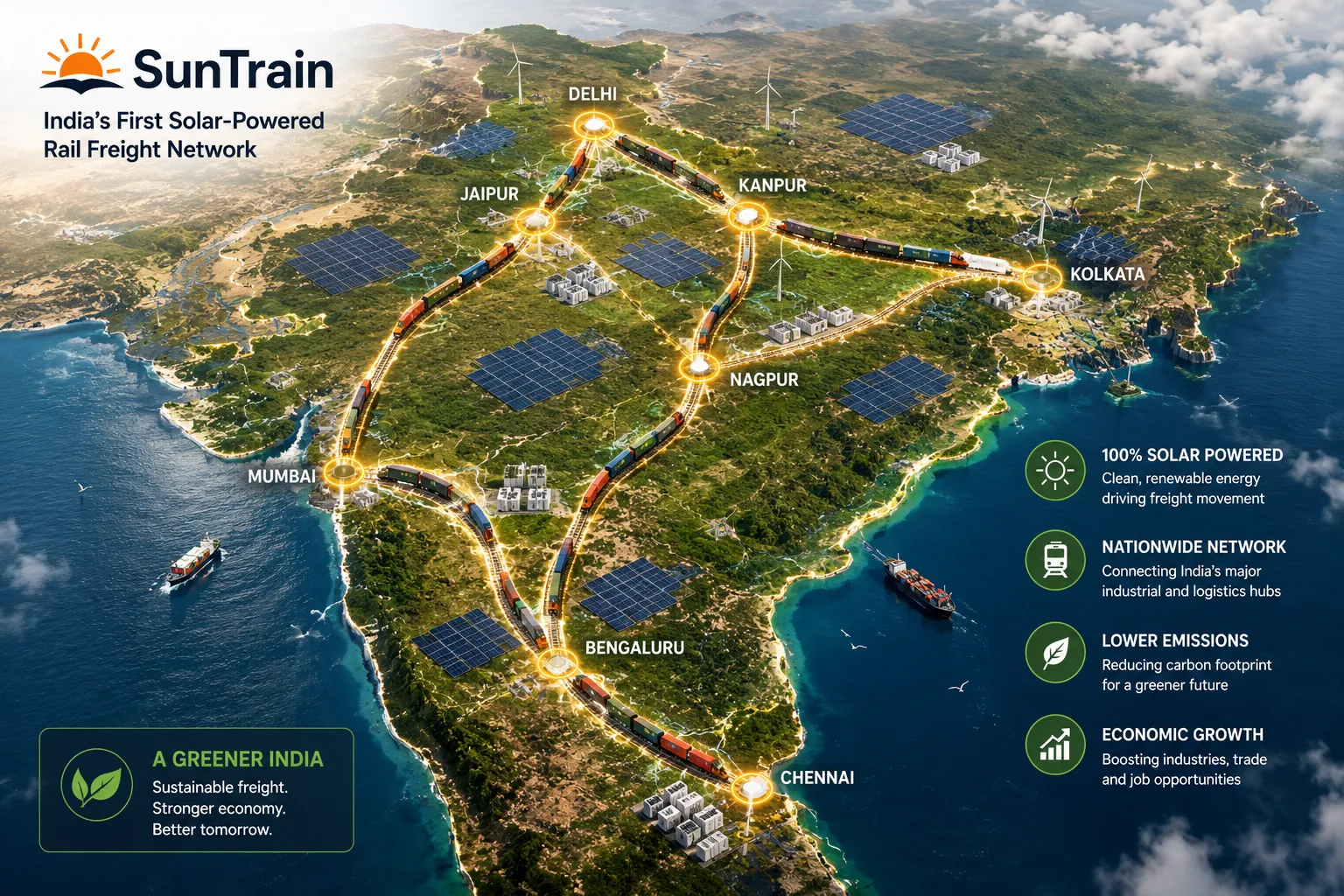
The social and environmental impact is substantial. India’s freight rail network currently runs 50% on diesel, consuming 2.5 billion litres annually. Every litre of diesel saved reduces CO₂ emissions by 2.7 kg and reduces India’s oil import bill. Moreover, diesel locomotives emit particulates and NOx, which worsen air quality in cities near railway yards. SunTrain’s battery‑electric shunters eliminate tailpipe emissions entirely. The startup also plans to train local workers in solar panel installation and maintenance, creating green jobs in rural areas near the DFC.
SunTrain’s long‑term vision is to turn every freight wagon into a net energy producer. The company is researching “vehicle‑to‑grid” technology that would allow wagons to feed solar power back into the grid even when the train is stationary. It is also working on a version of the system for passenger coaches, starting with the Tejas Express, which already has a significant electrical load for air conditioning and lighting. If successful, Indian Railways could become a distributed solar generator, reducing its electricity bill and its carbon footprint simultaneously.
For the 2,500 km Dedicated Freight Corridor, which carries 400 trains per day, SunTrain’s deployment could offset 10% of the total energy consumption within five years. “We are not waiting for a breakthrough in battery technology or green hydrogen,” said Mehta. “We are using existing trains and the Indian sun – two things we have in abundance – to make rail freight cleaner today. That is the essence of climate tech: not magic, but practical engineering.”