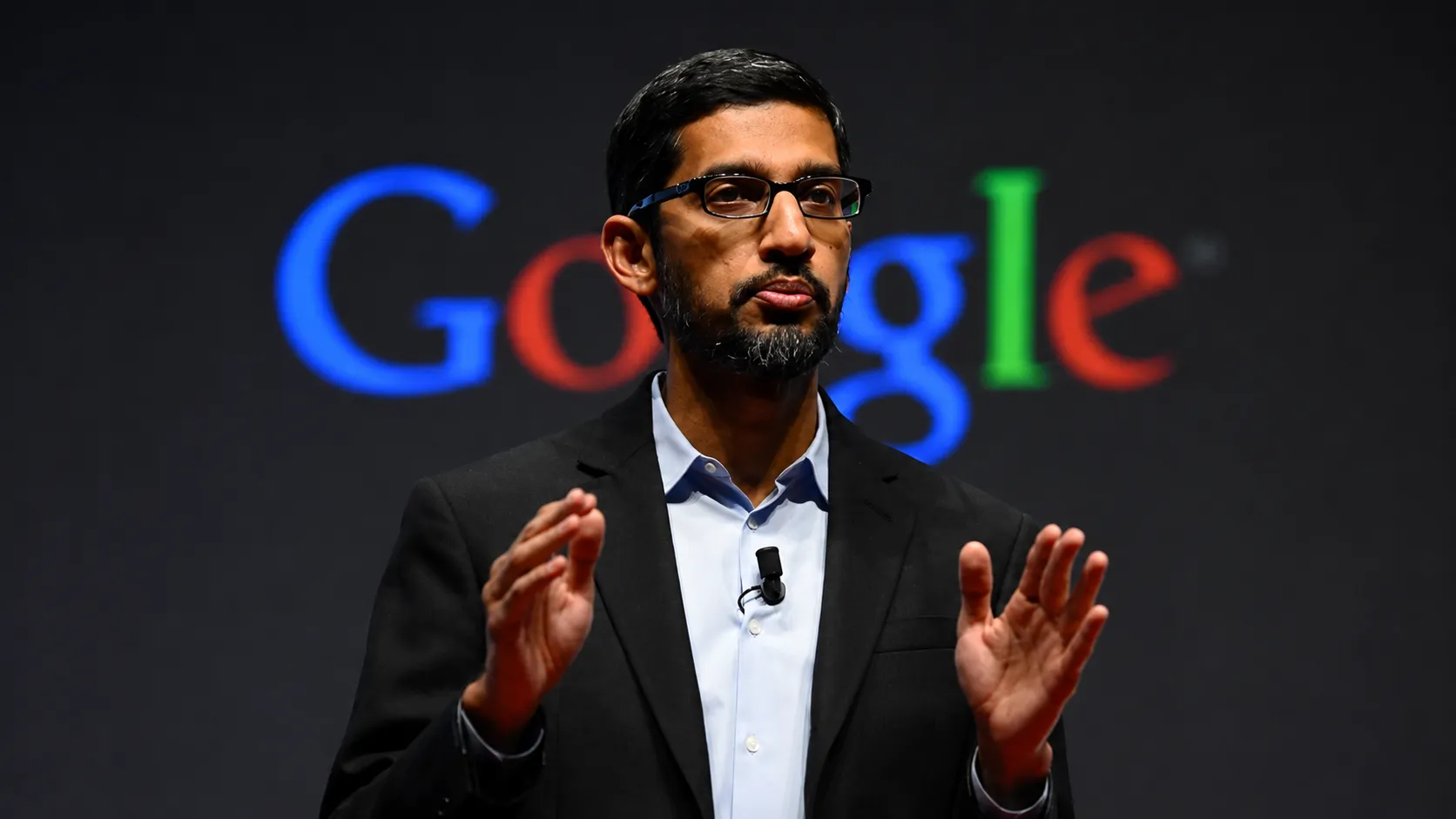
Alphabet Inc., the parent company of Google, reported first-quarter 2026 financial results on April 29 that exceeded Wall Street expectations across nearly every major metric, delivering the company's fastest quarterly revenue growth rate since 2022 and cementing Chennai-born chief executive Sundar Pichai's position at the helm of what has become, by several measures, the most successful enterprise artificial intelligence transformation story among the world's largest technology companies. Total revenue reached $109.9 billion, a 22 percent increase from the same quarter a year earlier, comfortably beating the consensus analyst estimate of $107.2 billion compiled by the London Stock Exchange Group.
The standout performer within Alphabet's diversified portfolio was, by a considerable margin, Google Cloud, which reported revenue of $20.02 billion for the quarter — the first time the division has crossed the $20 billion threshold — representing 63 percent year-over-year growth and beating StreetAccount's consensus estimate by nearly $1.6 billion. That growth rate marked a dramatic acceleration from the prior quarter, when Google Cloud had grown 48 percent to $17.7 billion, itself already considered a standout performance at the time. The magnitude and acceleration of Cloud's growth trajectory prompted immediate comparisons with Alphabet's primary cloud infrastructure competitors: the 63 percent growth rate comfortably exceeded Microsoft Azure's mid-30s percentage growth in its concurrent fiscal quarter and Amazon Web Services' 19 percent growth in its most recent reporting period, though Google Cloud remains the smallest of the three major hyperscale cloud providers in absolute revenue terms. Speaking to analysts on the earnings call, Pichai identified enterprise artificial intelligence solutions as having become Google Cloud's primary growth driver for the first time, a milestone he specifically flagged as a structural shift in the business rather than simply a strong quarter. Revenue from products built on Google's generative AI models grew by nearly 800 percent year-over-year during the quarter — an extraordinary growth figure that, while starting from a comparatively small base, illustrates the speed at which enterprise customers have been adopting Google's AI-powered cloud offerings. Cloud's order backlog nearly doubled quarter-on-quarter, surpassing $460 billion, providing a substantial forward indicator of revenue Alphabet expects to recognise over coming quarters and years as those contracted commitments are fulfilled.
Chief Financial Officer Anat Ashkenazi elaborated further on the specific drivers of Cloud's acceleration, confirming during the earnings call that the largest contributor to the division's growth was AI solutions built on Google's industry-leading models, including the company's Gemini 3 model family. Pichai reinforced this framing in his own commentary, emphasising what he characterised as Google's distinctive competitive advantage as the only major cloud provider offering fully integrated, first-party solutions spanning the entire enterprise AI technology stack — from custom-designed silicon chips through foundation models to end-user applications — a vertically integrated approach he argued was increasingly differentiating Google Cloud from competitors that rely more heavily on third-party hardware or model partnerships. That full-stack strategy extends specifically to Alphabet's custom chip development programme, centred on its Tensor Processing Unit, or TPU, family of AI accelerator chips. During the quarter, Alphabet's seventh-generation Ironwood TPU entered general availability, and the company subsequently announced a substantial multi-year design and manufacturing partnership with semiconductor company Broadcom, estimated at roughly $21 billion through 2029, covering production of Google's upcoming TPU 8t training chip and TPU 8i inference chip. This deepening investment in custom silicon reflects Alphabet's strategic bet that owning its own AI hardware stack — rather than relying primarily on external chip suppliers such as Nvidia — will provide a durable cost and performance advantage as AI computing demand continues its rapid expansion, with major clients including Meta reportedly among the customers gaining traction with Google's custom TPU infrastructure. Beyond Cloud, Alphabet's core Search and advertising business demonstrated notable resilience even amid the broader industry-wide anxiety about generative AI's potential to disrupt traditional search engine business models. Search and Other Advertising revenue grew 19 percent during the quarter, with Pichai specifically crediting AI-powered search experiences — including the company's AI Mode and AI Overviews features — with driving increased user engagement and query volume that reached what the company described as an all-time high.
Notably, Pichai and other Alphabet executives emphasised that this AI-driven usage growth had not come at the expense of paid click volume, directly addressing a persistent investor concern that AI-generated search summaries might cannibalise the click-through traffic that has historically underpinned Google's advertising revenue model. The AI Mode feature specifically reached more than 200 million monthly active users by March 2026, achieving that scale only six months after its general availability launch — a rapid adoption curve that Pichai and other executives pointed to as evidence of strong underlying user demand for AI-enhanced search experiences. Alphabet also disclosed that the underlying cost of delivering core AI-powered search responses had fallen by more than 30 percent following the company's upgrade to its Gemini 3 model family, and that Search latency had been reduced by 35 percent over a five-year period despite the substantial added computational complexity of incorporating sophisticated AI features — improvements the company credited to continued advances in model efficiency and underlying infrastructure optimisation.
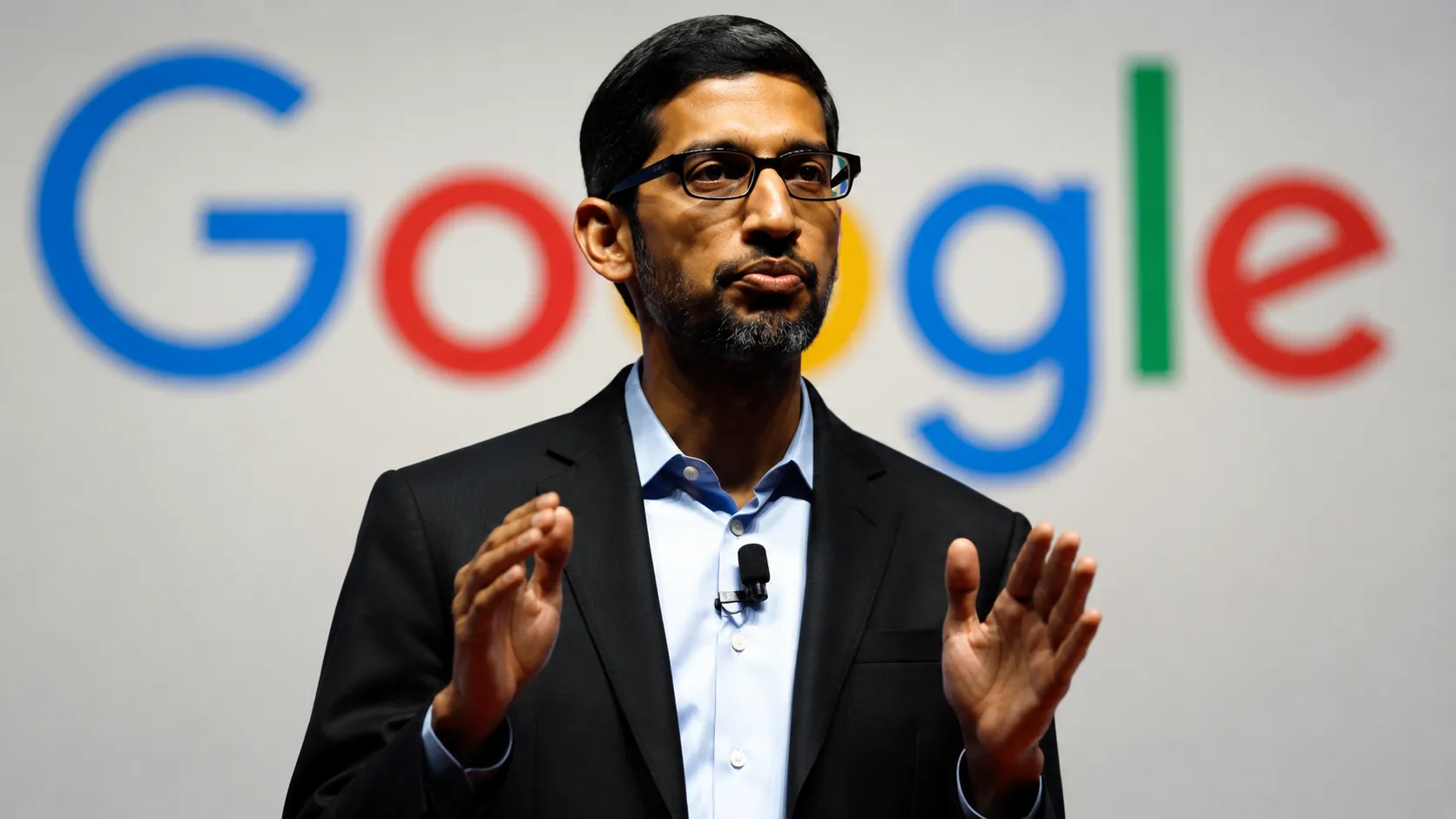
Alphabet's profitability metrics matched the strength of its revenue growth. Net income for the quarter reached $62.57 billion, or $5.11 per share, representing an 81 percent increase compared to the $34.54 billion, or $2.81 per share, reported in the equivalent quarter a year earlier — a figure that comfortably exceeded analyst expectations of $2.62 per share. Google Cloud's operating income during the quarter surpassed $5.3 billion, pushing the division's operating margin above 30 percent for the first time, a significant milestone for a business segment that had, for much of its history, operated at meaningfully lower margins than Alphabet's core advertising business as the company invested heavily in building out its cloud infrastructure and sales capacity. The company's other major consumer-facing properties also contributed to the strong quarterly performance. YouTube advertising revenue grew 9 percent to reach $11.4 billion, with the platform reporting that United States viewers were watching more than 200 million hours of YouTube content daily on television screens specifically, alongside a milestone of 10 million channels publishing short-form video content daily. Alphabet's total paid subscription base, spanning services including YouTube Premium and Google One, reached 350 million, with the company adding 25 million net new paid subscriptions during the quarter alone — continued evidence of the company's success in diversifying its revenue base beyond its traditional advertising core. Alphabet's autonomous vehicle subsidiary Waymo also featured prominently in the quarter's disclosures, with the company reporting that Waymo had surpassed 500,000 fully autonomous rides per week — a scale milestone that underscores the continued expansion of commercial robotaxi operations across the growing number of US metropolitan markets where Waymo currently operates, and one that positions the division as an increasingly significant, if still financially subordinate, component of Alphabet's broader technology and mobility ambitions beyond its core search and cloud businesses.
The strength of the quarter's results came paired with a substantial increase in Alphabet's planned capital expenditure for 2026, with the company raising its guidance range to between $180 billion and $190 billion, up from a previous estimate of $175 billion to $185 billion — a revision reflecting the scale of continued investment required to build out the data centre capacity, custom silicon manufacturing, and broader AI infrastructure needed to sustain Cloud's growth trajectory and support the company's expanding AI product portfolio. Ashkenazi further indicated that the company expects 2027 capital expenditure to increase significantly compared to 2026 levels, signalling that Alphabet's current investment cycle is likely to continue intensifying rather than plateauing over the near term. The company reported $35.7 billion in capital expenditures during the quarter alone, and separately issued senior unsecured notes generating net proceeds of $31.1 billion, providing additional financing capacity to support this accelerating investment programme, alongside a 5 percent increase to its quarterly dividend, raised to $0.22 per share. For Pichai personally, the quarter represents a significant milestone in a tenure now spanning more than a decade as Google's chief executive and, since 2019, as chief executive of parent company Alphabet as well. Having joined Google in 2004 as a materials engineer following a stint at McKinsey & Company, Pichai's rise through product leadership roles overseeing Chrome, ChromeOS, and eventually Android before his 2015 elevation to Google's top role has been extensively chronicled as one of the defining Indian-American corporate success stories of the past two decades. The Q1 2026 results, and specifically the successful positioning of Google Cloud as a credible, rapidly accelerating challenger to Microsoft Azure and Amazon Web Services in the critical enterprise AI infrastructure market, represent a particularly significant validation of the multi-year, capital-intensive AI infrastructure strategy Pichai has championed throughout his tenure, even amid periodic investor scepticism about the scale of Alphabet's AI-related capital commitments.
Looking ahead, Alphabet's leadership team signalled continued confidence in the trajectory established during the first quarter, with Pichai specifically highlighting the company's showcase of new AI capabilities at its Cloud Next conference held just prior to the earnings announcement, alongside additional major product announcements anticipated at the company's Google I/O developer conference and its Brandcast and Google Marketing Live advertising industry events later in the year. As competition among the major cloud providers for enterprise AI infrastructure spending continues to intensify, Alphabet's first-quarter 2026 results have established Google Cloud, under Pichai's broader strategic direction, as an increasingly formidable competitor in a market that just a few years earlier had been widely viewed as a distant third behind Amazon and Microsoft — a competitive repositioning that stands as one of the more significant developments in global enterprise technology this year, and one closely tied to the continued leadership of one of the most consequential Indian-origin executives in American corporate history.
The scale of Alphabet's Q1 2026 results also carries broader implications for how investors and industry analysts have come to assess the return on the enormous capital expenditure commitments that Alphabet, alongside its major technology peers, has made toward AI infrastructure over the past several years. Prior to this quarter, a persistent strand of investor scepticism had questioned whether the tens of billions of dollars being poured annually into data centres, custom silicon, and AI model development across the industry would ultimately translate into commensurate revenue growth, or whether the sector risked a period of overinvestment relative to near-term commercial demand. Google Cloud's 63 percent growth rate, and specifically the nearly 800 percent surge in generative AI-linked product revenue, provided one of the clearest quarterly data points yet suggesting that at least for well-positioned incumbents with genuine full-stack AI capabilities, the return on this investment cycle is beginning to materialise at meaningful scale. Wall Street's reaction to the results reflected this shift in sentiment, with Alphabet shares rising sharply in after-hours trading following the earnings release, as analysts across major investment banks moved to raise their price targets and growth forecasts for the company's cloud and AI businesses. Several analysts specifically highlighted the doubling of Google Cloud's order backlog to over $460 billion as a particularly significant forward-looking indicator, noting that such a substantial contracted revenue pipeline provided unusually strong visibility into the division's likely growth trajectory over the coming several years, reducing some of the uncertainty that had previously surrounded Alphabet's ability to sustain its elevated capital expenditure programme without corresponding revenue growth to justify the investment.
For the Indian-American diaspora and for observers of Indian-origin executive leadership more broadly, Pichai's continued success at Alphabet's helm carries significance that extends well beyond any single quarter's financial results. Having now led Google and Alphabet through more than a decade of sustained growth and strategic transformation — spanning the company's evolution from a primarily search-and-advertising business into a diversified technology conglomerate spanning cloud computing, autonomous vehicles, and now frontier artificial intelligence — Pichai's tenure has become a frequently cited reference point in broader discussions about the qualities and leadership styles that have enabled Indian-origin executives to achieve sustained success at the helm of some of the world's largest and most complex technology organisations, a track record that Q1 2026's results have only further reinforced. The competitive implications of Alphabet's cloud acceleration also extend into the broader race among major technology companies to establish dominant positions within the enterprise artificial intelligence infrastructure market, a competition that industry analysts increasingly frame as one of the most consequential business battles of the current technology cycle. Microsoft, through its deep partnership with OpenAI and its Azure cloud platform, and Amazon, through AWS's still-dominant market share position, each bring distinct competitive strengths to this contest.
Alphabet's specific advantage, as articulated repeatedly by Pichai throughout the earnings call, rests on its unique combination of frontier AI model development, custom silicon manufacturing, and integrated cloud infrastructure — a full-stack approach that, if Q1 2026's results are any indication, is beginning to translate into tangible market share gains within the broader enterprise cloud computing market. As Alphabet moves through the remainder of 2026, the durability of the growth trajectory established in the first quarter will face its own tests, including sustained execution against the substantially increased capital expenditure guidance, continued competitive responses from Microsoft and Amazon, and the broader macroeconomic environment within which enterprise technology spending decisions are being made. For Pichai personally, and for the broader narrative of Indian-origin leadership at the pinnacle of global technology, the first quarter of 2026 stands as one of the strongest individual quarters of his now more than decade-long tenure at Google and Alphabet's helm — a result that will likely feature prominently in future retrospective assessments of how the company navigated the defining technological transition of this era.
For business schools and technology industry historians, Pichai's Q1 2026 results are also likely to become a frequently cited case study illustrating the strategic value of sustained, patient capital investment in foundational technology infrastructure — TPU chip development, frontier AI model research, and global data centre capacity — pursued consistently over multiple years even amid periodic investor scepticism about near-term returns. That such an investment strategy has now begun generating the kind of accelerating, AI-driven growth reflected in Google Cloud's 63 percent expansion offers a validating data point not only for Alphabet's own board and shareholders, but for the broader thesis, championed by Pichai throughout his tenure, that owning the full technology stack — from custom silicon through foundation models to end-user applications — represents a durable source of competitive advantage in an artificial intelligence era where computational infrastructure increasingly determines which companies can translate AI research breakthroughs into commercially viable, enterprise-scale products.