
Sridhar Vembu & Radha Vembu — The Siblings Who Built a Global SaaS Giant from Rural Tamil Nadu
The Village Roots of a Global Giant
Sridhar Vembu and Radha Vembu were born into a Tamil‑speaking family in a small village near Thanjavur, Tamil Nadu — a region known for rice paddies, not software. Their father was a village court judge, their mother a homemaker. Education was the family’s sole currency. All three Vembu siblings (including elder brother Sekhar) excelled academically, with Sridhar and Radha both earning degrees from IIT Madras (Sridhar in electrical engineering, Radha also in engineering) followed by graduate studies in the United States.
Sridhar earned a PhD from Princeton University and worked at Qualcomm in San Diego. Radha earned a master’s from Princeton and worked in the US tech industry. But neither forgot their Tamil Nadu roots. In 1996, Sridhar returned to India and founded AdventNet (the precursor to Zoho) in Chennai’s Mylapore neighbourhood, initially writing network management software for telecom equipment makers.
Radha joined shortly after, leaving her US career behind. Together, they bootstrapped the company for nearly a decade, taking no external capital, living modestly, and reinvesting every rupee of profit into R&D. By 2005, AdventNet had pivoted to building a SaaS suite (word processor, spreadsheet, email, CRM) under the brand Zoho — competing directly with Microsoft and Salesforce.
The gamble paid off. Today, Zoho has over 75 million users across 180 countries, generates over $1 billion in annual revenue, and has been profitable every single year since 2005. And remarkably, the company is still headquartered in Chennai (with major rural campuses in Tenkasi and Renigunta), not Bengaluru or San Francisco.
The Sibling Dynamic: CEO and Secret Weapon
Sridhar Vembu is the public face of Zoho — the articulate, bespectacled CEO who speaks passionately about rural development and bootstrapping. He has given TEDx talks, testified before Indian parliamentary committees, and won the Padma Shri (India’s fourth‑highest civilian award) in 2021.
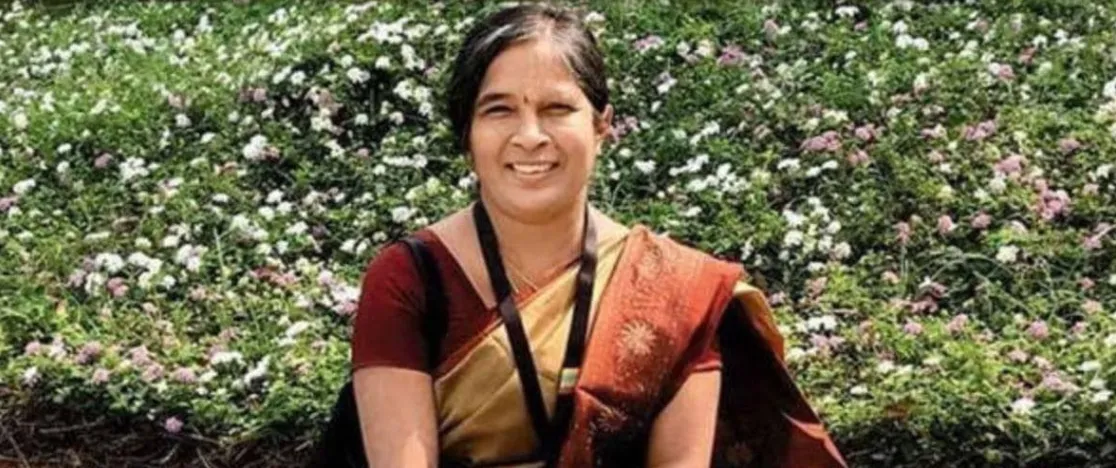
Radha Vembu, by contrast, has never given a single media interview. She does not attend conferences. She has no Wikipedia page, no Twitter account, no public speaking engagements. She is, by choice, invisible to the outside world.
But inside Zoho, Radha is a force. She leads the development of Zoho Email — one of the company’s oldest and most critical products, with over 60 million users. She personally writes code, reviews pull requests, designs features, and answers customer support tickets. Her product philosophy: email should be secure, private, ad‑free, and simple. While Google scans Gmail for ad targeting, Zoho Mail offers enterprise‑grade privacy at a fraction of the cost.
Radha also holds approximately 48% of Zoho’s equity (Sridhar holds a similar percentage, with the remaining held by employees through ESOPs). This makes her India’s richest self‑made woman, with a net worth of over ₹55,000 crore ($6.7 billion) according to the Hurun India Rich List 2025. Yet she lives modestly in a Chennai suburb, drives a Toyota, and reportedly still takes public buses occasionally.
The sibling partnership works because of clear role separation: Sridhar sets the vision, speaks to the world, and handles external relations. Radha builds products, manages engineering, and stays internal. They trust each other completely — a bond forged in childhood and strengthened through decades of shared struggle.
The Zoho Way: Bootstrapping, Rural Campuses, and Product‑Led Growth
Zoho’s success rests on three unconventional pillars:
1. Bootstrapping, not VC: Zoho has never taken a single rupee of external funding. Every dollar of growth came from customer revenue. This has given the Vembus complete control — no board demanding quarterly growth, no pressure to IPO, no need to chase flashy acquisitions. They can invest in products that take 5–7 years to mature (like Zoho Creator, a low‑code platform) without worrying about investor patience.
2. Rural campuses, not metros: Instead of expanding in expensive, talent‑poaching‑heavy Bengaluru, Zoho built massive campuses in rural Tamil Nadu — Tenkasi (Sridhar’s native village) and Renigunta (near Tirupati). These campuses offer world‑class infrastructure (high‑speed internet, modern offices, subsidized housing) but are located in towns where living costs are low and employee loyalty is high. Over 5,000 Zoho employees now work from these rural campuses, bringing tech jobs to regions that had never seen a software company.
3. Product‑led growth, not sales‑led: Zoho spends almost nothing on traditional sales and marketing. Instead, the products are designed to be intuitive, affordable, and self‑service. A business can sign up for Zoho CRM in minutes, start using it for free (up to 3 users), and upgrade as they grow. This “land and expand” model has built a massive user base with minimal customer acquisition cost.
Sridhar explains: “We don’t have a sales team hunting for customers. We have a product team building things that customers hunt for us.”
Zoho Schools: Transforming Rural Education
One of the Vembus’ most impactful initiatives is Zoho Schools of Learning — a free, residential alternative education programme for underprivileged rural students. The school does not follow the traditional CBSE/state curriculum. Instead, it teaches programming, design, mathematics, communication, and work ethic. Students live on campus in Tenkasi, are paid a stipend, and upon graduation (after 2–3 years) are offered full‑time roles at Zoho.
The results have been remarkable:
Over 1,000 students have graduated since inception.
80% now work at Zoho as engineers, designers, or product managers — without ever having a college degree.
Many come from families with annual incomes below ₹1 lakh.
Radha personally oversees the programme, interviewing each batch of applicants and mentoring top students. She has also funded an expansion to a second campus in Renigunta, aiming to reach 2,000 students by 2028.
“We don’t need more IITs,” Sridhar has said. “We need more opportunities for the 99% of Indian students who will never see an IIT. Zoho Schools is our small attempt to prove that talent is everywhere — opportunity is not.”
The Radha Vembu Mystery: India’s Richest Woman You’ve Never Seen
Radha Vembu’s invisibility is itself a statement. In an era where founders commodify their personal brands, she has chosen anonymity. She does not want to be a role model in the traditional sense. She does not give speeches about women in tech. She simply does the work.
This has drawn some criticism. “If she is India’s richest self‑made woman, shouldn’t she use her platform to inspire others?” one commentator asked. Others counter that her very anonymity is inspiring — proof that you don’t need to perform success to be successful.
Radha’s only public appearance (of sorts) is her name on Zoho’s corporate filings as a director. Her net worth, calculated by Hurun, is based entirely on her Zoho stake — a stake she has never sold a single share of. She has no other investments, no real estate portfolio, no art collection. Just Zoho.
A former Zoho employee told The Morning Context: “Radha is the most understated genius I’ve ever met. She will sit with you for two hours debugging a regular expression. She doesn’t care about your degree or your pedigree. She only cares if you can ship quality code.”
Challenges and Critiques
Zoho is not without its critics. The company has been accused of being insular — rarely hiring from outside, preferring to promote from within its own schools and campuses. This creates a unique culture, but some argue it lacks diversity of thought.
Others question the concentration of ownership. Radha and Sridhar together control over 95% of Zoho’s equity. There is no independent board, no external oversight, and no succession plan. If anything happens to the siblings, Zoho’s future is uncertain.
Sridhar has acknowledged this, saying: “We are building an institution, not a family fiefdom. We have a team of leaders who have been with us for 15–20 years. When we step back, they will take over. But we will never list Zoho on a stock exchange. That would destroy our long‑term thinking.”
Finally, some former employees have complained about below‑market salaries (though Zoho offers significantly better work‑life balance than competitors). The Vembus’ response: “We pay fairly for the cost of living in Tenkasi or Renigunta. If you want a Bengaluru salary, move to Bengaluru.”
The Tamil Nadu Legacy
Sridhar and Radha Vembu have put rural Tamil Nadu on the global tech map. Their Tenkasi campus has inspired other companies (like Freshworks and Chargebee) to open satellite offices in smaller cities. The Tamil Nadu government has cited Zoho as a model for its “rural tech hubs” policy, offering incentives for companies to locate outside Chennai.
The siblings remain deeply connected to their roots. Sridhar speaks Tamil in internal meetings and often quotes Tamil saints and poets. Radha, according to employees, insists on serving traditional Tamil breakfast (idli, sambar, pongal) in the office canteen.
Their ultimate ambition is to prove that world‑class software can be built from anywhere in India — not just the glamorous tech corridors. “Chennai is our base, Tenkasi is our heart,” Sridhar once said. “We are Tamil Nadu’s company. That will never change.”


