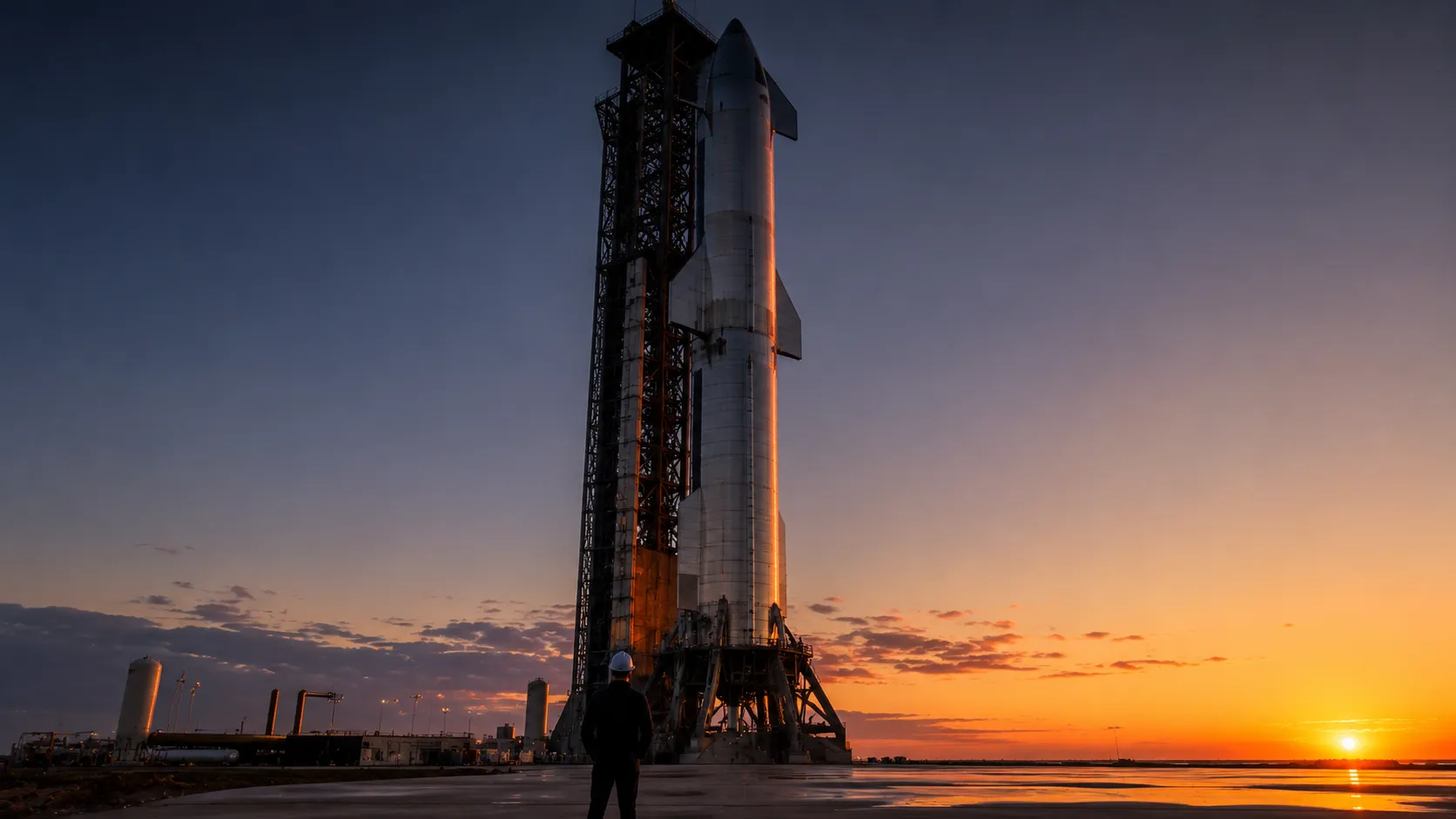
SPCX: SpaceX Sets June 12 Nasdaq Listing — The Most Audacious IPO in Wall Street History Is Now Three Weeks Away
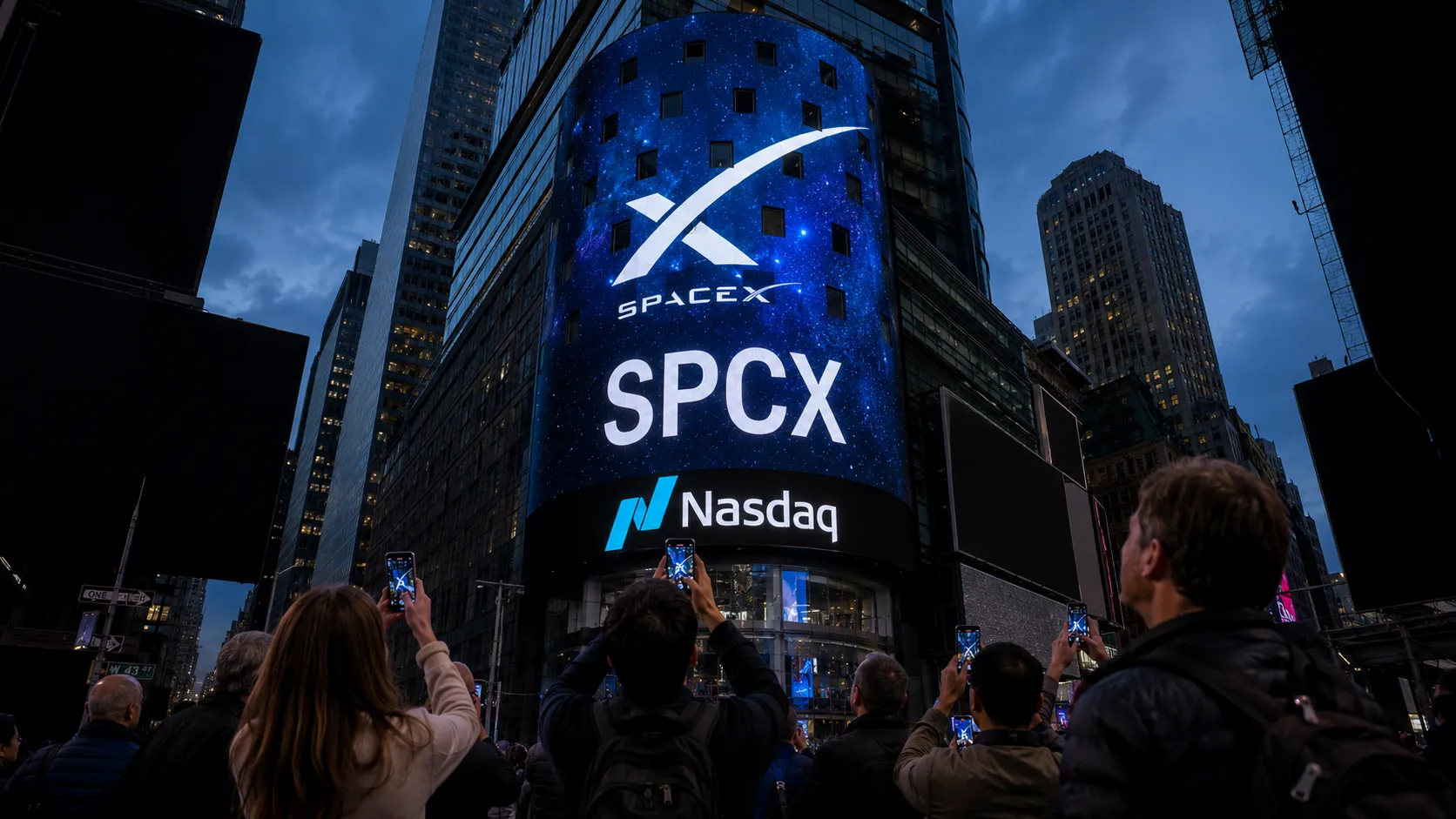
NEW YORK — May 18, 2026 — On June 12, barring a last‑minute delay, Elon Musk's SpaceX will list on the Nasdaq under the ticker SPCX. The company will price its shares the night before — June 11 — and begin trading the following morning, opening an auction that will almost certainly become the largest initial public offering in the history of global capital markets. The target: $75 billion raised at a valuation of roughly $1.75 trillion, with some price talk racing as high as $2 trillion. Either number eclipses Saudi Aramco's $29 billion raise at $1.7 trillion in 2019 — the current record holder — and does so with a margin so wide it feels less like a market event than a rewriting of financial gravity.
The timeline has accelerated sharply. As recently as early May, SpaceX was targeting a late‑June debut, timed loosely to Musk's June 28 birthday. But on May 15, Reuters reported that the company had pulled the schedule forward by three full weeks. The prospectus could be filed publicly as early as May 20. The investor roadshow — the multi‑city marketing blitz where Musk and his bankers will pitch the story to institutions — is slated to launch June 4. Pricing June 11. Trading June 12. A faster‑than‑expected SEC review of the company's confidential filing partially drove the new schedule, sources told Reuters. The Nasdaq's newly introduced "fast entry" rule, which makes newly listed mega‑cap companies eligible for inclusion in the Nasdaq‑100 after just 15 trading sessions, was another accelerant. That rule means index funds tracking the Nasdaq‑100 will be required to purchase SPCX shares within weeks of the listing, creating what amounts to a guaranteed post‑IPO bid of tens of billions of dollars — a structural tailwind no debut has ever enjoyed.
Morgan Stanley, Bank of America, Citigroup, JPMorgan, and Goldman Sachs are the lead bookrunners, with 16 other banks in smaller roles spanning institutional, retail, and international channels. The sheer size of the banking syndicate — 21 firms — is itself a statement about the scale of the undertaking. This is not merely an IPO. It is the financial industry's largest coordinated effort to price a single asset.
Starlink Is the Engine. Everything Else Is Bet.
The most important thing to understand about SpaceX as it enters the public markets is that its financial story is a Starlink story. Everything else — rockets, Starship, the xAI merger, the Cursor option, the Golden Dome contracts — orbits around the satellite internet business that now generates the vast majority of the company's revenue and all of its profit.
SpaceX generated $18.7 billion in revenue in 2025. Of that, Starlink accounted for $11.4 billion — roughly 61 percent — and delivered $4.4 billion in operating profit at margins approaching 60 percent. The rocket launch business, while dominant — SpaceX claimed more than 80 percent of global launches last year — is a much smaller contributor to the top line. For 2026, space research firm Payload projects Starlink revenue will surge 80 percent to $18.7 billion, which would account for nearly 80 percent of all SpaceX revenue. The constellation now exceeds 10,000 satellites in low‑Earth orbit, with regulatory approval for roughly 15,000 and plans to eventually deploy up to 42,000.
The profit picture, however, is complicated by Musk's decision to merge xAI into SpaceX in February 2026. xAI, the artificial intelligence company Musk founded in 2023, posted an operating loss of $6.4 billion in 2025, widening from $1.6 billion a year earlier. Together with losses at X — the social media platform also folded into the combined entity — the consolidated SpaceX swung from standalone profitability to a net loss of $4.94 billion in 2025. Starlink is a cash‑generating machine. The rest of the conglomerate is burning through it at a rate that will dominate the S‑1 conversation.
The company has also entered into an agreement giving it the right to acquire AI coding startup Cursor for $60 billion later this year — or to pay a $10 billion breakup fee if it does not. Cursor, which builds an AI‑powered code editor that competes with Anthropic's Claude Code and GitHub Copilot, would give SpaceX a credible entry into the enterprise AI tools market. But at $60 billion, the price tag is roughly 120 times the annualized revenue of the coding‑assistant market leader, and it comes due in the same year SpaceX is asking public investors to fund a $75 billion IPO.
The Governance Structure That Has No Precedent
No aspect of the SpaceX IPO has generated more controversy than the governance architecture Musk has designed for the public company. Under the proposed structure, Musk holds approximately 42.5 percent of SpaceX equity but controls 83.8 percent of voting power through Class B super‑voting shares. Those shares carry ten times the voting weight of the Class A shares that will be sold to public investors. Critically, the S‑1 registration statement specifies that Musk can only be removed as CEO or chairman by a vote of Class B shareholders — a vote he controls outright. In effect, Musk cannot be fired. The only person who can fire Musk is Musk.
The structure also includes mandatory arbitration provisions, a controlled‑company exemption, and a floor on shareholder proposals — either 3 percent ownership or $1 million in value — that effectively silences all but the largest institutional investors. Harvard Law professor Lucian Bebchuk, a leading authority on corporate governance, told reporters the arrangement was "not common" and noted that boards typically retain formal removal authority. SpaceX's filing collapses that authority into Musk's voting bloc.
The compensation package is tied to milestones that have no precedent in public company pay design. One tranche awards Musk up to 200 million Class B shares if SpaceX reaches a $7.5 trillion market capitalization and establishes a permanent Mars colony of at least 1 million residents. The $7.5 trillion threshold sits above the combined market value of Apple, Microsoft, and Saudi Aramco. The Mars criterion has no infrastructure to project against, no off‑world regulatory framework, and no timeline. A second tranche grants up to 60.4 million shares if the valuation hits $6.6 trillion and the company deploys a network of space‑based data centers with 100 terawatts of computing capacity — an amount roughly equivalent to the total installed compute power of the entire global cloud industry.
On May 14, the three largest public pension systems in the United States — CalPERS, the New York State Comptroller, and the New York City Comptroller — sent a joint letter to SpaceX objecting to what they called "the most management‑favorable governance structure ever brought to the U.S. public markets at this scale." They demanded a one‑share, one‑vote structure or a time‑based sunset on super‑voting shares, the elimination of CEO consent as a prerequisite for his own removal, and an independent majority board. SpaceX did not respond.
The Competitive Threat No One Is Pricing
SpaceX's IPO narrative is built on the idea of an unassailable moat — the only company that can reliably launch heavy payloads to orbit, the only company with a working satellite internet constellation at scale, the only company that can credibly promise to land humans on Mars. But the moat has a crack, and its name is Amazon.
Amazon's Project Leo — a low‑Earth‑orbit satellite internet constellation designed to compete directly with Starlink — is expected to go live in mid‑2026, CEO Andy Jassy confirmed in April. Leo is far smaller than Starlink — approximately 300 satellites in orbit versus Starlink's 10,000 — but Amazon has been quietly building infrastructure that suggests it intends to compete on price and performance, not just on presence. In April, Amazon acquired satellite communications provider Globalstar for $11.6 billion, adding spectrum, orbital slots, and a direct‑to‑device capability that Starlink does not yet offer. Jassy has publicly stated that Leo will deliver "six times better uplink performance than existing alternatives."
Amazon is not the only competitor. China has accelerated its own low‑Earth‑orbit broadband constellation program. Europe's IRIS² project is advancing. The moat that SpaceX investors are pricing at $1.75 trillion is real, but it is not permanent. High margins attract competition. Starlink's 60 percent operating margins — extraordinary for any telecommunications business — are a beacon that rivals cannot ignore. The question is not whether Starlink will face price pressure. It is when, and by how much.
The Macro Moment
SpaceX is going public at a moment of extraordinary flux in global capital markets. The S&P 500 is trading at roughly 23 times forward earnings, well above its historical average of 16 to 18 times. The IPO market, which struggled through 2024 and early 2025 amid tariff volatility and geopolitical uncertainty, has roared back. Cerebras Systems debuted on the Nasdaq on May 14, surging 68 percent on its first day to a $95 billion valuation. Anthropic is expected to list in the fourth quarter at a valuation near $900 billion. OpenAI is eyeing the public markets at $852 billion.
All of this is happening against a backdrop of historic AI infrastructure spending — the four largest hyperscalers are on track to invest $725 billion in 2026 — and a regulatory environment that is simultaneously accelerating (the Nasdaq's fast‑entry rule) and tightening (the SEC's review of governance structures). The SpaceX IPO is not a standalone event. It is the centerpiece of a year that could mark the largest wealth‑creation event in the history of technology capital markets.
Musk has said on X that he will not sell any of his SpaceX shares after the lockup period expires. The statement was interpreted by some as a signal of long‑term commitment and by others as an attempt to calm retail investors who have watched Musk sell Tesla shares at scale. Either way, it underscores the central tension of the SPCX offering: investors are being asked to fund a company they cannot influence, led by a CEO they cannot remove, pursuing milestones that cannot be valued. The only assurance is the Starlink cash flow and the conviction — widespread among early backers — that betting against Musk has been, historically, a losing trade.
"I am not saying our investment process is to just give him money for anything he wants," one venture capitalist who backed X, xAI, and SpaceX told the Financial Times. "But to be honest that wouldn't have been a bad strategy: never bet against Elon."
The market will vote on that thesis on June 12.


