The Seed Funding Market Just Got More Selective. That Makes This Close More Important, Not Less.
The data from India's first half of 2026 tells a specific and important story about where the venture capital market is heading. Indian startups raised $3.34 billion across 608 early-stage and seed funding rounds in the first six months of the year. In the same period in 2025, they raised $2.96 billion across 1,055 rounds.
The capital went up. The number of companies funded went down — by 42 per cent. The average cheque size across seed and early-stage rounds nearly doubled, from $2.8 million to $5.5 million. Fewer startups are getting funded. The ones that are getting funded are getting more.
This is the market that Sparrow Capital is entering with Fund III. It is the market that made raising ₹475 crore a strategic necessity rather than simply an ambition. At the cheque sizes and round lead positions that Sparrow is targeting — $1 million to $2 million initial investments, leading or co-leading seed rounds rather than simply participating — a ₹120 crore fund is no longer sufficient. A ₹475 crore fund is the tool required to play the game as it is now being played.
The Fund — Structure, Investors, and What Changed
Sparrow Capital closed its third fund at ₹475 crore, completing the final close after a fundraise that ran from August 2025 through mid-2026. The fund's trajectory tells the story of growing institutional confidence: first close at ₹122 crore in August 2025, largely from existing limited partners and startup ecosystem participants; ₹280 crore by April 2026; final close at ₹475 crore.
The LP base composition is the most strategically significant detail in this fundraise. Approximately 60 per cent of the ₹475 crore corpus came from global investors — endowments, foundations, funds of funds, and family offices based outside India. The remaining 40 per cent came from startup founders, operators, Indian family offices, and high net worth individuals.
This marks a fundamental shift from Sparrow's earlier vehicles, which were backed largely by domestic and non-institutional limited partners. The institutional investor base that Fund III has assembled — global endowments and foundations whose investment mandates are typically defined by rigorous portfolio performance requirements and extended investment horizon — represents a form of validation that is qualitatively different from domestic capital. These investors committed after observing Sparrow's portfolio over multiple years, evaluating the firm's disciplined investment approach, and deciding that the evidence supported a larger, longer-term commitment.
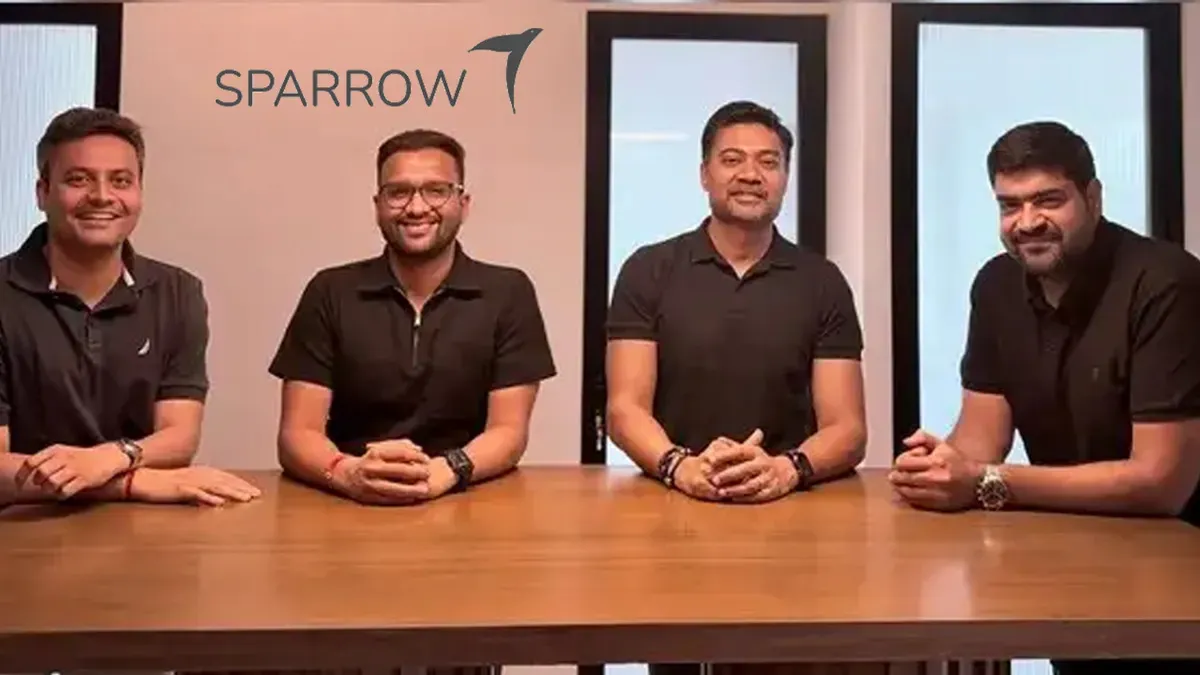
Sparrow Capital was founded in 2020 by Yash Jain. Aakash Goyal and Darshit Vora are general partners. For Fund III, Arpit Agarwal has joined the leadership team as CFO and partner — Agarwal previously held senior roles at KreditBee and PwC, bringing the financial discipline and institutional governance standards that a larger, more institutionally-backed fund requires.
What the Fund Will Do Differently
The comparison between Fund II and Fund III is the most direct measure of what the larger corpus enables.
Sparrow's second fund — ₹120 crore — backed 27 companies with initial cheque sizes of $300,000 to $500,000. At those sizes, Sparrow was almost always participating in rounds that were led by someone else. The capital was meaningful, the support was valuable, but the deal dynamics were defined by whoever was leading.
Fund III, at ₹475 crore, with initial cheque sizes of $1 million to $2 million, enables Sparrow to lead or co-lead seed-stage rounds. This is not a minor operational change. A fund that leads a round controls the term sheet, sets the valuation, and takes a board seat or observer rights that give it meaningful influence over the company's early direction. A fund that participates in a round led by others follows the terms and does not have the same governance relationship with the company.

The upgrade from participant to lead is the substantive improvement that the larger fund enables. Combined with a plan to reserve 30 to 40 per cent of the corpus for follow-on investments in high-performing portfolio companies, Fund III gives Sparrow the ability to both set terms at entry and maintain ownership in its winners through subsequent rounds.
The plan for 25 to 30 new investments over three years reflects the discipline that the larger cheque strategy requires. Fund II backed 27 companies. Fund III will back a comparable number with nearly 4 times the capital — meaning more support per company, more ownership at entry, and more capacity for follow-on investment in the companies that perform.
Five investments have already been made from the new fund. The portfolio company names have not been disclosed from Fund III, but the firm's approach across sectors remains unchanged: sector-agnostic, with current founder activity concentrated in consumer technology, fintech, and AI-native software companies being built from India for global markets.
The Portfolio That Built the Track Record
Sparrow's ability to raise a ₹475 crore fund with 60 per cent institutional capital is the output of a six-year track record that the institutional investors evaluated before committing.
The Fund I and Fund II portfolio includes names that have become significant contributors to India's startup ecosystem. GoKwik — the e-commerce enablement platform that helps direct-to-consumer brands reduce return-to-origin rates and improve checkout conversion — has become one of the more widely used platforms in India's D2C infrastructure stack. ApnaMart — a community commerce and social commerce platform — has built significant reach in the Tier 2 and Tier 3 markets where the next phase of India's digital consumer growth will happen.
Deconstruct — an evidence-based skincare brand that has built a loyal following among young Indian consumers who have become sophisticated about active ingredients — is among the more interesting brand-building stories in Sparrow's portfolio. It has reached the scale of maturity that, as Sparrow notes, could generate liquidity opportunities over the next two to three years.
E6data, Gushwork, Furnishka, Aukera, StrainX, Superhealth, Homerun, and Optimist round out the portfolio profile — a mix of enterprise software, consumer, health, and fintech companies that reflects the sector-agnostic approach Sparrow has maintained throughout its investing history.
What This Fund Close Says About Indian Early-Stage Investing
The Sparrow Capital Fund III close is a data point that sits inside the broader story of how India's venture capital market is evolving at the seed stage.
The concentration dynamic — more capital flowing to fewer, better-evaluated companies — is not a contraction of the market. It is a maturation. The seed rounds that attracted $200,000 to $300,000 cheques in 2021 and 2022, based on a deck and a promising founder story, are less likely to close in 2026. The rounds that are closing are closing at higher valuations, with more rigorous due diligence, and with investors who are taking more concentrated positions rather than spreading small bets across dozens of companies hoping that volume produces winners.
A ₹475 crore Sparrow Capital fund with a 60 per cent institutional LP base, investing $1 million to $2 million initial cheques in 25 to 30 companies over three years, is the exact expression of that maturation. It is a seed fund that has the capital to lead, the track record to attract global institutional LPs, and the discipline to invest in fewer companies with more conviction rather than treating early-stage investing as a volume game.
The founders who receive Sparrow Capital investment from Fund III will receive not just a larger cheque but a more meaningful governance relationship, a better-capitalised follow-on reserve, and the backing of a fund whose LP base includes global institutions that have evaluated the portfolio and decided it is worth a longer, deeper commitment.
That combination — more capital, more conviction, more institutional backing — is what the current seed funding market rewards. And it is exactly what Sparrow Capital's Fund III is designed to provide.


