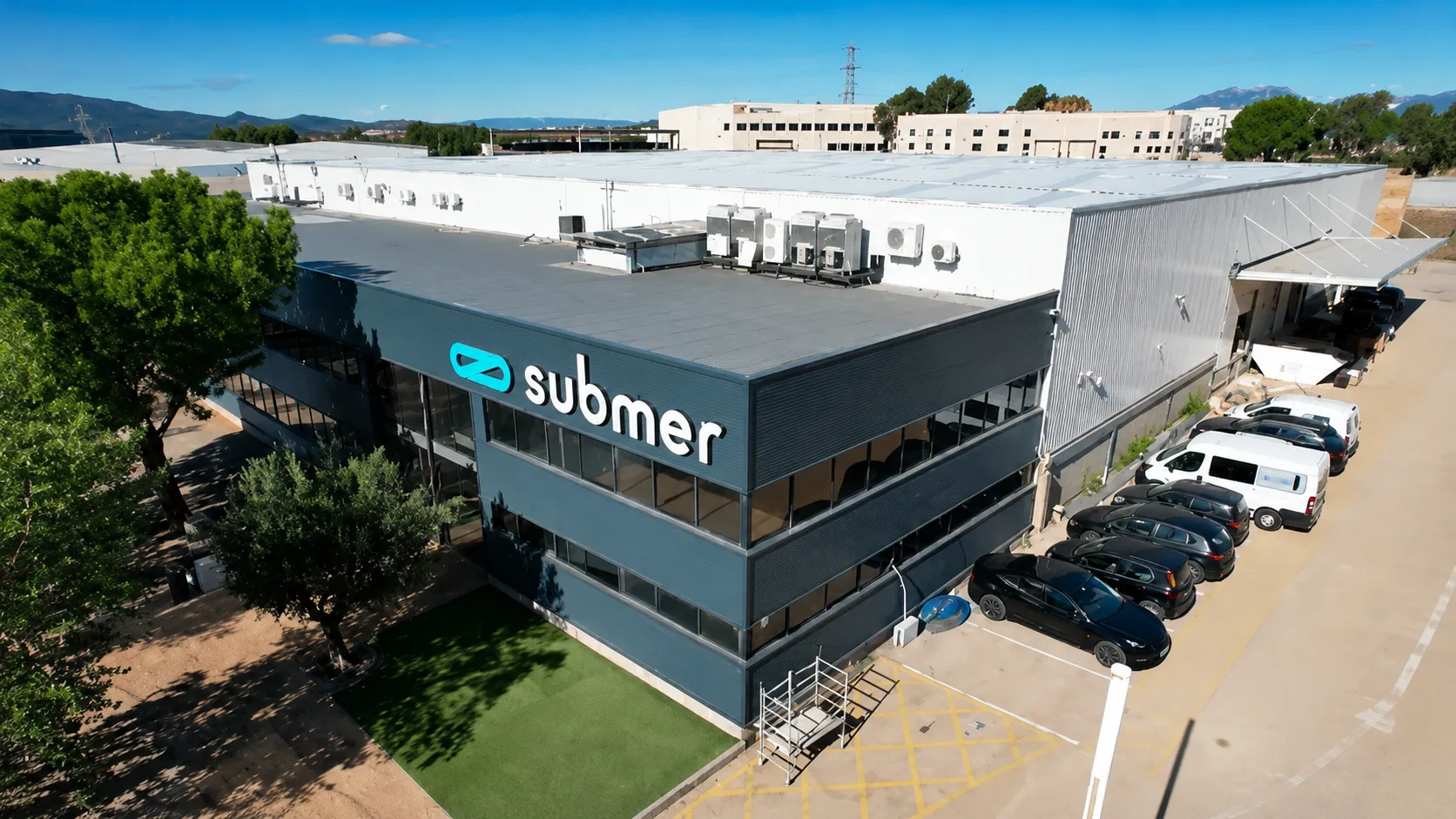
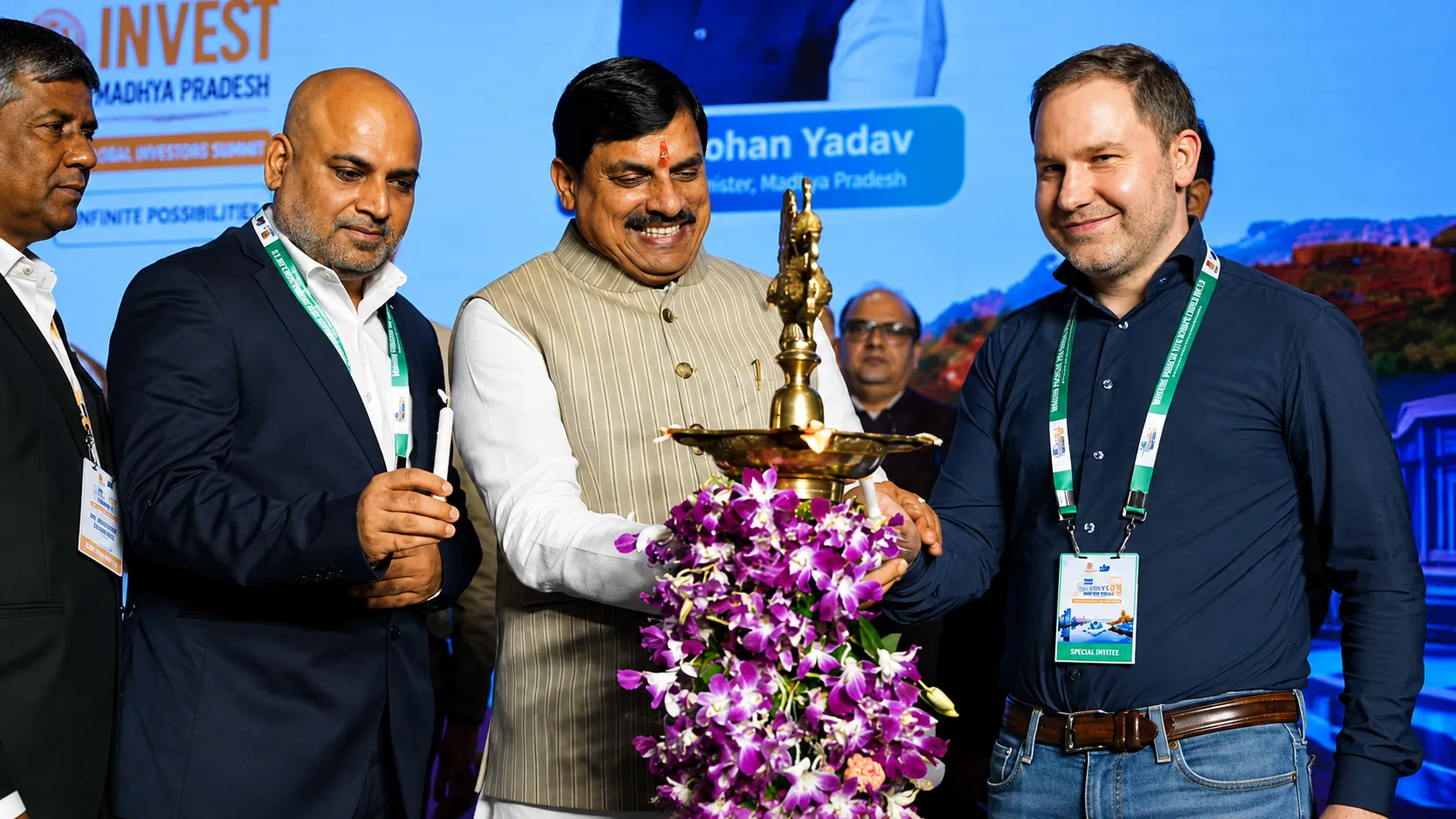
On July 13, 2026, at the MP Tech Growth Conclave 3.0 in Bhopal, a Spanish company most Indian investors had never heard of made one of the largest single foreign-direct-investment announcements Madhya Pradesh has ever secured. Submer Group, a Barcelona-headquartered specialist in immersion cooling technology for data centres, committed $2 billion — roughly ₹19,000 crore at prevailing exchange rates — to build a combined semiconductor manufacturing facility and a 1-gigawatt data centre in the state, in a project state officials say will create approximately 5,000 direct jobs and position Madhya Pradesh as an unlikely new entrant in India's rapidly intensifying race for semiconductor and advanced-technology manufacturing capacity.
The announcement itself is notable less for the identity of the investor — Submer is a mid-sized, privately held specialist rather than a semiconductor industry household name like TSMC, Micron or Applied Materials — and more for what it signals about the changing shape of India's technology-infrastructure investment landscape. Submer's core expertise lies not in chip fabrication itself but in the energy-efficient liquid cooling systems that have become an increasingly critical bottleneck constraint across the entire semiconductor and data-centre supply chain, as chip density and the power consumption of modern computing hardware — particularly AI training and inference workloads — has climbed to levels that traditional air-cooling infrastructure struggles to manage economically or sustainably. By building both a semiconductor facility and a dedicated 1-gigawatt data centre in Madhya Pradesh, Submer is positioning the state as a production and deployment base from which it intends to export its cooling technology across Asian markets more broadly, rather than treating India purely as a captive domestic market opportunity.

Submer India CEO Patrick Smets, addressing the conclave, framed the investment within a broader thesis about the geography of the AI infrastructure buildout currently reshaping global data-centre economics, arguing that states investing in AI infrastructure are positioned to emerge as the future technology leaders of this decade — a framing that positions Madhya Pradesh's pitch not merely as a conventional manufacturing-incentive play, but as a bet on the state becoming genuinely embedded within the physical infrastructure layer that AI-driven computing demand is expected to require at scale over the coming several years, a category of investment that industry analysts increasingly view as at least as strategically important as the chip-fabrication capacity itself.
The speed of Madhya Pradesh's response to Submer's specific infrastructure request has become, in its own right, a notable part of the story — and one state officials have been keen to publicise as evidence of a genuinely improved ease-of-doing-business posture. When Submer formally requested land for its data centre component, the state government allotted 15 acres in the Acharpura industrial area within six days of the request being made — a turnaround time that stands in sharp contrast to the multi-month, sometimes multi-year, land-allocation timelines that have historically deterred large industrial investors from committing capital to Indian states, regardless of how favourable the underlying tax and subsidy incentives on offer might otherwise be. For an investor category as infrastructure- and timeline-sensitive as data-centre and semiconductor manufacturing — where construction schedules are typically measured against global capacity-planning cycles that leave little room for open-ended regulatory delay — a six-day land allotment is the kind of operational signal that can matter as much to an investment committee's final decision as the headline tax incentive package itself.
Madhya Pradesh Chief Minister Mohan Yadav, addressing the same conclave, positioned the Submer announcement within a broader pattern of technology-sector investment the state has been actively courting since its Global Investors Meet held in 2025, stating that more than ₹12,000 crore in technology-sector investments have already materialised in the state since that event — a figure that, while modest relative to the scale of investment flowing into more established technology hubs like Gujarat, Karnataka or Tamil Nadu, represents a genuinely significant diversification push for a state whose economy has historically been anchored far more heavily in agriculture and mining than in advanced manufacturing or digital infrastructure. The Submer investment, at $2 billion, would on its own represent one of the largest single foreign direct investment commitments the state has secured in the technology and manufacturing space, dwarfing the cumulative ₹12,000 crore figure cited for the broader post-2025 technology investment push.
The conclave also produced a second, smaller but strategically complementary announcement: Google Play India and the Madhya Pradesh State Electronics Development Corporation signed a memorandum of understanding aimed at further developing the state's digital ecosystem, a pairing that state officials have framed as evidence of a broader, multi-layered technology strategy extending beyond hardware manufacturing into software, app-economy and digital-skilling initiatives — the kind of ecosystem breadth that states like Karnataka and Telangana have long used to reinforce their own technology-sector positioning, and which Madhya Pradesh appears to be attempting to replicate, at a considerably earlier stage of its own technology-investment journey.
Job creation projections tied to the Submer investment reflect the genuinely specialised nature of both semiconductor manufacturing and advanced cooling-system production. State officials and industry analysts have pointed to demand emerging across several distinct categories: engineering roles spanning research and development, chemical engineering and hardware design; technical positions including cleanroom technicians, equipment operators and quality-assurance analysts, reflecting the precision-manufacturing tolerances inherent to both semiconductor fabrication and advanced cooling-system production; and a broader layer of support roles in logistics, facility management and administration. Beyond the roughly 5,000 direct jobs the project is expected to generate, economists tracking the announcement have pointed to a substantial anticipated multiplier effect across the local supply chain, construction sector and ancillary services — a dynamic well documented in India's other semiconductor and electronics manufacturing hubs, where a single large anchor investment has historically catalysed a broader cluster of supporting vendors, logistics providers and specialised training institutions over a multi-year horizon.
It is worth situating Submer's Madhya Pradesh investment within the considerably larger context of India's national semiconductor ambitions, where the state's project, while significant regionally, remains modest in scale relative to the country's flagship fabrication investments. India's central government has approved allocations reaching into the tens of billions of dollars for semiconductor plant investments nationally, anchored by projects including the Tata Group and Taiwan's PowerChip's first domestic semiconductor fab facility in Gujarat's Dholera region, alongside Micron's multi-billion-dollar assembly and test facility also in Gujarat, and a large-scale chip project involving Adani Group and Israel's Tower Semiconductor in Maharashtra. Against that backdrop of marquee, government-anchored mega-projects concentrated substantially in Gujarat and Maharashtra, Madhya Pradesh's Submer investment represents something structurally different: a comparatively smaller, privately-driven investment in a specialised cooling-and-infrastructure niche within the broader semiconductor value chain, rather than a headline chip-fabrication project competing directly with the country's largest and most heavily subsidised national semiconductor missions.
That distinction may, in fact, be strategically sensible for a state at Madhya Pradesh's current stage of technology-sector development. Rather than attempting to compete head-on with Gujarat and Maharashtra for the largest, most capital-intensive fabrication mega-projects — a competition the state would enter with considerably less existing infrastructure, supply-chain density and specialised talent pool than its more established rivals — Madhya Pradesh's pitch to Submer, and the broader technology-investment strategy the state appears to be building around it, focuses instead on carving out a more specialised, complementary niche within the broader national semiconductor ecosystem: cooling infrastructure, data-centre capacity, and the surrounding digital-ecosystem partnerships exemplified by the Google Play MoU, rather than the fabrication capacity itself. Whether that more targeted positioning proves durable, and whether it succeeds in attracting the kind of secondary and tertiary investment that has historically clustered around anchor projects in India's more established technology hubs, will become clearer as the Acharpura facility moves from land allotment through construction and, eventually, into commercial operation over the coming several years.
For now, the six-day land allotment and the $2 billion headline figure have given Madhya Pradesh exactly the kind of high-visibility technology-investment story its officials have been actively seeking since the 2025 Global Investors Meet — proof of concept, at meaningful scale, that a state long associated primarily with agriculture and mining can move fast enough, and offer compelling enough terms, to win genuinely significant deep-technology manufacturing investment against competition from India's more established industrial states.
The choice of immersion cooling as a strategic entry point into India's semiconductor ecosystem also reflects a broader, industry-wide inflection point worth understanding in its own right. As AI training and inference workloads have driven a step-change increase in the power density of modern data-centre and chip-fabrication equipment, traditional air-cooling systems have increasingly hit practical physical limits — unable to dissipate heat fast enough to keep pace with the latest generations of high-performance computing hardware without consuming disproportionate amounts of energy themselves simply running cooling fans and chillers. Immersion cooling, the technology category Submer specialises in, addresses this by submerging server and chip hardware directly in specially engineered dielectric fluids that conduct heat away far more efficiently than air ever could, allowing data centres and fabrication facilities to run hotter, denser hardware configurations while simultaneously reducing overall energy consumption — an increasingly important selling point as data-centre operators globally face mounting pressure over the sheer scale of electricity their AI infrastructure buildouts are beginning to consume. Submer's decision to build both a semiconductor facility and a full-scale 1-gigawatt data centre in Madhya Pradesh, rather than a smaller pilot or demonstration facility, signals genuine confidence that Indian and broader Asian demand for this specific category of advanced cooling infrastructure is scaling quickly enough to justify a full commercial-scale commitment from day one.
For India's broader semiconductor policy establishment, watching a specialised infrastructure player like Submer commit meaningful capital to a second-tier state like Madhya Pradesh, rather than exclusively to the already-established hubs of Gujarat, Maharashtra, Karnataka or Tamil Nadu, offers an encouraging signal about the geographic breadth of investor interest the country's broader semiconductor mission is beginning to attract. India's Ministry of Electronics and Information Technology has repeatedly emphasised, in policy statements accompanying the country's various semiconductor incentive schemes, an ambition to spread advanced manufacturing investment more evenly across states rather than concentrating it entirely within the two or three regions that have historically dominated India's electronics and technology manufacturing base — a diversification goal that Madhya Pradesh's Submer win, however specialised and modest relative to the country's largest fabrication mega-projects, offers genuine early evidence of actually beginning to materialise on the ground.
The coming eighteen to twenty-four months will offer the real test of whether Madhya Pradesh's fast-track approach translates into a durable technology-investment cluster rather than a single, standout headline. Construction timelines for both the semiconductor facility and the 1-gigawatt data centre will need to be met without the kind of delays that have periodically plagued other large Indian industrial projects, and the state will need to demonstrate it can replicate the six-day land-allotment turnaround for subsequent investors rather than treating Submer as a one-off, specially expedited case. State officials have signalled ambitions to use the Submer announcement as a proof point in ongoing conversations with other global technology and advanced-manufacturing investors, several of whom, according to officials speaking around the conclave, are reportedly evaluating Madhya Pradesh alongside more established alternative locations for their own India expansion plans — meaning the true measure of this week's announcement may ultimately be less about the $2 billion itself and more about whether it succeeds in convincing the next wave of investors that Bhopal's newly fast-tracked approach to industrial land allocation and regulatory clearance is a genuine, repeatable institutional capability rather than a single well-publicised exception. For a state that has spent the better part of a decade working to shed its image as primarily an agricultural and mining economy, that longer-term credibility question may matter more than any single investment figure, however large the headline number looks today — and Madhya Pradesh's officials appear well aware that the world will be watching how Acharpura's construction timeline actually unfolds far more closely than it watched the announcement itself.


