
"Getting land on the outskirts of Bengaluru has been more difficult than actually making said satellites."
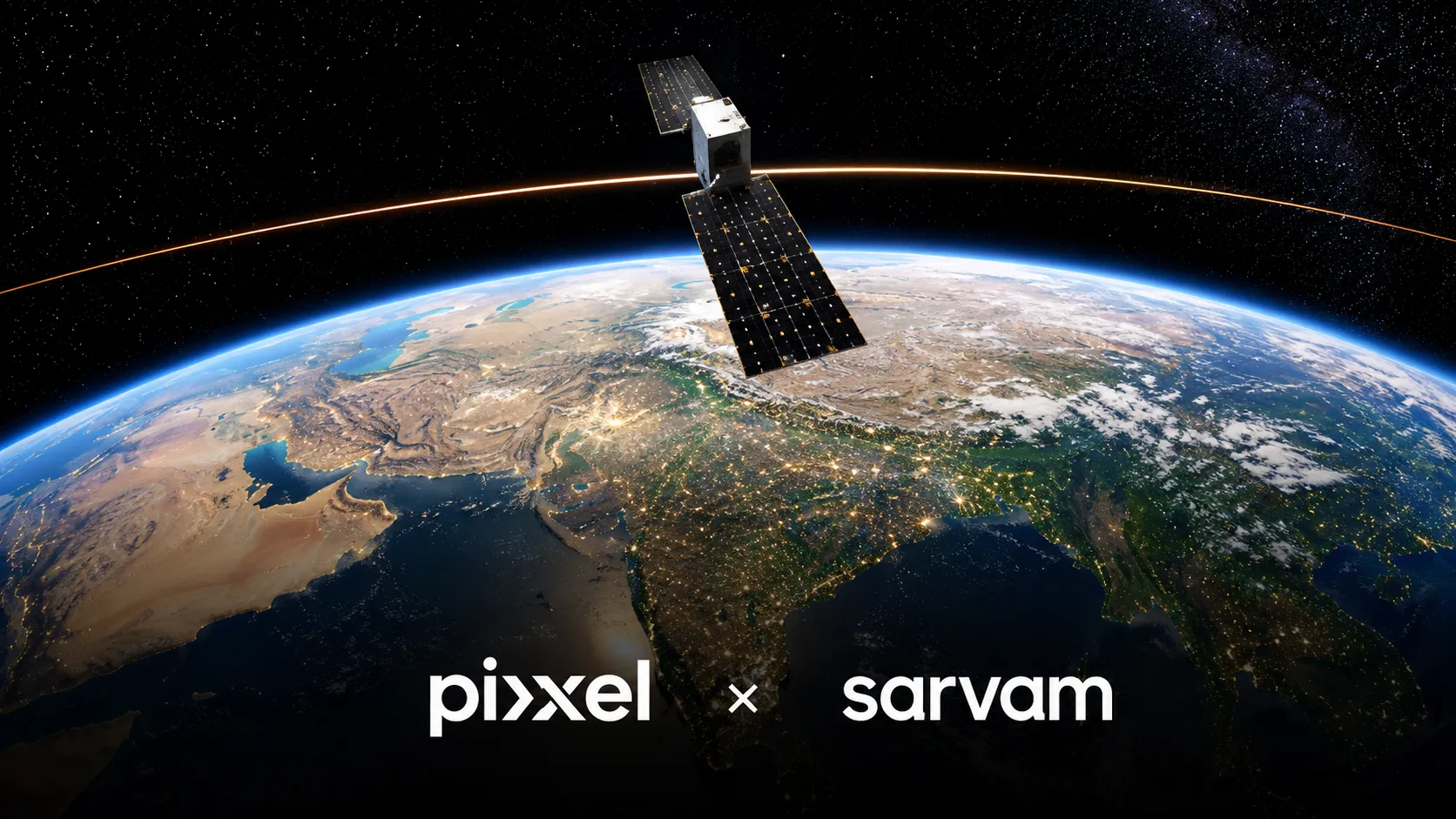
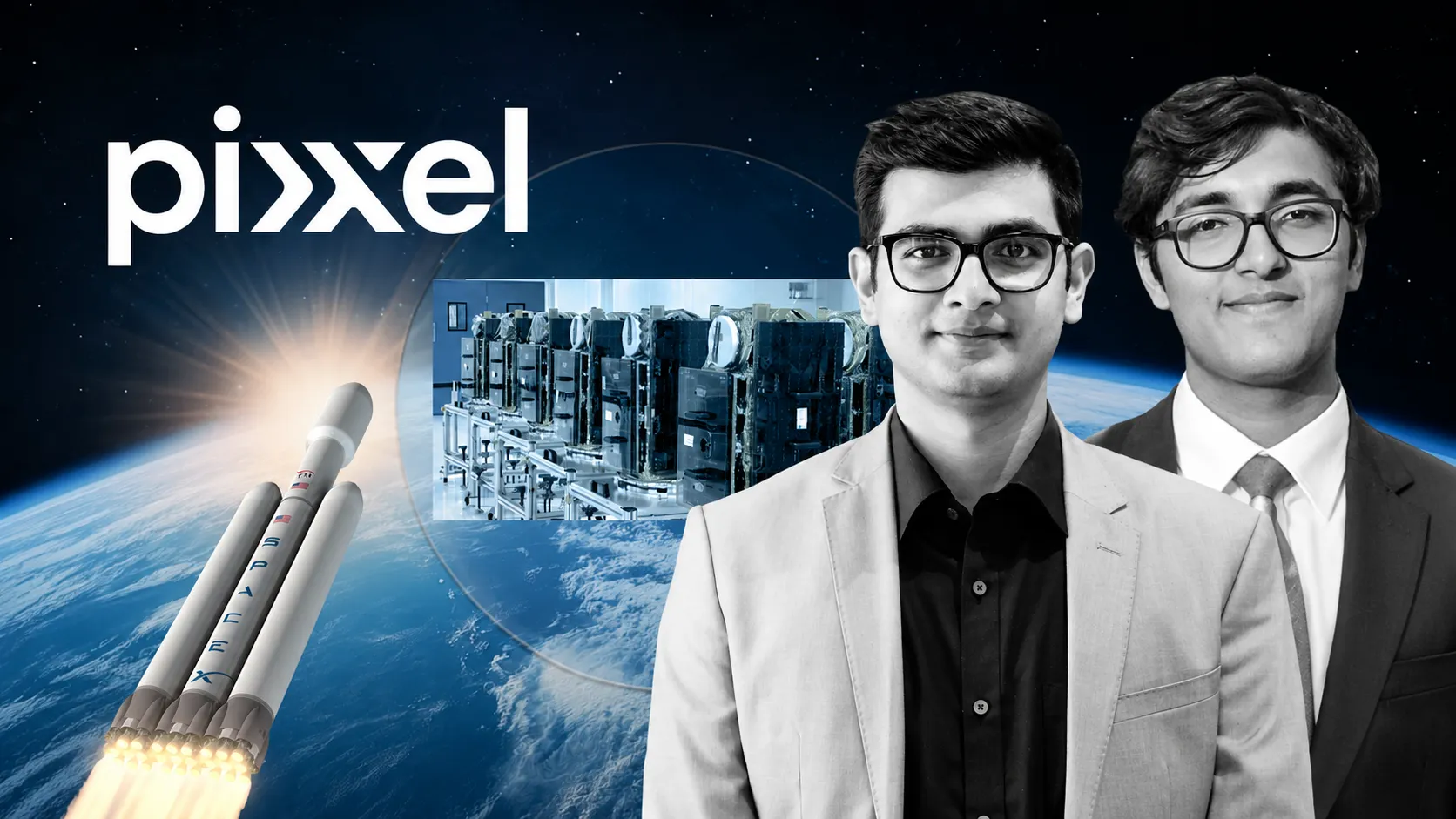
That single line, posted on X by Pixxel co-founder and Chief Technology Officer Kshitij Khandelwal, has triggered a high-stakes bidding war between three southern states—and Tamil Nadu is refusing to lose.
What started as a founder's frustration has now become a textbook case of how social media can reshape industrial policy. Within days of Khandelwal's post, Karnataka, Andhra Pradesh, and Tamil Nadu were publicly courting the spacetech startup, each offering land, incentives, and red-carpet treatment for Pixxel's satellite manufacturing facility.
Tamil Nadu's investment promotion arm, Guidance Tamil Nadu, wasted no time. It invited Pixxel to consider Hosur—a city already emerging as a manufacturing powerhouse with its strategic location, strong industrial ecosystem, and proximity to Bengaluru's talent pool. The pitch was clear: come to Tamil Nadu, and we'll give you the land, the infrastructure, and the ecosystem to build.
The Bigger Picture: A State on a Mission
This isn't just about one startup. This is about Tamil Nadu's aggressive push to position itself as India's premier deep-tech and space manufacturing destination.
The numbers tell the story. According to a DPIIT official who recently reviewed the state's industrial growth, Tamil Nadu has already contributed 34,000 registered startups. But there's a catch: "There is still significant untapped potential. We need to create an enabling ecosystem, particularly in tier-II and tier-III cities, to accelerate innovation-driven entrepreneurship," the official said.
The state is doubling down. More than 35 major defence companies are currently operating in Tamil Nadu, with another 30 expected to join the ecosystem. The government has signed a ₹10,000 crore MoU with Sarvam AI to build India's first Sovereign AI Park near IIT Madras, creating 1,000 high-skilled deep-tech jobs. And just days ago, Tamil Nadu and IN-SPACe inked a deal to set up a shared-access testing facility for private space companies and startups building space-grade hardware.
From a Small Town to Seven International Markets
While the big-ticket battles grab headlines, Tamil Nadu's startup story is also being written in its smaller towns—by founders who refuse to follow the conventional Bengaluru-or-Mumbai playbook.
Take Anitha Sri Maheswaran, founder of Jack Meow. She has built a globally focused job-application services company serving seven international markets—including the United States and Canada—without a single rupee of external funding. And she built it from Bodinayakanur, a town of modest size in Tamil Nadu's Theni district.
No venture capital. No accelerator programs. No fancy co-working spaces in Bengaluru. Just raw entrepreneurial grit, a deep understanding of global labor markets, and the quiet determination to prove that world-class startups can emerge from beyond the metros.
Her story is a testament to the resilience and entrepreneurial spirit thriving in Tamil Nadu's tier-II and tier-III cities—the very places the DPIIT official said hold "significant untapped potential."
The Government Gets Hands-On
The Vijay government isn't just talking about startups—it's getting its hands dirty.
Tamil Nadu's AI, IT, and Digital Services Minister R. Kumar recently visited the IIT-Madras Research Park to interact with deep-tech innovation ecosystem stakeholders. The delegation toured facilities spanning lab-grown diamonds, healthcare technology, space, and AI—reflecting the breadth of innovation emerging from the IIT-Madras ecosystem.
The minister also interacted with a cross-section of startups incubated at the research park, emphasizing the importance of artificial intelligence in driving economic growth, improving public services, and creating new employment opportunities.
The message was clear: the government isn't just watching from the sidelines. It's engaging, learning, and building policy frameworks to support the next generation of Tamil Nadu's innovators.
The Zoho Elephant in the Room
No discussion of Tamil Nadu's startup ecosystem is complete without mentioning the 800-pound gorilla that has been quietly dominating global SaaS from Chennai for three decades.
Zoho Corporation—the bootstrapped Chennai-headquartered giant—recently celebrated its 30th anniversary by surpassing one million paying customers and 150 million users worldwide. The company, which employs 19,000 people and operates in over 150 countries, reported 20 per cent revenue growth in 2025.
While other Indian SaaS companies chased venture capital and unicorn valuations, Zoho took a different path: build slowly, bootstrap relentlessly, and compete with Salesforce and Microsoft on product quality rather than marketing hype. Today, it stands as proof that Tamil Nadu can produce world-class technology companies without following Silicon Valley's playbook.
What's at Stake?
The battle for Pixxel's satellite factory is more than a land grab—it's a signal of where India's industrial future is heading. Space-tech, AI, deep-tech manufacturing, and sovereign digital infrastructure are the industries of tomorrow. And Tamil Nadu is making it clear: it wants a front-row seat.
But challenges remain. Investors in Tamil Nadu are often seen as "conservative, preferring bonds and basic equity, which limits early-stage funding and discourages entrepreneurs." The state's deep-tech ecosystem, while growing, still lags behind Bengaluru's in terms of risk capital and mentorship networks.
Yet the momentum is undeniable. With 34,000 registered startups, a ₹10,000 crore AI park in the pipeline, a space-testing facility on the horizon, and a government that's actively courting innovation, Tamil Nadu is writing a new chapter in India's startup story.
The Final Verdict
A frustrated tweet. A bidding war. A small-town founder building a global business. A 30-year-old SaaS giant quietly dominating the world.
These aren't separate stories. They're all threads of the same narrative: Tamil Nadu's startup ecosystem is no longer a sideshow—it's the main event.
The question isn't whether Tamil Nadu can compete with Bengaluru or Hyderabad. The question is: can it create an ecosystem where the next Pixxel, the next Zoho, and the next Jack Meow can all thrive—simultaneously?
If the past few weeks are any indication, the answer is a resounding yes.


