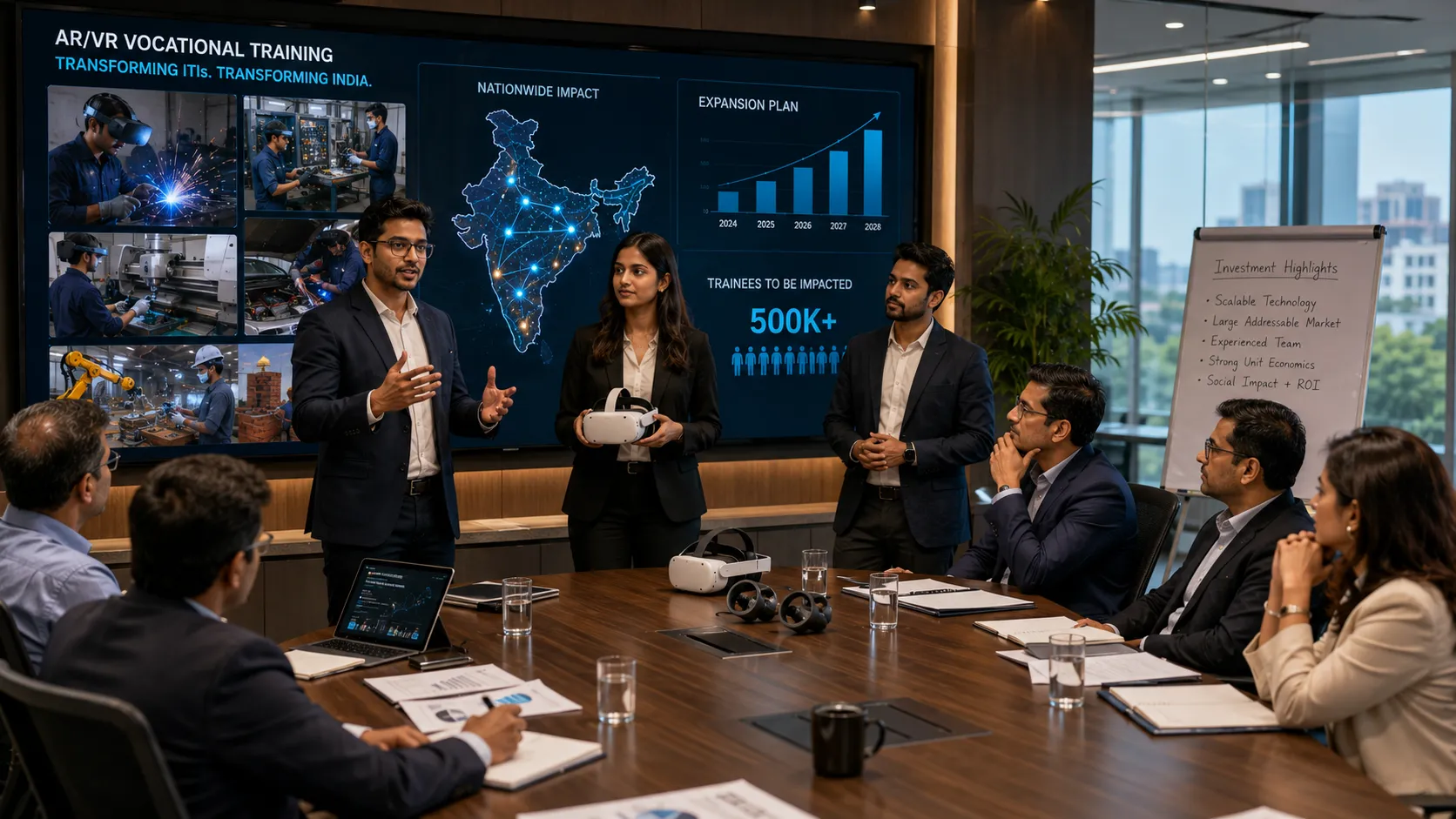
India has 15,000 Industrial Training Institutes (ITIs) that train millions of youths in trades like welding, electrical wiring, and automotive repair. But the quality of training is poor: outdated equipment, lack of trainers, and insufficient practice materials. According to the National Skill Development Corporation (NSDC), only 40% of ITI graduates are employable by industry standards. The gap is not just in knowledge but in hands‑on skills – a welder who has practiced only 10 hours cannot compete with one who has practiced 100. SkillArth, a Pune‑based edtech startup, has developed an AR/VR training system that allows students to practice on virtual equipment before touching real machinery. The company has raised $28 million in Series B funding led by GSV Ventures, with participation from NSDC (National Skill Development Corporation) and existing investor Unitus Ventures. The capital will be used to deploy 50,000 AR/VR headsets across 1,000 ITIs over the next 18 months.
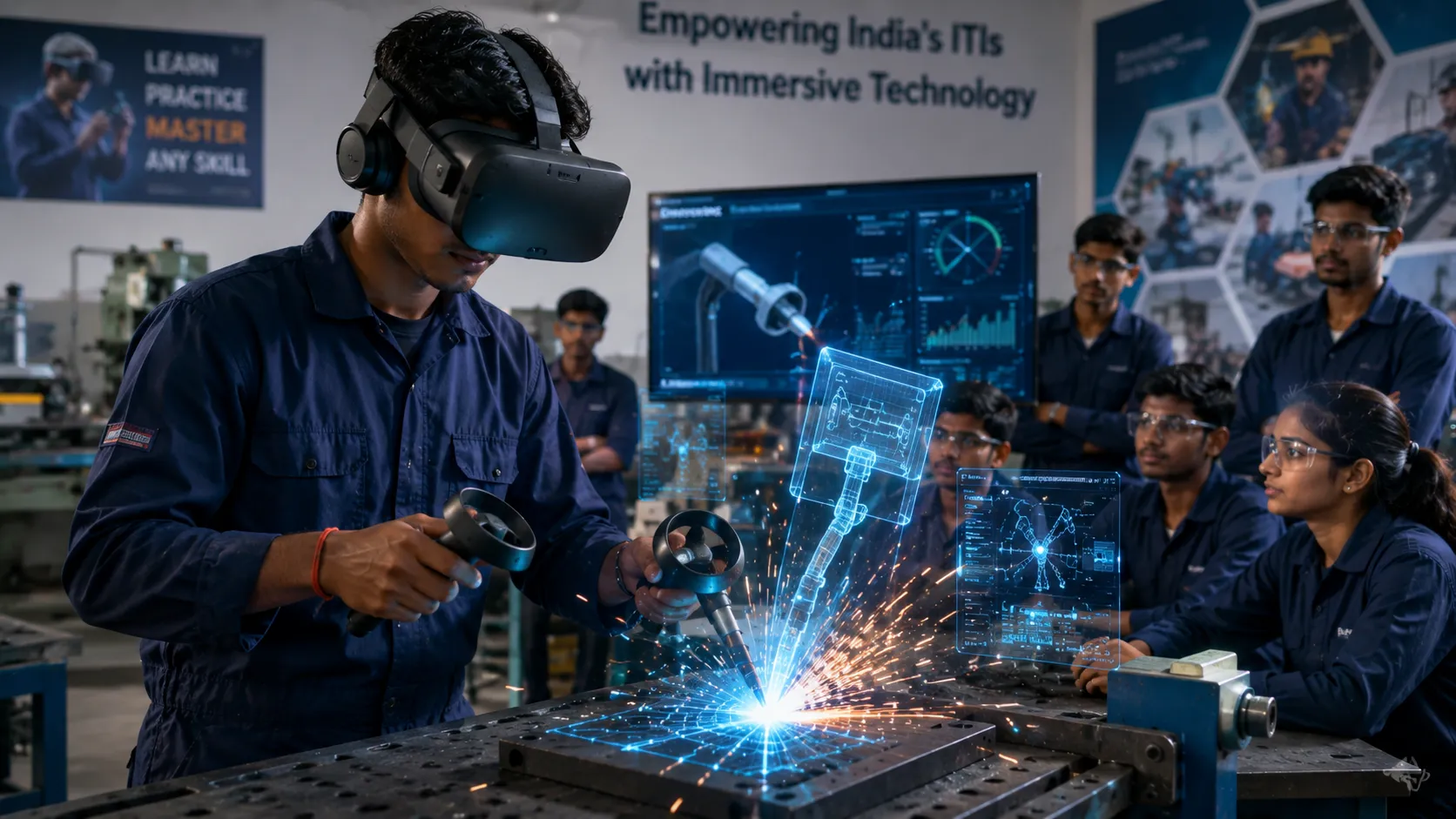
SkillArth’s modules cover 20 trades, including arc welding, engine disassembly, electrical panel wiring, and CNC machining. The student wears a lightweight headset and holds haptic controllers that simulate the weight and resistance of tools. The software provides real‑time feedback – for example, if a welding student moves the torch too fast, a virtual spark shows incomplete fusion; if they move too slow, the virtual metal shows burn‑through. Instructors can monitor performance on a tablet and identify common errors across the class. In pilot studies conducted at 50 ITIs in Maharashtra and Tamil Nadu, students using SkillArth modules completed their practical exams 40% faster and had 55% fewer safety incidents compared to control groups. More importantly, their employability scores, as measured by independent industry assessments, increased by 30%.
“Many ITIs have only one welding machine for 100 students,” said co‑founder and CEO Neha Joshi, a former mechanical engineer at Larsen & Toubro. “With VR, every student can practice at the same time, at zero material cost. It also saves consumables like electrodes and metal plates – a single ITI can save ₹5 lakh ($6,000) per year just on welding rods.” SkillArth charges ITIs a subscription of ₹20,000 ($240) per headset per year. The government provides subsidies under the Skill India Mission, making the effective cost to ITIs as low as ₹5,000 ($60) – less than the cost of one welding machine per classroom. The startup has already signed agreements with the governments of Maharashtra, Gujarat, and Tamil Nadu to cover 300 ITIs in the first phase, with letters of intent from five other states.
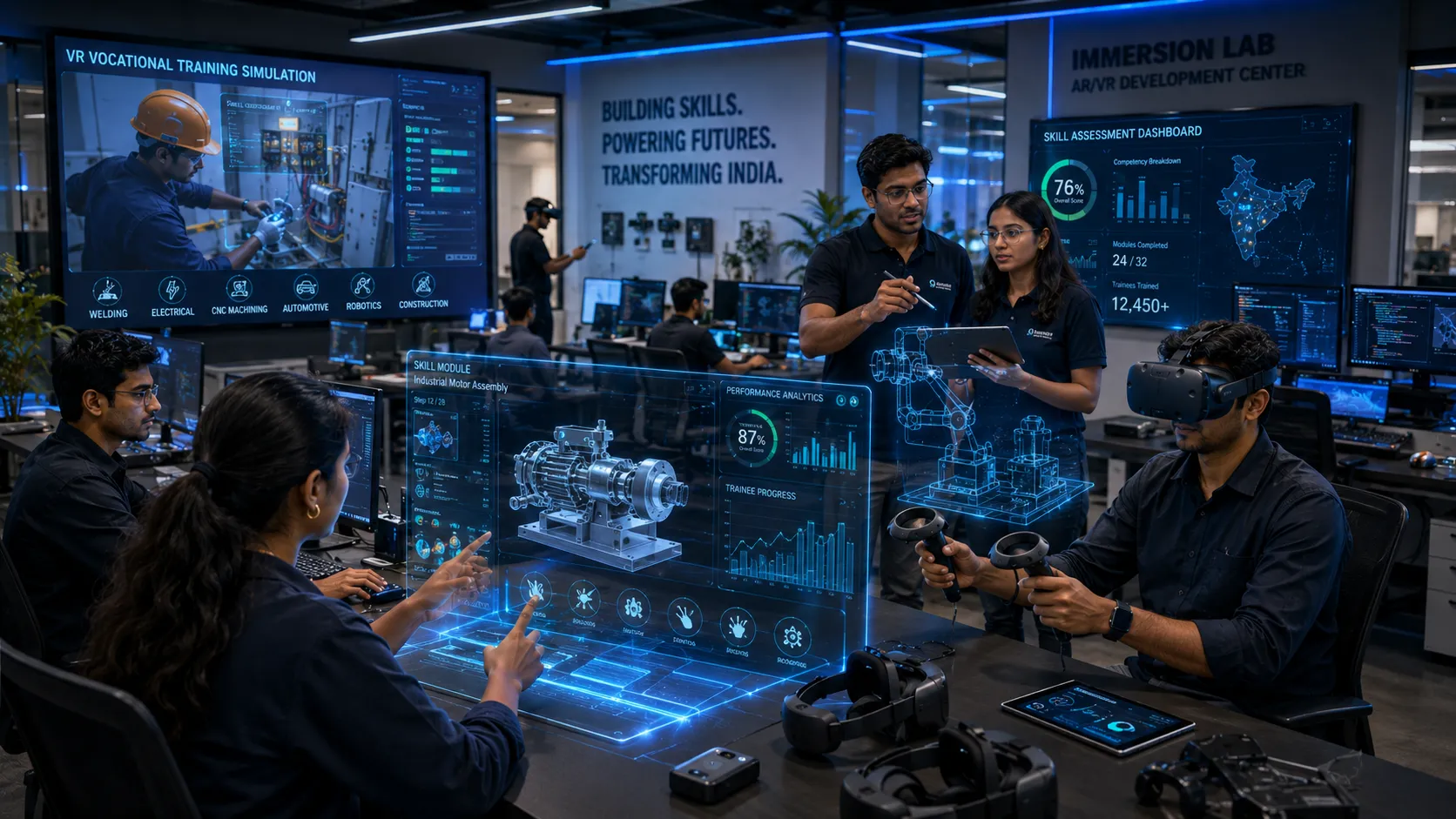
The Series B round comes as the Indian government pushes to modernize vocational training. The new National Education Policy 2026 emphasizes work‑integrated learning and mandates that every ITI must have a “digital lab” by 2028. NSDC has allocated $200 million for technology upgrades, and SkillArth is empanelled as a preferred vendor. “SkillArth is exactly the kind of innovation we need,” said NSDC chairman Ved Mani Tiwari. “It makes high‑quality training scalable and accessible, even in remote areas. A student in a small town can now practice the same skills as a student in a metropolitan city.”
SkillArth will use the funds to develop modules for emerging trades: solar panel installation (to support India’s renewable energy target), drone repair (for agriculture and surveillance applications), and nursing assistant skills (to address healthcare worker shortages). The company also plans to export its system to Indonesia and Nigeria, where similar vocational challenges exist. Indonesia has 2,000 vocational schools with outdated equipment; SkillArth has already signed a memorandum of understanding with the Indonesian Ministry of Education for a pilot of 100 schools. The startup’s gross margins are 70%, and it expects to become profitable by 2027, after reaching 2,000 ITI customers.
The technology behind SkillArth is noteworthy. The VR modules run on a standalone headset (modified version of the Meta Quest 2) that costs $300, but SkillArth has optimized the software to run on cheaper domestic hardware being developed in partnership with IIT Bombay. The haptic controllers are custom‑built in Pune, using off‑the‑shelf actuators. The company holds two patents for its “virtual resistance feedback” algorithm, which mimics the physical feel of different materials – welding steel feels different from welding aluminum, even in VR. This fidelity is critical for skill transfer: studies show that trainees who practice on high‑fidelity simulators perform as well as those who practice on real equipment, while using 80% less material.
Competitors include Simulanis and iXRLabs, but SkillArth’s advantage is its curriculum alignment with the National Skills Qualifications Framework (NSQF) and its low‑cost hardware. While Simulanis uses high‑end VR systems costing $2,000 per seat, SkillArth’s system costs $500 per seat including the headset. The company also has an offline mode for ITIs with poor internet, which is common in rural India; the VR modules are stored locally, and performance data is synced when connectivity becomes available.
The social impact is substantial. India needs to create 10 million skilled jobs per year to absorb its young population. But without quality training, many youths remain unemployable. SkillArth’s system can multiply the output of an ITI without building new workshops. “We can take a mediocre ITI and make it excellent within six months,” said Joshi. “The teachers don’t need to be expert welders; they just need to know how to use the software. The VR system teaches the students.” The startup also offers a train‑the‑trainer program, free for government ITIs, to ensure adoption.