
Magazine10 MIN READ

Six Years, Seventy-Two Chargesheets, One Arrest: Inside The Mahadev App Case's Dramatic New Turn

What investigators once filed away as a routine betting scandal is now being described as an unlicensed financial system — an exchange, a clearing house, and a merchant bank hidden inside betting...

By Shaym Kumar · Author25 July 2026Investigation
Six Years, Seventy-Two Chargesheets, One Arrest: Inside The Mahadev App Case's Dramatic New Turn

For six years, the Mahadev Online Book case sat in India's public consciousness under a fairly simple, easily digestible label: a betting scandal. It was a story about an illegal online betting platform, built around cricket and other sporting events, that had allegedly generated enormous illicit profits and drawn in a roster of Bollywood celebrities and public figures whose promotional appearances and alleged financial links to the platform's promoters made for regular tabloid and news-cycle fodder. That framing, however, has undergone a significant and consequential revision in recent developments, as investigators examining thousands of pages of financial documents amassed over the course of the investigation have concluded that what they were looking at was never simply a betting scandal at all — it was something considerably more structurally sophisticated, and considerably more alarming from a financial-system integrity standpoint.

According to the documents underpinning the most recent phase of the investigation, the Mahadev ecosystem functioned as an unlicensed financial system operating inside betting apps — complete with what investigators describe as the functional equivalent of an exchange, a clearing house, and a merchant bank, all running parallel to, and entirely outside the oversight of, India's regulated financial infrastructure. In practical terms, this reframing suggests that the platform was not merely facilitating illegal bets, but was operating an entire shadow financial architecture: taking in funds from bettors across the country, settling and clearing transactions between users and operators at scale, and — in the detail that has drawn perhaps the most attention from financial crime investigators and market regulators alike — channelling the resulting profits into legitimate global capital markets, with reports indicating that proceeds from the operation found their way into investments listed on the Nasdaq exchange in the United States.

That final detail transforms the Mahadev case from a domestic law-and-order and gambling-regulation story into something with far more serious cross-border financial crime implications. Money that begins its life as illegal betting proceeds, routed through what investigators characterise as a sophisticated internal clearing and settlement system, and which ultimately ends up parked in shares or investment vehicles listed on one of the world's most prominent stock exchanges, represents a textbook illustration of the kind of layered money-laundering architecture that international financial crime frameworks — including India's own Prevention of Money Laundering Act, under which the Enforcement Directorate has pursued much of this investigation — are specifically designed to detect and dismantle. The scale of formal legal action taken against the network over the six years of investigation underscores just how extensive investigators believe the operation to have been: sixteen separate attachment orders have been issued against assets linked to the case, seventy-two individuals have been chargesheeted, and, in the most recent and arguably most significant escalation, the state has now begun arresting members of the network's board of directors — a step that, notably, had not been taken in the six years of investigation prior to this point.

The significance of that shift toward arresting board-level figures, rather than continuing to pursue the case primarily through asset attachment and chargesheeting of operational-level individuals, should not be understated. In complex, multi-layered financial crime investigations of this scale, the movement from documentary and asset-based enforcement action toward personal-liberty-restricting arrests of governance-level figures typically signals that investigators believe they have assembled sufficiently robust evidence to establish direct, individual culpability at the decision-making level of an organisation — a considerably higher evidentiary bar than is required for asset attachment orders, which can often proceed on the basis of a lower threshold of suspected proceeds-of-crime linkage. That investigators have now cleared that bar, after six years of painstaking financial forensic work, suggests the case has reached a genuinely mature and consequential stage.
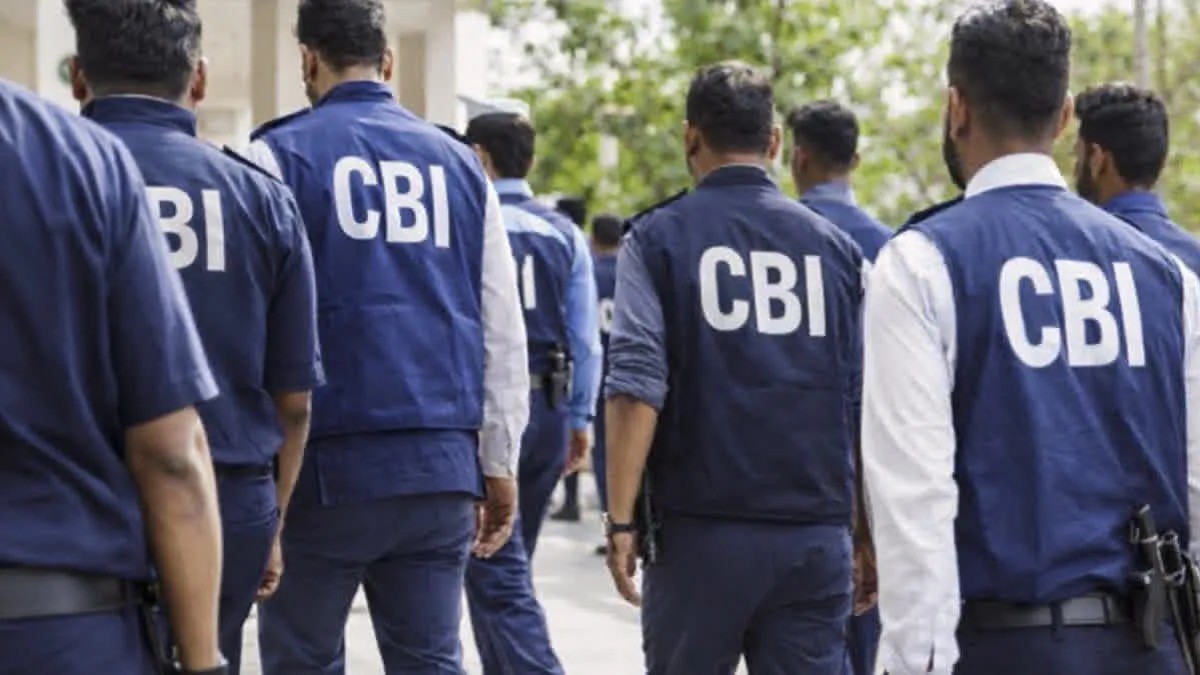
image.png

The Mahadev Online Book platform first rose to broad national prominence a few years ago when its alleged links to a sitting state chief minister's office and to a roster of Bollywood celebrities who had appeared in promotional content for the platform generated sustained national media coverage and significant political controversy, particularly given the platform's alleged connections to Chhattisgarh, where investigators had traced significant portions of the network's operations and alleged political patronage. The celebrity dimension of the case, while attention-grabbing, has always been something of a sideshow relative to the core financial crime allegations investigators have pursued — the far more consequential story, in regulatory and financial-system terms, has always been the mechanics of how the platform allegedly moved and laundered the enormous sums it is accused of generating, a story that this latest tranche of documents and arrests has now brought much more sharply into focus.

For India's broader online betting and gaming ecosystem, the Mahadev case's evolution carries implications that extend well beyond the specific individuals and entities named in the investigation. India has, in recent years, been grappling with a genuinely difficult regulatory challenge around online betting, gambling, and real-money gaming — a sector that operates in a complex legal grey zone shaped by a patchwork of colonial-era gambling legislation, state-level variations in gambling law, and more recent central government efforts to regulate online real-money gaming more comprehensively, including through provisions addressing offshore and illegal betting platforms that operate outside India's formal licensing framework entirely, as Mahadev is alleged to have done. The scale of the alleged financial flows through the Mahadev network — sufficient to fund investments in globally listed securities — offers a sobering data point for policymakers grappling with just how large the illegal offshore betting economy targeting Indian consumers has become, operating largely beyond the reach of India's tax authorities, foreign exchange regulations, and consumer protection frameworks.

The case also intersects with a broader, ongoing national conversation about the taxation and regulation of India's legal, licensed real-money gaming and fantasy sports industry, which has itself faced significant regulatory upheaval in recent years, including contentious changes to the Goods and Services Tax regime applied to online gaming platforms. Industry participants in the legal, licensed gaming space have periodically pointed to cases like Mahadev as evidence of a troubling asymmetry in India's current regulatory approach — one in which compliant, licensed, tax-paying gaming operators face increasingly stringent regulatory and tax burdens, even as vastly larger illegal offshore operations, of the scale now alleged in the Mahadev case, continue to attract Indian users and generate proceeds that, by design, contribute nothing to the domestic exchequer and operate entirely outside consumer protection safeguards.


The significance of that shift toward arresting board-level figures, rather than continuing to pursue the case primarily through asset attachment and chargesheeting of operational-level individuals, should not be understated.
Investigations Desk

From an investor and market integrity standpoint, the revelation that illegal betting proceeds may have been channelled into Nasdaq-listed investments also raises pointed questions for international financial institutions and cross-border compliance frameworks about how funds with origins as opaque and layered as those alleged in the Mahadev case are able to find their way into regulated global capital markets in the first place. Anti-money-laundering compliance teams at global banks and brokerages have, in the wake of similar revelations in other jurisdictions, faced renewed scrutiny over the adequacy of their client onboarding and source-of-funds verification processes, and the Mahadev case's international dimension is likely to feature in exactly these kinds of compliance conversations going forward, both within India and among international regulatory counterparts who may now be drawn into the investigation as it follows the money trail beyond India's borders.

image.png

For the individuals now facing arrest as board-level figures in the network, the legal road ahead is likely to be long and complex, involving proceedings under the Prevention of Money Laundering Act that, based on the trajectory of comparable large-scale financial crime cases in India, could extend over several years before reaching final resolution, encompassing bail proceedings, trial court processes, and likely appeals that could ultimately reach India's higher judiciary. The seventy-two individuals already chargesheeted, and any additional board-level figures arrested in this latest phase, will now need to navigate a legal process that Indian financial crime cases of comparable scale and complexity have historically shown can take the better part of a decade to fully adjudicate.

To appreciate how the case reached this point, it helps to trace the broad arc of the investigation since it first became public. Enforcement agencies began examining the Mahadev network's operations several years ago, following intelligence about the scale of illegal betting activity being routed through a cluster of interlinked online platforms, most heavily promoted around major cricketing tournaments when betting volumes and, correspondingly, illicit proceeds, tend to peak sharply. Early enforcement action focused primarily on identifying and freezing bank accounts and other financial assets linked to the network's operators, a process that yielded the first tranche of the sixteen attachment orders that have now been issued over the life of the investigation. As forensic accountants and financial investigators dug deeper into the layered transaction trails — a process complicated by the network's alleged use of numerous shell entities, intermediary accounts, and cross-border fund transfers designed specifically to obscure the origin and destination of funds — the picture that emerged grew steadily more complex, eventually leading investigators to the conclusion that they were examining not a single illegal betting operation, but an entire parallel financial ecosystem built to service it.

The involvement of Bollywood celebrities in the case, while a secondary matter relative to the core financial crime allegations, nonetheless played a significant role in keeping the case in sustained public view over its six-year lifespan, ensuring a level of media and political scrutiny that likely contributed to sustained investigative resourcing over a period during which many complex financial crime cases in India have historically lost momentum or faded from public attention. Several prominent film industry figures faced questioning over payments allegedly received for promotional appearances linked to the platform, with most maintaining that they were unaware of the platform's illegal nature at the time of their engagement — a defence that has featured in numerous similar cases involving celebrity endorsements of subsequently-banned or investigated platforms and applications across other sectors of India's economy in recent years, from cryptocurrency exchanges to fraudulent investment schemes.

The political dimension of the case, centred on alleged links to political patronage networks in Chhattisgarh, has also ensured the investigation has periodically intersected with broader partisan political battles, with opposing political parties trading allegations over the extent to which state machinery may have been aware of, or even complicit in facilitating, the network's operations during the period in question. Investigators have, for their part, sought to keep the financial crime investigation itself insulated from these political crossfires, emphasising that the evidentiary basis for attachment orders, chargesheets, and now arrests rests on financial forensic analysis of transaction records rather than on the political allegations that have periodically surrounded the case in the public discourse.

image.png

Looking ahead, legal experts tracking the case have suggested that the shift toward board-level arrests could presage a broader wave of similar enforcement action against other, less prominent illegal betting and online gaming networks currently operating in India, many of which are believed by industry analysts to employ broadly similar offshore, layered financial structures to the one now alleged in the Mahadev case. India's Enforcement Directorate and other financial crime investigative agencies have, in recent years, increasingly prioritised cases involving illegal betting and gaming platforms as part of a broader crackdown on the shadow economy operating outside formal financial and tax oversight, a priority reinforced by growing awareness, cases like Mahadev illustrate, of just how large and financially sophisticated these networks can become if left uninvestigated for extended periods.

What began, in the public imagination at least, as a story about illegal cricket betting and a handful of embarrassed celebrity endorsers has, six years and dozens of legal actions later, revealed itself to be something considerably more structurally significant: a case study in how sophisticated illegal financial networks can construct parallel, unlicensed versions of legitimate financial infrastructure — exchanges, clearing systems, merchant banking functions — entirely outside the reach of formal regulatory oversight, and how the proceeds of such networks can, if left unchecked for long enough, find their way into the heart of the world's most closely regulated capital markets. The Mahadev case's next chapter, with board-level arrests now underway for the first time, will be watched closely not just by those following the specific individuals involved, but by regulators, compliance officers, and policymakers grappling with the much larger question the case has come to represent: just how much of India's illegal offshore betting economy remains hidden, and how many more Mahadev-style shadow financial systems might still be operating undetected.

TagsMahadevAppMahadevBettingScamEDMoneyLaunderingCaseIndianFinancialCrimeBettingAppScamEnforcementDirectorateOnlineBettingIndiaFinancialFraudIndiaNews

Reader reviews

Sign in to rate and review this article.
Loading reviews…


