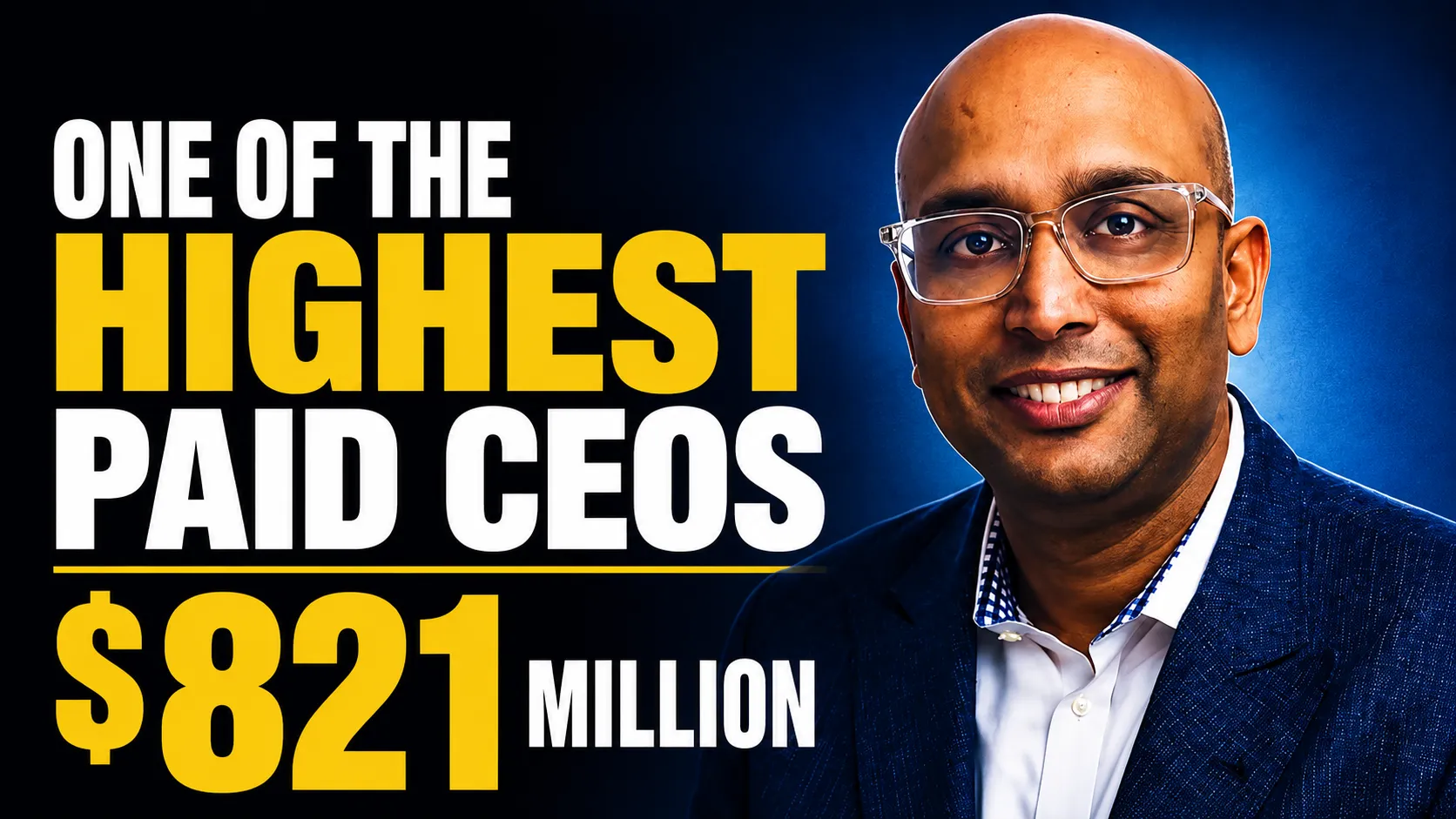
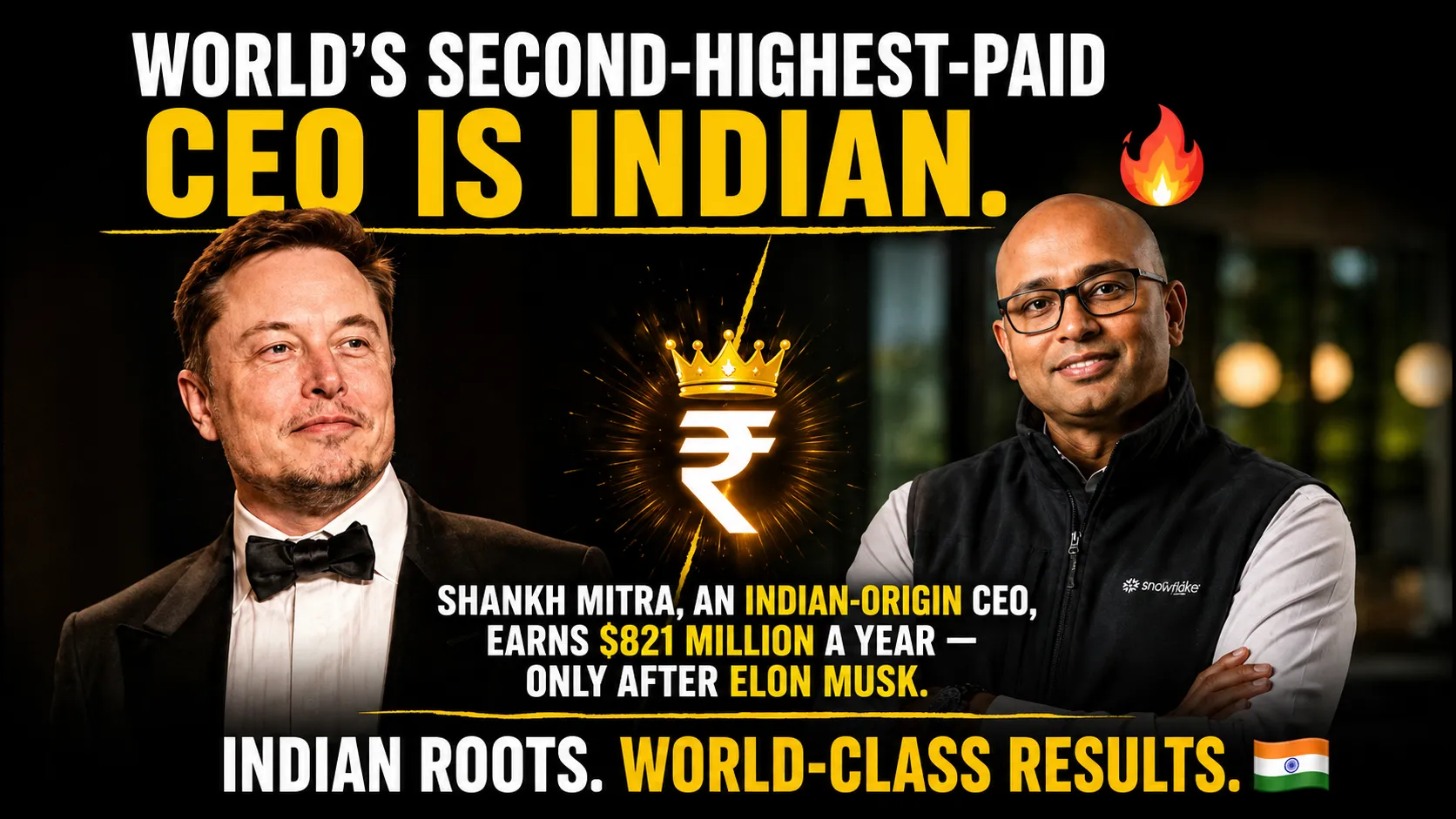
Ask most people to name the highest-paid Indian-origin executive in the world, and the answers will cluster predictably around a handful of famous names: Sundar Pichai at Alphabet, Satya Nadella at Microsoft, perhaps Arvind Krishna at IBM or Nikesh Arora at Palo Alto Networks. Almost no one guesses correctly. The actual answer, according to the Wall Street Journal's 2026 annual CEO compensation rankings, is Shankh Mitra — the chairman and chief executive of Welltower, a real estate investment trust most people outside the healthcare and senior-housing industry have never had reason to think about.
Mitra's compensation package for the year came to $821.1 million, a figure large enough to make him the second-highest-paid executive in the world, trailing only Elon Musk. It is a number so far outside the range of a conventional executive salary that it requires some unpacking simply to understand what it represents, let alone how a relatively low-profile REIT executive ended up earning more in a single year than nearly every other chief executive on the planet, famous or otherwise.
A Name Missing From the Usual Lists
Part of what makes Mitra's story striking is how thoroughly it has flown under the radar relative to its scale. Even Forbes' 2026 list of America's 250 Most Successful Living Immigrants — a list explicitly designed to catalogue exactly this kind of achievement — did not include his name. Neither Pichai nor Nadella, neither Krishna nor Arora, occupies the position Mitra holds at the very top of global executive compensation; and yet Mitra's name remained, for most of the year, essentially unknown outside specialist financial and real estate circles, surfacing as breaking news only once the Wall Street Journal's compensation rankings forced the broader business press to take notice.
That obscurity is not an accident of poor public relations. It reflects the nature of the industry Mitra operates in. Senior housing, healthcare real estate, and wellness infrastructure do not generate the kind of consumer-facing visibility that a Google, a Microsoft, or a Palo Alto Networks enjoys simply by virtue of the products ordinary people use every day. Welltower's business — owning and operating the physical infrastructure in which aging Americans live out their final years — is enormously consequential and enormously profitable, but almost entirely invisible to anyone who does not have an elderly family member currently searching for a senior living facility, a demographic reality that will only become more universal, more urgent, and more economically significant as America's population continues to age steadily over the coming decades.
From Kolkata to Jadavpur to Ohio
Mitra's own biography traces a path that looks, on paper, similar to many of the more famous Indian-origin executives who preceded him into American corporate leadership: born and raised in Kolkata, educated at Jadavpur University, and eventually drawn into the American business world through a combination of ambition and opportunity. Where his path diverges from the more familiar technology-executive template is in the industry he ultimately chose. Rather than following the well-worn route into software engineering and eventually technology management that carried Nadella and Pichai to the top of Microsoft and Google, Mitra built his career in finance, investment management, healthcare, and real estate — an unglamorous but capital-intensive corner of the American economy that rarely produces the kind of celebrity executives who appear on magazine covers.
He joined Welltower in 2016, working his way toward the company's senior leadership over the following years. In October 2020, in the middle of one of the most difficult periods the American senior housing industry has ever faced, Mitra was promoted to CEO and vice chairman. The timing could hardly have been more challenging: COVID-19 was devastating the senior living sector specifically, with nursing homes and assisted living facilities among the hardest-hit institutions in the entire pandemic, both in terms of health outcomes for residents and in terms of occupancy rates and financial performance for the companies that owned and operated them.
A Bet Made in the Worst Possible Moment
Taking over as CEO of a senior housing REIT at the exact moment the senior housing industry was facing an existential crisis is not, by any conventional measure, good timing. Occupancy rates across the industry had collapsed, families were pulling elderly relatives out of congregate living settings wherever alternatives existed, and the entire business model underlying companies like Welltower appeared, for a period, to be facing a genuine existential threat rather than a temporary disruption. But it was in the years immediately following that difficult beginning that Mitra made the strategic decisions that would eventually produce his record-setting compensation. Under his leadership, Welltower invested more than $40 billion acquiring thousands of senior housing units across North America — an enormous, sustained bet that the demographic tailwinds driving demand for senior housing, an aging American population requiring more assisted living and healthcare infrastructure with each passing year, would eventually overwhelm whatever short-term disruption the pandemic had caused.
That bet has paid off dramatically. As the pandemic's acute disruption faded and America's demographic aging continued its long, predictable march forward, the senior housing assets Welltower had acquired during and after the crisis appreciated substantially, driving the company's share price to levels that made Mitra's long-term stock-based compensation extraordinarily valuable. It is a case study in a particular kind of executive courage: making an enormous capital commitment during the worst possible moment for the underlying business, on the conviction that the crisis itself was temporary while the demographic trend driving long-term demand was not.
Anatomy of an $821 Million Package
The structure of Mitra's compensation is, in its own way, as instructive as the headline number. His base salary came to approximately $1.3 million, and his cash bonus added roughly $6.5 million — figures that, while substantial by any ordinary standard, represent barely one percent of his total compensation for the year. The remaining 99-plus percent, more than $813 million, arrived in the form of long-term stock incentives: compensation directly tied to Welltower's share price performance over an extended period, rather than a fixed annual payment unconnected to how the company's underlying business actually performed.
That structure matters because it fundamentally changes how the number should be interpreted. A CEO earning a fixed salary in the hundreds of millions of dollars regardless of company performance would represent one kind of story, and likely a troubling one, about executive pay disconnected from shareholder outcomes. A CEO whose compensation is overwhelmingly determined by long-term stock performance, and who happened to preside over a period of extraordinary share price appreciation driven by strategic decisions he personally made, represents a different story entirely — one in which the enormous number is, in a fairly direct sense, a measure of how much value those decisions created for Welltower's shareholders over the same period.
None of this is to suggest the figure is uncontroversial. Compensation packages of this scale inevitably invite scrutiny, regardless of how directly they are tied to performance, and questions about whether any single executive's contribution justifies a nine-figure annual payout are unlikely to disappear simply because the underlying stock-incentive structure can be explained in reasonable terms. But understanding the mechanics of how Mitra arrived at $821.1 million — rather than simply reacting to the headline figure in isolation — helps explain why this particular pay package tells a genuinely different story than a simple, fixed executive salary of comparable size would.
It is also worth situating Mitra's package within the broader debate over executive compensation that has intensified across corporate America in recent years, as shareholder advocacy groups, regulators, and the business press have increasingly scrutinized the gap between what top executives earn and what median employees at the same companies take home. Stock-incentive-heavy compensation structures like Mitra's are often defended precisely on the grounds that they align management's interests with shareholders' — an executive who only gets paid handsomely when the stock performs well has, in theory, a direct incentive to make decisions that benefit the company's owners rather than simply enriching themselves regardless of outcomes. Whether that theoretical alignment justifies compensation on the scale Mitra received is a judgment each observer will reach differently, but the structural logic behind it is at least coherent, which is more than can be said for every large executive pay package that draws public attention.
An Orderly Exit, In Keeping With the Rest of the Story
In March 2026, Mitra announced that he would step down as CEO once Welltower's board identified and appointed a successor, while remaining with the company as chairman of the board. Even this transition, handled with a clear timeline and an intention to remain involved in a governance capacity, reflects the same unglamorous, methodical competence that appears to run through the rest of Mitra's tenure. There was no scandal precipitating the announcement, no activist investor campaign forcing his hand, and no dramatic boardroom struggle of the kind that often accompanies high-profile CEO departures at more visible companies. It was, by all appearances, simply a planned transition at a natural moment in the company's development, announced well in advance rather than sprung on investors without warning.
That quiet, procedural approach to succession planning is, in its own way, consistent with everything else about Mitra's public profile: a leader whose most consequential decisions — the pandemic-era acquisition strategy, the compensation structure tied almost entirely to long-term performance, and now the transition out of the CEO role — have all been executed with a kind of low-drama professionalism that stands in sharp contrast to the scale of the numbers involved.
What Mitra's Story Adds to the Indian-Origin CEO Narrative
The now-familiar story of Indian-origin executives rising to lead major American companies has, for years, been told largely through a handful of recurring names and a handful of recurring industries: technology, primarily, with occasional detours into pharmaceuticals and consumer goods. Mitra's emergence as the world's second-highest-paid executive complicates that narrative in a useful way, demonstrating that the reach of Indian-origin leadership in corporate America extends well beyond the technology sector's more visible boardrooms and into corners of the economy — real estate investment trusts, senior housing, healthcare infrastructure — that rarely attract the same attention, despite commanding capital and compensation on a scale that rivals or exceeds even the most prominent technology CEOs. It is a reminder that the diaspora's economic footprint in the United States is considerably broader and more deeply embedded across the full range of American industry than the more commonly told technology-centric version of the story usually suggests.
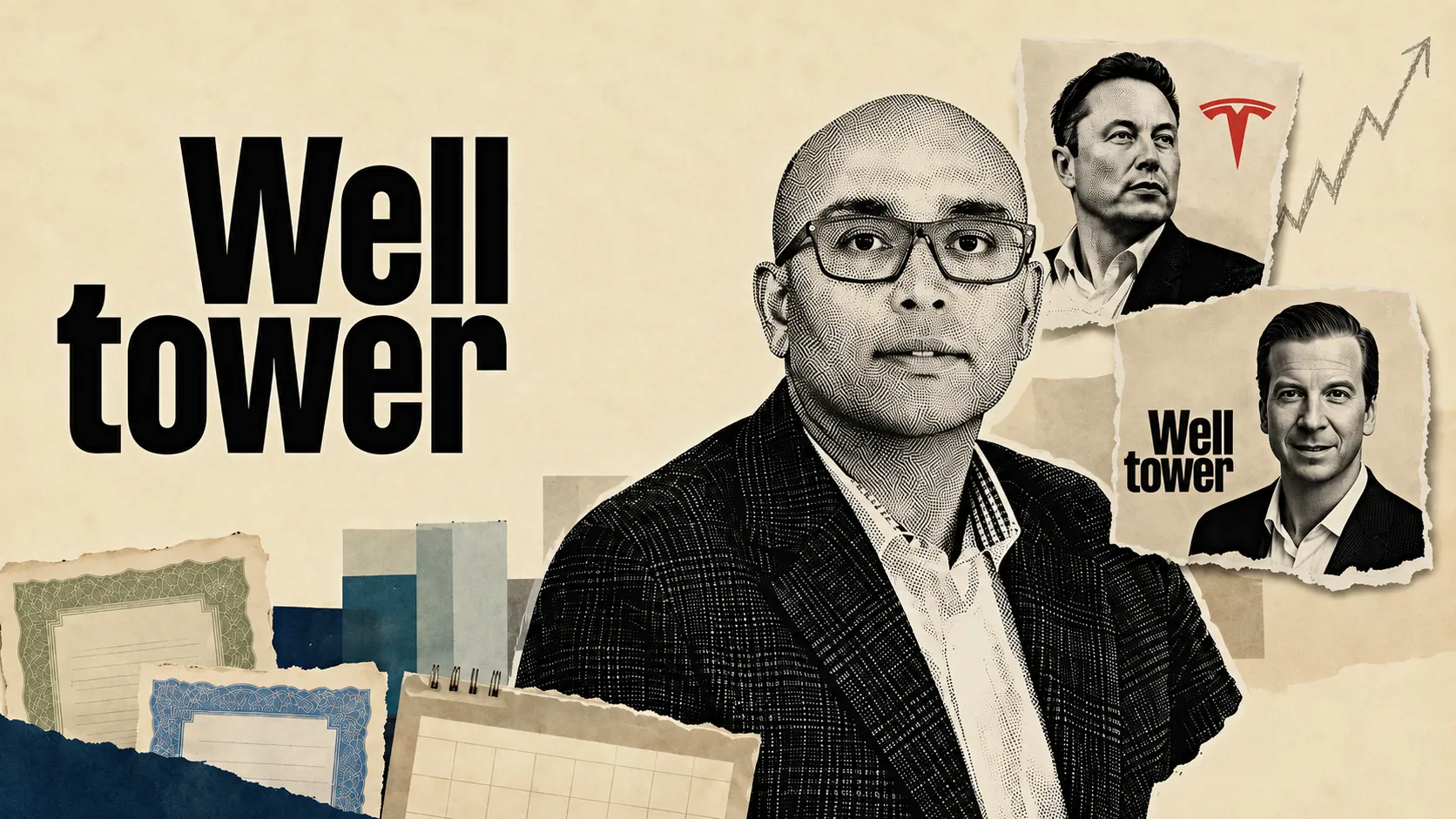
Whether Mitra's name eventually becomes as recognizable as Pichai's or Nadella's remains uncertain, and perhaps beside the point entirely — the number itself has already done the work of ensuring his name enters the record books, regardless of how quickly it fades from the news cycle in the months ahead. What his compensation record already demonstrates, regardless of how widely his name spreads beyond financial trade press, is that the ceiling for Indian-origin executive achievement in the United States has no meaningful boundary tied to industry visibility — a lesson that a REIT chief executive in Ohio has now delivered as emphatically as any household-name technology CEO ever has.
There is also a broader lesson here about how business media covers Indian-origin success. The infrastructure for tracking and celebrating Indian-origin achievement in America has, over the past two decades, become remarkably well-developed when it comes to technology leadership — dedicated lists, regular profiles, and an entire ecosystem of coverage built around tracking which company just appointed its latest Indian-origin chief executive. That same infrastructure appears far less attuned to achievement occurring outside the technology sector, which is precisely why a compensation record of this scale could go essentially unnoticed for the better part of a year before a single Wall Street Journal ranking forced it into public view. As Indian-origin professionals continue distributing themselves across a widening range of American industries — real estate, healthcare, industrial manufacturing, finance, insurance, logistics — the business press covering that diaspora's achievements will need to widen its own aperture correspondingly, or risk missing stories exactly like this one until the numbers become too large to ignore entirely.


