
The story of Indian-origin executives rising to lead major American corporations has, over the past two decades, developed a fairly predictable rhythm in how it gets told: a talented engineer or manager, often educated at an elite Indian technical institution, joins an American technology company, distinguishes himself through a series of high-profile projects or turnarounds, and is eventually elevated to the top job, frequently as an outsider brought in specifically to solve a strategic crisis the previous leadership could not solve on its own. Shailesh Jejurikar's rise to become chief executive of Procter & Gamble in January 2026 follows almost none of that pattern, and the differences are precisely what make his story worth telling on its own terms.
Jejurikar, born in Mumbai, did not arrive at P&G as an outside hire. He joined the company nearly four decades before assuming the CEO role, building his entire professional career within a single organization at a moment when that kind of career trajectory was already becoming unusual, and has only grown rarer since. By the time he reached the top job, Jejurikar had spent longer at Procter & Gamble than many of his own direct reports had been alive — a tenure that reflects not simply loyalty, but an unusually sustained bet, renewed year after year by both Jejurikar and the company, that his long-term value would eventually be realized at the very top.
A Career Built Inside One Company
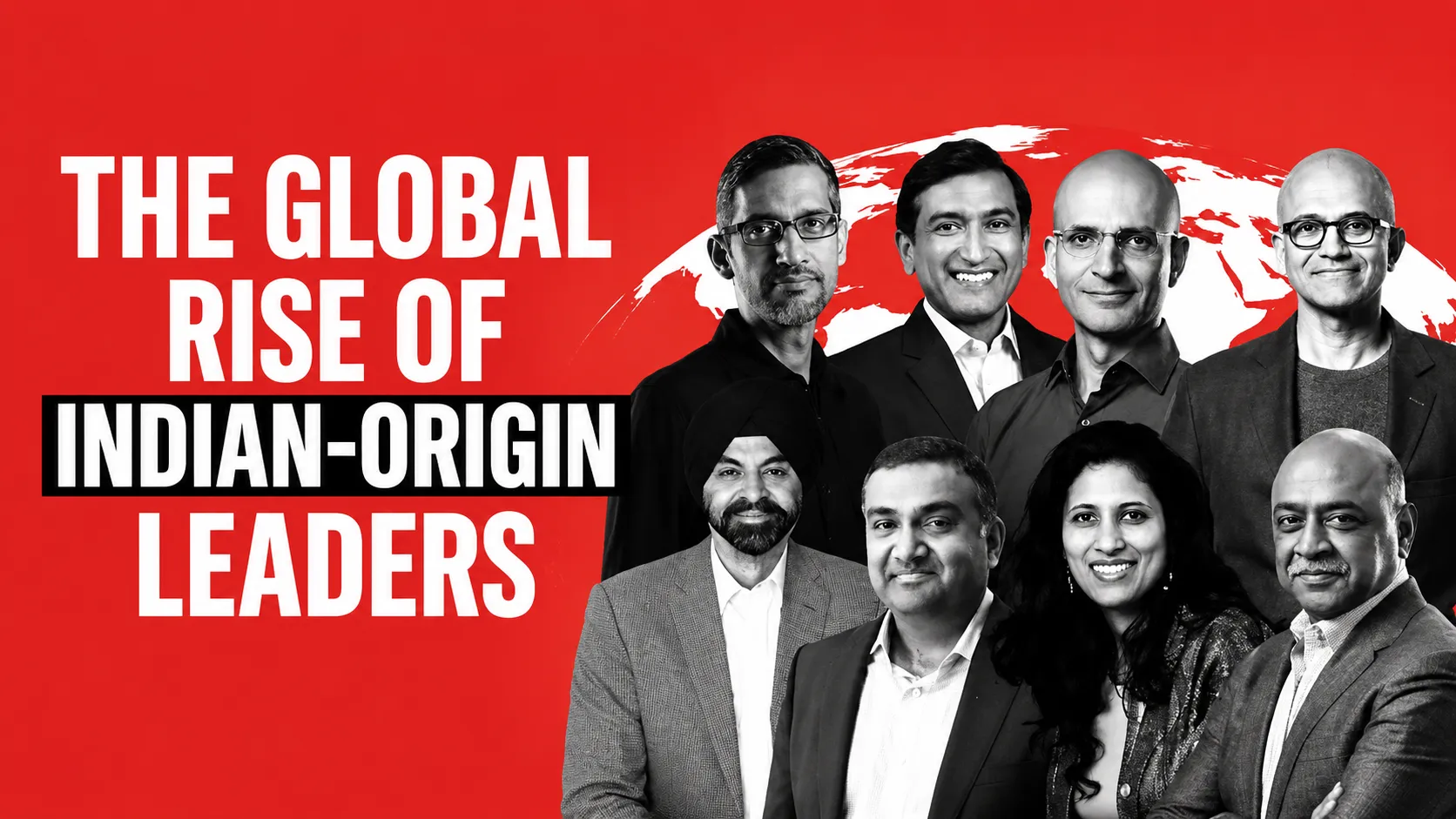
The contrast between Jejurikar's path and the more familiar Indian-origin executive narrative is worth dwelling on carefully and at some length. Satya Nadella joined Microsoft in 1992 and became CEO in 2014, a genuinely long internal career, but one still considerably shorter than Jejurikar's eventual tenure before ascending to P&G's top job. Sundar Pichai joined Google in 2004 and became CEO just over a decade later, in 2015, a comparatively rapid rise by any standard. Jejurikar's climb, unfolding over closer to four decades, represents a different order of patience entirely — closer to the traditional Japanese or European corporate model of steady, multi-decade internal advancement than to the faster-moving American technology industry template that has produced most of the other prominent Indian-origin CEO stories of the past fifteen years.
That difference in pace reflects, in part, a genuine difference in industry. Consumer packaged goods companies like Procter & Gamble operate on fundamentally different timelines than technology companies. Building and defending a portfolio of globally trusted household and personal care brands — the kind of trust that allows a consumer to reach for the same detergent or toothpaste brand across decades of shopping trips without a second thought — requires an entirely different kind of institutional patience than building software products that can be entirely reimagined within a single product cycle. A leader capable of eventually running that kind of company benefits enormously from having personally lived through multiple full brand cycles, multiple economic downturns, and multiple shifts in consumer behavior, rather than arriving with outside expertise but no lived institutional memory of how the company actually responded to similar pressures in the past.
What the Job Actually Requires Now
As CEO, Jejurikar inherits a company navigating a genuinely difficult moment for the global consumer goods industry: volatile input costs driven by fluctuating commodity prices, a retail landscape being reshaped by e-commerce and direct-to-consumer competitors that did not exist when Jejurikar joined the company decades earlier, and increasingly fragmented consumer preferences as younger shoppers show greater willingness to experiment with smaller, niche brands rather than defaulting to the large, established names that built P&G's fortune over the past century. Navigating each of these pressures simultaneously, without sacrificing the brand equity and operational discipline that took decades to build, represents precisely the kind of multi-front challenge that rewards a leader with genuinely deep institutional knowledge across every part of the business, rather than surface-level familiarity gained only recently.
His stated priorities as the new chief executive — brand growth, supply chain resilience, and innovation across the company's global portfolio — read, on their face, like fairly standard executive talking points. What genuinely distinguishes Jejurikar's ability to actually execute well on them is the sheer depth of institutional knowledge he personally brings to each and every priority. Supply chain resilience, for a leader who has spent decades inside P&G's operations, is not an abstract strategic goal but a problem he has likely already helped solve, in some form, during previous supply chain disruptions the company weathered over his tenure. Brand growth strategy benefits similarly from decades of direct, personal experience watching which brand investments succeeded and which failed across P&G's enormous portfolio, rather than relying entirely on market research and outside consultants to reconstruct that institutional memory from scratch.
The Quiet Power of Internal Promotion
There is a broader argument, largely made implicitly through board decisions like this one rather than stated explicitly in corporate communications, about the relative merits of internal promotion versus external hiring for a company's most senior leadership role. External hires bring genuinely fresh perspective and can be useful precisely when a company's internal culture has become part of the problem it needs to solve. Internal promotions, particularly ones as patient as Jejurikar's, bring something external hires structurally cannot: institutional memory deep enough to distinguish between strategies that failed because they were bad ideas and strategies that failed because they were poorly executed or badly timed — a distinction that matters enormously when deciding whether to revisit an old idea under new circumstances.
Corporate governance research has, for years, produced mixed and often contested findings on whether internally promoted CEOs or external hires tend to produce better shareholder outcomes over the long run, with the honest answer appearing to depend heavily on the specific circumstances a company faces at the moment of transition. A company in genuine crisis, with an internal culture that has become resistant to necessary change, often benefits from the disruptive clarity an outsider can bring, unencumbered by loyalty to existing relationships or attachment to strategies the outsider had no personal hand in creating. A company facing a more gradual set of strategic challenges — the kind P&G currently faces, involving input cost volatility and shifting retail dynamics rather than any singular existential crisis — often benefits more from a leader who already understands, in granular detail, exactly which levers have worked before and exactly why previous attempts at similar strategic shifts succeeded or failed.
P&G's decision to elevate a nearly four-decade veteran to the CEO role, at a moment when the broader consumer goods industry faces genuine strategic uncertainty, represents a clear institutional bet on the value of that kind of deep memory over the alternative bet many other large American corporations have made in recent years: bringing in outside leadership specifically to break from established patterns rather than build on them.
An Indian-Origin Story Outside the Technology Narrative
Jejurikar's rise also matters for what it adds to the broader, ongoing story of Indian-origin executive achievement in corporate America — a story that has, for years, been told disproportionately through the lens of Silicon Valley and enterprise technology. Nadella, Pichai, and Arvind Krishna at IBM continue to anchor nearly every list of prominent Indian-origin CEOs published in 2026, and their prominence, while entirely deserved, has had the side effect of narrowing popular perception of where Indian-origin executive talent actually operates within the broader American economy, beyond the handful of household names most coverage tends to circle back to again and again.
Jejurikar's appointment, alongside similar recent moves in industries as varied as real estate investment trusts and energy infrastructure, complicates that narrower perception considerably. Consumer packaged goods sits about as far from Silicon Valley's software-and-services culture as a major American industry can sit: it is capital-intensive, physically distributed across manufacturing plants and retail supply chains rather than concentrated in software campuses, and governed by brand-building timelines measured in decades rather than product-release cycles measured in months. An Indian-origin executive reaching the very top of that kind of company, through a nearly four-decade internal career, demonstrates a form of achievement that the more commonly told technology-executive narrative simply does not capture, and arguably deserves at least as much attention as any single technology company CEO appointment routinely receives.
What Comes Next
Jejurikar now leads a company whose products sit in a meaningful share of American households, and whose performance is watched closely as a bellwether for broader consumer spending trends across the American and global economy. His early tenure will likely be judged less by any single dramatic strategic pivot — a leader with his depth of institutional experience seems unlikely to pursue that kind of dramatic reinvention in any case — and more by whether P&G can navigate the current period of input cost volatility and shifting retail dynamics with the kind of steady, well-informed execution that his career trajectory suggests he is uniquely positioned to deliver, quarter after quarter, without the kind of disruptive strategic reversals that sometimes accompany a leadership transition built around an outside hire brought in to prove a point.
A Different Kind of Role Model
For younger professionals of Indian origin building careers in American corporations, Jejurikar's story offers a genuinely different kind of role model than the more commonly celebrated founder-executive or rapid-riser narratives that dominate business media coverage. Not every consequential career is built through founding a startup, orchestrating a dramatic turnaround, or rising rapidly through a technology company's compressed promotion cycles. Some of the most consequential careers, Jejurikar's suggests, are built the slower way: joining a large, established institution early, staying long enough to genuinely understand every part of how it works, and letting patient, sustained competence eventually speak for itself over a timeline measured in decades rather than years.
That model is considerably less exciting to write about than a dramatic founder story or a rapid ascent, which may partly explain why Jejurikar's appointment, despite its genuine significance, generated comparatively modest coverage relative to how much attention a comparable technology industry CEO appointment typically receives. But for an economy that will always need leaders capable of running large, complex, physically distributed organizations — not just software companies — Jejurikar's nearly four-decade path from Mumbai to the top of one of America's largest consumer goods companies offers a template worth taking seriously, precisely because it is so different from the template most business coverage has trained readers to expect.
The Immigrant Story Underneath the Corporate Story
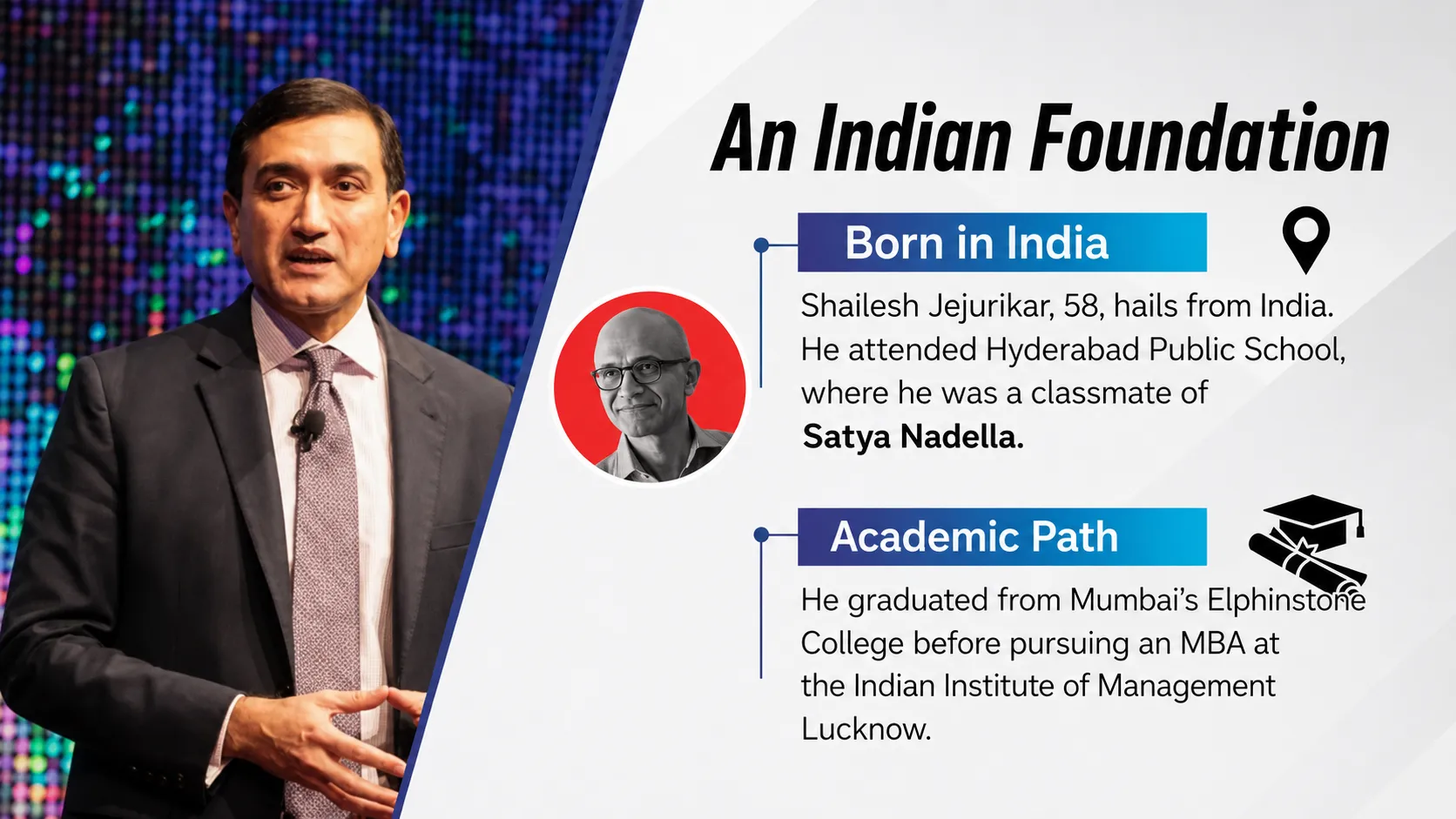
It is worth remembering that Jejurikar's nearly four-decade career at Procter & Gamble began, at some point in the 1980s, with a young professional from Mumbai making the same fundamental decision that has defined the broader Indian diaspora's relationship with corporate America for two generations: leaving India for an opportunity abroad, with no guarantee of where that opportunity would eventually lead. What makes Jejurikar's version of that story distinctive is not the initial decision to emigrate, which countless ambitious young Indian professionals made around the same era, but the decision to stay with a single company through every subsequent stage of that career, betting repeatedly, year after year, that patience would eventually be rewarded rather than seeking the kind of rapid external advancement that became increasingly common, and increasingly celebrated, across corporate America in the decades since his own career began.
That bet has now paid off in about as complete a way as a corporate career can: leadership of one of the largest, most globally recognized consumer companies in the world, a company whose products reach billions of households across virtually every country with functioning retail infrastructure. Whether Jejurikar's particular brand of patient, internally-built leadership becomes more common again in American corporate life, or remains a comparatively rare exception in an era that still tends to prize rapid external hiring and dramatic turnarounds, his own trajectory stands as proof that the older model still works, when a company and an executive both commit to it for long enough, decade after decade, to see it through to its eventual and considerable reward.


