DiasporaStartup9 MIN READ

Indian-American Engineering Legend Sanjay Ghemawat Leaves Google After 27 Years to Co-Found AI Research Startup Discovery Loop

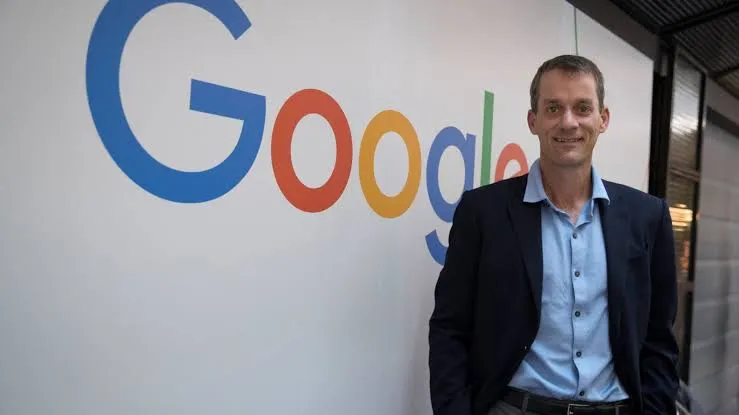
Sanjay Ghemawat, the Indian-American engineer behind Google File System, MapReduce, Bigtable and Spanner, has left Google after 27 years to co-found Discovery Loop with Jeff Dean, Oriol Vinyals and Quoc Le — a new venture backed by Alphabet that aims to automate scientific and engineering research.

By Aravind Kumar · Author6 August 2026New
Indian-American Engineering Legend Sanjay Ghemawat Leaves Google After 27 Years to Co-Found AI Research Startup Discovery Loop

PALO ALTO, CALIFORNIA — For 27 years, Sanjay Ghemawat's name sat quietly behind some of the most consequential engineering in the history of the internet. As a co-author, with Jeff Dean, of the Google File System, MapReduce, Bigtable and Spanner, Ghemawat helped build the technical scaffolding that let Google's search engine — and much of the modern cloud computing industry that followed it — operate at planetary scale. This week, that quiet, decades-long partnership took a public turn: Ghemawat and Dean are leaving Google to co-found Discovery Loop, a new AI startup aimed at automating scientific and engineering research, backed by Alphabet itself as a founding investor.

Google confirmed the departures on Wednesday in a joint memo from CEO Sundar Pichai and DeepMind CEO Demis Hassabis, titled "Next Chapter of Our AI Momentum." Joining Ghemawat and Dean in the new venture are Oriol Vinyals, a vice president of research at Google DeepMind who helped design the company's chatbot technologies, and Quoc Le, a co-founder of Google Brain whose research helped inspire today's generation of AI chatbots. Dean is expected to serve as CEO.

From Distributed Systems Pioneer to AI Founder

Ghemawat, an Indian-American computer scientist born in West Lafayette, Indiana, joined Google in 1999 after working at Digital Equipment Corporation's Systems Research Center, where he first began collaborating with Dean. Their partnership at Google produced some of the field's most cited systems papers: the Google File System (2003), MapReduce (2004), Bigtable (2006) and Spanner (2012), each of which became foundational infrastructure not just for Google but for the broader distributed-computing industry that grew up around cloud platforms like Amazon Web Services and Microsoft Azure. Wired magazine has described Ghemawat as one of the "most important software engineers of the internet age." He was elected to the National Academy of Engineering in 2009 and, together with Dean, received the ACM Prize in Computing in 2012.

What Discovery Loop Aims to Build

Discovery Loop, organized as an independent public benefit corporation, aims to automate the iterative cycle of scientific research — proposing experiments, running them, evaluating results and iterating, potentially thousands of times over. "Imagine a future where a handful of people can conduct scientific research and engineering tasks much more rapidly, and with higher quality, than massive teams of scientists," the company said in describing its mission. At launch, the company plans to focus on automating machine-learning research and engineering itself, before expanding into areas such as hardware design, drug discovery and clean energy, according to reporting by the Wall Street Journal.
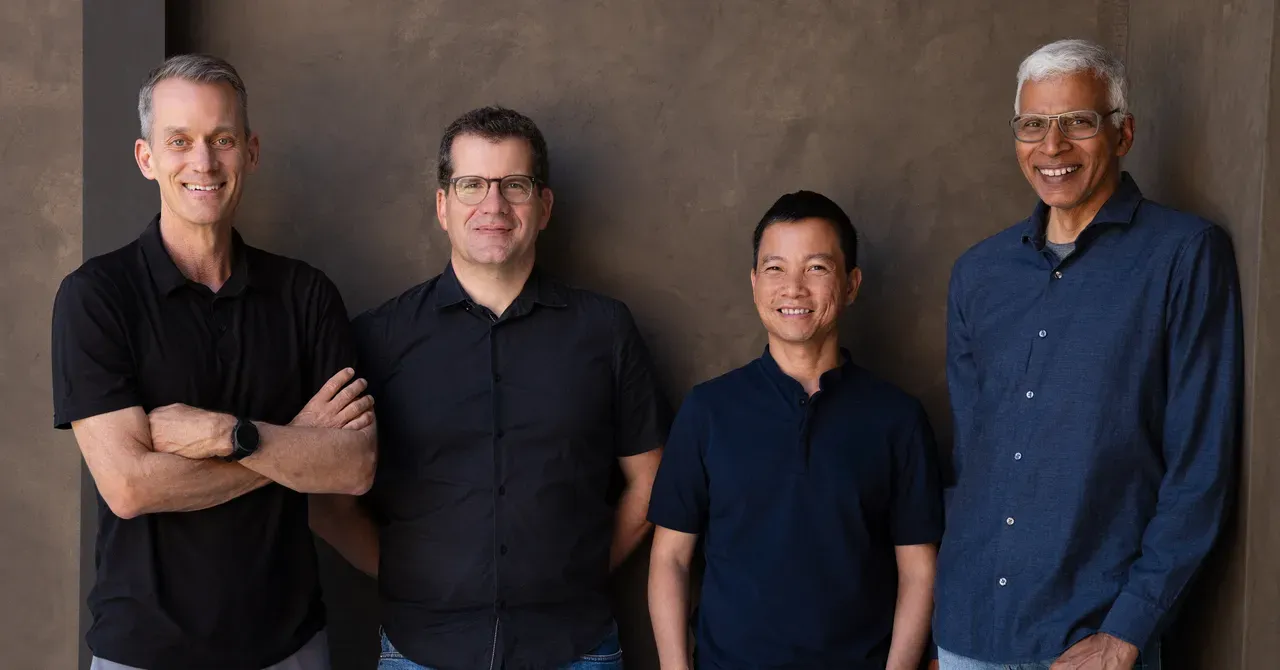
image.png

The new venture is based in Palo Alto and has raised seed funding from Radical Ventures and Khosla Ventures, among other Silicon Valley investors — with Google itself as a founding investor and, notably, as the startup's cloud computing provider for at least its first year. The departing researchers have declined to disclose the size of their funding round, but by most accounts the exit was an amicable one: Pichai wrote that Dean and Ghemawat "helped drive some of the most significant technology transitions" during their tenures, from Google's early search infrastructure to the neural networks underpinning the modern AI era.


Having extreme focus is very powerful. The ultimate form of extreme focus is when it is the only thing that matters — when it aligns with the mission of the company.
Oriol Vinyals, Co-founder, Discovery Loop

A Departure That Reflects a Broader Talent Shift

The Ghemawat-Dean exit lands amid a broader reshuffling of AI talent across Silicon Valley in 2026, as researchers weigh the trade-offs between staying at large, publicly traded technology companies and joining or founding leaner ventures that offer pre-IPO equity — a structural incentive that Alphabet, as an already-public $2 trillion company, cannot easily replicate. Oriol Vinyals, one of Discovery Loop's co-founders, framed the move in terms of focus rather than compensation. "Having extreme focus is very powerful," he said. "The ultimate form of extreme focus is when it is the only thing that matters — when it aligns with the mission of the company."

For Ghemawat specifically, the move also marks a rare public turn for an engineer whose four-decade body of work has largely lived inside academic papers and Google's internal infrastructure rather than in public view. His career path — undergraduate study at Cornell, a master's and doctorate at MIT under advisors Barbara Liskov and Frans Kaashoek, and more than two decades building the backbone of Google's infrastructure — places him among a small group of Indian-origin technologists whose contributions to computing are foundational rather than product-facing, shaping the industry from underneath rather than from a headline product.

Why This Matters

For Google, the departure of two of its most senior technical leaders — one its chief scientist, the other a senior fellow — is a reminder that even the deepest institutional loyalty has limits when a compelling enough idea, and enough capital, is on offer elsewhere. Google's own framing, that it will remain a founding investor and cloud partner in Discovery Loop, suggests the company is betting it can capture some of the upside even as it loses the researchers directly. For the AI industry more broadly, Discovery Loop's ambition — using AI systems to run the scientific method itself, at a pace and scale no human team could match — is one of the more direct bets yet on automating not just individual tasks but the entire discovery process. And for the Indian diaspora in American technology, Ghemawat's move adds a striking new chapter to a career that already ranks among the most consequential, if least publicly known, in the internet's technical history.

• Sanjay Ghemawat and Jeff Dean left Google after 27 years to co-found Discovery Loop, an AI-for-science startup.

• Also joining: Oriol Vinyals (Google DeepMind VP) and Quoc Le (Google Brain co-founder).

• Discovery Loop is a public benefit corporation backed by Alphabet, Radical Ventures and Khosla Ventures.

• Google will serve as a founding investor and cloud computing partner for at least the first year.

• Ghemawat co-created the Google File System, MapReduce, Bigtable and Spanner — foundational internet infrastructure.

• The company's stated goal: automate the full cycle of scientific experimentation, evaluation and iteration.

TagsSanjay GhemawatJeff DeanDiscovery LoopGoogleAlphabetIndian AmericanAI StartupMapReduceBigtableGoogle File SystemSpannerSilicon ValleyDiasporaDeep LearningAI ResearchPublic Benefit CorporationRadical VenturesKhosla VenturesDistributed SystemsPalo Alto

Reader reviews

Sign in to rate and review this article.
Loading reviews…
