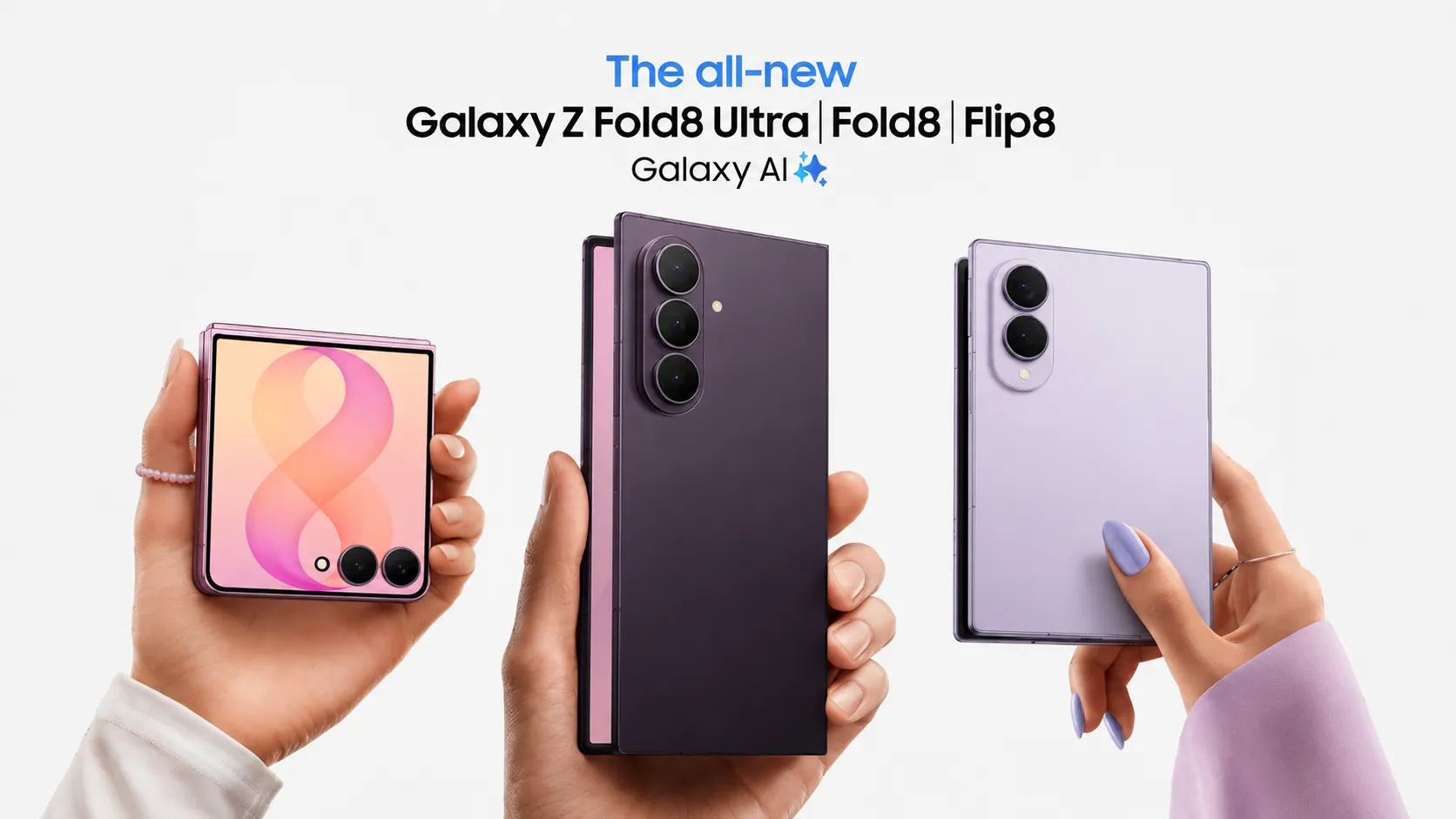
New Delhi: Samsung has rewritten its own foldable playbook. For the first time since it pioneered the modern foldable smartphone category, the company chose not to launch two devices at its Galaxy Unpacked event, but three — the Galaxy Z Fold8, the all-new Galaxy Z Fold8 Ultra, and the Galaxy Z Flip8 — unveiled on Wednesday, July 22, at a keynote that also introduced the company's latest Galaxy Watch lineup. The move answers a question long-time foldable watchers had been asking for several product cycles: what happens when Samsung stops treating the Fold as a single, do-everything device, and instead splits it into a lighter, content-focused phone and a heavier, productivity-focused one?
The Galaxy Z Fold8 Ultra represents the most significant structural change to Samsung's foldable strategy in years, bringing the company's premium 'Ultra' branding to a foldable device for the very first time. Positioned as the spiritual successor to the earlier single-tier Fold line, the Fold8 Ultra is built around an 8-inch main display and, despite its larger screen and expanded feature set, measures just 4.1mm thick when unfolded, weighing 215 grams — figures Samsung describes as its slimmest Fold design to date. The device is aimed squarely at users who want a screen large enough for genuine side-by-side, multi-app productivity workflows.
Sitting alongside it, the standard Galaxy Z Fold8 takes the opposite design philosophy, prioritising portability and everyday media consumption over maximal multitasking real estate. It weighs just 201 grams, making it Samsung's lightest Galaxy Z Fold smartphone yet, and features a 7.6-inch QXGA+ Dynamic AMOLED 2X foldable main display with a 120Hz adaptive refresh rate and peak brightness reaching up to 3,000 nits. Its cover display uses a distinctive 10:16 aspect ratio — tall and narrow — designed to make one-handed scrolling through social feeds and everyday tasks feel natural without needing to unfold the device, while the wider 4:3 main display, once opened, is tuned specifically for movies, e-books and long-form articles rather than dense multitasking layouts.
Under the hood, the Galaxy Z Fold8 is powered by the Snapdragon 8 Elite Gen 5 for Galaxy processor, paired with a 4,800mAh battery that Samsung rates for up to 26 hours of use. The Galaxy Z Fold8 Ultra, meanwhile, houses a larger 5,000mAh battery with 45W fast charging support, a configuration Samsung says is designed to sustain a full day of intensive work, content creation and entertainment while still maintaining the device's notably slim foldable profile. Both Fold8 models also introduce what Samsung calls Flex Titanium technology — a combination of a titanium-alloy film and a titanium plate working together within the foldable display structure to balance slimness, flexibility and long-term durability.
The Galaxy Z Flip8 completes the trio, and arrives as what Samsung is calling its slimmest and lightest Flip smartphone to date, weighing just 180 grams and measuring 6.1mm thick when folded. Rather than chasing productivity or screen real estate, the Flip8 is designed around self-expression and rapid, everyday interactions, built around a redesigned and significantly expanded FlexWindow cover display that now functions as a genuine hub for quick tasks rather than a secondary, glanceable screen. The updated FlexWindow supports full apps, AI-driven insights and voice-activated automation, positioning the cover screen as a central part of the overall user experience rather than an afterthought.
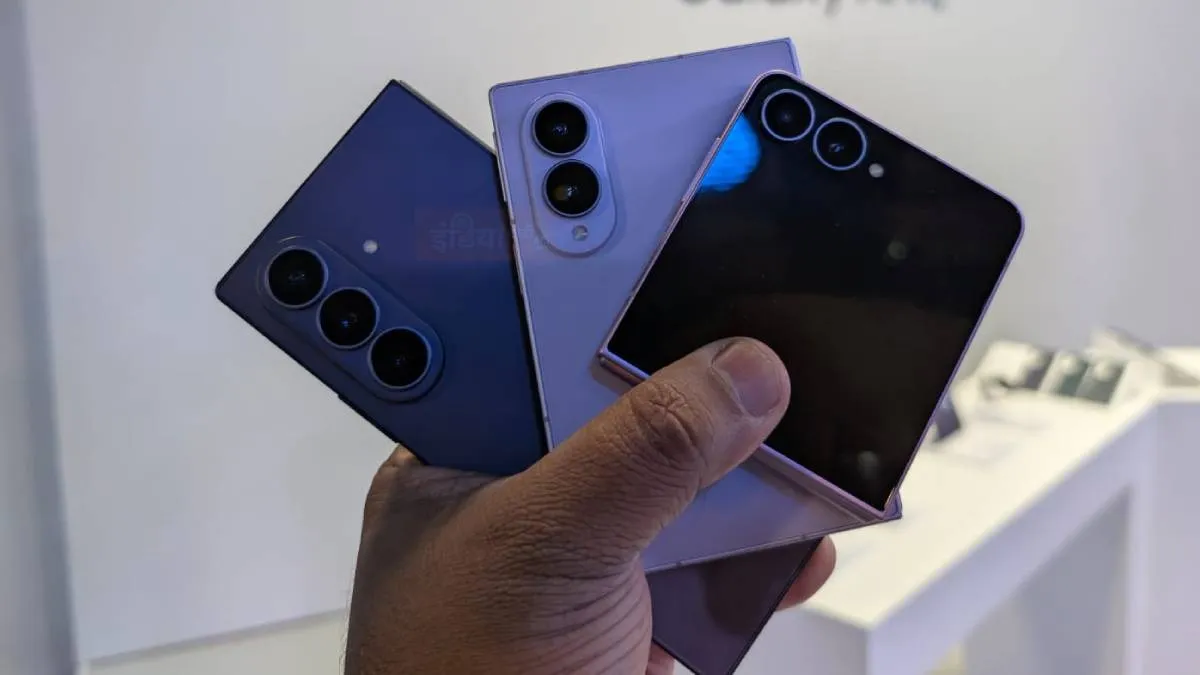
Camera hardware sees meaningful upgrades across the lineup. The Galaxy Z Fold8 Ultra's camera system includes a 200-megapixel main sensor with HDR support, a new 50-megapixel ultra-wide lens, improved low-light performance and support for 8K video recording, alongside a larger battery and improved internal cooling designed to sustain heavier computational workloads without thermal throttling. The standard Galaxy Z Fold8 carries a 50-megapixel main camera paired with a 50-megapixel ultra-wide sensor, plus 10-megapixel cameras on both its inner and outer displays, alongside new computational photography features including dual-capture modes that leverage the device's unique folding form factor. The Galaxy Z Flip8's main camera is built around a 50-megapixel sensor, complemented by the expanded FlexWindow's own camera-adjacent capabilities for selfies and quick content capture.
Artificial intelligence runs through the entire lineup as a unifying thread rather than a bolt-on feature. Across all three devices, Samsung's Galaxy AI suite — which now incorporates Google's Gemini Intelligence — is designed to help users complete everyday tasks in fewer steps, while the company has emphasised transparency, privacy and user control as core design principles governing how that AI processes and acts on personal data. On the Galaxy Z Flip8 specifically, the AI-native FlexWindow is designed to surface relevant information and shortcuts within easy reach without requiring the phone to be unfolded, extending Galaxy AI's reach into the kind of brief, glanceable interactions that make up much of a smartphone's daily usage.
Pricing for the new lineup places it firmly in India's ultra-premium smartphone segment, though reported starting prices have varied somewhat across retail and pre-order channels in the lineup's first hours on sale. Multiple outlets reported the Galaxy Z Fold8 starting at approximately ₹1,64,999 to ₹1,79,999 depending on configuration and colour variant, while the Galaxy Z Fold8 Ultra's base configuration has been reported starting around ₹1,79,999 to ₹1,99,999, rising to approximately ₹2,39,000 for the top-specification 16GB RAM plus 1TB storage variant. The Galaxy Z Flip8, positioned as the more accessible entry point into the new lineup, has been reported starting around ₹1,24,999 for its base 12GB RAM plus 256GB storage configuration, rising to roughly ₹1,44,999 for the higher-storage variant.
All three devices are being made available through Samsung's official website, its network of retail stores, and authorised partner channels, with pre-orders opening immediately following the Unpacked announcement. Buyers placing pre-orders have been offered a range of launch incentives, including a six-month free trial of Google AI Pro — which bundles 5TB of cloud storage alongside expanded AI features — as part of Samsung's push to encourage early adoption of the new lineup ahead of general retail availability.
Samsung has also used the launch to highlight a series of colourway and configuration choices designed to differentiate the three models further. The Galaxy Z Fold8 Ultra is being offered in Graphite, Cream, Violet Shadow and Green Shadow finishes, with the last reserved as an online-exclusive option. The standard Galaxy Z Fold8 comes in Graphite, Cream and Lavender, alongside an online-exclusive Pistachio finish, while the Galaxy Z Flip8 is available in Graphite, Cream and Pink, with an online-exclusive Mint colourway rounding out the range.
On the financing side, Samsung has arranged extended no-cost EMI options running up to 30 months through select partners including Samsung Finance+, TVS Credit, IDFC First Bank and PFL, while other NBFC financing partners cap no-cost EMI tenures at 24 months — a structure clearly designed to soften the up-front cost of what remain, even with financing, some of the most expensive smartphones available in the Indian market today.
Beyond hardware, Samsung has continued to invest in the software experience surrounding its foldables, particularly around cross-platform usability. The company has upgraded its Smart Switch tool to allow iOS users to transfer data wirelessly to a new Galaxy device simply by scanning a QR code, while also adding Quick Share compatibility with Apple's AirDrop protocol — moves aimed at lowering the switching costs for iPhone users who might otherwise be reluctant to consider a foldable alternative.
For India's broader premium smartphone market, the arrival of a three-tier foldable strategy from Samsung marks a notable evolution in how the category is being positioned to consumers. Rather than asking buyers to choose a single Fold model that attempts to serve every use case simultaneously, Samsung is now explicitly segmenting the foldable buyer base into distinct personas — the productivity-focused Ultra buyer, the content-and-portability-focused standard Fold buyer, and the self-expression-focused Flip buyer — a strategy that mirrors, in some respects, how the company has long segmented its non-foldable Galaxy S lineup into standard, Plus and Ultra variants.
Whether this expanded three-device foldable strategy meaningfully accelerates category adoption in price-sensitive India, where foldables still represent a small fraction of overall smartphone sales despite years of steady growth, will become clearer over the coming quarters as sales data from this launch window begins to filter through. For now, the sheer scale and specificity of Wednesday's Unpacked event — three distinct foldables, each engineered around a clearly differentiated use case — signals that Samsung views the foldable form factor not as a passing premium novelty, but as a durable, segmentable product category worth the same kind of tiered strategy the company has long applied to its flagship non-folding devices.
Software longevity forms another important pillar of Samsung's pitch to prospective buyers across the new lineup. The company has continued to extend its commitment to long-term software support on its premium devices, with the new Fold8 and Flip8 generation reportedly carrying seven years of software support commitments spanning both operating system updates and ongoing security patches — a duration that meaningfully exceeds typical smartphone replacement cycles and is clearly positioned as a differentiator against rival foldable offerings from competitors whose software support commitments have historically been shorter and less consistently communicated to consumers.
The launch also arrives at a moment of intensifying competition within India's still-nascent but rapidly growing foldable smartphone segment. Domestic and international rivals alike have been steadily expanding their own foldable offerings across multiple price points in recent product cycles, meaning Samsung's decision to split its flagship Fold line into two distinct tiers can also be read as a defensive move designed to cover a wider span of the premium price ladder simultaneously, rather than ceding either the ultra-premium productivity segment or the more accessible content-and-portability segment to a rival with a more precisely targeted single offering.
Retail and e-commerce partners have moved quickly to support the launch with a broad range of exchange offers, bank card cashback promotions and bundled accessory deals, reflecting the scale of marketing investment Samsung typically commits to its flagship Unpacked launches in India, historically one of the company's largest and most strategically important global markets for premium smartphones given both the sheer size of the domestic consumer base and India's growing significance as a manufacturing and export hub for Samsung's broader global device production.
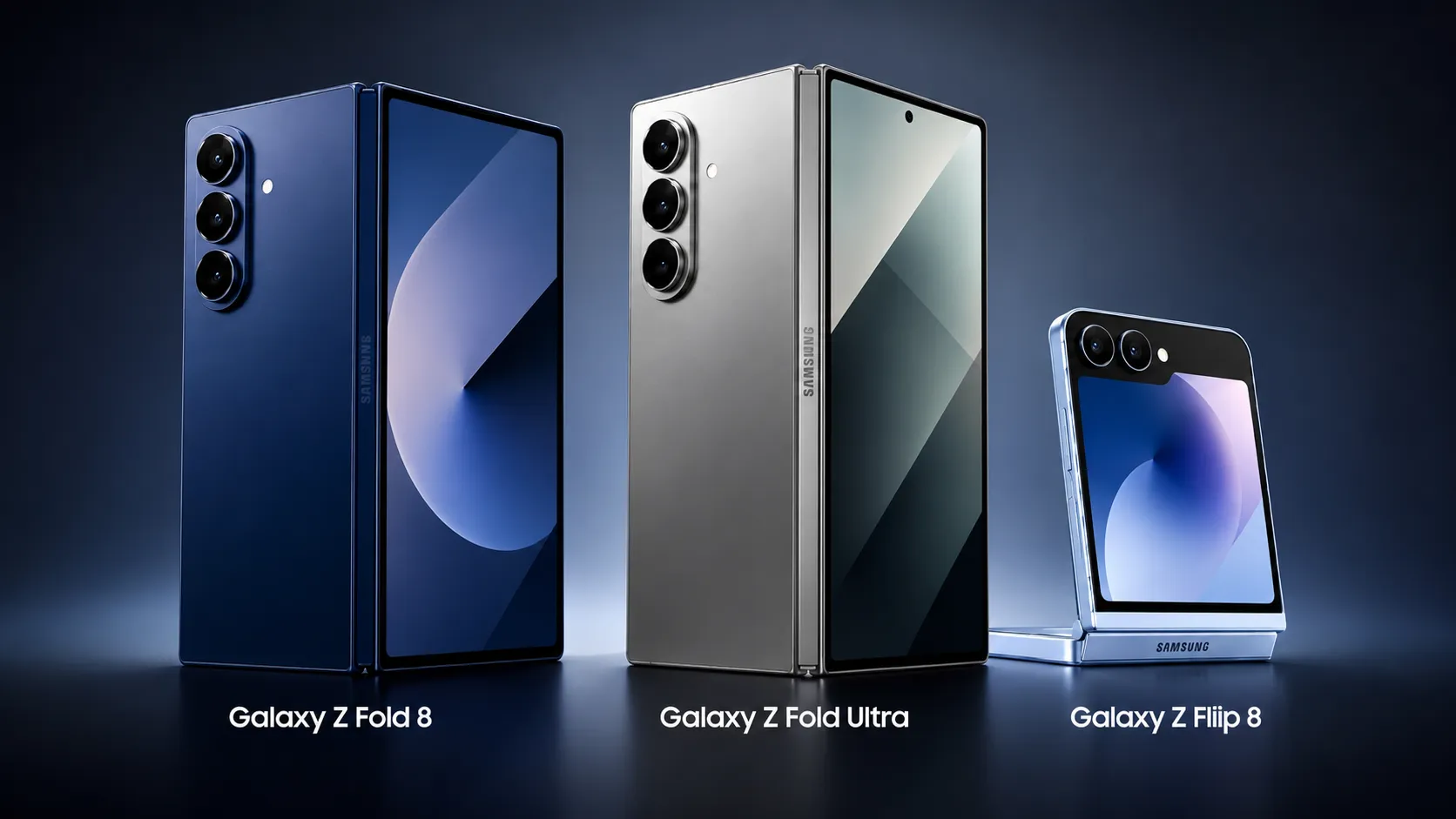
Early hands-on impressions from Indian technology reviewers who attended the Unpacked event or received review units ahead of the formal India launch have generally highlighted the Fold8 Ultra's productivity-oriented multitasking capabilities and the Flip8's substantially expanded FlexWindow functionality as the two most consequential upgrades within the new lineup, while also noting that the segmented three-device approach does introduce a genuinely new layer of purchase-decision complexity for consumers who, in previous product generations, faced a comparatively simpler binary choice between a single Fold model and a single Flip model.
For Samsung's India business specifically, the foldable category has increasingly come to serve as a proof point of the company's broader premiumisation strategy within the domestic smartphone market — a deliberate, multi-year push to grow the share of its India revenue derived from higher-margin flagship and near-flagship devices, even as the overall Indian smartphone market remains dominated in unit volume terms by considerably more affordable devices from a wide range of domestic and international competitors.
Trade-in and upgrade programmes have also been positioned prominently as part of the launch, with Samsung and its retail partners offering enhanced exchange valuations for existing smartphones, including rival brand devices, as a way of lowering the effective entry price for buyers considering a first foldable purchase. Combined with the extended no-cost EMI tenures already on offer, the overall financing and trade-in package reflects a clear strategic intent to widen the realistic buyer pool for the new lineup beyond Samsung's existing base of foldable early adopters.
Display durability, long a point of consumer scepticism around foldable devices generally, has also received renewed attention in Samsung's marketing around this launch, with the company emphasising independent durability testing results and an extended track record across seven generations of foldable hinge engineering as reassurance for buyers who might otherwise hesitate over the perceived fragility of a folding screen relative to a conventional glass slab display.


