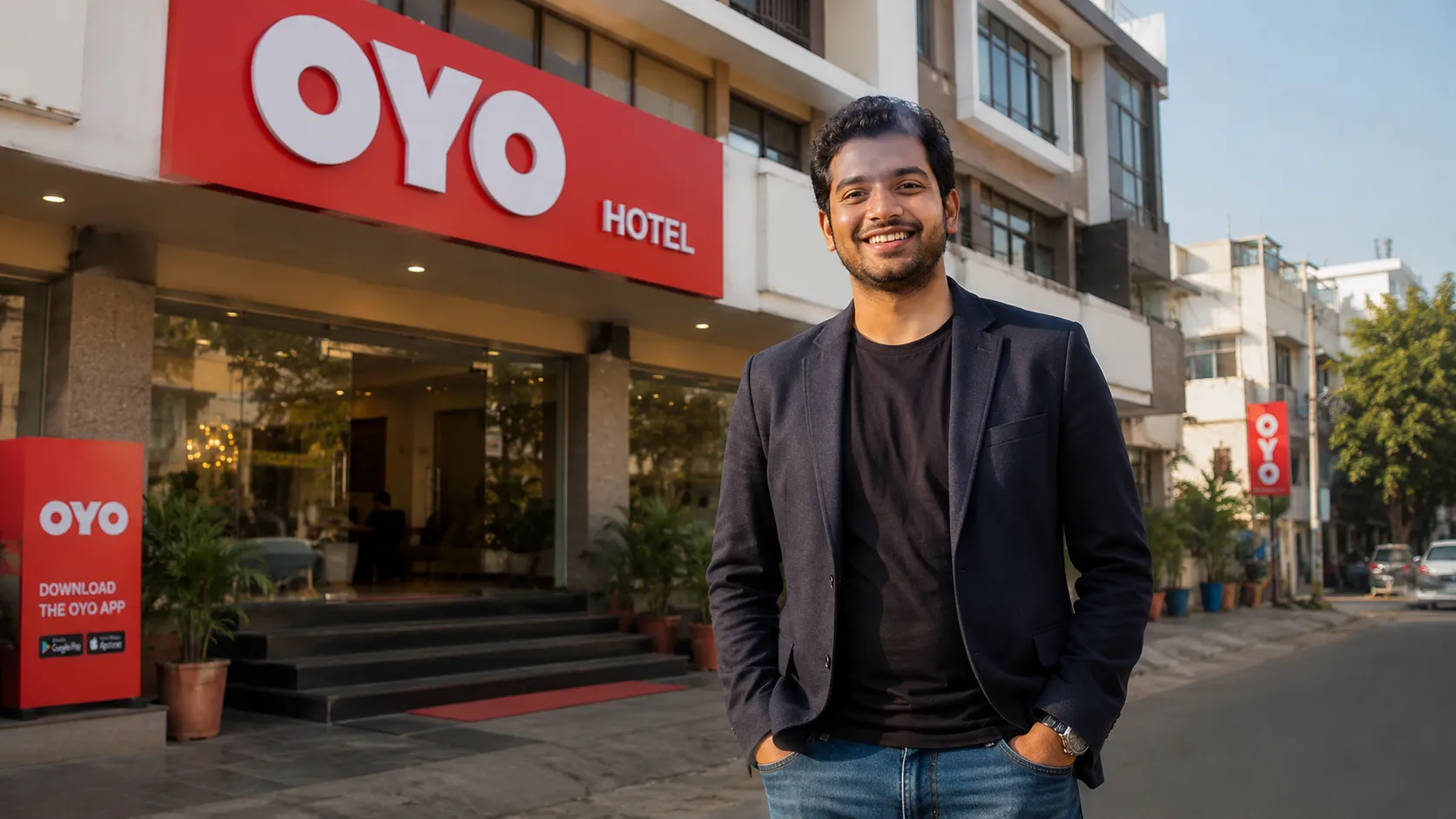
Ritesh Agarwal — The Teenager Who Slept on a Friend’s Bed and Built a $9 Billion Hotel Chain
The Night That Changed Everything
In 2010, Ritesh Agarwal was a 17-year-old from Rayagada, Odisha, a small town with no big hotels or startup culture. He had saved ₹20,000 from selling SIM cards and doing odd jobs. He took a train to Delhi to attend a college event. When he arrived, he realized he couldn’t afford any decent hotel. The cheap ones were dirty, unsafe, and unreliable. A friend offered him a corner of his bed in a hostel dorm.
That night, lying on a thin mattress, Ritesh didn’t feel sorry for himself. He felt opportunity.
He thought: “If I, a middle-class kid, can’t find a good budget hotel, there are millions like me. Why isn’t there a brand that guarantees a clean room, AC, Wi-Fi, and breakfast for a predictable price?”
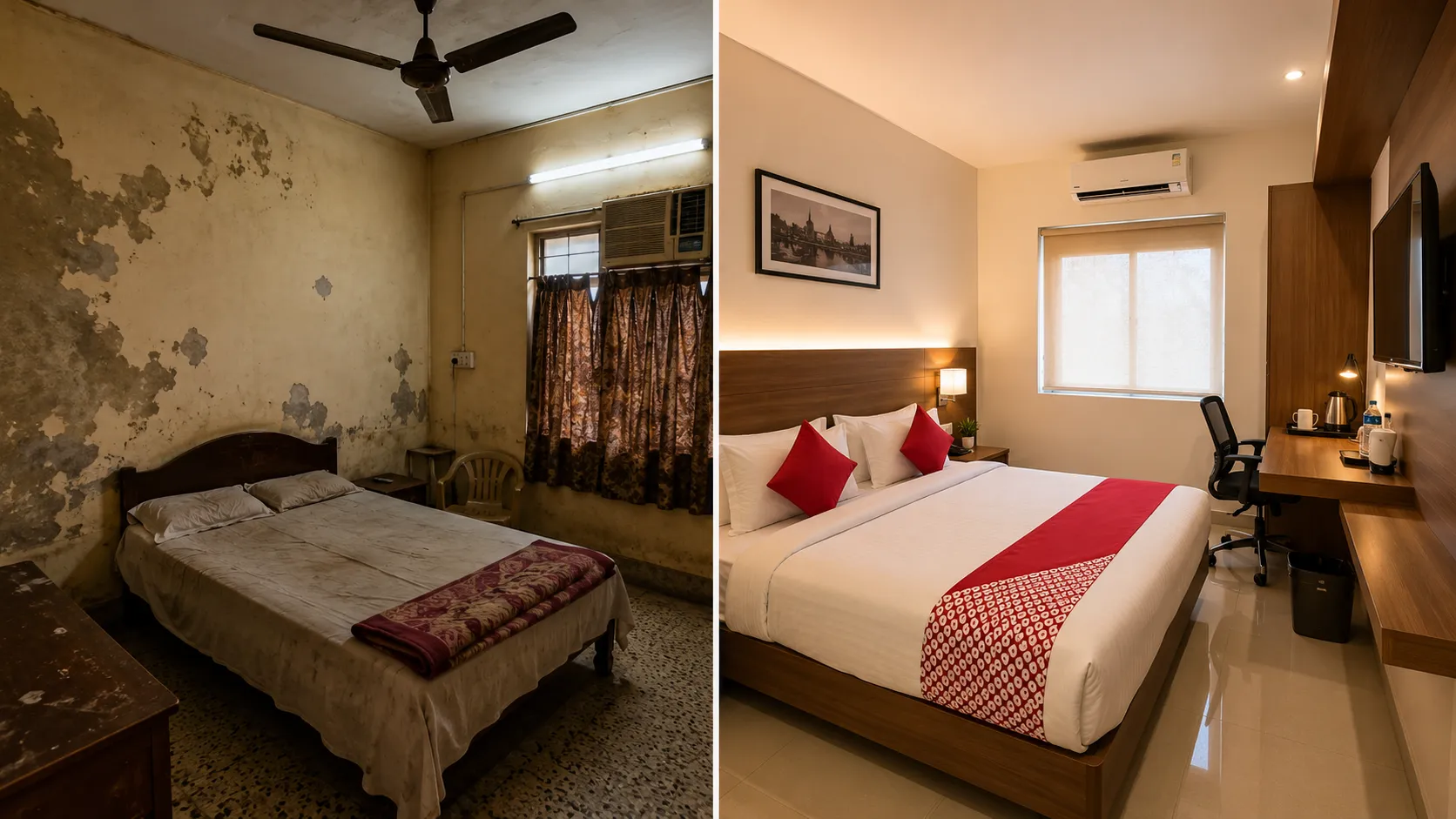
That question became OYO – short for “On Your Own.” But before OYO, Ritesh tried a different startup: a college event discovery platform called Oravel Stays. It failed. He learned that discovery alone wasn’t enough; you had to control the experience. So he pivoted to partnering with budget hotels, standardizing them, and selling their rooms online with a quality guarantee.
The Dropout and the Thiel Fellowship
Ritesh was studying at the Indian School of Business and Finance (ISBF) in Delhi but found classes boring compared to building a business. He applied for the Thiel Fellowship – a programme started by PayPal co-founder Peter Thiel that gives $100,000 to young entrepreneurs who drop out of college.
In 2013, Ritesh became one of the first Indians to win the Thiel Fellowship. He dropped out, moved to a small office in Gurugram, and built OYO’s first team. The early days were chaotic. He personally visited hotels, convinced owners to repaint rooms, install new bed sheets, and follow a standard checklist. In exchange, OYO guaranteed them bookings through its app.
By 2015, OYO had 1,000 hotels and was raising money from marquee investors like Sequoia Capital, SoftBank, and Lightspeed. SoftBank’s Masayoshi Son famously invested $1 billion, believing OYO could become the “world’s largest hotel chain.”
The Hyper-Growth Years and the Crash
Between 2016 and 2019, OYO expanded like wildfire. It went from India to China, the US, the UK, Europe, and Southeast Asia. It acquired European vacation rental company @Leisure and launched OYO Vacation Homes. It also experimented with OYO Townhouse (premium budget), OYO Life (co-living), and OYO Workspaces.
At its peak in 2019, OYO had over 43,000 hotels and 1 million rooms globally, was valued at $9.5 billion, and Ritesh became Asia’s youngest self-made billionaire at 25.
But cracks appeared. In China, the expansion was too fast – OYO lost billions because of low occupancy and high operating costs. In India, hotel partners complained about unpaid dues, opaque contracts, and forced discounting. The company burned through $2 billion in cash.
Then COVID-19 hit. Travel stopped overnight. OYO’s revenue collapsed by 60%. It laid off 5,000+ employees globally, shut down operations in many countries, and faced lawsuits from partners. Ritesh later admitted that he had grown the company “irresponsibly fast.”
The Pivot to Profitability
From 2021 onwards, Ritesh focused on one thing: unit economics. He shut down unprofitable markets (China, most of Europe), renegotiated contracts with hotel partners, and raised fresh debt at a much lower valuation ($2.5 billion in 2023). He also changed OYO’s model from “guaranteed booking” to “commission-only,” reducing the financial risk on OYO.
By 2025, OYO had turned profitable. It had 18,000 hotels (down from 43,000) but each was profitable. The company filed for an IPO in 2024, though it’s still waiting for a favorable market window.
Ritesh’s story is no longer about being the youngest billionaire. It’s about surviving your own ambition.
Leadership Philosophy: Audacity with Accountability
Ritesh’s leadership has evolved. In the early years, he was aggressive, demanding, and micromanaged everything. Now he delegates and listens more. He told Forbes: “I learned that growth without profitability is just burning cash. Now I ask every manager: ‘How will this unit make money?’ before approving any expansion.”
He is also famous for sleeping in OYO rooms personally to test quality. He still carries a small suitcase and visits hotels unannounced.
Challenges and Critiques
Partner disputes: Thousands of hotel owners accused OYO of unfair contracts and payment delays. Ritesh settled many cases but the damage to trust took years to repair.
Governance concerns: SoftBank’s large stake led to questions about founder control. Ritesh bought back shares to increase his ownership.
IPO delay: The market turned against loss-making tech IPOs. OYO’s valuation dropped from $9.5B to under $3B, making it a cautionary tale for hyper-funded startups.
OYO’s Global Hotel Inventory (2015–2025)
Hotel inventory rose sharply before COVID, then declined as OYO moved toward profitable consolidation.
year
hotels
2015
1,000
2018
10,000
2019
43,000
2021
25,000
2025
18,000


