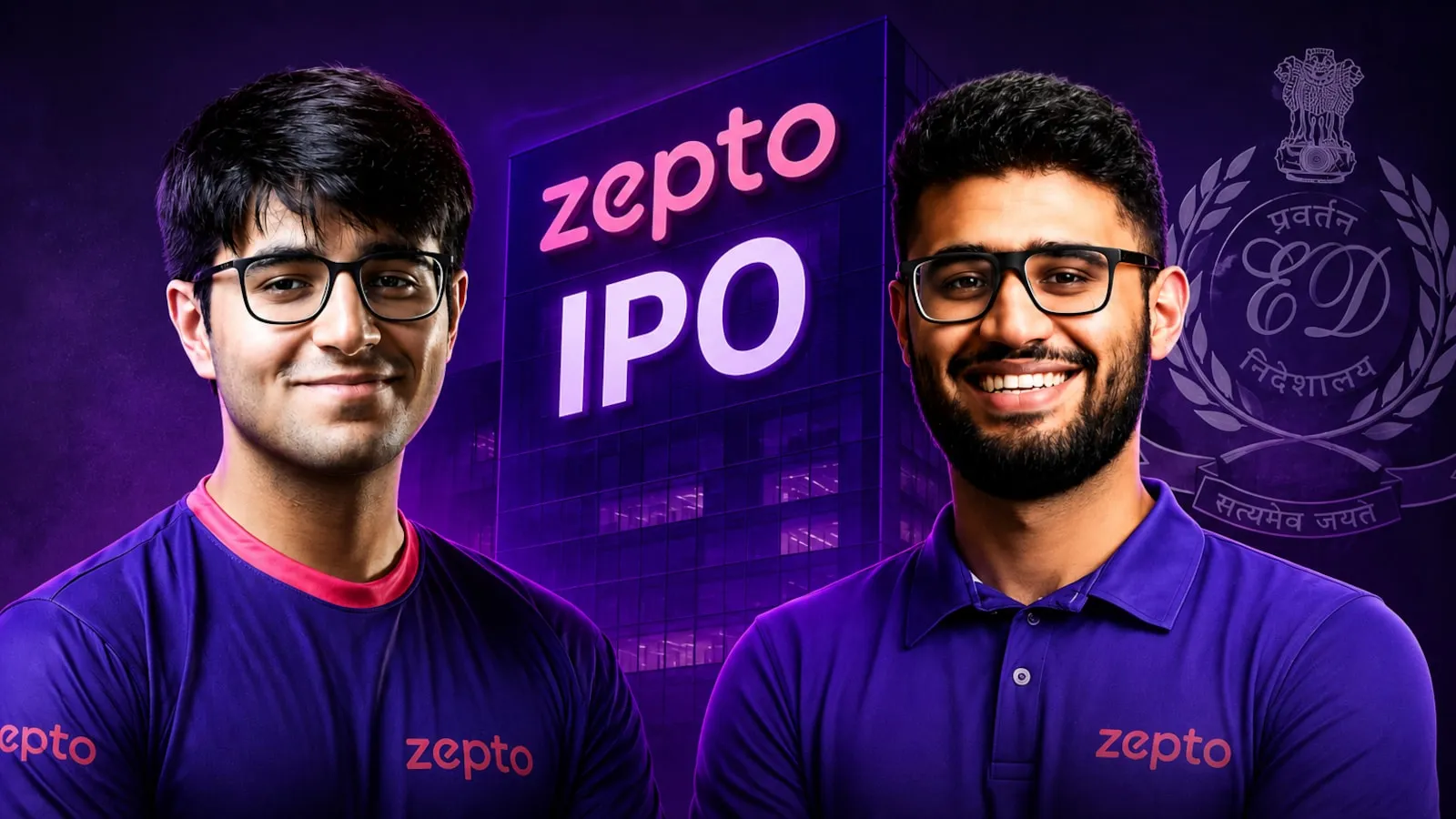
What happens when a company doubles its revenue in a single year—but loses ₹5,905 crore doing it? What happens when it processes 64 crore orders, operates 1,139 dark stores, and yet still warns investors that profitability is nowhere in sight? That's the paradox at the heart of Zepto's updated IPO filing. The company that defined India's 10-minute delivery revolution is now asking public market investors to bet on a future it can't guarantee. And the numbers it just disclosed are nothing short of breathtaking—for better and for worse.
On June 8, 2026, Zepto filed its updated draft red herring prospectus (UDRHP) with the Securities and Exchange Board of India (SEBI), setting the stage for what is expected to be one of the largest new-age technology listings in India this year. The filing, which came weeks after SEBI's approval in May 2026, reveals a company that has scaled at breakneck speed—but at a cost that will give even the most optimistic investors pause.
The Numbers That Define Zepto
Let's start with the headline figures. Zepto's revenue from operations more than doubled to ₹22,623.58 crore in FY26, up from ₹11,109.94 crore in FY25 and ₹4,454.5 crore in FY24. That's a compound annual growth rate of approximately 119.5% between FY24 and FY26. In the fourth quarter alone, the company reported a 75% year-on-year jump in consolidated revenue to ₹7,498 crore, while net loss narrowed to ₹1,539 crore from ₹1,832 crore a year earlier.
But the revenue story is only half the picture. Net loss widened to ₹5,905.19 crore in FY26, up 26% from ₹4,699.71 crore in FY25. Total expenses surged to ₹29,026.7 crore, with the procurement of traded goods forming the largest cost component. The company also reported a negative free cash flow of ₹4,329.54 crore in FY26, though this was an improvement from ₹5,332.48 crore in the previous fiscal.
The IPO Structure: ₹8,010 Crore Fresh Issue and a Massive OFS
The proposed IPO consists of two parts:
Fresh Issue: Up to 1,60,20,000 equity shares of face value ₹5 each, aggregating up to ₹8,010 crore.
Offer for Sale (OFS) : Up to 11.35 crore equity shares by existing shareholders, including Nexus Ventures VI Holdings, Nexus Ventures VII Holdings, Contrary ZEP Holdings, Razor Ventures Zepto, Kaiser Foundation Hospitals, and Kaiser Permanente Group Trust. Nexus entities account for the largest portion of the secondary share sale.
The total IPO size, including the OFS, is expected to be between ₹11,000 crore and ₹12,000 crore. The company has also kept open the option for a pre-IPO placement of up to ₹1,602 crore, which would reduce the fresh issue size proportionately.
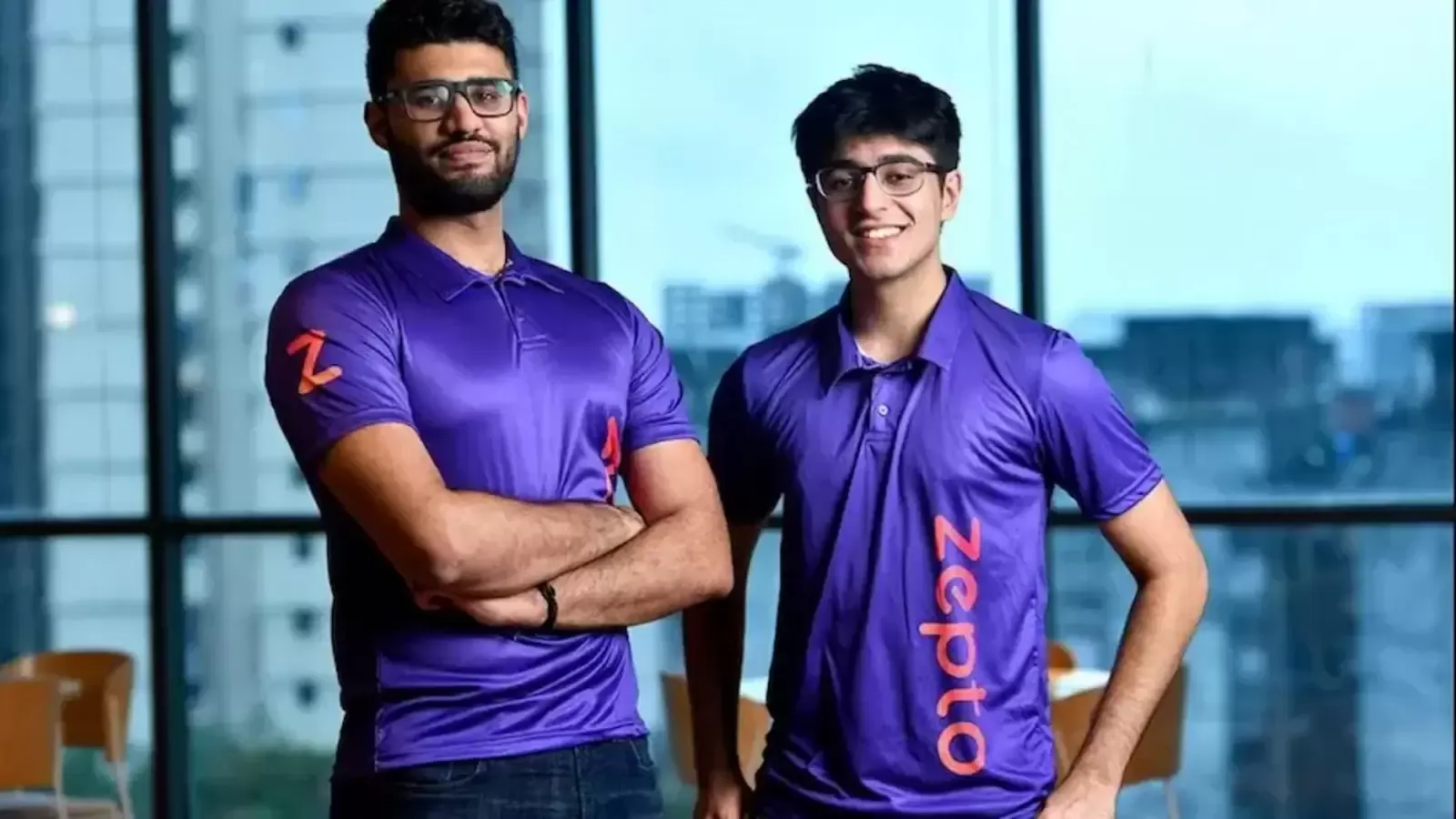
Crucially, founders Aadit Palicha and Kaivalya Vohra are not selling any shares in the IPO. This is a significant signal of their long-term commitment to the company they built from their Stanford dorm room.
How Zepto Will Spend the Money
The company has provided a detailed breakdown of how it plans to use the ₹8,010 crore fresh issue proceeds:
₹1,628.98 crore for setting up new dark stores—nearly 1,900 new stores by FY30
₹1,734.94 crore for lease rentals of existing dark stores over the next four financial years
₹1,324.78 crore for technology and cloud infrastructure
₹520 crore for marketing and business promotion through subsidiary Zepto Marketplace Pvt Ltd
Remaining funds for potential acquisitions, strategic investments, and general corporate purposes
The company operated 1,139 dark stores across 66 cities as of March 31, 2026, up nearly 3.5x from 337 locations across 11 cities in March 2024. The planned expansion to nearly 1,900 new stores represents a massive bet on the continued growth of India's quick-commerce market.
The Operational Metrics: Scale Beyond Imagination
Beyond the financials, the UDRHP reveals operational metrics that underscore Zepto's dominance in the quick-commerce space:
64 crore orders processed in FY26, translating to an average of more than 17 lakh orders daily
The fourth quarter alone accounted for 21 crore orders, or 23.3 lakh orders a day
Daily orders increased from 1.46 million in Q2 FY26 to 2.33 million in Q4 FY26
Orders per store per day rose from 1,433 to 2,140 over the same period
Q4 FY26 Net Order Value stood at ₹8,134 crore
The company had nearly 4.8 crore annual transacting users
Advertising revenue for FY26 was ₹1,636 crore, up 151% from ₹651 crore in the previous year
On unit economics, the company showed meaningful improvement: cost per order declined from ₹181 in Q2 FY26 to ₹128 in Q4 FY26. Adjusted EBITDA loss per order fell from ₹110 to ₹59, while free cash flow loss per order improved from ₹103 to ₹42.
The Market Share Battle
Zepto's filing also provides a rare glimpse into the competitive dynamics of India's quick-commerce market. The company held approximately 29% market share, behind Blinkit at 46%. However, Zepto's order share among scaled quick-commerce players increased from 26% to 35% between FY24 and FY26, indicating it is gaining ground on its rivals. The company also surpassed Instamart in both net order value (₹7,591 crore) and order volumes (210 million) during the March quarter.
The Risks: A Candid Warning to Investors
Perhaps the most striking aspect of Zepto's UDRHP is the candor with which it addresses its risks. In the prospectus, the company explicitly warns investors that there is "no assurance growth will translate into profitability".
"If we are unable to generate sufficient revenue growth, we may continue to incur losses. Further, we may not be able to sustain our historical growth rates, and our historical performance may not be indicative of our future growth or financial results."
The company acknowledges that it has made losses and had negative cash flows from operating activities since its inception in July 2021. It also flags its limited operating history as a risk factor, noting that investors have relatively little historical data to assess the long-term sustainability of the business.
Beyond financial risks, the filing also reveals that Zepto's founders were summoned by the Enforcement Directorate (ED) on April 8, 2026, seeking information on foreign and overseas investments, audited financial statements since FY21, shareholding patterns, loans and guarantees, income tax returns, and bank account details.
The company also acknowledges its classification as a foreign-owned and controlled company (FOCC) , operating within the framework applicable to foreign-owned e-commerce companies.
The Road Ahead: A Defining Moment for Quick Commerce
Zepto's IPO will mark a significant milestone for India's quick-commerce sector. While the parent firms of rivals Blinkit (Zomato) and Swiggy Instamart are already listed, Zepto will be the first standalone quick-commerce company to list on Indian stock exchanges.
The IPO is being managed by a consortium of book-running lead managers, including Motilal Oswal Investment Advisors, Morgan Stanley India, Goldman Sachs (India) Securities, JM Financial, IIFL Capital Services, HSBC Securities and Capital Markets (India), and Axis Capital.
The company is targeting a stock market debut before July 31, 2026.
The Verdict
Zepto's updated IPO filing is a document of extremes. Revenue has doubled. Losses have widened. Scale is unprecedented. Profitability is elusive. The founders are staying in. Early investors are cashing out. The company is growing faster than almost any consumer internet business in Indian history—and burning cash at a rate that would make even the most aggressive venture capitalists wince.
For public market investors, the question is simple: Is Zepto the next Zomato—a company that eventually found its path to profitability after a bumpy public listing—or is it a cautionary tale of growth at any cost?
The answer will determine not just Zepto's fate, but the future of India's entire quick-commerce sector.


