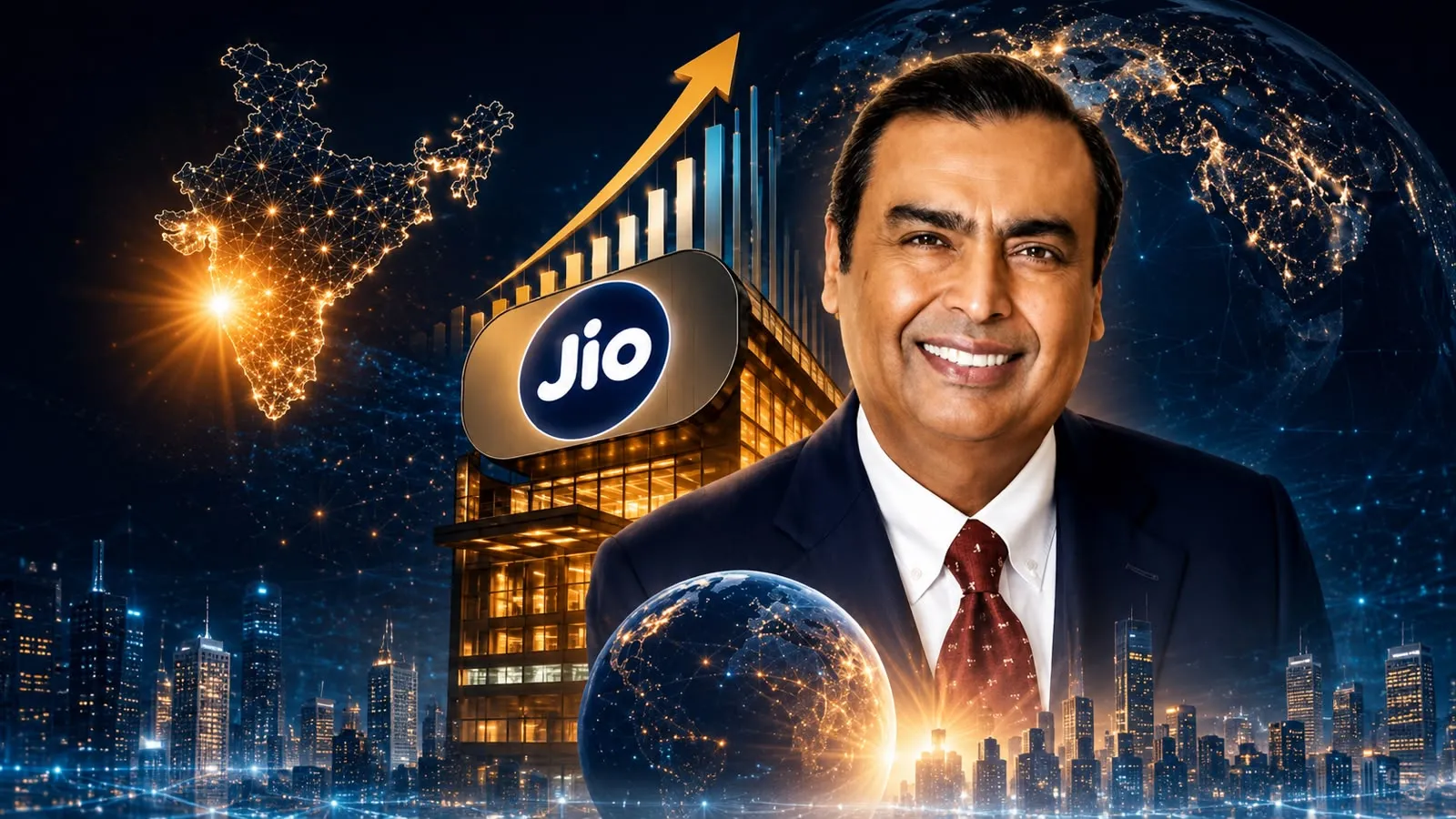
Introduction: A Historic Moment for Indian Capital Markets
June 25, 2026 marks a pivotal date in Indian corporate history. After years of anticipation, regulatory groundwork, and strategic manoeuvring, India's primary market is on the verge of witnessing two of the largest initial public offerings the country has ever seen. Reliance Jio Platforms Limited and the National Stock Exchange of India (NSE) are both poised to file their Draft Red Herring Prospectus (DRHP) papers with the Securities and Exchange Board of India (SEBI), potentially setting the stage for a combined fundraise of over ₹60,000 crore.
The twin listings, each monumental in their own right, come at a time when India's IPO market has been navigating a subdued first half of 2026. Geopolitical uncertainty, foreign institutional investor (FII) outflows, and rupee depreciation had dampened sentiment at Dalal Street. Yet, the mere announcement of these mega offerings has already shifted the narrative, with experts and fund managers describing the moment as a watershed for Indian capitalism.
For TheImpactfulGlobalIndian.com and its global readership of Indian business professionals, entrepreneurs, and investors, this story carries enormous significance. These are not just IPOs — they are national events that will determine how India's digital and financial infrastructure is perceived by global investors for the next decade.
Reliance Jio: The Most Anticipated Tech IPO in Indian History
Reliance Jio Platforms Limited, the digital and telecommunications arm of Mukesh Ambani's Reliance Industries, has become the single most talked-about IPO in India's history. With over 524.4 million subscribers as of March 31, 2026, Jio is not merely India's largest telecom operator — it is a digital ecosystem that touches the lives of nearly half a billion Indians every day.
The IPO, expected to raise between ₹32,000 crore and ₹38,000 crore through a 100% fresh issue, will channel every rupee raised directly into the business. Reliance abandoned an earlier Offer For Sale (OFS) structure following a valuation disagreement with minority shareholders, choosing instead to list through a pure fresh issue to ensure all capital is deployed into Jio's next phase of growth: AI infrastructure, 5G network densification, JioAirFiber expansion, and debt repayment.
Jio's credentials are staggering. It holds a 49.95% share of India's wireless broadband market. It has deployed over one million 5G cells in what stands as the fastest 5G rollout globally outside China. Its JioAirFiber service has already scaled to 12.9 million subscribers, and its digital platform MyJio records 215.9 million average monthly active users. These metrics are not just impressive for India — they would be benchmark numbers for any technology company globally.
Analysts at Elara Capital have valued Jio Infocomm at ₹12–13 lakh crore based on 13x FY28E EV/EBITDA, projecting 11% revenue CAGR and 14% EBITDA CAGR over the FY26–29 period. At that valuation, Jio would enter India's top three most valuable listed companies from day one of trading.
Akash Mukesh Ambani, who was formally appointed Managing Director of Jio Platforms in May 2026, will lead the company into its listed chapter. The next generation of the Ambani family's stewardship begins at the most consequential moment in Jio's short but transformative decade-long existence.
NSE: A Decade-Long Wait Nears Its End
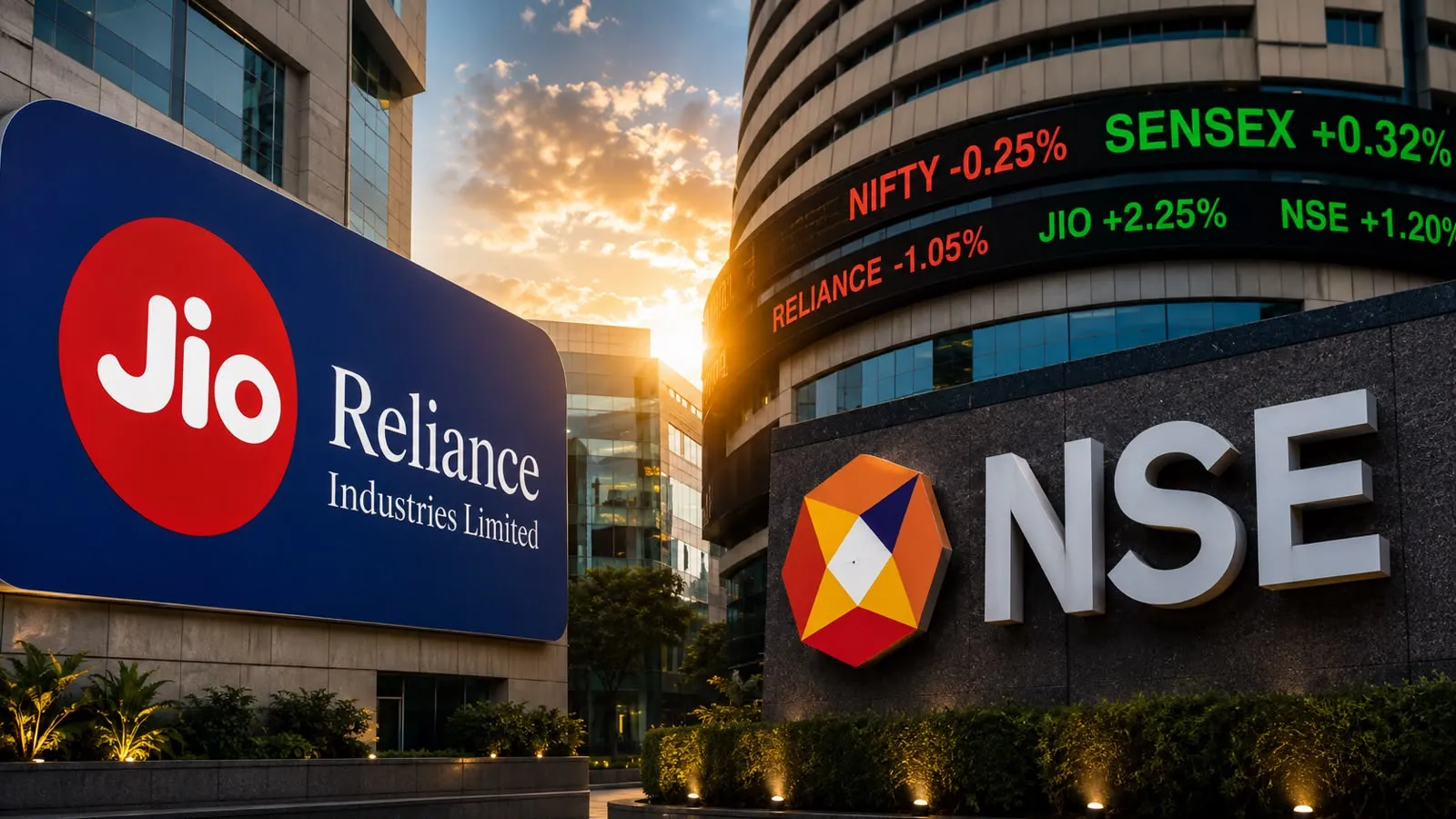
Alongside Jio's blockbuster listing stands the equally momentous IPO of the National Stock Exchange of India — the exchange that processes the majority of India's equity and derivatives volumes and serves as the heartbeat of the Indian financial system. NSE's public debut has been delayed for over a decade due to regulatory hurdles, governance controversies, and protracted SEBI proceedings. That wait is finally drawing to a close.
NSE has filed draft IPO papers seeking to raise approximately ₹25,000–30,000 crore. Market estimates value the exchange at around ₹5 trillion, making it one of the most valuable financial market infrastructure companies globally. NSE's revenue model — transaction fees, listing charges, data services, and indices — provides a highly visible and recurring earnings stream that fund managers find exceptionally attractive.
The listing of NSE will also create a meta-investment opportunity: investors will be able to own a stake in the very platform through which they buy other Indian stocks. This philosophical dimension has captured the imagination of retail and institutional investors alike.
Market Impact: Opportunity and Caution
The combined ₹60,000+ crore fundraise will represent one of the single largest capital absorption events in Dalal Street history. Fund managers are already trimming existing portfolios to free up allocation for these anchor investments. The SME IPO segment, which raised only ₹21,000 crore in the first five months of FY27 — well below the pace of the prior two years — could also benefit from the halo effect of two trusted, fundamentally strong listings.
Narendra Solanki, Head of Fundamental Research at Anand Rathi Share and Stock Brokers, noted that the two issues could add nearly 2–3 times the total first-half 2026 fundraise when they arrive. Experts believe the success of Jio and NSE will open the floodgates for a pipeline of over 150–200 companies reportedly preparing for their own IPOs, including Zepto, OYO, SBI Mutual Fund, Hero FinCorp, and Acko.
However, caution is warranted. The market must absorb this capital while continuing to digest earnings results, global macro pressures, and ongoing geopolitical tensions affecting energy and supply chains. Sensible valuations will be the key factor determining whether these IPOs mark the beginning of a sustained primary market bull run or a brief peak before a correction.
For global Indian investors watching from the diaspora in the United States, United Kingdom, Singapore, the Gulf, and beyond, the Jio and NSE IPOs represent a rare direct opportunity to participate in India's digital and financial infrastructure story — the very story that has defined the last decade of the country's economic evolution.
TheImpactfulGlobalIndian.com will continue to provide comprehensive, real-time coverage as these landmark IPOs move from DRHP filing through to allotment, listing, and beyond.
What This Means for the Global Indian Community
For Non-Resident Indians (NRIs) and People of Indian Origin (PIOs) across the globe, the Jio and NSE IPOs are more than investment opportunities — they are a chance to be part of India's next chapter of economic transformation. Both companies are institutions. Jio changed how India communicates. NSE changed how India invests. Owning a piece of both, even at IPO stage, is a statement of confidence in the India growth story.
As Mukesh Ambani himself noted at Reliance's 49th AGM earlier this month, Jio is now much more than a telecom company. It is a platform — for AI, for digital commerce, for entertainment, for healthcare, for education. The IPO is the doorway through which global capital will enter and stake its claim in that platform.
The road ahead is exciting, complex, and high-stakes. June 25, 2026 may well be remembered as the day India's primary market turned the corner — propelled by two giants, each built differently, each irreplaceable in the fabric of modern India.


