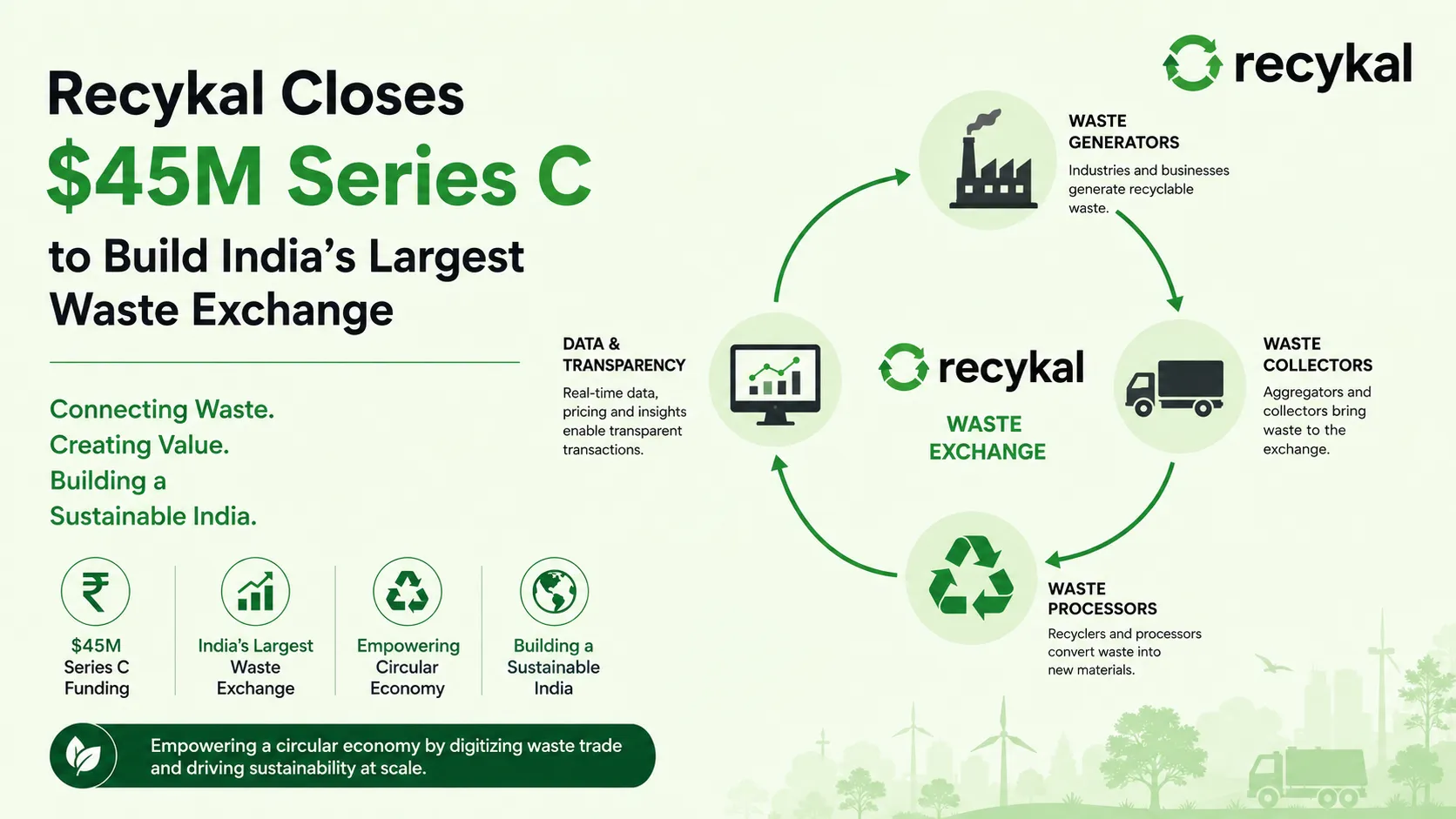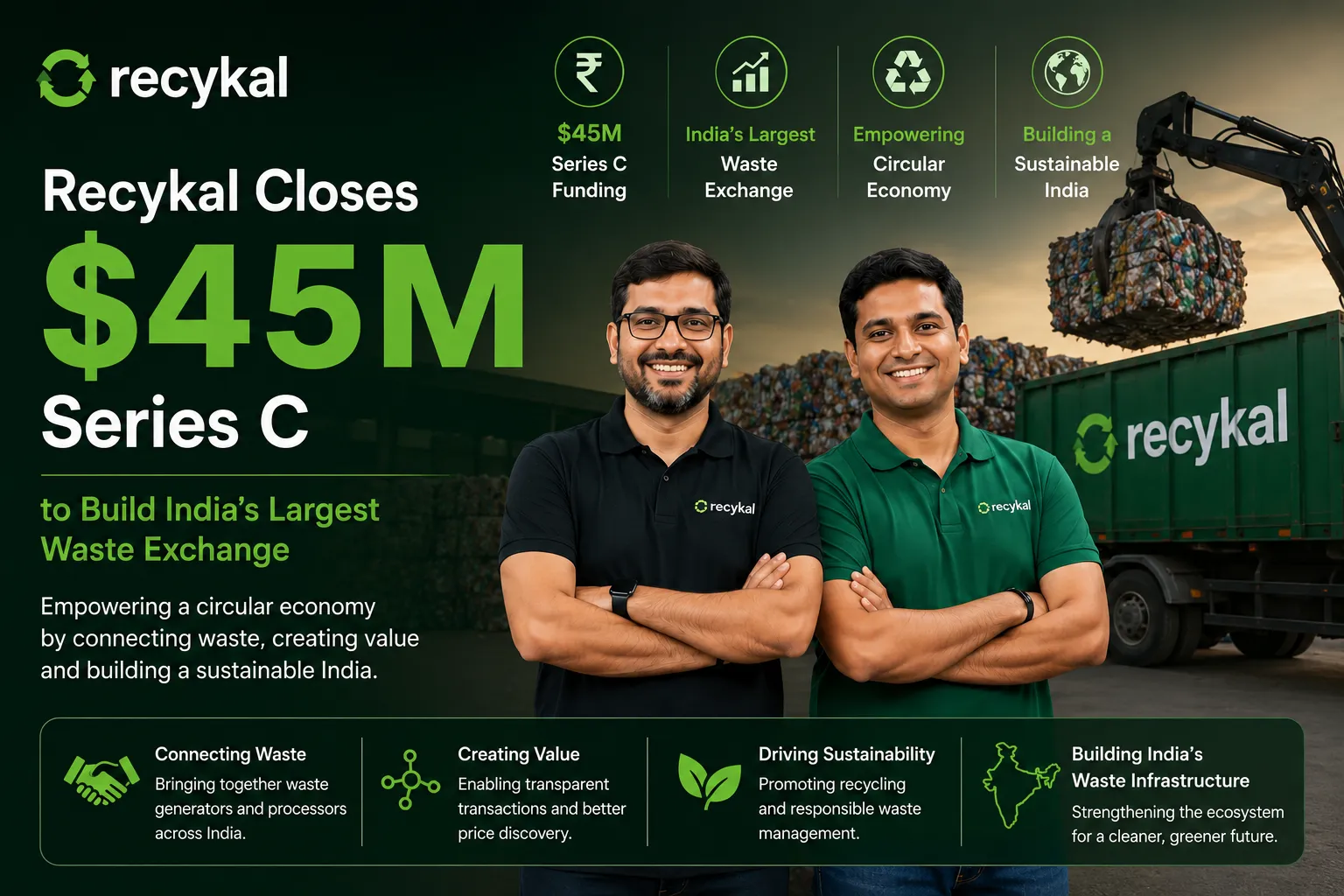
India generates 62 million tons of waste every year, but only 30% is recycled. The rest ends up in landfills or open dumps, leaching toxins into groundwater and emitting methane. The reason: the waste supply chain is fragmented and opaque. Thousands of small scrap dealers operate informally, with no standardization of quality, price, or logistics. Recykal, a Hyderabad‑based startup, has built a digital marketplace that connects waste generators (factories, offices, hotels) with recyclers, scrap dealers, and brand owners. The company has raised $45 million in Series C funding led by Circularity Capital, with follow‑on from existing investors Circulate Capital and The Rise Fund. The round brings Recykal’s total equity raised to $80 million and values the company at $320 million.
Recykal’s platform works like an e‑commerce site for waste. A factory that produces plastic scrap lists its material, with specifications (type, color, contamination level), quantity, and location. Recyclers bid for it. Recykal handles logistics, quality checks, and payments, charging a 5‑8% transaction fee. The company also provides a “traceability engine” that tracks waste from source to final recycling, generating verifiable credits for corporate ESG (Environmental, Social, Governance) reporting. In 2025, Recykal facilitated the recycling of 1.2 million tons of waste, including plastic, paper, glass, and metals – a 70% increase over the previous year. The platform’s gross merchandise value (GMV) reached ₹1,200 crore ($144 million), up from ₹700 crore in 2024.
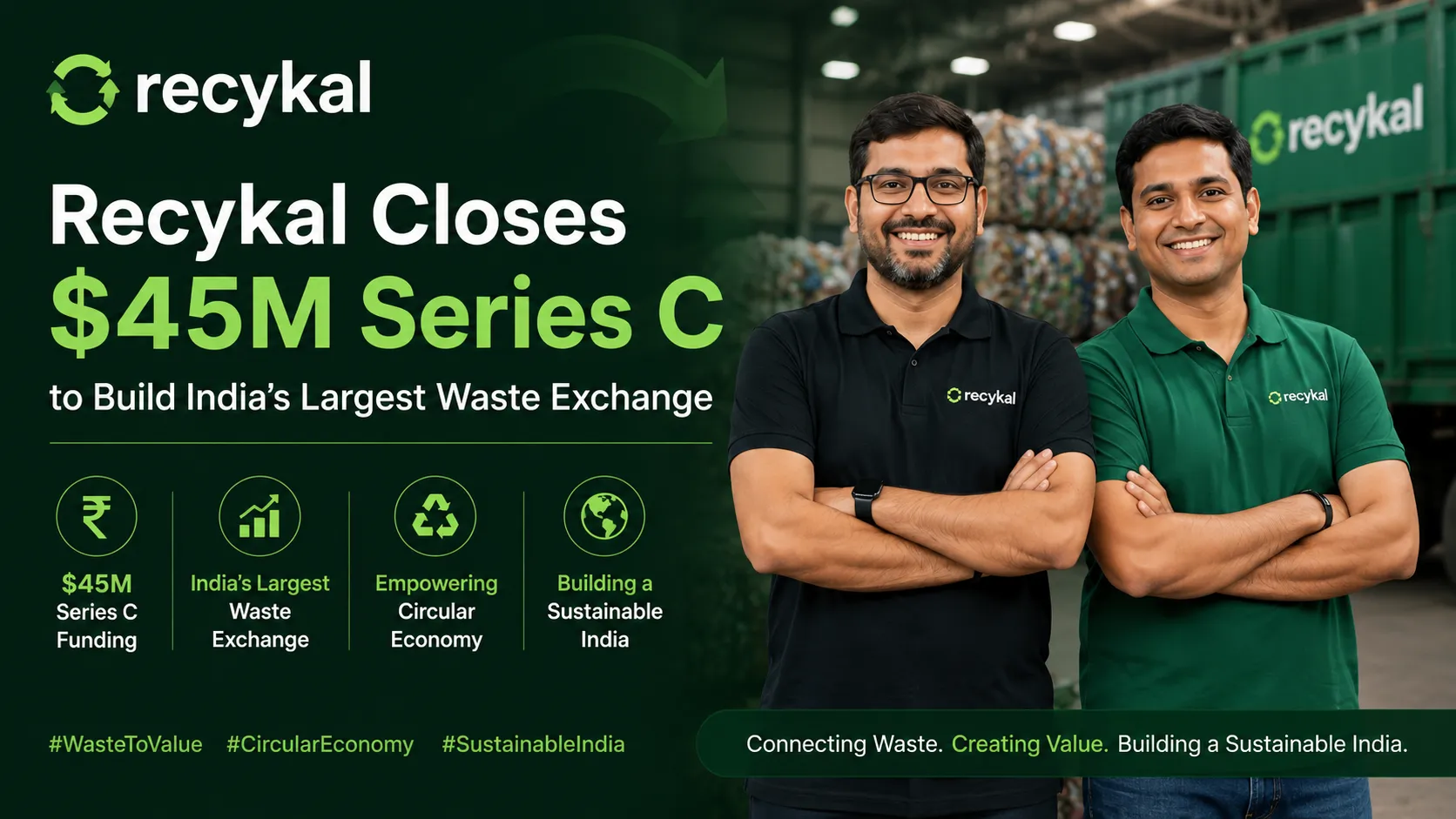
“The waste sector is worth $15 billion in India, but it is run by middlemen with no transparency, no quality control, and no accountability,” said co‑founder and CEO Abhishek Deshpande, a second‑generation scrap trader who experienced the inefficiencies first‑hand. “Recykal brings efficiency, data, and trust. A recycler can now buy consistent quality scrap, and a brand owner can prove that their packaging is actually recycled.” The company’s clients include Unilever, Coca‑Cola, Amazon, and Tata. Many of them have signed long‑term contracts to source recycled material for their sustainability commitments; for example, Unilever has committed to using 25% recycled plastic in its packaging by 2028, and Recykal is a key supplier.
The Series C funding will be used to expand Recykal’s physical infrastructure: the company plans to build 10 “circularity hubs” – collection and sorting centres – in tier‑2 and tier‑3 cities such as Nagpur, Coimbatore, and Lucknow, where waste management is poorest. Each hub will have a capacity to process 50 tons per day, using automated sorting machines (optical sorters, magnets, air classifiers) to separate materials more efficiently than manual sorting. The hubs will also provide fair prices to small waste pickers and local scrap dealers, who can bring their material directly. Recykal will also launch a mobile app for small scrap pickers (kabadiwalas) to directly upload and sell waste. There are an estimated 1.5 million informal waste pickers in India; Recykal aims to onboard 500,000 of them over three years, providing better prices and safer working conditions.
Circularity Capital partner Juhi Singh said: “Recykal has cracked the hardest part – trust and logistics. They are digitizing an informal economy that has resisted technology. Their growth is proof that circularity can be profitable.” Recykal is already profitable at the operating level, with gross margins of 25% and a net profit margin of 5% in 2025. The company expects to reach full EBITDA profitability of ₹50 crore ($6 million) by Q4 2026. The unit economics work because the platform reduces transaction costs: a traditional scrap deal might involve multiple middlemen taking 15‑20% margins; Recykal takes 5‑8% and passes the savings to both buyer and seller.
Competitors include the traditional scrap aggregators (still fragmented) and newer platforms like Banyan Nation and Kabadiwala Connect. But Recykal’s advantage is its end‑to‑end offering: from listing to transport to compliance reporting. The company also operates a reverse‑logistics fleet of 600 trucks, a significant barrier to entry. Moreover, Recykal has built a network of 10,000 verified buyers and sellers, creating strong network effects: the more participants, the more valuable the platform.
The company’s long‑term vision is to create a “circular economy cloud” – a set of APIs that any business can use to track, trade, and report recyclable materials. Recykal is already working with the Federation of Indian Chambers of Commerce and Industry (FICCI) to develop industry standards for recycled content certification. The startup also plans to expand to Southeast Asia, beginning with Indonesia and Vietnam, which face similar waste management challenges.
For the 1.5 million waste pickers who are currently at the bottom of an exploitative supply chain, Recykal offers a path to dignity and better income. The company’s mobile app will allow a kabadiwala to upload photos of their sorted scrap, get instant price quotes from multiple recyclers, and receive payment directly to their bank account – no haggling, no middlemen. Recykal also provides protective gear (gloves, masks) and health insurance to registered waste pickers through a partnership with ICICI Lombard.
The Series C round attracted interest from impact investors and climate funds, reflecting a global shift towards circular economy solutions. “India’s waste problem is also an opportunity,” said Deshpande. “We are sitting on a goldmine of recyclable materials worth billions of dollars. The only missing piece is organization. Recykal provides that organization. We are turning trash into treasure – and cleaning up the country in the process.”