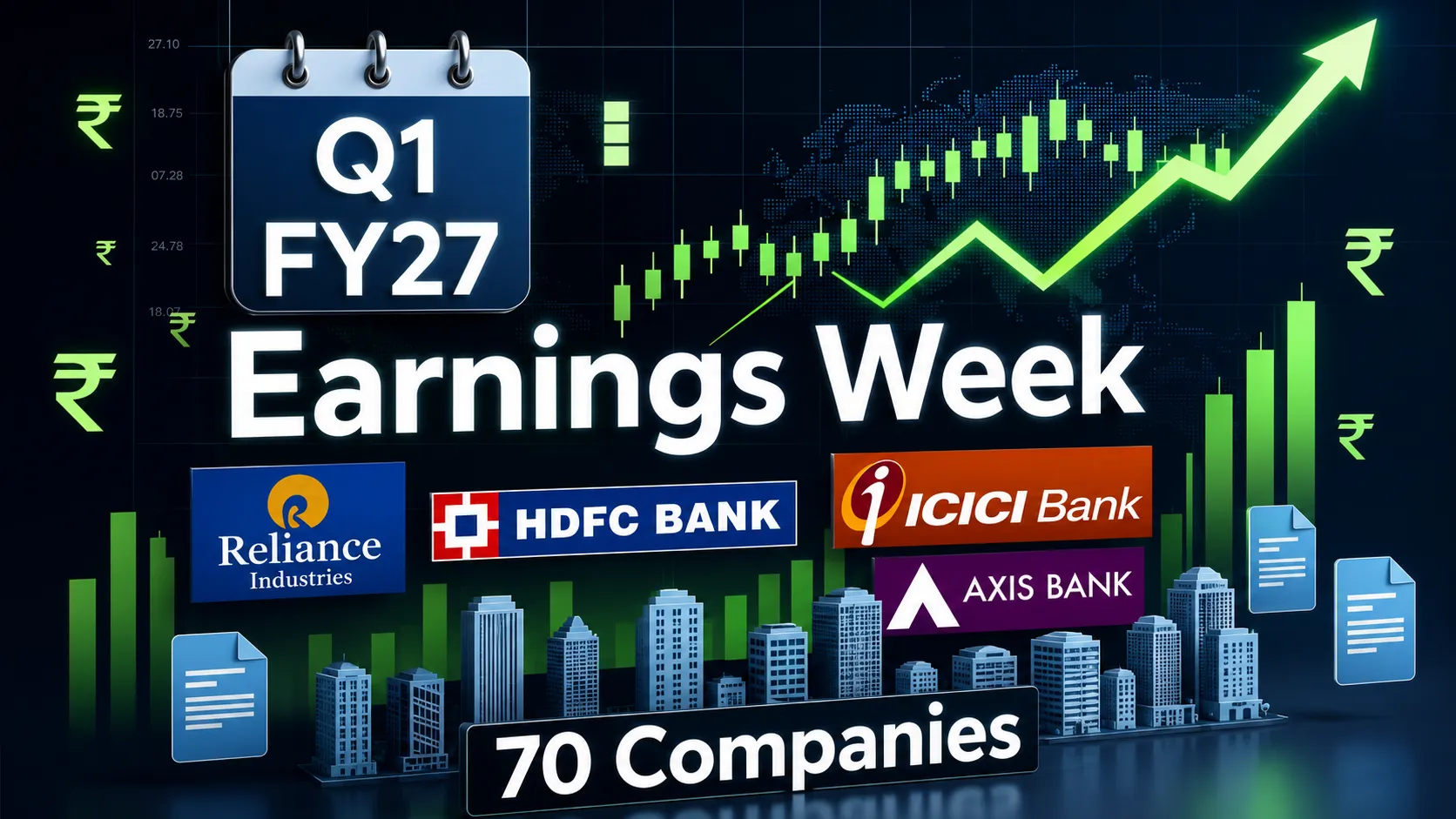
Mumbai, July 31, 2026 — If there was a single day that captured the full sweep of India Inc's Q1 FY27 earnings season in miniature, it was July 30. More than 100 listed Indian companies reported their April-June quarter results on that single day, spanning virtually every major sector of the economy — financial services, automobiles, steel, pharmaceuticals, defence manufacturing, ports and logistics, insurance, and consumer goods among them. For investors, analysts and financial journalists alike, the sheer density of that single day's reporting calendar made it one of the more demanding, and ultimately revealing, single sessions of the entire earnings season.
Rather than any single blockbuster result dominating the narrative, July 30 offered something arguably more valuable: a genuinely broad, cross-sectional snapshot of how different corners of the Indian economy are performing simultaneously, at the same point in the same fiscal quarter, unfiltered by the kind of sequential, spread-out reporting cadence that can make it harder to draw meaningful cross-sector comparisons when results trickle in over many separate days spread across several weeks.

The headline names
Among the marquee names reporting that day, Bajaj Finance, Mahindra & Mahindra, Tata Steel, Torrent Pharmaceuticals, Hyundai Motor India, Indian Railway Finance Corporation, Mankind Pharma, Vedanta Aluminium and Swiggy anchored a results calendar that read almost like a cross-section of India's entire corporate landscape. Adani Ports and Special Economic Zone reported a 9.22% jump in net profit to ₹3,620 crore, beating Street estimates, on the back of an 18.6% revenue surge driven substantially by growth in its marine and international ports segment. Mahindra & Mahindra posted strong results that helped power a broader auto sector rally, with the stock jumping over 2% as Maruti Suzuki and Tata Motors also gained on their own results.
Beyond these headline large-cap names, a substantial tail of mid-cap and smaller companies also reported the same day, including Mazagon Dock Shipbuilders, which posted a striking 22% jump in net profit to ₹550 crore on the back of India's ongoing naval modernisation programme, Torrent Pharmaceuticals, which delivered a 54.5% revenue surge driven by its acquisition-led consolidation strategy, and Waaree Energies, which reported a 15.39% profit increase alongside a dramatic 79.22% revenue jump reflecting India's rapidly scaling domestic solar manufacturing sector. Rounding out the day's calendar, companies including Exide Industries, Gillette India, Niva Bupa Health Insurance, RailTel Corporation and LIC Housing Finance each contributed their own results to what became an unusually comprehensive single-day snapshot of India Inc's overall financial health.
Why so many companies report on the same day
The clustering of such a large number of results on a single day is not entirely coincidental; it reflects a broader structural pattern in how India's corporate reporting calendar has evolved. Regulatory requirements mandate that listed companies report quarterly results within a specified window following the end of each fiscal quarter, and many companies, particularly those with June-ending quarters as part of the standard April-March Indian fiscal year, tend to gravitate toward reporting near the latter portion of this window, often coordinating board meeting schedules with statutory auditors and other advisers in ways that naturally cluster around certain calendar dates. This clustering effect tends to produce a small number of unusually dense reporting days within each quarterly earnings season, of which July 30 clearly represented one of the most extreme examples this cycle.
For market participants, this clustering creates both challenges and opportunities. The sheer volume of simultaneous results makes it genuinely difficult for any single analyst or investor to process every relevant data point in real time, often requiring a more triaged approach that prioritises the largest, most market-moving names while relying on subsequent, more detailed analysis for smaller companies whose results, while individually less market-moving, can still offer valuable read-through insight into specific sector or sub-sector trends when analysed collectively.
What the aggregate picture reveals
Stepping back from individual company results to consider the aggregate picture painted by July 30's earnings blitz, several broader themes emerge. Defence and infrastructure-linked public sector companies, exemplified by Mazagon Dock's strong performance, continued to demonstrate the kind of consistent, policy-tailwind-supported growth that has characterised this segment of the market over recent quarters, benefiting from sustained government capital expenditure commitment to defence indigenisation and broader infrastructure development. Renewable energy and clean manufacturing names, represented by Waaree Energies' dramatic revenue growth, similarly reflected the continued scaling of India's domestic manufacturing capacity build-out in strategically prioritised sectors, even as margin dynamics in this specific segment showed the kind of pressure typical of rapidly scaling, increasingly competitive manufacturing categories.
Pharmaceutical sector results, anchored by Torrent's standout consolidation-driven growth alongside more measured performance from other reporting pharma names, suggested a sector continuing to benefit from its long-standing reputation as a relatively defensive, less cyclically-exposed segment of the Indian market, even as individual company performance varied considerably based on specific corporate strategy and portfolio mix. Auto sector results, led by Mahindra & Mahindra's strong showing, reinforced the broader narrative of resilient Indian domestic consumption demand, even amid the various external macro uncertainties — trade policy, currency volatility, elevated crude prices — that have periodically weighed on broader market sentiment through the current fiscal year.
The market's reaction
India's broader equity indices, which had already been on a modestly positive trajectory heading into July 30's earnings blitz, closed the session with further gains, the Sensex adding 273 points to close at 77,928.15 and the Nifty 50 climbing 67 points to 24,317.15 — a performance that suggests the market, on balance, interpreted the day's dense earnings calendar as more encouraging than concerning, even as individual stock reactions inevitably varied considerably based on how specific results compared against each company's own analyst estimates and prior guidance.
This broadly positive market reaction to such a dense, comprehensive earnings day offers a useful data point for assessing overall investor sentiment heading into the remainder of the Q1 FY27 reporting season and beyond. Rather than the kind of nervous, cautious market response that might accompany a day dominated by disappointing or concerning results, July 30's price action suggests genuine underlying confidence in India Inc's overall earnings trajectory, even amid the various macro and geopolitical uncertainties that have periodically generated headline-driven volatility through the current fiscal year.
Looking ahead to the rest of the reporting season
With July 30 now behind it, India's Q1 FY27 earnings season continues into the following weeks, with several additional companies still scheduled to report results before the reporting window closes entirely. Market participants will be watching closely to see whether the broadly constructive themes evident in July 30's dense reporting day — resilient consumer demand, continued strong performance in defence and infrastructure-linked names, ongoing scaling in renewable energy manufacturing, and generally solid, if uneven, performance across the pharmaceutical sector — continue to hold across the remaining companies still to report, or whether the picture becomes more mixed as the reporting season moves toward its conclusion.
How analysts cope with the information overload
For sell-side equity research analysts and institutional investors tasked with actually processing this volume of simultaneous corporate disclosure, a single day like July 30 represents a genuine operational challenge, requiring careful triage of which results demand immediate, same-day analysis versus which can be absorbed into more considered assessments over the following days. Most large institutional research desks maintain pre-established coverage priority lists, generally organised around index weight and existing portfolio exposure, ensuring that the largest, most market-moving names like Adani Ports, Bajaj Finance and Tata Steel receive immediate analytical attention, even as smaller but still noteworthy results, including those from Mazagon Dock and Waaree Energies, may not receive full detailed analyst commentary until subsequent trading sessions, once the immediate crush of same-day disclosure has been at least partially processed.
The technology behind processing earnings at scale
The sheer scale of simultaneous corporate disclosure on days like July 30 has, over recent years, increasingly driven investment in automated and AI-assisted financial data processing tools, capable of rapidly extracting and structuring key financial metrics from the flood of regulatory filings, investor presentations and management commentary that accompanies each individual company's results announcement. These tools, while not replacing the nuanced judgment of experienced human analysts, have become increasingly important infrastructure for institutional investors seeking to maintain comprehensive coverage across India's large and growing universe of listed companies, particularly during the kind of unusually dense reporting days that have become a recurring, if unofficial, feature of India's quarterly corporate reporting calendar.
What this earnings density says about India's corporate scale
Perhaps the broadest takeaway from July 30's unprecedented reporting density is simply a reminder of just how large and diverse India's listed corporate universe has become. A single day capable of hosting more than 100 meaningful corporate results, spanning sectors as varied as ports infrastructure, consumer finance, defence shipbuilding, solar manufacturing and pharmaceuticals, reflects an economy and capital market that have both grown substantially in scale and diversity over recent decades — a far cry from a market where a handful of blue-chip results might once have dominated any given reporting day's narrative. For investors and analysts navigating this increasingly complex landscape, days like July 30 serve as both a genuine operational challenge and a useful, if demanding, reminder of the sheer breadth of opportunity and complexity that now characterises India's public equity markets.
The retail investor challenge
For India's rapidly growing base of retail equity investors, many of whom lack access to the institutional-grade research infrastructure and analyst coverage that large funds rely on, a reporting day as dense as July 30 presents a particular challenge in staying genuinely informed about portfolio holdings reporting results simultaneously. Financial media outlets and digital investing platforms have, over recent years, increasingly developed dedicated live-blog and real-time results tracking formats specifically designed to help retail investors keep pace with exactly this kind of high-volume reporting day, aggregating key headline figures across dozens of simultaneous results into a more digestible, scannable format. The growth of this kind of dedicated retail-facing earnings coverage infrastructure is itself a reflection of how central single-day earnings clustering has become to India's market information ecosystem, and how much demand exists among India's expanding retail investor base for tools that make this kind of dense reporting day genuinely navigable without requiring institutional-grade research resources.
Setting the stage for August
With the bulk of India's largest companies now having reported, market attention turns toward synthesising the aggregate lessons of this earnings season into a coherent view on sector allocation and broader market positioning heading into August. Early evidence from the season, including July 30's dense reporting day specifically, points toward a market that has, on balance, delivered enough genuine earnings strength to support continued index gains, even amid the various macro and trade-policy uncertainties that have periodically generated headline volatility. Whether this constructive earnings backdrop proves sufficient to sustain the current market rally through what has historically been a somewhat quieter August trading period for Indian equities will likely become one of the more closely watched questions as the Q1 FY27 reporting season draws to its eventual close over the following weeks.
For now, though, July 30 stands as a genuinely useful single-day snapshot of India Inc's overall financial health at this specific point in the current fiscal year — a day when the sheer breadth and volume of simultaneous corporate results offered investors and analysts alike an unusually comprehensive, if demanding, cross-sectional view of how different corners of the Indian economy are actually performing, well beyond what any single company's individual results, however impressive or disappointing in isolation, could ever fully convey. It is, in many respects, the single busiest and most revealing day of the entire Q1 FY27 corporate reporting calendar.


