The Excitement Is at an All-Time High. And the Business Agenda Behind It Is Real.
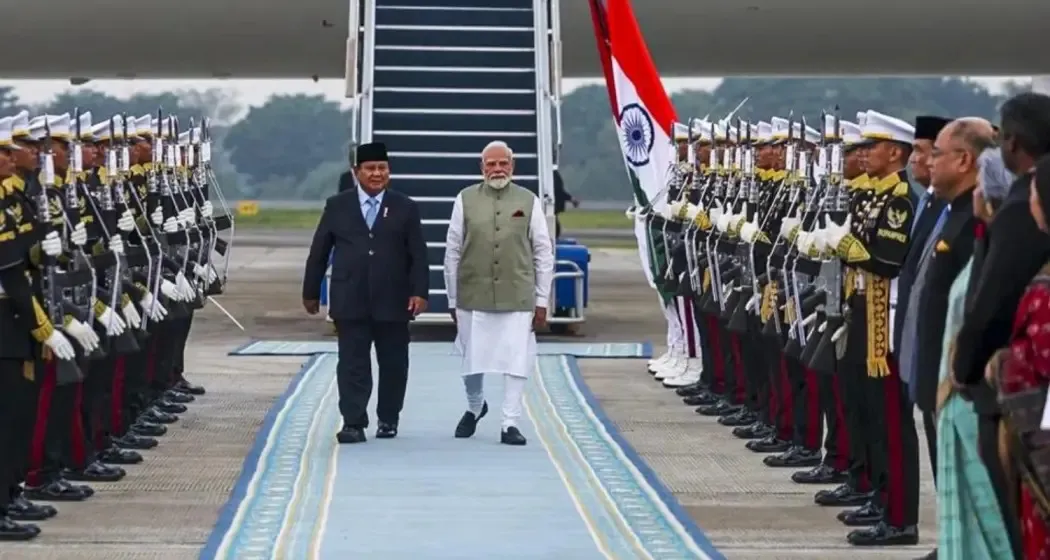
When Prime Minister Narendra Modi departed from New Delhi on July 6, 2026, for the first leg of a three-nation visit covering Indonesia, Australia, and New Zealand, the framing from the Ministry of External Affairs was diplomatic and measured: deepening the Comprehensive Strategic Partnership, reviewing the entire gamut of bilateral ties, strengthening the Act East Policy and the MAHASAGAR Vision.
The framing from the Indian diaspora in Jakarta was considerably less measured.
Bipin Mishra, CEO of PT. Leap Digital Indonesia, described the atmosphere in the days before the Prime Minister's arrival: the excitement is at an all-time high. His company was expecting close to 5,000 people to attend the community event where Modi was scheduled to address the diaspora — and where President Prabowo Subianto was expected to join. The bilateral ties are at an all-time high, Mishra said. And the trade relationship, he added, still has significant room to grow.
That combination — diplomatic significance, diaspora enthusiasm, and a specific and detailed commercial agenda — is what makes the Indonesia leg of this visit worth examining closely.
The Strategic Context — Why This Visit Matters Now
PM Modi's Indonesia visit, scheduled from July 6 to 8, 2026, is his fourth visit to the country and his first bilateral visit since India-Indonesia ties were elevated to a Comprehensive Strategic Partnership in May 2018. That elevation was the outcome of his first Indonesia visit. The current visit is the first substantive bilateral review of what those eight years of Comprehensive Strategic Partnership have produced.
The context has changed substantially since 2018. Indonesia is now the largest economy in Southeast Asia, with a population of 280 million people and a growth trajectory that has made it one of the most commercially significant markets in the Indo-Pacific. The ASEAN framework, within which Indonesia operates as a leading voice, has taken on greater strategic importance as the region navigates the US-China competition and seeks partners that can provide alternatives to Chinese-origin infrastructure, technology, and defence equipment.
India's positioning in that competitive landscape has improved significantly over the same period — as a defence exporter, as a digital infrastructure provider through UPI and digital public goods, as a pharmaceutical and healthcare services hub, and as a technology talent and services economy whose capabilities are increasingly sought by Southeast Asian companies looking to build their own digital capabilities.
The visit comes just over a year after President Prabowo's state visit to India, where he was the chief guest at Republic Day celebrations on January 26, 2025 — a mark of diplomatic priority that set the stage for the current bilateral deepening.
The Business Agenda — What the Diaspora Is Actually Focused On
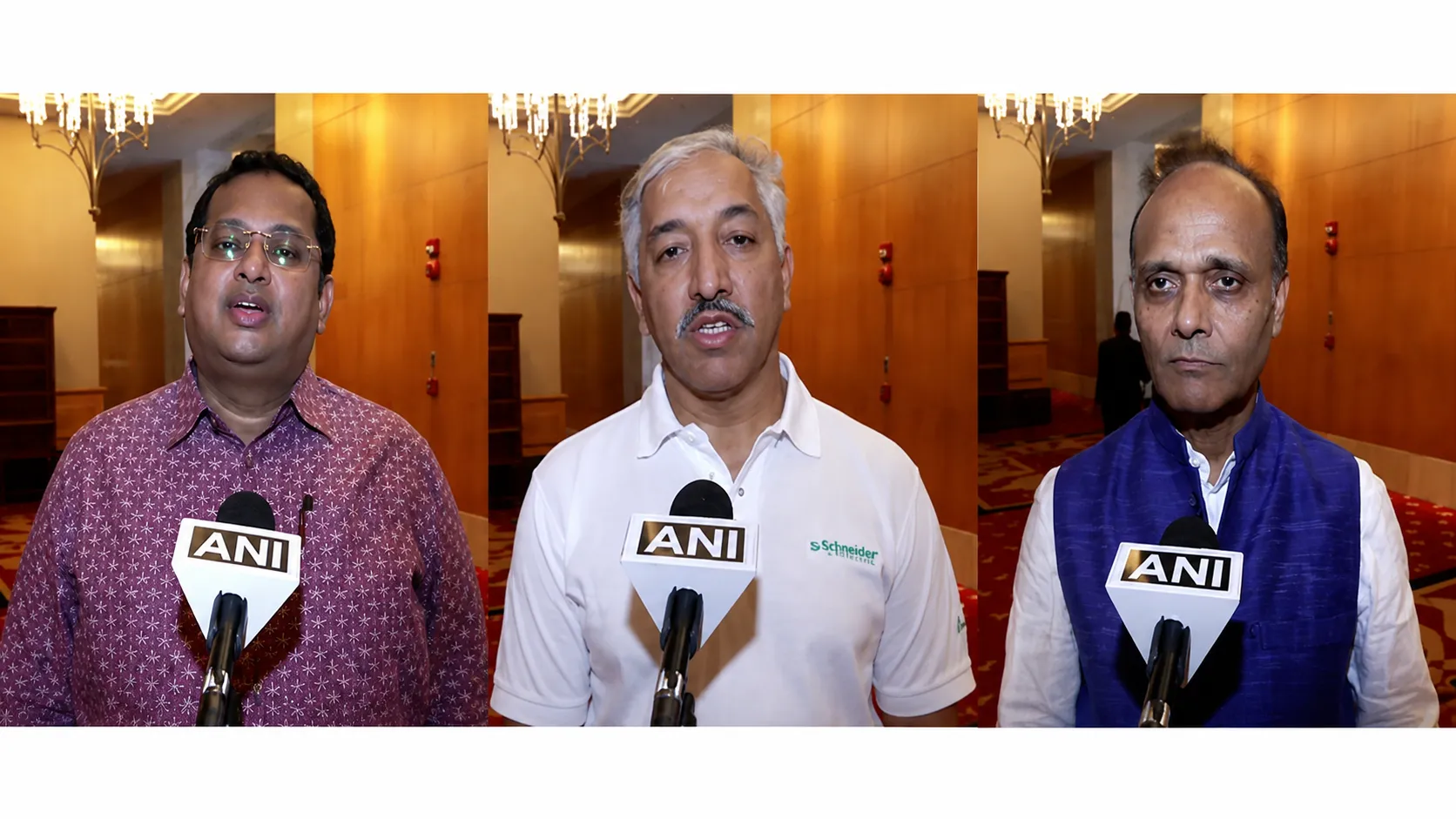
The members of the Indian business community in Indonesia who spoke to ANI ahead of and during the Prime Minister's visit were specific about what they were hoping the visit would produce.
Vinod Srinivasan, CEO of Jayata Consulting and Honorary Secretary of the India-Indonesia Chamber of Commerce, named the sectors where the business community sees the most immediate opportunity: healthcare, agriculture, and IT. He also noted the technology dimension more broadly, observing that Indonesia is now actively pursuing the same kind of sustainability and technology transition that India has been leading — and that Indian companies and expertise are well-positioned to support that journey.
The sustainability angle Srinivasan raised is specific and commercially relevant. India has built significant capability in renewable energy, electric vehicles, sustainable agriculture, and clean technology — capabilities that Indonesian businesses are beginning to actively seek as the country pursues its own green transition. The intersection of India's technological maturity in these areas with Indonesia's ambition to get there is where commercial partnerships are most likely to materialise in the near term.
Shailendra Halbe, APAC Head of Kirloskar Oil Engines — a company that has been operating in Southeast Asia for decades — described the ground-level reality in terms that were equally specific. Indonesian businesses are very eager to engage with Indian firms across multiple sectors, including power generation, agriculture, and data centres. Despite global pressures, particularly from Middle Eastern instability affecting business sentiment in the region, Indonesia itself remains a self-propagating economy with the largest population in Southeast Asia and a consumer base that drives internal demand regardless of external shocks.
The cultural dimension that Halbe highlighted — describing the cultural amalgamation between India and Indonesia as excellent — reflects something specific about the bilateral relationship that trade statistics do not fully capture. The two countries share deep civilisational ties: Prambanan, the Hindu-Buddhist temple complex at Yogyakarta that Modi visited with President Prabowo during the trip, is a UNESCO World Heritage Site that reflects the historical influence of Indian culture across the Indonesian archipelago. The diaspora community in Indonesia — estimated at around 70,000 to 100,000 people — has integrated deeply into Indonesian society while maintaining strong links with India. That integration is the social infrastructure on which business relationships are built.
The Financial Integration Agenda
The most specific financial outcome that diaspora business leaders were hoping the visit would produce came from the banking sector.
Akash Damniwala, President Director of Bank SBI Indonesia, highlighted the potential for progress on a local currency settlement framework. India and Indonesia signed an agreement in 2024 enabling settlement of bilateral trade in local currencies — the Indonesian rupiah and the Indian rupee — rather than defaulting to US dollars as the intermediary currency. The framework existed on paper. What Damniwala and others in the banking community were hoping for from the Modi visit was the formal operationalisation of that framework through a specific signing or procedural announcement that would make the de-dollarised settlement mechanism actually usable by businesses.
The logic is straightforward: bilateral trade that settles in rupees and rupiahs is less exposed to dollar exchange rate volatility, reduces transaction costs for both sides, and builds the kind of financial infrastructure interdependence that deepens economic ties over time. For Indian companies selling to Indonesian buyers, and Indonesian companies purchasing from India, a functioning local currency settlement system removes a meaningful friction from the commercial relationship.
The training of 1,000 Indonesian doctors in India represents a specific human capital cooperation initiative in the healthcare sector. Indonesia's healthcare system has a documented shortage of specialist medical professionals. India's medical education infrastructure — particularly at premier institutions — has the capacity to absorb international students at scale. A commitment to train 1,000 Indonesian doctors in Indian medical institutions would create a long-term professional network connecting Indonesian healthcare with Indian medical standards and pharmaceutical supply chains, with commercial benefits for both countries' healthcare industries over the following decade.
The Defence Dimension — India's Astra Goes Abroad
The most strategically significant headline from the defence dimension of the visit is the confirmation that Indonesia is set to become the first foreign buyer of the Astra Mk1 — India's indigenously developed beyond-visual-range air-to-air missile, designed for use on fighter aircraft.
The Astra programme represents one of India's most significant defence manufacturing achievements — a domestically developed, internationally competitive missile system that can now generate export revenue and diplomatic leverage simultaneously. Indonesia's decision to acquire Astra positions India as a credible defence exporter in Southeast Asia, where Chinese and Western defence equipment have historically dominated procurement decisions.
The significance of this goes beyond the specific transaction value. When a Southeast Asian nation of Indonesia's size and strategic positioning chooses Indian-developed defence equipment over alternatives, it signals to other regional buyers that Indian defence exports are a serious option — competitive on quality, favourable on price, and not carrying the political complications that Chinese equipment or Western equipment with technology transfer restrictions might bring.
What the Visit Represents for India's Act East Policy
The Modi Indonesia visit is the opening chapter of a three-country tour that also takes him to Melbourne for the India-Australia CEOs Forum and to Auckland for the first Indian Prime Minister's state visit to New Zealand in four decades. Taken together, the three visits are the most concentrated multilateral engagement India has undertaken in the Indo-Pacific in recent years.
For the Indian diaspora in each of these countries, the visit represents something more personal than geopolitical strategy. It represents formal acknowledgement of their role as bridge-builders — the commercial relationships they have built, the professional expertise they have transferred, the cultural connections they maintain, and the economic value they create for both countries simultaneously.
The five thousand people who came together in Jakarta to welcome Modi are the living evidence of that bridge. They are not tourists or temporary workers. They are entrepreneurs, bankers, industrialists, technology executives, and healthcare professionals who have built careers and businesses in Indonesia while maintaining deep connections to India.
The Prambanan visit — a Hindu-Buddhist temple complex in Yogyakarta that stands as evidence of Indian civilisational influence across Indonesia over a thousand years — is the historical frame within which the contemporary economic relationship sits. What India and Indonesia are building in 2026 is new in its form and its technology. The relationship it is built upon is ancient.


