There is a version of the Indian diaspora success story that has become so familiar it risks becoming background noise: a technology executive here, a rich-list ranking there, another honor from an American institution marking some anniversary or another. This week's roundup of Indian business and diaspora news resists that familiar shorthand. It spans a private equity-backed infrastructure company processing natural gas across two continents, a French luxury house whose global chief executive happens to be a woman raised in a small town in Maharashtra, an Indiaspora report attempting to put a dollar figure on an entire diaspora's economic weight, a cybersecurity company run by a former SoftBank president, India's own shifting export mix, and a set of Republican congressional campaigns in the American Midwest built around immigrant biography rather than technology-sector credentials.
Taken individually, each story belongs to an entirely different section of the newspaper: energy infrastructure, luxury retail, philanthropy and demographic research, cybersecurity, macroeconomic trade data, and domestic American politics. Taken together, they make a case that is easy to state and somewhat harder to fully absorb: the Indian diaspora's economic and civic footprint has grown too large and too varied to be captured by any single industry narrative, however dominant that narrative has become in the retelling.
Bhavesh Patel and the New Face of American Energy Infrastructure
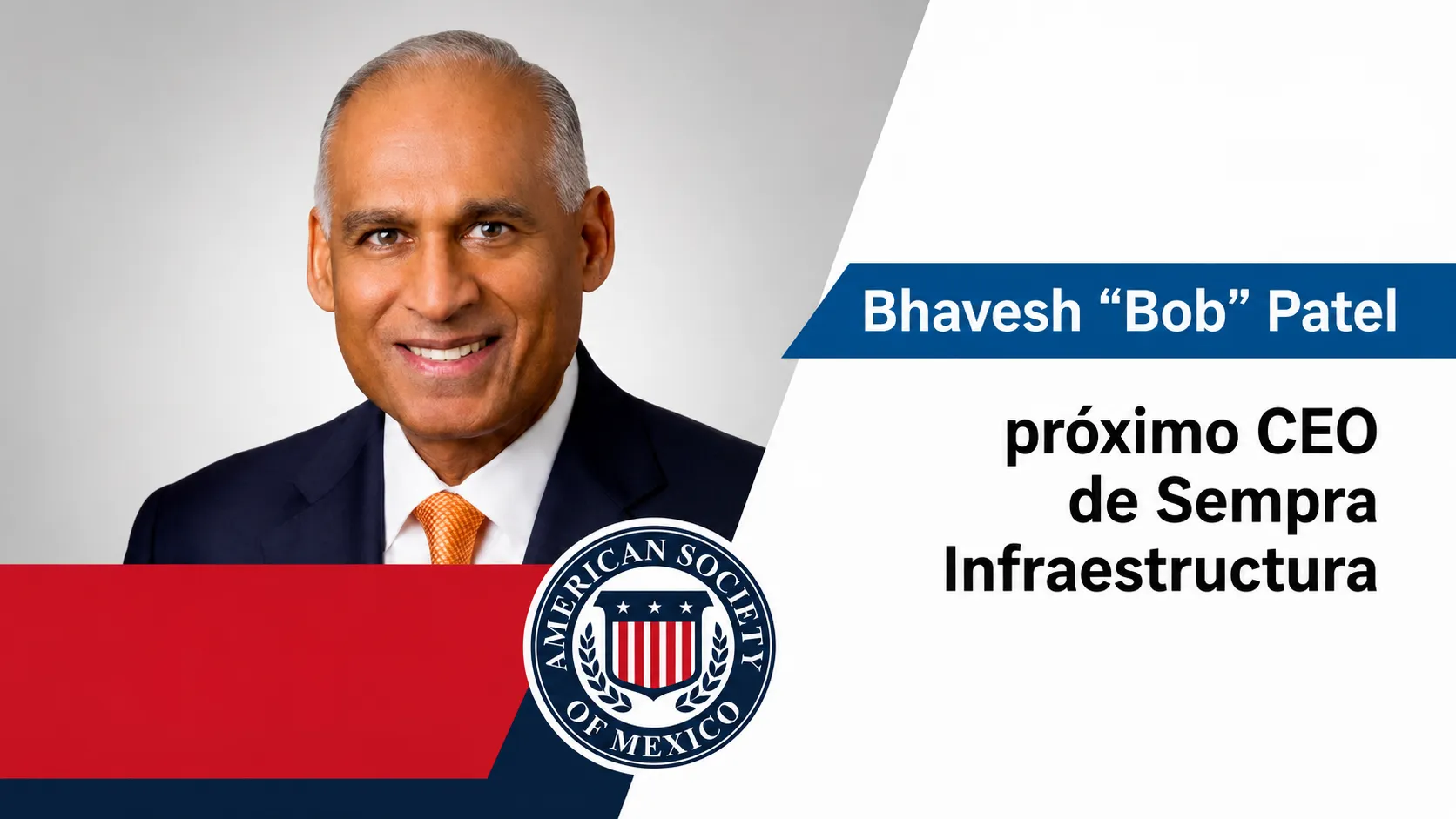
Bhavesh “Bob” Patel was named incoming chief executive of Sempra Infrastructure this month, arriving at the helm just as the company's ownership structure itself is being reshaped by a major stake acquisition from KKR, the private equity giant. Sempra Infrastructure sits at a genuinely consequential point in North America's energy landscape, developing and operating natural gas and liquefied natural gas infrastructure that connects domestic production to export markets across the globe, at a moment when energy security and export capacity have become central strategic priorities for governments and investors alike.
Patel's appointment, and KKR's simultaneous move to take a major ownership stake in the company, are not coincidental developments unfolding independently of one another. Private equity investment of this scale typically arrives alongside, or shortly before, a change in operational leadership, reflecting a new majority owner's confidence in the specific executive chosen to execute its investment thesis. That KKR's capital and Patel's leadership are arriving in tandem suggests a coordinated strategic bet on Sempra Infrastructure's next phase of growth, one that will likely involve expanded LNG export capacity at a moment when global demand for reliable, diversified energy supply remains historically elevated.

Leena Nair: Two Years In, Still the Exception That Proves the Rule
Leena Nair's continued leadership of Chanel, the storied French luxury house, remains one of the more quietly remarkable executive stories in global business — not because anything dramatic happened this week, but because her mere continuation in the role underscores just how unusual her original appointment was, and remains. Nair, who grew up in a small town in Maharashtra before rising through Unilever's global human resources leadership to become the company's chief human resources officer, made history when Chanel named her global chief executive: the first person of color, the first Indian-origin executive, and one of very few professionals from outside the traditional luxury or fashion industry ever entrusted with leading one of the industry's most fiercely guarded, most tradition-bound institutions.
The global luxury sector remains one of the most insular corners of international business, an industry where creative heritage, brand mystique, and an almost aristocratic sense of institutional continuity are treated as core assets to be protected rather than disrupted. Nair's background — a career built in consumer goods human resources rather than in fashion, retail, or luxury brand management — made her appointment a genuine departure from how the industry typically selects its top leadership. That she has now led the company through a period long enough to move past the initial “first of her kind” framing and into simply being Chanel's chief executive, evaluated on ordinary business performance terms, represents its own form of quiet success.
Nair's continued presence atop Chanel also matters for a specific reason relevant to the broader diaspora story: luxury fashion is an industry where Indian-origin executive leadership remains genuinely rare, in sharp contrast to technology, pharmaceuticals, or increasingly, consumer packaged goods. Her tenure offers a data point — still largely singular, but no less significant for that — that the ceiling for Indian-origin leadership extends even into industries built almost entirely around European heritage and craft traditions that, on their face, might seem to offer the least obvious opening for outside leadership of any kind.
Putting a Number on the Diaspora's Weight
A report titled India and its Diaspora: Partners in Progress, produced under the Indiaspora banner, has continued to generate discussion this year for its attempt to quantify something most coverage of diaspora achievement treats anecdotally rather than statistically: the diaspora's actual aggregate economic scale. The report estimates that more than 35 million people of Indian heritage now live across more than 200 countries, with a combined annual income estimated at roughly $730 billion — a figure that, considered on its own, would rank among the larger national economies in the world, despite describing not a country but a dispersed population connected by heritage rather than geography.
Numbers of this scale are easy to state and considerably harder to fully absorb. A combined annual income approaching three-quarters of a trillion dollars implies a diaspora with genuine capacity to function as an independent economic actor: a source of foreign direct investment, a market worth courting directly by both Indian and foreign businesses, and a philanthropic and institutional funding base capable of building universities, hospitals, and cultural institutions at a scale most purely domestic philanthropic sectors would struggle to match. The report's framing — partners in progress, rather than simply a source of remittances or nostalgia — reflects a deliberate effort to shift how both Indian policymakers and diaspora communities themselves think about this relationship going forward.
Nikesh Arora's Quiet Consistency
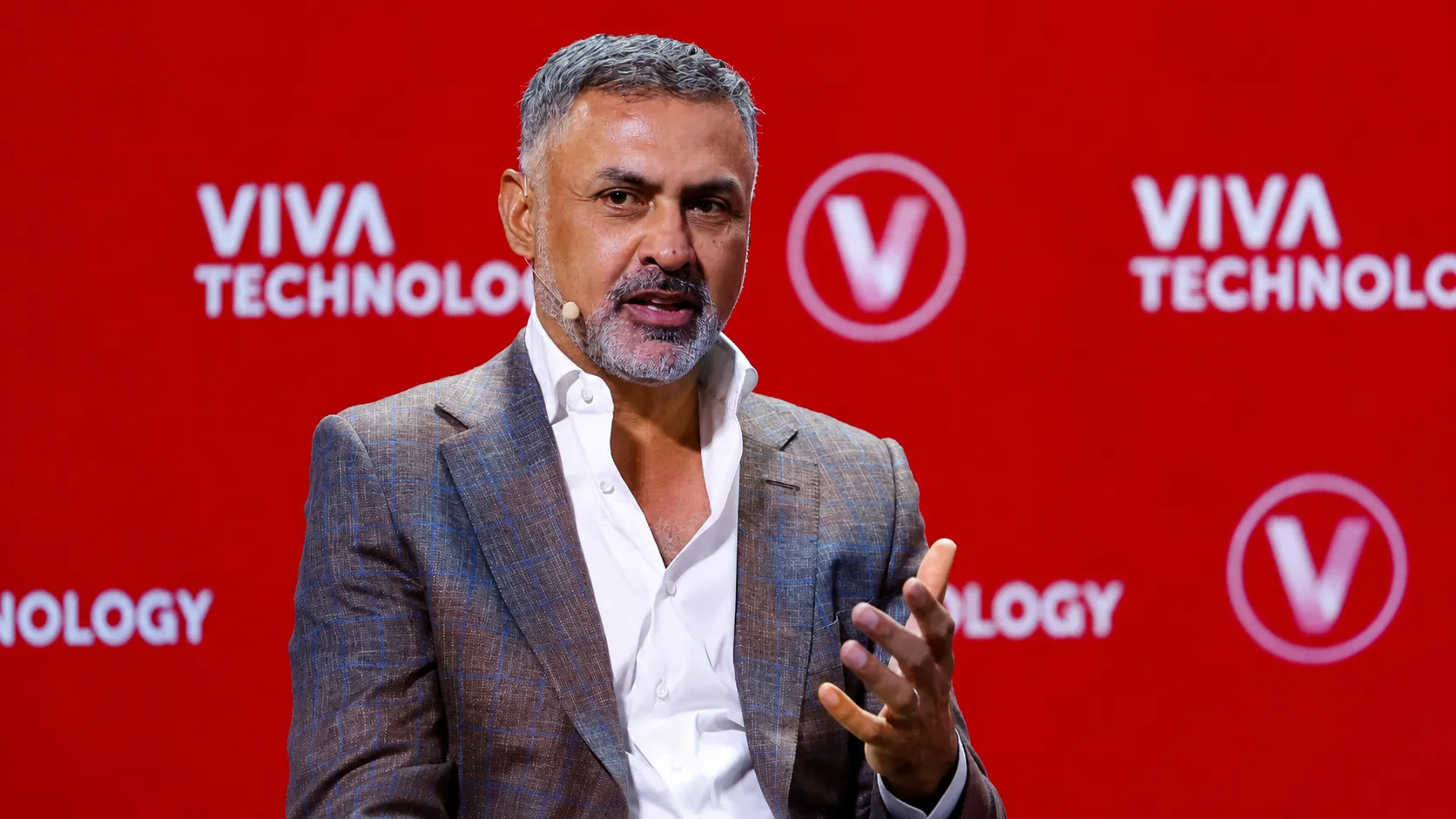
Nikesh Arora continues to be cited among the world's most consequential technology executives, a status built as much on his current role as chief executive of Palo Alto Networks, one of the cybersecurity industry's most significant companies, as on the reputation he built over a career that included a high-profile stint as president and chief operating officer of SoftBank, one of the most closely watched, if occasionally controversial, investment institutions in global technology. That dual background — deep operational leadership at a major cybersecurity company, combined with direct experience inside one of the world's most aggressive technology investment platforms — gives Arora a genuinely distinctive vantage point among Indian-origin technology executives, most of whom have built their careers within a single company or a single narrow specialization.
Cybersecurity occupies an increasingly central position in global technology strategy, as artificial intelligence adoption expands the attack surface available to malicious actors even as it simultaneously offers powerful new tools for defense. Arora's continued prominence reflects not simply past achievement but Palo Alto Networks' ongoing relevance at exactly the moment cybersecurity leadership matters most, a reminder that staying power in a fast-moving industry requires continuously proving relevance rather than resting on an established reputation.
India's Shifting Export Mix
Away from individual executive stories, India's own first-quarter export data for the current fiscal year offers a useful macroeconomic complement to the parade of individual diaspora success stories dominating this week's coverage. Engineering goods, gems and jewellery, electronics, and chemicals emerged as the primary drivers of export growth during the quarter, even as India's overall trade deficit widened — a combination that captures both the genuine progress and the persistent structural challenge running through India's trade position.
The specific composition of that export growth matters. Engineering goods and electronics reflect India's ongoing push to build genuine manufacturing and value-added export capacity, a priority that has anchored government industrial policy for years under various iterations of the Make in India initiative. Gems and jewellery, by contrast, represent a more traditional Indian export strength, built on decades of craftsmanship and specialized processing capability, particularly in diamond cutting and polishing, that continues to anchor Indian export earnings even as the broader economy diversifies into newer sectors. Chemicals sit somewhere between the two, reflecting both established Indian industrial capacity and newer investment in specialty and pharmaceutical-adjacent chemical manufacturing.
The widening trade deficit accompanying this export growth is the less celebratory half of the story, reflecting import growth that has outpaced the export gains across these sectors — a reminder that India's trade position, like most large developing economies pursuing rapid industrialization, remains a work in progress rather than a settled success, even as individual export categories post genuinely encouraging growth numbers. Economists tracking the data have noted that a widening trade deficit alongside robust export growth is not inherently alarming on its own; it often reflects an economy importing capital goods, intermediate components, and energy at a pace that outstrips even strong export performance, precisely because rapid industrial expansion requires substantial imported inputs before domestic supply chains can fully substitute for them. Whether that pattern proves temporary, resolving as domestic manufacturing capacity deepens, or becomes a more structural feature of India's trade position will likely take several more quarters of data to determine with any real confidence.
A New Chapter: Diaspora Politics in the American Midwest
Perhaps the least expected story in this week's roundup involves neither business nor philanthropy but American domestic politics: Indian-origin Republican candidates, including one running in Wisconsin, are building renewed congressional campaigns explicitly around their immigrant journeys, according to coverage in New India Abroad. That framing — immigrant biography as a campaign asset within the Republican Party specifically, a party whose national politics around immigration have grown considerably more restrictive in recent years — represents a genuinely interesting political development worth examining on its own terms, separate from any broader diaspora business narrative.
Indian-origin candidates running for American political office are not, on their own, a new phenomenon; Indian-origin politicians have won seats in Congress, state legislatures, and other elected offices across both major parties for years. What distinguishes this particular moment is the explicit choice by Republican candidates specifically to foreground immigrant journey narratives as a core campaign message, a framing choice that reflects each candidate's own calculation about what resonates with their specific electorate, even within a party whose national messaging on immigration policy has often emphasized restriction over celebration.
Six Stories, One Widening Map
What connects Bhavesh Patel's move to Sempra Infrastructure, Leena Nair's continued leadership at Chanel, the Indiaspora report's $730 billion figure, Nikesh Arora's sustained relevance at Palo Alto Networks, India's shifting export composition, and Republican congressional campaigns in Wisconsin is not a single industry, a single geography, or even a single generation of diaspora migration. It is, instead, a widening map: evidence that Indian-origin leadership and Indian economic weight now show up in energy infrastructure boardrooms, luxury fashion houses, cybersecurity strategy sessions, trade balance data, and American electoral politics, often in the same week, frequently without any of these stories directly referencing one another.
That widening map matters more than any single data point within it. A diaspora whose visible achievement clusters entirely within one or two industries remains, in an important sense, a specialized success story — impressive, but bounded. A diaspora whose achievement and influence show up simultaneously in private equity-backed energy infrastructure, century-old European luxury houses, cybersecurity leadership, and competitive congressional races across ideologically diverse political terrain describes something closer to full economic and civic integration into the countries where its members have settled, alongside a still-active, still-strengthening relationship with the country most of them or their families originally left. Both halves of that story — diaspora integration abroad and continued connection to India — appear, in this week's news alone, to be advancing simultaneously, each reinforcing rather than undermining the other.
It is worth resisting, even so, the temptation to read this widening map as evidence of a uniform, uncomplicated success story. Patel inherits an infrastructure company navigating genuinely difficult questions about the future of natural gas in an energy transition still finding its footing. Nair leads Chanel through a period of real pressure across the global luxury sector, as shifting consumer spending patterns and economic uncertainty in key markets test even the most established brands. The Indiaspora report's impressive aggregate figures sit alongside genuine, unresolved questions about how evenly that $730 billion in diaspora income is actually distributed, and how much of it reaches the communities most in need of investment either abroad or in India itself. Arora's cybersecurity leadership operates in an industry defined by a permanent, unwinnable arms race against adversaries who only need to succeed once. India's export gains arrive bundled with a widening trade deficit that policymakers have not yet resolved. And the Republican congressional candidates citing immigrant journeys as campaign assets are running within a party whose national coalition remains genuinely divided over immigration policy, meaning individual candidate biography, however compelling, operates against a considerably more contested political backdrop.
The Map Is Still Being Drawn
None of those complications diminish the significance of the widening map itself; if anything, they make it more credible. A narrative of diaspora success built entirely on unambiguous triumphs, without friction, competition, or unresolved tension, would be the less believable story. What this week's six stories actually describe is a diaspora mature enough to be operating at the highest levels of genuinely difficult, contested arenas — energy transition, luxury retail economics, cybersecurity, trade policy, and electoral politics — rather than simply accumulating uncomplicated wins in already-established lanes. That is, in its own way, a more meaningful marker of arrival than any single headline achievement could be: not the absence of difficulty, but a diaspora now trusted, across an increasingly wide range of institutions, to navigate difficulty at the highest level.


