
She Was an Actor. She Had a Problem Nobody Was Solving. She Built the Company to Solve It.
Neha Marda Agrawal is known in Indian entertainment circles as an actor with a significant television career. She is also — and this is the identity that defines the most recent chapter of her story — a co-founder of one of India's most quietly impressive early-stage D2C successes.
The founding story of Phitku is personal in the most specific sense. Marda has spoken publicly about experiencing body odour and underarm pigmentation concerns after pregnancy — problems that the mainstream personal care market had not addressed with the kind of clean, ingredient-conscious products she wanted. The conventional deodorant market in India is dominated by products containing aluminium salts, synthetic fragrances, and a catalogue of ingredients that an increasingly aware consumer base has begun to scrutinise and question.
The alternative she found in the traditional Indian pharmacopoeia was alum — a naturally occurring mineral salt with documented antibacterial and astringent properties that has been used in India and across the Middle East for centuries, sold in raw crystal form in pharmacies and grocers, and essentially ignored by the modern personal care industry as too simple and too cheap to build a brand around.
Phitku was built on the proposition that alum was not too simple. It was just underserved — an ingredient that worked, that was natural, that had no synthetic additives, and that the personal care industry had walked past for fifty years in favour of formulations that were more profitable and less honest.
In early 2025, Neha Marda Agrawal, her brother Sumit Marda, and Rahul Dokania launched Phitku as a bootstrapped venture. Fourteen months later, on July 1, 2026, private equity firm Ananta Capital announced the acquisition of a majority stake in the company for approximately ₹100 crore — implying a total company valuation of approximately ₹200 crore.
The Deal — What ₹100 Crore Buys and What It Signals
The transaction structure is specific and worth understanding clearly. The ₹100 crore investment from Ananta Capital is structured as a combination of primary capital infusion — fresh money going into the company to fund growth — and a secondary share purchase that buys existing shares from the founders, providing Sumit Marda, Neha Marda Agrawal, and Rahul Dokania with partial liquidity on a company they built without taking a rupee of external funding until this transaction.
That secondary component is the partial exit referenced in startup ecosystem coverage — the founders receive cash for a portion of their stake while retaining significant ownership and continuing to lead the business. Sumit Marda remains CEO. Neha Marda Agrawal continues as the brand's public voice and creative identity. Rahul Dokania remains Chief Product Officer. The deal is a liquidity event and a growth-stage partnership simultaneously.
Ananta Capital is the consumer-focused private equity arm backed by the Taparia family of Famy Care Group — one of India's most established consumer healthcare companies. Its portfolio through The Guardian Group includes Bella Vita, HipHop, Rubans, and the India franchise of GNC. Ashutosh Taparia, founder and Managing Partner of Ananta Capital, articulated the investment thesis clearly: Phitku has modernised a trusted ingredient like alum and built a proposition that resonates with today's consumers. Odour protection is a large category with limited innovation, and Phitku is positioned to lead the emerging clean personal care segment.
His colleague Sanjeev Taparia added a longer-horizon frame: the vision is to evolve Phitku into a broader clean personal care platform, leveraging the Taparia group's consumer ecosystem, distribution network, product development capabilities, and international footprint.
What Phitku Actually Is — the Product and the Philosophy
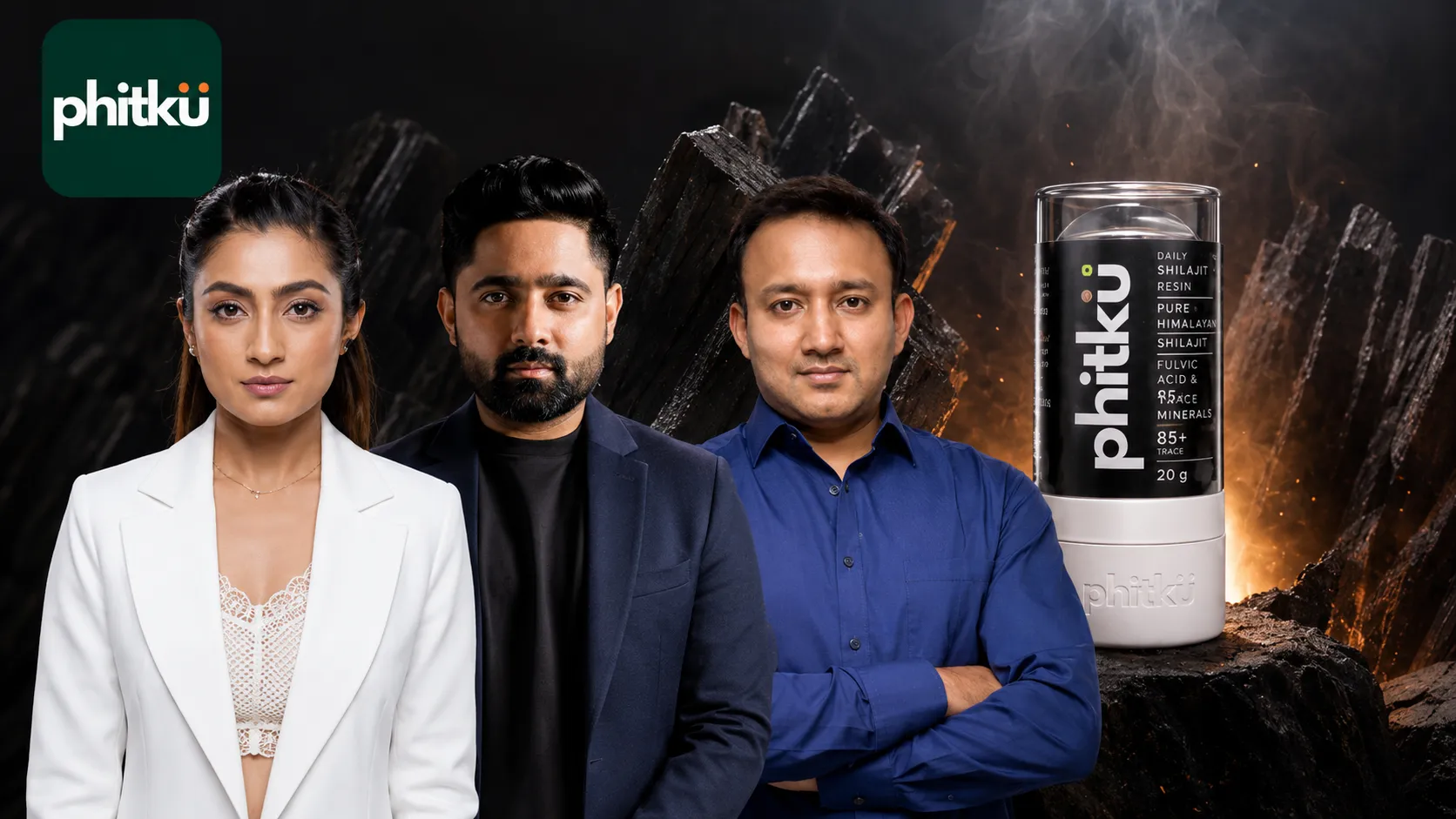
Phitku's product line is built on a simple but consequential repositioning of an ancient ingredient. Alum — known as phitkari in Hindi, from which the brand name derives — is a mineral salt with natural antibacterial properties. Applied to skin, it inhibits the bacteria that cause body odour without blocking sweat glands, without synthetic fragrances, and without the aluminium chlorohydrate compounds found in most commercial antiperspirants whose long-term health effects have been a subject of scientific debate.
The brand's positioning as a science-led personal care company is deliberate. The claim is not that natural is better simply by virtue of being natural — it is that specific natural ingredients, used correctly, are both safe and effective. The target consumer is the person who reads ingredient labels, who has grown wary of brands that over-promise and under-deliver, and who wants a deodorant that works without requiring them to accept unknown long-term risks.
Sumit Marda articulated the founding vision with a precision that distinguishes the brand from the broader natural personal care category: "Phitku was founded with a simple vision, to build a science-led personal care brand that consumers can genuinely trust. As a team, we've stayed focused on one thing: building products that are clean, safe, and that actually work. For us, efficacy and safety aren't trade-offs; they go hand in hand."
The market response to that proposition, in 14 months of operation, was a customer base exceeding 6 lakh consumers across India, acquired through the company's own direct-to-consumer platform and leading e-commerce and quick commerce marketplaces — without external funding and while maintaining profitability from inception.
Profitability from inception, in a consumer D2C startup, is not a common achievement. Most D2C brands in India operate for years with significant marketing spend-driven losses before unit economics improve at scale. Phitku's founders built the brand without that cushion, which means the early profitability is structural rather than management-assisted by external capital.
The Shark Tank India Dimension
Phitku's Shark Tank India appearance was part of the brand-building journey that preceded the Ananta Capital deal. The visibility that Shark Tank India provides — an engaged national television and digital audience that is specifically interested in emerging consumer brands — has been a meaningful accelerant for several D2C brands that subsequently completed significant funding rounds or acquisitions.
Neha Marda Agrawal's public profile, both as an actor and as a vocal advocate for ingredient-conscious personal care, provided the brand with the kind of founder-identity credibility that marketing budgets cannot purchase. The personal story behind Phitku — a founder who built the brand to solve a problem she experienced herself, in a category where honesty about the problem was itself a differentiator — connected with consumers in the authentic way that the most successful consumer brands always do.
Where the ₹100 Crore Goes — and Where Phitku Is Heading
The growth plan that the Ananta Capital capital will fund is specific. Product development and portfolio expansion will extend the alum-based personal care proposition into new categories beyond deodorant. Distribution expansion will deepen presence across quick commerce platforms and online marketplaces while building offline retail access through the Taparia group's consumer network. International expansion will bring the brand to markets where ingredient-conscious personal care has established consumer demand.
The financial targets are ambitious by any standard. Phitku is targeting ARR of ₹300 crore within 24 months — approximately four to five times growth from current levels. At ₹200 crore valuation, a ₹300 crore ARR target implies a business that, if achieved, would make the current acquisition price look conservative.
For Ananta Capital, the Phitku deal continues a pattern of acquiring founder-led consumer brands that have proven product-market fit and early profitability before institutional capital arrived — and then using the group's distribution and operational infrastructure to scale them toward category leadership. The Guardian Group portfolio (Bella Vita, HipHop, Rubans, GNC India) provides the template. Phitku is the next addition to it.
For Neha Marda Agrawal and her co-founders, the deal represents something more personal: validation that the problem they noticed, the ingredient they chose, and the brand they built without external funding or the safety net of investor capital was worth the fourteen months it took to prove it.
Clean, safe, and actually works. In a personal care market that has made consumers sceptical of all three simultaneously, that promise, kept, turns out to be worth ₹200 crore.


